XLSlides
Episode premiere: 15 November 2026 at 7:30 am IST. Read the full case study before the premiere.
Seven minutes of selling
On Wednesday 15 September 2021, starting at 9:35 am, a trader in New York sold 2,481 GreenSky call option contracts in about seven minutes. According to the SEC, he had paid about $23,100 for them. He sold them for $449,128. That morning, Goldman Sachs had announced that it would buy GreenSky. The trader was not a hedge fund. He was Puneet Dikshit, a partner at McKinsey & Company, who had been advising Goldman on the deal. This case follows how a consumer-loan business, a bank’s strategy and a consultant’s access to confidential information came together in one short-dated bet.
Source context: [1]
The business
GreenSky sold loans at the point of sale. A contractor quoting for a new kitchen, for example, could offer the homeowner financing on the spot through GreenSky’s app, often with a promotional feature such as deferred interest. GreenSky did not lend its own money: partner banks funded the loans. GreenSky earned most of its revenue from merchants, through an upfront transaction fee on each loan that made up about three quarters of its 2020 revenue, plus fees for servicing the loans. In 2020 it facilitated about $5.5 billion of loans and reported revenue of about $526 million and net income of about $29 million.
Source context: [11]
The buyer and the adviser
Goldman Sachs wanted that kind of customer. Its consumer business, Marcus, was meant to become, in the words of its chief executive, David Solomon, “the consumer banking platform of the future”. To evaluate a deal, Goldman engaged McKinsey on a project code-named Project Glacier. One of the partners was Puneet Dikshit, then 40 and based in New York, who led McKinsey’s North American practice in unsecured lending and digital payments. According to the SEC, he was brought inside the deal work from late 2019, with access to a confidential data room. Talks stopped in March 2020 and restarted at the end of May 2021.
The rules
Consultants see confidential information for a living, so firms like McKinsey have rules about personal trading. According to the SEC, McKinsey’s Personal Investments Policy required employees to pre-clear trades in their own and their household members’ accounts before making them, and Dikshit certified in May 2012 that he had read the policy. He pre-cleared none of his GreenSky trades.
Source context: [1]
The trades
His bet was on call options. A call option gives the right to buy a share at a fixed price, the strike, until a set date. If the share stays below the strike, the option expires worthless; if the share jumps, the gain can be many times the cost. Prosecutors said he bought GreenSky options between 26 July and 15 September 2021.
On the night of 9 September, according to the SEC, a colleague emailed that Goldman had “unofficially heard that they have won the deal”, and Dikshit replied: “This is great news!” On Monday 13 September, at 3:41 pm, he bought 212 calls with a $10 strike that expired that Friday. GreenSky had closed at $8.85, so its shares needed to rise by about 13% in four days. That night, $10,000 was deposited into his spouse’s brokerage account, and an order for 150 calls was placed in that account. The next day he bought 2,269 more.
The announcement
On the morning of 15 September, Goldman announced an all-stock deal valuing GreenSky at about $2.24 billion: 0.03 Goldman shares per GreenSky share, worth about $12.11, a premium of about 25%. According to the SEC, GreenSky’s shares rose from $7.77 to close at $11.90, up 53%. Within minutes of the market opening, Dikshit’s calls were sold. Including the spouse’s account, the SEC said, the trades produced a profit of more than $450,000, a return of about 1,829%.
Make the trading wall operational
- 01Wall-cross deliberately
Record who is brought inside each deal, when, and which securities become restricted.
- 02Pre-clear every trade
Require approval for personal and household trades, including options, against the live restricted list.
- 03Monitor and act
Compare trading records with deal timelines, and act quickly on breaches.
The case
On 10 November 2021, Dikshit was arrested and charged by federal prosecutors in Manhattan with securities fraud; the SEC filed a parallel civil case the same day. McKinsey said it had fired him for a serious breach of its policies and code of conduct. Neither McKinsey nor Goldman Sachs was accused of wrongdoing. On 15 December 2021, Dikshit pleaded guilty to one count of securities fraud before Judge Colleen McMahon.
Follow the money
According to the SEC complaint, the options cost about $25,000 in total and were sold for about $475,000. The court ordered Dikshit to forfeit $455,017. For Goldman, the deal was a much bigger bet. It paid in its own shares, and those shares fell: when the acquisition completed in March 2022, the price was about $1.7 billion, according to Banking Dive. Goldman’s consumer platforms unit lost more than $3 billion between 2020 and the third quarter of 2022, with GreenSky part of that. In March 2024, Goldman completed the sale of GreenSky to a group led by Sixth Street, on undisclosed terms. The deal that made the trade pay off did not pay off for the buyer.
The reckoning
On 6 April 2022, Judge McMahon sentenced Dikshit to 24 months in prison; the sentencing guidelines had suggested 30 to 37 months. He told the court he was profoundly sorry, according to Reuters. According to Inner City Press, he said, “This crime is not who I am,” and the judge said she wanted the word to go out that insider traders must be jailed.
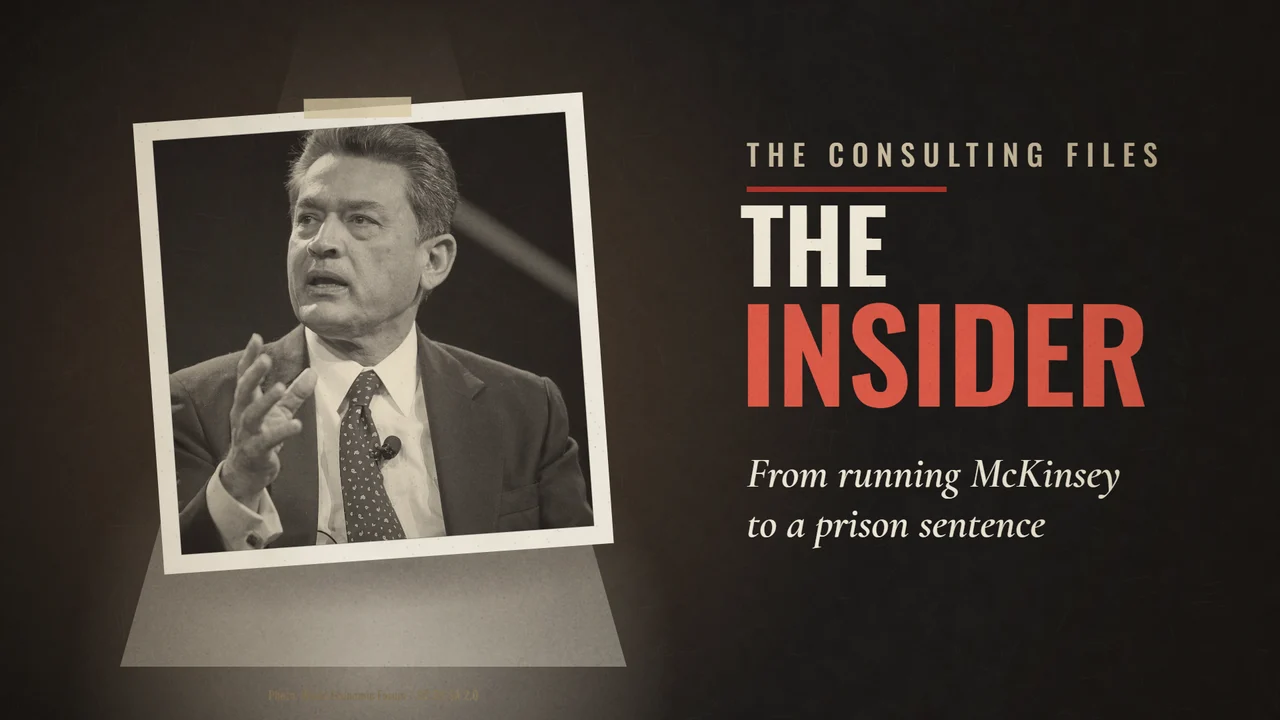
In June 2022, he consented to a final judgment in the SEC’s case, which permanently enjoined him from violating the antifraud provisions of the securities laws. He later sought to withdraw his guilty plea, saying he had not been told that deportation would be mandatory; in October 2022 the judge denied the motion. Reuters reported that he would be deported to India after his sentence. McKinsey had been here before: its former managing director, Rajat Gupta, was convicted of insider trading in 2012.
THE SEQUENCE
A timeline of the case
Project Glacier begins
McKinsey is engaged by Goldman; Dikshit is brought inside the deal, per the SEC. [1]
Talks restart
Discussions paused in March 2020 resume at the end of May 2021. [1]
Options buying begins
Prosecutors say Dikshit bought GreenSky options from late July. [3]
Short-dated calls
212 and then 2,269 calls expiring that Friday, plus 150 in the spouse’s account. [1]
Deal announced, options sold
Goldman announces a ~$2.24bn all-stock deal; the calls are sold within minutes. [1]
Arrest and SEC case
A criminal charge and a parallel SEC civil complaint; McKinsey fires him. [6]
Guilty plea
One count of securities fraud before Judge McMahon. [5]
Sentence
24 months in prison and forfeiture of $455,017. [4]
Plea withdrawal denied
The court denies his motion to withdraw the guilty plea. [8]
Access to a deal is a loan of trust
Consultants who work on mergers see the most valuable information a company has: the identity of a target, the price under discussion and the likely timing. That access is granted because the client needs expert help, and it rests on an assumption that the adviser will treat the information as the client’s property. In this case, according to the SEC, a partner brought inside Goldman Sachs’s work on GreenSky used that information to buy short-dated options in the target.
The outcome was severe for him: a guilty plea, 24 months in prison, forfeiture of $455,017, a permanent injunction in the SEC’s case and, according to Reuters, deportation after his sentence. McKinsey and Goldman Sachs were not accused of wrongdoing, and McKinsey fired him. The episode still matters for every advisory firm, because the trust that was breached belonged to the client and, by extension, to the firm that vouched for its people. The Rajat Gupta case shows a different route to the same breach, through a board seat rather than a project team.
Why short-dated options are a red flag
The trades in this case were not ordinary investments. According to the SEC, on 13 September 2021 he bought calls with a $10 strike expiring that Friday, when GreenSky closed at $8.85. Those options would pay only if the shares rose by about 13% in four days. The next day he bought 2,269 more.
An investor without inside information has little reason to place such a bet. That is why surveillance teams, exchanges and regulators pay particular attention to out-of-the-money, short-dated options bought shortly before announcements. The cost is low, the potential return is extreme and the timing is precise. When the SEC calculated a return of about 1,829%, it was describing exactly the pattern that makes such trades easy to reconstruct. For firms, the lesson is that personal-trading rules should treat derivatives on restricted securities with at least the same strictness as the shares themselves.
Policies only work if people use them
McKinsey had a Personal Investments Policy requiring employees to pre-clear trades in their own and household accounts. According to the SEC, Dikshit certified in 2012 that he had read it, and he pre-cleared none of his GreenSky trades. The policy existed. It was not followed.
That is the limit of any written control. A pre-clearance rule relies on the person who wants to trade asking permission. It can be reinforced by regular attestations, by requiring duplicate brokerage statements for employee and household accounts, and by comparing those statements with the list of restricted securities. Each of these makes it harder for a breach to remain undetected. None of them replaces the individual’s choice. The audit committee presentation guide offers a structure for reporting how such controls are tested, not just whether they exist.
Household accounts are part of the perimeter
According to the SEC, $10,000 was deposited into the spouse’s brokerage account on the night of 13 September, and 150 calls were bought in that account. They were sold on the morning of the announcement for $26,250. Trading through family accounts is a familiar pattern in insider-trading cases, which is why most personal-investment policies extend to household members.
For firms, the practical question is whether the policy covers the accounts that matter and whether the firm can see them. A rule that applies to household accounts but relies entirely on self-reporting provides limited assurance. Many regulated firms require disclosure of all brokerage accounts in which the employee has an interest or influence, and periodic certification that the list is complete.
The trail is always there
Every element of this case left a record: the email on 9 September saying Goldman had unofficially heard it had won the deal, the reply calling it great news, the timestamps of the option purchases, the deposit into the spouse’s account and the sales within minutes of the market opening. The SEC complaint reconstructs the sequence almost to the minute.
That is typical. Brokerage firms report trading data, exchanges monitor unusual options activity ahead of announcements, and deal teams create detailed records of who knew what and when. A consultant tempted to trade should assume that the trade will be matched against the deal timeline. The M&A due diligence presentation guide describes how deal teams document their work; the same documentation becomes evidence when something goes wrong.
Firms carry the reputational cost
McKinsey was not accused of wrongdoing, and it acted quickly to dismiss the partner. Even so, its name appeared in every headline about the case, and the story inevitably recalled the conviction of Rajat Gupta in 2012. A single person’s breach can revive a firm’s history.
The reputational lesson is that firms should treat information-handling failures as institutional risks, not individual lapses. That means wall-crossing records that show who is inside each deal, restricted lists that update automatically, personal-trading surveillance and training that uses real cases rather than abstract rules. It also means being ready to explain these controls to clients, who may reasonably ask how their information is protected. The Puerto Rico debt case shows how information barriers at an affiliated investment office came under scrutiny, even though no insider trading was alleged there.
The buyer’s outcome is a separate lesson
For Goldman, the acquisition did not perform as hoped. It paid in its own shares, and by completion in March 2022 the price was about $1.7 billion rather than the $2.24 billion announced. Its consumer platforms unit lost more than $3 billion between 2020 and the third quarter of 2022, with GreenSky part of that, and Goldman sold GreenSky to a group led by Sixth Street in 2024 on undisclosed terms.
That outcome is unrelated to the crime, but it is a reminder that announcement-day price movements reflect expectations, not results. The trade profited from information about an announcement; the deal itself was judged later by its economics. Strategy teams presenting acquisitions should separate the two, as the management consulting presentation guide recommends: the decision, the evidence and the risks, not the reaction of the share price.
What the client is really buying
Clients pay advisers for expertise, but they also pay for discretion. Every engagement that involves confidential information carries an implicit promise that the information will be used only for the client’s benefit. In this case that promise was broken by one person for about $450,000 in profit. The cost to him was his career, two years in prison and the country he lived in. The cost to the firm was its name in the headlines. The most valuable thing a consultant holds is not the client’s secret. It is the client’s trust.
TAKE IT INTO THE NEXT MEETING
Three practical lessons
You are an insider
Access to a client’s data room is a loan of trust. Anyone brought inside a deal should treat the target’s securities, and options on them, as off limits.
Rules exist for the moment of temptation
Pre-clearance only works if people ask. Make the request simple, mandatory for household accounts and backed by regular attestations.
The trail is always there
Emails, timestamps and short-dated options leave a precise record. Assume that any trade made near a client’s deal will be reconstructed.
Questions about the case
Was McKinsey accused of insider trading over GreenSky?
No. The criminal and civil cases were against Puneet Dikshit personally. McKinsey and Goldman Sachs were not accused of wrongdoing, and McKinsey said it fired him for a serious breach of its policies.
How much did the GreenSky trades make?
According to the SEC, the options cost about $25,000 and were sold for about $475,000, a profit of more than $450,000 and a return of about 1,829%. The court ordered forfeiture of $455,017.
What sentence did Puneet Dikshit receive?
He was sentenced to 24 months in prison in April 2022, below the guidelines range of 30 to 37 months, and consented to a permanent injunction in the SEC’s case. His later motion to withdraw his guilty plea was denied.
THE EVIDENCE TRAIL
Sources & editorial notes
Adapted from the original XLSlides documentary, with additional analysis. Published 13 November 2026. Sources have different roles: primary records, investigative reporting and the positions of affected parties.
- U.S. Securities and Exchange Commission: complaint, SEC v. Puneet Dikshit, 10 November 2021 ↗Primary civil complaint: Project Glacier, wall-crossing, the policy certification, emails, trade times, quantities, costs and proceeds. SEC.gov blocks generic automated checks.
- U.S. Securities and Exchange Commission: Litigation Release No. 25416, 9 June 2022 ↗The consent judgment of 2 June 2022 and permanent injunction.
- U.S. Attorney’s Office, Southern District of New York: sentencing release, 6 April 2022 (InsuranceNewsNet repost) ↗The 24-month sentence, forfeiture and trading period, as announced by prosecutors.
- Reuters, via Investing.com: McKinsey ex-partner gets 2 years in prison, 6 April 2022 ↗Sentence, guidelines range, his apology, Goldman not accused and expected deportation.
- CNBC: Ex-McKinsey partner pleads guilty to insider trading in Goldman Sachs fintech deal, 15 December 2021 ↗The guilty plea.
- Entrepreneur: McKinsey partner charged with insider trading, 10 November 2021 ↗The arrest and McKinsey’s statement that it fired him.
- Inner City Press: court reporting on the Dikshit case, 19 October 2022 ↗Courtroom reporting of the plea and sentencing remarks; independent court reporting, quoted with attribution.
- Inner City Press: motion to vacate denied, 21 October 2022 ↗Reporting of the denied motion to withdraw the plea.
- Consulting.us: Ex-McKinsey partner pleads guilty to insider trading, December 2021 ↗Trade cross-check of the plea and firing.
- Goldman Sachs and GreenSky: merger announcement (SEC Form 425), 15 September 2021 ↗Deal terms, exchange ratio, implied price and premium, and David Solomon’s description of the consumer platform.
- GreenSky, Inc.: Annual Report on Form 10-K for 2020 ↗GreenSky’s business model, bank partners, merchant fees and 2020 results.
- Banking Dive: Goldman completes GreenSky sale, March 2024 ↗The completion price, consumer-platform losses and the sale to a Sixth Street-led group.
Image credits & licences
Original illustrations and typography: XLSlides. Documentary stills have been resized and converted to WebP for this article. Underlying images retain the credits supplied with the episode.
- McKinsey & Company logo: public domain (text logo), via Wikimedia Commons.
- Goldman Sachs logo: public domain (text logo), via Wikimedia Commons.
- Seal of the U.S. Securities and Exchange Commission: public domain (U.S. government), via Wikimedia Commons.
- Rajat Gupta, Davos 2010: World Economic Forum, CC BY-SA 2.0, via Wikimedia Commons.
- XLSlides logo: XLSlides.
- Puneet Dikshit and other people are shown as silhouettes; GreenSky, the U.S. Attorney's Office and the Sixth Street-led group as name cards; buildings, documents, phones and charts are drawn. Scenes marked "illustrative" are not to scale.
FROM EVIDENCE TO A RECOMMENDATION
Make the reasoning visible.
Use clear action titles, sourced exhibits and an explicit decision. XLSlides helps turn your analysis into an editable presentation; the evidence and judgment remain yours to verify.
Build a case-study presentation