What An Audit Committee Presentation Needs To Do
An audit committee presentation is not just a finance update with extra compliance language. Its job is to help directors judge whether reporting quality, controls, liquidity oversight, audit findings, regulatory exposure, and remediation plans are being handled with enough discipline. The committee wants signal, not a stack of dashboard exports. It needs to see what changed, why it matters, whether management has the issue contained, and where oversight or approval is required.
That changes the writing standard. The best audit committee decks do not open with a long list of completed activities. They open with the governance verdict: where reporting or control confidence stands today, which issues deserve committee attention, and whether the pressure is getting better, worse, or simply moving. The deck has to work even when a director reads only the headlines between meetings, so every page needs to behave like a standalone oversight document.
In practice, this means combining finance precision with committee judgment. A good presentation clarifies whether the issue is a control design gap, an operating discipline problem, a one-time reporting exception, an external-auditor challenge, or a broader management-risk signal. That distinction is what allows an audit committee to spend time on the right questions instead of getting lost in procedural detail.
Key Takeaways
- Audit committee decks should start with the oversight verdict, not a list of activities completed since the last meeting.
- Directors care about control reliability, reporting quality, remediation momentum, unresolved judgment calls, and the exact committee ask.
- The strongest pages use answer-first headlines, compact issue summaries, clear severity logic, and backup appendices for technical detail.
- AI is useful when it drafts the first structured committee narrative, but management still owns judgment, disclosure sensitivity, and the final wording.
Executive Oversight Summary Reference
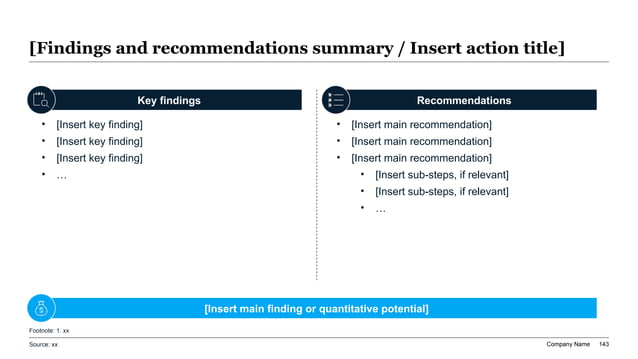
How An Audit Committee Deck Differs From Other Executive Packs
The same metrics can appear in several executive forums, but the committee lens is different in each case.
| Deck Type | Primary Audience Question | What The Deck Should Emphasize | Common Failure Mode |
|---|---|---|---|
| Audit committee presentation | Is reporting, control, or compliance confidence moving in the right direction? | Severity, remediation status, external-auditor topics, judgment calls, and oversight asks | Dumping operational detail without framing what requires committee scrutiny |
| CFO board presentation | What do the numbers imply for the board's business decisions? | Variance, cash, forecast, capital allocation, and management recommendation | Blending governance topics with too much business-performance discussion |
| Full board deck | What should directors know, challenge, or approve across the business? | Cross-functional issues, strategy, finance, talent, and decision requests | Giving audit and controls topics too little precision inside a broad board pack |
| Internal audit readout | What did the audit team find and what should management fix? | Testing scope, control breakdown, root causes, and owner actions | Using internal-audit language that is too procedural for committee-level review |
The Five Questions Directors Need Answered In Ten Minutes
Most audit committee discussions collapse into the same five questions. First, can directors still trust the reporting process and the core control environment? Second, what changed since the last meeting that increases or decreases that confidence? Third, which findings are merely important versus urgent? Fourth, is management's remediation plan concrete enough to believe? Fifth, what does the committee actually need to do now: challenge assumptions, approve a change, request more evidence, or simply keep monitoring?
A serious audit committee presentation is designed around those questions. That is why the main flow should stay narrow. It should summarize the control or reporting status, quantify the few issues that matter most, explain whether the problem is isolated or systemic, show how management is containing it, and make the next committee action explicit. If a page does not help answer one of those questions, it probably belongs in backup.
This is also where many management teams lose credibility. They either over-compress the issue and sound evasive, or they over-share technical detail and bury the judgment call. Directors do not need every test step on the main page. They do need clarity on impact, likelihood, timeline, owner accountability, and whether the matter affects disclosures, close quality, liquidity, covenants, cyber exposure, or regulatory posture.
Recommended 9-Slide Audit Committee Sequence
Use this when the committee needs a focused governance packet rather than a broad board book.
| Slide | Purpose | Committee Question Answered |
|---|---|---|
| 1. Oversight summary | State the overall reporting and control verdict plus the committee ask | What matters most right now? |
| 2. Issue scorecard | Show the few open matters by severity, owner, and due date | Which items need the most attention? |
| 3. What changed since last meeting | Highlight new findings, closed items, and slippage | Is the situation improving or deteriorating? |
| 4. Financial-reporting and close quality | Cover judgment areas, close exceptions, and disclosure sensitivity | Can we still trust the numbers and process? |
| 5. Controls and remediation detail | Explain the root cause, containment steps, and milestone plan | Is management treating the issue seriously enough? |
| 6. External-auditor and internal-audit topics | Summarize matters raised by audit partners or internal audit | Are independent reviewers aligned with management's view? |
| 7. Risk implications | Connect the issue to compliance, liquidity, cyber, legal, or reputational exposure | Why does this matter beyond process hygiene? |
| 8. Committee asks and decisions | List approvals, follow-up requests, or watch items | What should directors do now? |
| 9. Appendix | Preserve testing detail, issue logs, and evidence backup | Where is the proof if challenged? |
Opening-Slide Standard For Audit Committees
Controls Health Matrix Reference
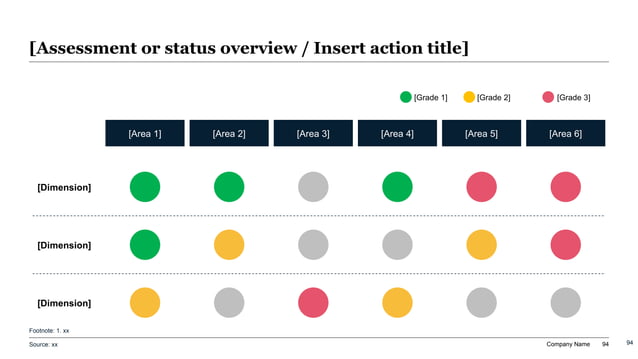
How To Turn Findings Into A Director-Level Story
The transition from management note to committee slide is where quality usually breaks. A raw finding such as "late user-access review completion" is not yet a committee story. The committee version has to explain what the lapse means: for example, whether the delay creates a control-design weakness, a testing exception, a segregation-of-duties concern, or only an administrative clean-up item. Directors need the implication before they need the test script.
A useful way to frame each issue is to answer four lines in order. What happened? Why does it matter? What is management doing about it? What does the committee need to monitor or approve? When every issue follows that discipline, the deck becomes much easier to read, compare, and challenge. It also lowers the chance that management confuses severity with volume. Ten minor open items are not automatically more important than one judgment-sensitive revenue-recognition issue.
This is where answer-first action titles matter. Instead of calling a slide "Internal controls update," write the conclusion the committee should absorb. A title such as "Quarter-end close confidence remains intact, but access-review slippage requires a controlled remediation plan by August" gives directors a reason to read the evidence. It also forces the management team to decide what the slide actually proves.
Prompt Recipe For An Audit Committee Presentation
Create a 9-slide audit committee presentation for a PE-backed B2B software company. Audience: audit committee chair, two independent directors, CFO, chief accounting officer, chief audit executive, and CEO observer. Situation: quarter-end close completed on time, but two access-control exceptions remained open past due date, one revenue cut-off judgment required manual override review, and the external auditor requested tighter remediation evidence before year-end. Decision needed: confirm whether management's current remediation plan is sufficient, whether extra internal-audit support should be approved, and which items should stay on the committee watch list next quarter. Include an oversight summary, issue scorecard, change-since-last-meeting view, reporting-quality update, controls remediation plan, external-auditor topics, risk implications, explicit committee asks, and appendix placeholders. Use action titles, concise governance language, and editable PowerPoint-style structure.
What Belongs In The Main Flow And What Belongs In Appendix
Committee decks get stronger when the main narrative is judgment-focused and the proof is still easy to pull on demand.
| Keep In Main Flow | Move To Appendix | Why The Split Matters |
|---|---|---|
| Current control or reporting verdict | Full testing population detail | The committee needs the judgment first, not every workpaper line |
| Open issue scorecard with severity and owner | Historical issue logs for closed low-risk items | Directors should focus on what still affects oversight |
| Any change in auditor alignment or escalation level | Detailed auditor correspondence | You need the implication in the room and the documents only if challenged |
| Remediation timeline and next milestone | Full project-plan task list | Milestones drive committee monitoring better than operational task clutter |
| Disclosure or legal sensitivity | Technical accounting memo excerpts | Committee members need the risk framing before the technical memo support |
| Specific committee ask | Background reference material already in prior packets | Avoid making directors search for the actual decision point |
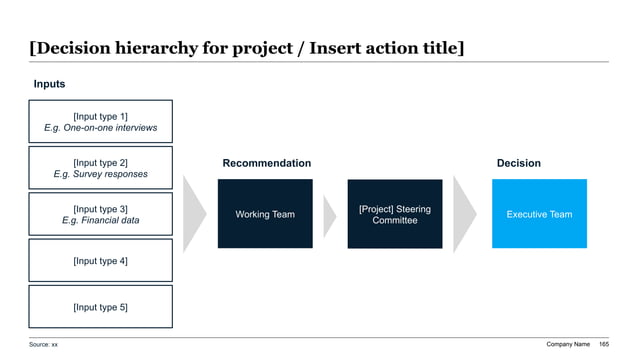
Decision Workflow Reference
Control Themes Directors Actually Care About
Not every issue belongs on the same level. Audit committee time should usually center on control themes that can change trust in the business, not just trust in the process. That includes revenue-recognition judgment, quarter-end close quality, access and segregation-of-duties weaknesses, unresolved external-auditor points, cyber-control breakdowns, whistleblower or investigation matters, covenant or liquidity reporting sensitivity, and compliance lapses that could influence disclosures or regulatory relationships.
The point is not to overload the committee with every open item. It is to classify what the item means. A recurring reconciliation delay may matter because it signals close-quality deterioration. A delayed access recertification may matter because it weakens the evidence behind management's control assertions. A cyber finding may matter because it changes incident response readiness or disclosure exposure. Directors react better when the issue is linked to its governance consequence instead of presented as a standalone procedural lapse.
This also helps management avoid defensive language. Saying "the issue is being monitored" is rarely enough. A stronger formulation is to describe whether the issue changes the committee's confidence in the process today, whether the current control environment contains the risk, and what milestone would change that confidence. That is how you convert a static status report into a real oversight tool.
Action Title Rewrite Matrix For Audit Committee Slides
A committee page should tell directors what to conclude before they study the detail.
| Weak Topic Label | Stronger Audit Committee Title | Why The Rewrite Works |
|---|---|---|
| Internal controls update | Control confidence remains stable, but two access-review exceptions require committee visibility until August close | It states the current verdict and the reason for oversight |
| Revenue recognition review | Revenue close remained accurate, but manual override review still depends on one non-automated control step | It explains what is working and what remains fragile |
| External auditor feedback | The auditor agrees with management's direction but wants tighter remediation evidence before year-end sign-off | It converts a vague update into a concrete consequence |
| Compliance matters | No regulatory breach is indicated, but delayed documentation could lengthen the response window if reviewed | It distinguishes exposure from confirmed failure |
| Remediation plan | Management can close the highest-risk findings in 60 days only if internal-audit support is expanded now | It turns the plan into a resource decision |
| Next steps | The committee is asked to keep revenue-override testing on watch and approve added remediation support today | It makes the oversight ask explicit |
Questions To Pressure-Test Before Circulation
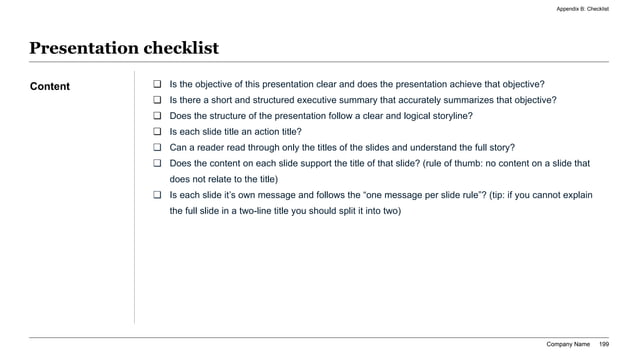
Audit Checklist Reference
What AI Should And Should Not Automate In Audit Committee Prep
AI is helpful when it turns messy inputs into a more disciplined first draft. For audit committee work, that means converting issue logs into action-title headlines, summarizing what changed since the last meeting, drafting a scorecard structure, proposing appendix categories, and rewriting management notes into cleaner director-facing language. These are real time savers because the bottleneck is often packaging, not just analysis.
What AI should not own is governance judgment. The model does not know whether a finding is disclosure-sensitive, whether legal wants a narrower phrase, whether the external auditor would object to the wording, or whether the chair expects a stronger escalation. Those decisions stay with management, internal audit, finance, legal, and the committee lead. An automated draft can be useful precisely because it is editable, not because it is final.
That is the right positioning for XLSlides. The value is not flashy design. The value is a serious workflow that helps executives and board-prep teams move from notes, issue logs, finance commentary, and remediation trackers to a clean PowerPoint-ready committee draft faster while preserving room for human review. For this audience, speed only matters if clarity and defensibility survive.
Choose The Right Visual For Each Oversight Question
The visual should answer the committee question directly instead of merely displaying what the source spreadsheet already contains.
| Oversight Question | Best Visual | Why It Works |
|---|---|---|
| Where are the open issues concentrated? | Status matrix or issue scorecard | Lets directors see severity and concentration faster than a narrative list |
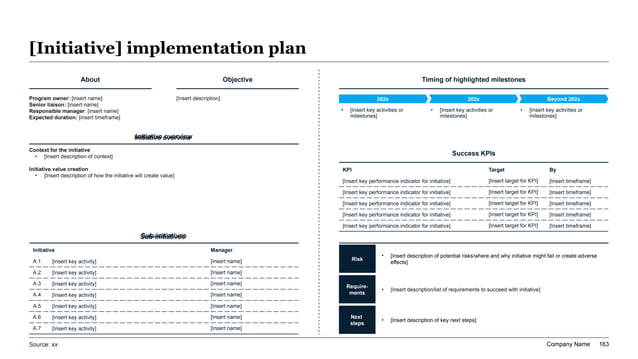
| Is remediation really progressing? | Milestone roadmap or implementation charter | Shows dates, owners, and slippage clearly |
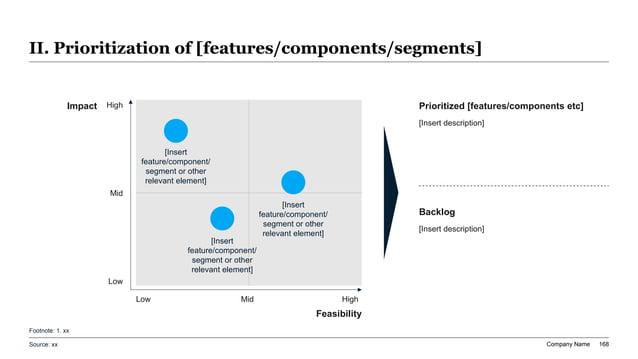
| Which issue deserves escalation first? | Prioritization matrix | Separates high-impact items from visible but lower-consequence noise |
| How does the issue move through management review? | Decision workflow diagram | Clarifies who reviews what before committee sign-off |
| What should the committee monitor each meeting? | Compact scorecard | Supports repeatable cadence and historical comparison |
| What detail should be retained for challenge questions? | Appendix log or checklist page | Preserves proof without cluttering the main story |
XLSlides Resources For Audit Committee And Finance Governance Work
Short Answers For Audit Committee Reporting Teams
What should the first audit committee slide say?
It should summarize the current reporting and control verdict, name the issues that need committee attention, state whether management believes the situation is contained, and make the committee ask explicit.
How is an audit committee presentation different from a CFO board presentation?
A CFO board presentation translates finance performance into business and capital-allocation implications. An audit committee presentation focuses more narrowly on reporting quality, controls, remediation progress, audit feedback, and governance sensitivity.
What belongs in the main flow versus the appendix?
The main flow should carry the oversight verdict, issue severity, changes since the last meeting, remediation confidence, and the committee ask. Testing detail, full logs, and technical memos usually belong in appendix unless they materially change the judgment.
Can AI draft an audit committee deck well?
Yes, if the inputs clearly specify the issue, audience, severity, management response, and desired committee outcome. Human review is still required for disclosure sensitivity, legal nuance, auditor alignment, and final boardroom wording.
Remediation Charter Reference
Meeting Cadence And Ownership Model
Repeatable committee prep gets easier when every recurring deliverable has a clear owner and decision purpose.
| Cadence Item | Primary Owner | What The Committee Should Receive |
|---|---|---|
| Pre-close issue review | Controller and chief accounting officer | Emerging reporting judgments, close-risk watch list, and escalation triggers |
| Open findings tracker | Chief audit executive | Severity status, overdue items, owner accountability, and required management support |
| External-auditor coordination | CFO and audit partner interface lead | Any challenge points, evidence requests, and areas where auditor comfort is still conditional |
| Committee packet assembly | Chief of staff or board-prep lead | Answer-first storyline, consistent wording, and appendix backup links |
| Post-meeting follow-through | Named executive owner per issue | Action register with dates, approvals, and next-committee watch items |
Issue Prioritization Reference
Draft The Audit Committee Deck In XLSlides
Use XLSlides to turn issue logs, close commentary, auditor notes, remediation trackers, and committee prep bullets into an editable audit committee presentation with answer-first headlines, issue scorecards, remediation timelines, and explicit oversight asks.