Direct Answer: What A Board Deck Generator Should Actually Produce
A useful board deck generator should create the first structured draft of a board presentation, not a decorative slideshow. That means the output should start with the decision asks, summarize business performance in plain language, frame the risks that matter, and show the implications of management's recommendation. If the tool cannot produce a coherent opening summary, disciplined action titles, and an editable deck that finance and strategy leaders can revise before the meeting, it is not solving the real job.
Board decks are decision documents under time pressure. Directors read ahead, skim on tablets, revisit selected pages during committee calls, and compare the current packet to prior quarters. The presentation therefore needs to work as both a live discussion tool and a standalone record of management's judgment. The strongest board decks make the conclusion visible before the audience starts decoding every chart.
For XLSlides, the opportunity is straightforward: help operators turn messy monthly reports, KPI spreadsheets, budget commentary, strategy notes, and meeting prep into a board-ready first draft with clear narrative spine, executive summaries, source-note placeholders, and PowerPoint-style editability. Human leadership still has to validate the recommendation, the assumptions, and the political realities behind the page.
Key Takeaways
- A board deck should make a decision easier, not merely report activity.
- The opening page must state the situation, recommendation, and board ask in plain language.
- Directors care about performance, variance, risk, capital allocation, and management's judgment about what happens next.
- AI is most valuable when it turns scattered notes and metrics into a structured first draft that remains fully editable.
- A strong board deck is different from an investor update, QBR, or investment committee memo even when the same metrics appear.
Board Deck Vs. Investor Update Vs. Operating Review
These formats overlap, but the audience and decision burden are different. A generator that treats them as interchangeable usually produces weak board materials.
| Deck Type | Primary Audience | Main Question | What Must Be Visible Early |
|---|---|---|---|
| Board deck | Directors, CEO, CFO, functional leaders | What does the board need to approve, challenge, or monitor? | Decision ask, performance movement, major risks, management recommendation |
| Investor update | Current or prospective investors | How is the company progressing and where does support help? | Milestones, KPI trend, runway, priorities, confidence level |
| Operating review | Internal executives and functional owners | What is happening in the business and who owns the fix? | Variance analysis, workstream status, operational blockers |
| Investment committee deck | PE or VC decision makers | Should we commit capital under these assumptions? | Underwriting case, downside, diligence risk, approval terms |
| QBR deck | Customer, GTM, or account stakeholders | What happened this quarter and what should the account do next? | Outcome recap, business impact, next-quarter plan |
When A Board Deck Needs More Than A Pretty Slide Maker
Many AI slide tools are optimized for fast visual formatting. That is useful for marketing decks, lightweight training content, or idea-stage presentations. It is not enough for board work. Directors do not reward glossy themes when the packet hides the real issue, confuses the metrics, or delays the recommendation until the end.
A board deck typically needs to reconcile multiple management views into one coherent story. Finance wants accurate variance explanation. The CEO wants a clear recommendation. Functional leaders want their context represented fairly. Independent directors want to understand what changed, which risks are becoming material, and whether management's confidence is justified. A generic prompt-to-slides workflow rarely solves that tension on its own.
That is why a board deck generator should help with board-specific mechanics: turning raw operating notes into action titles, converting spreadsheets into an executive summary, separating facts from management interpretation, and forcing the packet to state what the board must actually do. The design layer matters, but it sits below the logic layer.
Board Summary Opening Reference
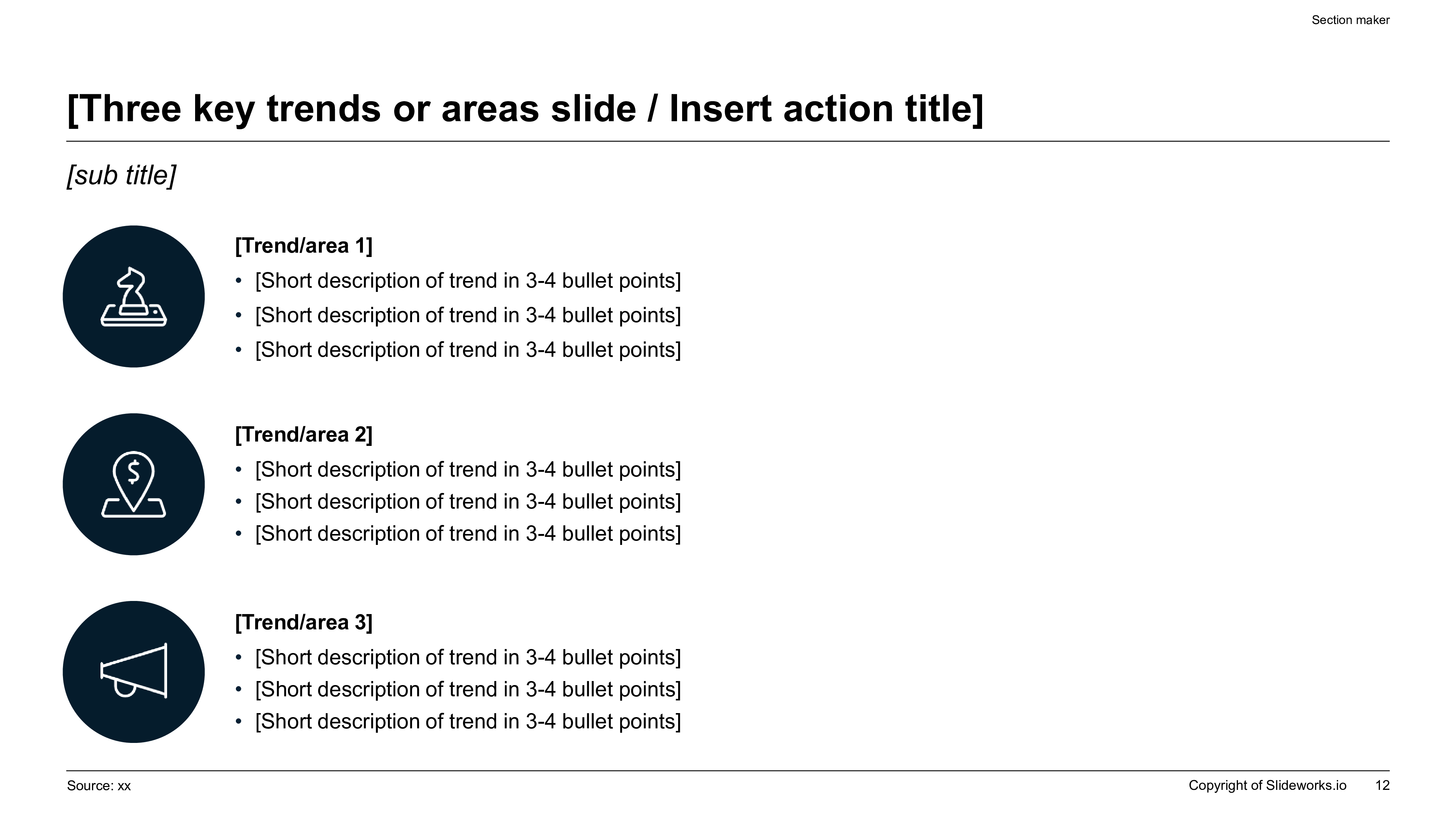
What Directors Need On Slide One
If the opening page misses these elements, the board will reconstruct the story on its own.
| Element | Why It Matters | Common Mistake |
|---|---|---|
| Current business state | Directors need the headline performance context immediately | Opening with a topic label instead of a conclusion |
| Decision ask | Clarifies whether the board is approving, advising, or monitoring | Hiding the ask in the final slide |
| Performance implication | Shows whether the business is above, on, or below plan | Listing raw KPIs without saying what changed |
| Top risk or uncertainty | Prepares the room for the hard discussion | Saving the risk page for the appendix |
| Management recommendation | Signals judgment rather than passive reporting | Describing options without taking a position |
Metrics Directors Usually Ask About
The exact set varies by company, but directors tend to challenge the bridge between operating reality, capital needs, and management confidence.
| Category | Examples | What The Board Often Wants To Know |
|---|---|---|
| Growth | Revenue, pipeline quality, bookings, customer expansion | Is growth durable or just timing noise? |
| Profitability | Gross margin, EBITDA, contribution margin, burn | What is driving the variance and what is controllable? |
| Cash and capital | Runway, covenant headroom, working capital, capex | How much flexibility do we really have? |
| Customer health | Retention, churn, NPS, implementation backlog, concentration | Are there leading indicators of future weakness? |
| Execution | Hiring, launches, project milestones, compliance, system readiness | What slipped, why, and what decision is needed now? |
| Risk | Litigation, cyber, regulatory, supply chain, pricing pressure | Which risk is becoming board-level and what mitigation exists? |
KPI Mix And Commentary Reference
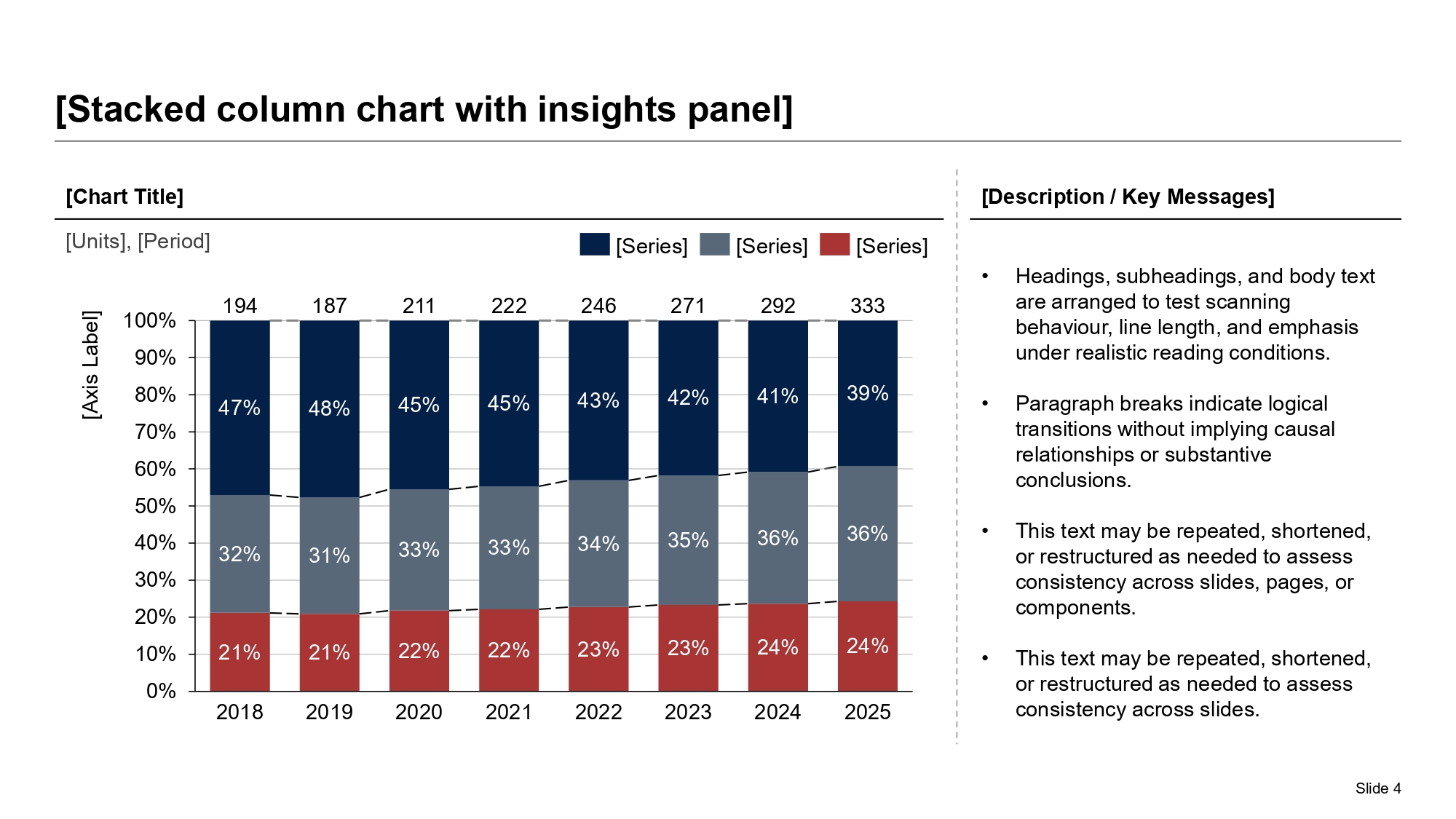
How To Structure The Board Story Around Decisions
The cleanest board decks follow a simple rule: open with the answer, then show why the answer is necessary, credible, and appropriately risk-managed. Management often overestimates how much historical context the board wants in the main flow. Directors usually need enough context to calibrate the decision, not a replay of every workstream update.
A practical sequence is: opening summary, current performance and variance, the issue or opportunity that needs board attention, management's recommendation, evidence for the recommendation, risk and scenario considerations, then the required approvals or discussion points. Supporting detail can still exist, but it belongs in appendices or board-book backup pages rather than the main storyline.
This structure is especially important when AI is involved. If the prompt merely says create a board presentation about quarterly performance, the model may build a generic recap. If the prompt instead defines the board audience, the specific decision ask, the plan versus actual variance, the critical risk, and the management recommendation, the draft becomes closer to a real board packet.
Recommended 12-Slide Board Deck Sequence
| Slide | Purpose | Board Question Answered |
|---|---|---|
| Executive summary | State recommendation and context | What should we know first? |
| Performance snapshot | Show plan versus actual and what moved | How is the business performing? |
| Variance bridge | Explain the major drivers behind the numbers | Why are we above or below plan? |
| Strategic issue | Frame the topic requiring board attention | Why does this matter now? |
| Management recommendation | Present the proposed path | What does management want to do? |
| Evidence page | Support the recommendation with data or market logic | Why should we believe this? |
| Scenario or sensitivity | Bound the upside and downside | What happens if assumptions change? |
| Risk register | Name the major exposures and mitigations | What could derail the plan? |
| Capital or resource implications | Show spend, hiring, or liquidity consequences | What does this require from a capital standpoint? |
| Timeline and governance | Define milestones and review cadence | How will the board monitor execution? |
| Decision asks | List approvals, guidance, or follow-up requests | What are we being asked to do? |
| Appendix | Preserve supporting detail | Where is the backup if challenged? |
Board Meeting Agenda Flow Reference
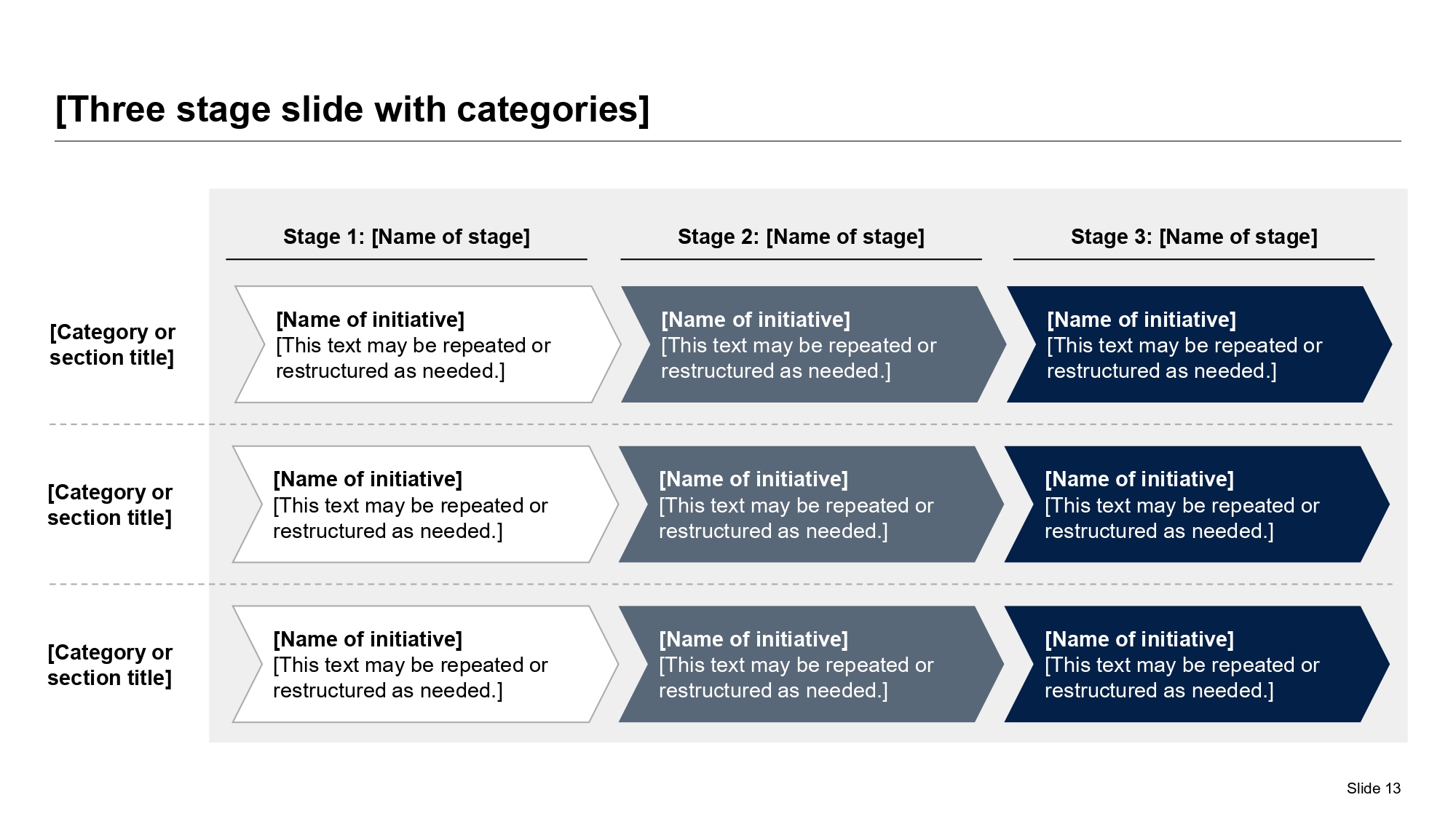
Action Title Rewrite Matrix For Board Slides
Board audiences should not have to infer the message from a topic label.
| Weak Topic Title | Stronger Board Action Title | Why The Rewrite Works |
|---|---|---|
| Q2 performance | Q2 EBITDA landed below plan because services utilization lagged hiring | It names the result and the driver immediately |
| Cash flow | Cash runway remains adequate through Q1 only if capex pacing stays unchanged | It connects the metric to the real board concern |
| International expansion | Management recommends delaying the EU launch until compliance staffing is in place | It makes the recommendation explicit |
| Pricing | A targeted enterprise repricing move can recover margin without slowing new logo growth | It states the conclusion rather than the subject |
| Risk update | Cyber remediation is on track, but vendor access remains the board's main residual risk | It highlights the live concern instead of reporting a category |
| Next steps | The board is asked to approve hiring, capex, and launch sequencing changes this quarter | It turns a vague closing label into an actionable ask |
Board Packet Inputs To Gather Before Drafting
Decision Framing Panel Reference
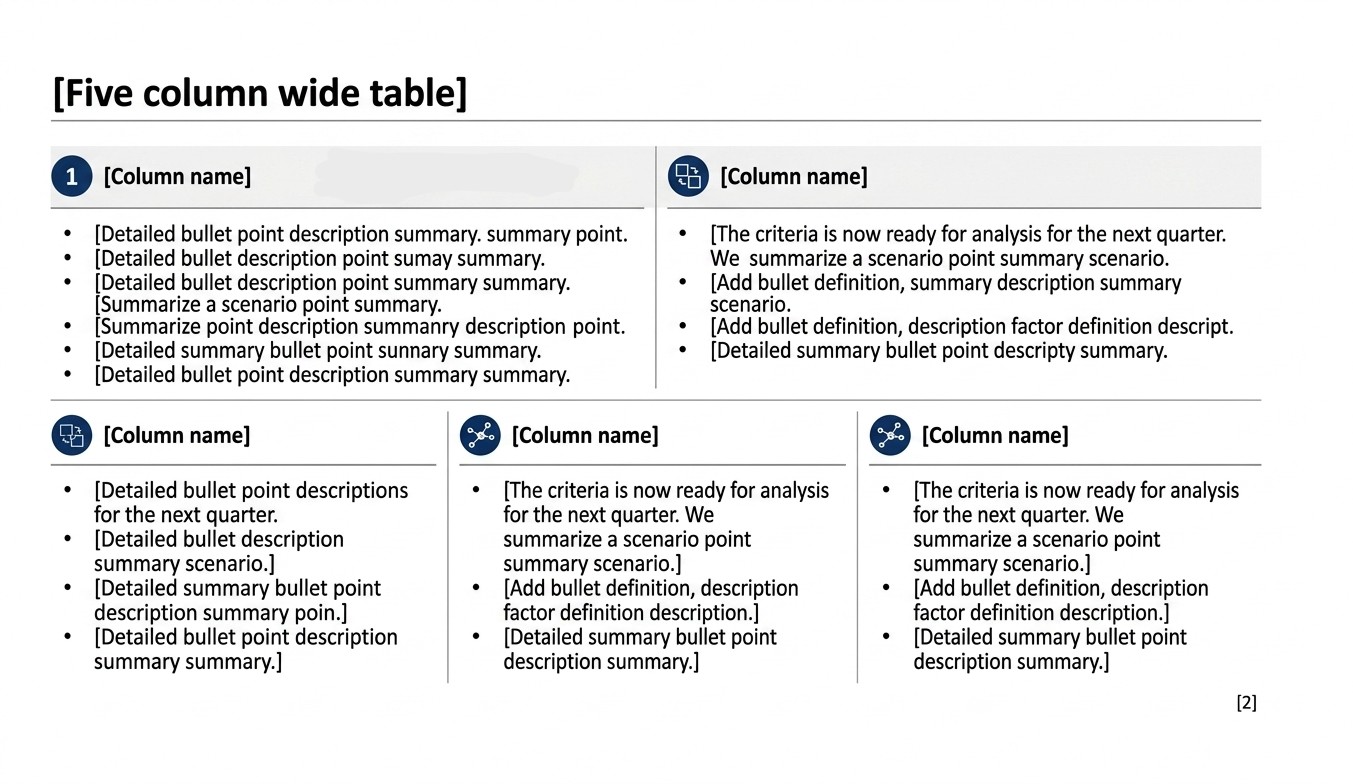
Capital Allocation, Risk, And Follow-Through
Board discussions often converge on three things: where capital should go, which risks deserve escalation, and how the board will know whether management delivered. A weak deck treats those as separate reporting categories. A strong deck connects them. If management wants to accelerate hiring, defer an expansion, pursue an acquisition, change pricing, or invest in product reliability, the deck should show the capital implication, the risk implication, and the follow-through mechanism together.
This is where CFO and strategy leaders can add disproportionate value. They can translate operating details into decision-quality framing: what is fixed versus flexible, what is reversible versus hard to unwind, what assumptions matter most, and what board oversight is appropriate. That logic is much more useful than dumping additional status slides into the packet.
For AI-assisted drafting, the right move is to feed the model structured context: current metrics, the major variance drivers, the recommendation, known objections, the capital envelope, and the monitoring milestones. That produces a better first draft than asking for a generic board presentation because it forces the narrative to revolve around tradeoffs and governance.
What AI Should Automate In A Board Deck Workflow
The best automation targets are the repetitive presentation mechanics that slow down the prep cycle every quarter.
| Workflow Step | Good AI Contribution | Human Judgment Still Required |
|---|---|---|
| Executive summary drafting | Turn notes and metrics into a first-pass answer-first summary | Decide whether the recommendation is strong enough to put in front of the board |
| Metric narration | Convert spreadsheet deltas into draft action titles and short commentary | Validate whether the interpretation is actually true and board-relevant |
| Slide sequencing | Propose a clean board storyline with appendix separation | Choose what belongs in the main flow versus backup |
| Risk synthesis | Group open issues into categories and draft mitigation bullets | Judge which risk is genuinely board-level and how directly to frame it |
| Follow-up tracking | Generate action logs, timeline drafts, and owner placeholders | Commit to realistic dates, named owners, and escalation rules |
| Formatting and layout | Apply clean boardroom-style slide structures quickly | Final-review readability, political nuance, and wording precision |
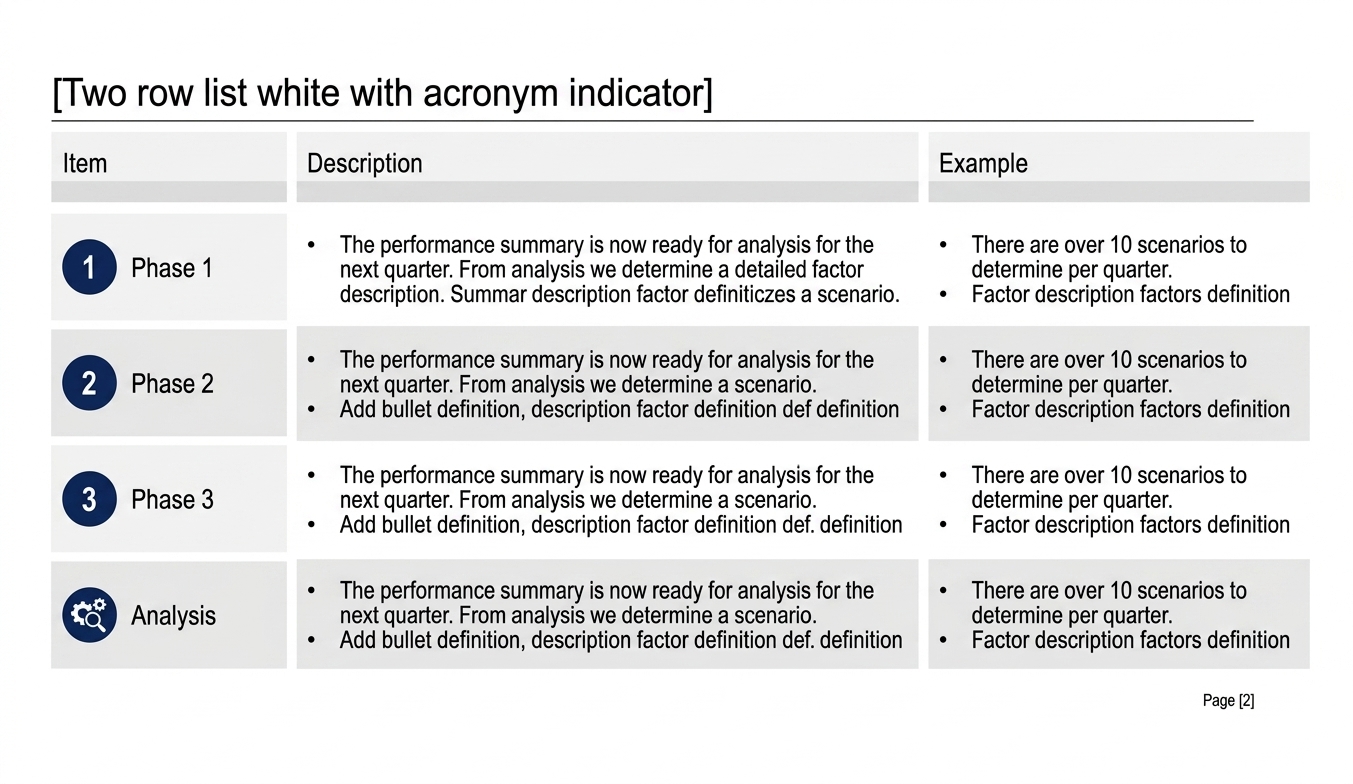
Board Action Tracker Layout Reference
Prompt Recipe For A Board Deck Generator
Create a 12-slide board deck for a quarterly board meeting. Audience: board of directors, CEO, CFO, and business unit leaders. Company context: PE-backed B2B software company slightly below plan on EBITDA but ahead on enterprise pipeline. Decision needed: approve a revised hiring plan, a narrower international expansion scope, and a product reliability investment. Include an answer-first executive summary, current performance snapshot, variance bridge, major strategic issue, management recommendation, supporting evidence, scenario sensitivity, top risks, capital implications, timeline and governance, explicit board asks, and appendix source-note placeholders. Use consultant-style action titles, concise board language, and editable PowerPoint-style structure instead of decorative AI slides.
Common Board Deck Failure Modes
The first failure mode is over-reporting and under-recommending. Management fills the packet with KPI pages, but the board still has to guess what management wants to do. That creates a passive meeting where directors reconstruct the decision themselves, often with less context than the team that prepared the materials.
The second failure mode is mixing operational detail with board-level judgment indiscriminately. Board packets should not read like functional team notes. They need enough evidence to support the recommendation, but the main flow should stay at the altitude of management choices, material variances, and significant risks. Details that only matter if challenged should sit in appendix backup pages.
The third failure mode is tone. Some decks sound defensive. Others sound promotional. A good board packet sounds controlled. It should acknowledge where performance is soft, where assumptions are uncertain, and where management still has open items. Directors trust a deck more when it names the hard parts directly.
Frequently Asked Questions
What should a board deck include?
At minimum, include an answer-first summary, current performance context, variance explanation, the issue requiring board attention, management's recommendation, supporting evidence, the major risks, and the explicit board asks.
How is a board deck different from an investor update?
A board deck is more decision-oriented and governance-oriented. It needs to frame approvals, oversight questions, and management judgment more directly than an investor update, which often focuses on progress communication and confidence building.
Can AI generate a good board presentation?
AI can generate a strong first draft when the audience, metrics, decision ask, and risks are clearly defined. The final deck still needs executive review for accuracy, tone, legal sensitivity, and whether the recommendation is truly ready for board discussion.
What is the biggest mistake in board deck writing?
The most common mistake is forcing directors to infer the real issue from too many status slides. A board packet underperforms when it delays the recommendation, reports numbers without implications, or hides material risks until late in the discussion.
Final Review Checklist Before Sending The Board Packet
Build The First Draft In XLSlides
Use XLSlides to turn board prep notes, KPI exports, budget commentary, operating updates, and recommendation memos into an editable board deck with action titles, executive summary pages, risk framing, governance follow-through, and PowerPoint-ready structure.