Direct Answer: What An Operating Review Presentation Should Do
An operating review presentation should help leadership understand what changed, why it changed, what management plans to do next, and which decisions or escalations are required now. It is not a ceremonial KPI readout, a polished archive of team activity, or a board packet in disguise. A serious operating review is the management system that turns monthly or quarterly performance into action while there is still time to intervene.
For CFOs, FP&A teams, chiefs of staff, operators, and PE-backed executives, the deck has to work under time pressure. Leaders usually skim the pre-read, jump to the pages where plan variance is largest, and ask whether the business understands the driver behind the number. If a slide only reports that revenue missed plan or implementation backlog increased, the review has not done its job. The page needs to separate symptom from cause and connect both to an owner-backed response.
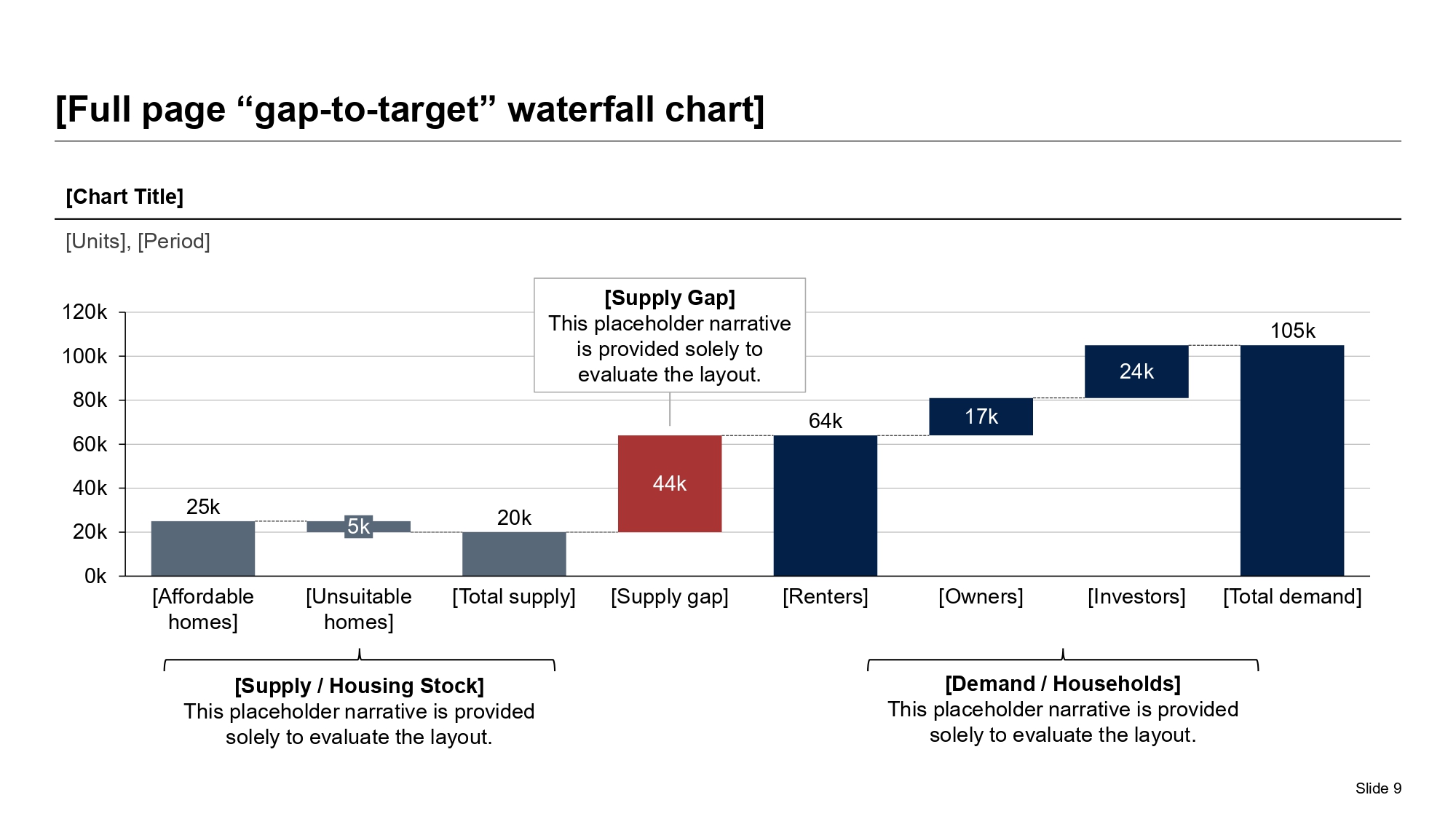
The strongest operating reviews therefore behave like decision documents. They open with answer-first headlines, show the variance bridge between plan and actual, isolate the operating or commercial driver, and make the next management action explicit. They also respect recurrence. An operating review is not a one-off strategy deck. It must be repeatable every month, stable enough to compare across periods, and editable enough that finance and operating leaders can update the story without rebuilding the deck from scratch.
Key Takeaways
- A useful operating review explains variance, decisions, and follow-through rather than listing metrics without interpretation.
- The deck should distinguish internal management cadence from board governance, investor communication, and customer-facing QBRs.
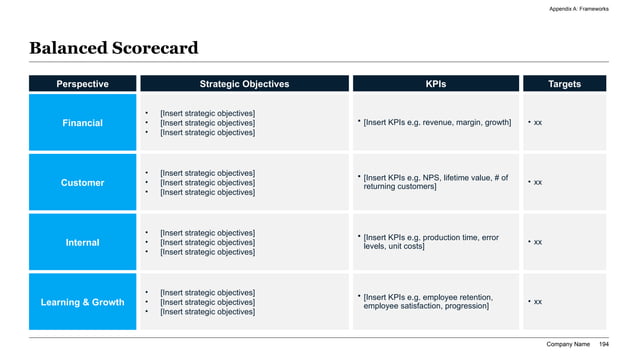
- The best reviews combine a stable scorecard structure with page-level action titles that explain what changed this period.
- AI is valuable for drafting the first narrative from spreadsheets and notes, but leaders still need to judge causality, accountability, and escalation.
Balanced Scorecard Review Architecture
Operating Review Vs. QBR Vs. Board Deck Vs. Investor Update
These decks often share data, but they solve different management jobs.
| Deck Type | Primary Audience | Main Question | What Good Looks Like |
|---|---|---|---|
| Operating review | CEO, CFO, COO, FP&A, business leaders | What changed operationally and what action do we take now? | Tight variance explanation, owner accountability, and near-term intervention plan |
| QBR | Customer, account team, sponsor | What value did the customer get and what should happen next quarter? | Customer outcomes, risks, renewals, and shared next-quarter plan |
| Board deck | Directors, CEO, CFO | What does the board need to approve, challenge, or monitor? | Governance framing, board asks, sharper risk treatment, and management judgment |
| Investor update | Current or prospective investors | How is the company progressing and what changed in the business story? | Transparent but selective narrative focused on traction, cash, milestones, and confidence |
Why Most Operating Reviews Fail Even When The Data Is Accurate
Many operating reviews fail because they confuse information completeness with management usefulness. Teams spend days collecting numbers, aligning spreadsheets, and refreshing charts, then walk into the meeting with a deck that still does not explain what anyone should conclude. Accurate data is necessary, but it is not enough. The meeting fails when the audience still has to ask basic questions such as which driver matters most, whether the gap is structural or temporary, and who owns the recovery action.
Another common failure is activity reporting. Functional leaders describe what they did during the month instead of what happened in the business. A sales team may list pipeline programs, an operations team may list workstream milestones, and a product team may list releases. None of that is automatically wrong, but the management team needs the impact first. Did bookings conversion improve, did backlog clear, did cycle time drop, did implementation margin recover, and did customer churn risk change? The operating review should force activity to justify itself in performance terms.
The third failure is weak escalation logic. Some issues belong inside the function. Others need a cross-functional decision, capital allocation, or leadership intervention. A mature operating review distinguishes those levels clearly. If every slide ends with vague next steps, leadership cannot tell whether a number is being watched, worked, or escalated. That is why strong operating reviews feel more analytical and more operational than generic business presentations. They exist to focus leadership time on the gaps that matter most.
Inputs To Assemble Before You Draft The Review
Variance Bridge And Driver Logic Reference
Recommended 12-Slide Operating Review Sequence
This sequence is designed for recurring internal management reviews rather than one-off strategy projects.
| Slide | Purpose | Executive Question Answered |
|---|---|---|
| 1. Executive summary | State the period result, the main driver, and the actions required | What happened and what needs attention? |
| 2. Company scorecard | Show the handful of metrics that summarize business health | Where are we ahead or behind plan? |
| 3. Variance bridge | Explain the movement from plan or prior period to actual | What specifically drove the gap? |
| 4. Commercial performance | Cover pipeline, bookings, pricing, mix, or retention changes | What changed on the demand side? |
| 5. Delivery or operations performance | Show throughput, backlog, quality, or cycle-time shifts | What changed operationally? |
| 6. Customer health | Highlight churn, NPS, implementation, or service issues | Are customer risks growing or easing? |
| 7. People and capacity | Surface staffing, utilization, hiring, or management bandwidth constraints | Do we have the capacity to execute? |
| 8. Cash and capital | Link performance to liquidity, working capital, or investment use | What is the financial consequence? |
| 9. Strategic initiatives | Track the few initiatives that could change the next quarter outcome | Are the interventions moving? |
| 10. Risks and escalations | Name the issues that now need leadership attention | What requires a cross-functional decision? |
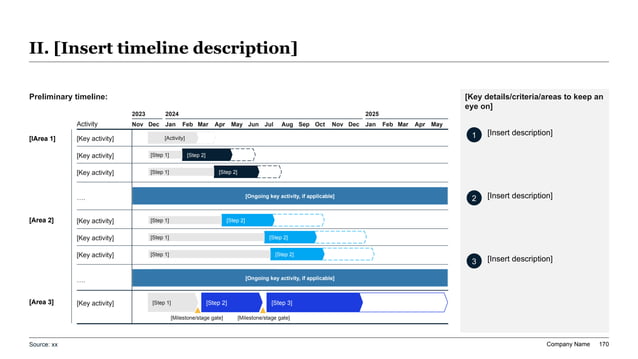
| 11. Action register | Assign owners, due dates, and milestones for the next period | Who will do what before the next review? |
| 12. Appendix or backup | Store supporting detail without cluttering the main flow | Where is the backup if leaders want more detail? |
Open With Variance, Not Activity
The opening pages of an operating review should tell management what changed in the business and why the change matters. Teams often waste the most valuable real estate on descriptive agenda pages, recap bullets, or an exhaustive list of workstream updates. That pushes the real issue to the middle of the deck, which is exactly where busy executives stop reading closely. The better pattern is simple: summarize the period outcome, identify the key variance, explain the biggest driver, and state the action or decision required.
This discipline matters because leaders use operating reviews to allocate attention. If EBITDA is down because implementation overrun offset price gains, say that in the title. If backlog improved but service quality worsened, say that in the title. If the company is broadly on plan except for one region, one product line, or one cost category, the opening should make that visible immediately. The executive summary is not there to be polite to every function. It is there to prioritize the conversation.
A practical rule is that every opening slide should answer one of four questions: what happened, why it happened, what management is doing, or what decision is needed. Any page that cannot pass one of those tests probably belongs in the appendix. This is where action titles matter. A title such as Revenue Performance or Operations Update is too vague. A title such as New bookings missed plan because enterprise deal cycles extended by three weeks tells leadership what to focus on before they look at the chart.
Forward Actions And Timing Sidebar
Core Scorecard Blocks For A Serious Operating Review
The scorecard should match management control, not just data availability.
| Scorecard Block | Example Metrics | Why It Belongs In The Review |
|---|---|---|
| Financial performance | Revenue, gross margin, EBITDA, cash conversion | Shows whether the business is economically on track |
| Commercial engine | Pipeline coverage, win rate, pricing, retention, expansion | Explains the demand and revenue side of the story |
| Delivery health | Backlog, cycle time, utilization, SLA attainment, defect rate | Shows whether the operating model can fulfill the plan |
| Customer health | Implementation status, NPS, escalations, support backlog, churn risk | Surfaces future revenue and reputation risk early |
| People and capacity | Hiring fill rate, attrition, manager span, bench, overtime load | Clarifies execution constraints before they become financial misses |
| Cash and capital | Burn, working capital, capex, collections, covenant headroom | Links performance to solvency and investment choices |
| Strategic initiatives | Milestone completion, value capture, owner status, blockers | Keeps interventions visible between board meetings |
Prompt Recipe For An Operating Review Presentation
Create a 12-slide operating review presentation for an executive audience. Audience: CEO, CFO, COO, chief of staff, and business unit leaders at a PE-backed B2B services company. Period: April monthly operating review. Business context: revenue is slightly above plan, EBITDA is below plan because implementation costs and overtime rose, backlog improved in one region but worsened in another, and cash collections slipped versus target. Include an answer-first executive summary, company scorecard, variance bridge, commercial performance, delivery performance, customer risk, people and capacity, cash implications, strategic interventions, risks and escalations, owner-based action register, and appendix placeholders. Use consulting-style action titles, source-note placeholders for every claim, and editable PowerPoint-ready structure instead of decorative AI slides.
Build A Monthly Cadence That Forces Real Ownership
The review process matters almost as much as the slides. If teams submit commentary at the last minute, finance ends up ghostwriting every page and the meeting turns into a live fact-finding exercise. A better cadence starts several days before the review with a fixed scorecard cutoff, a small set of page owners, and a rule that every material miss must include both a driver explanation and a proposed action. That forces functions to arrive with a view, not just a number.
One effective operating model is to lock the scorecard first, then circulate a lightweight action memo, then build the deck. Finance or the chief of staff can use the memo to identify which issues deserve a full slide and which belong in backup. That avoids the common trap where every function insists on equal deck space regardless of business impact. Good operating reviews are selective. They expand only the areas where leadership attention can still change the next result.
The cadence should also preserve memory across periods. If a problem appeared last month, the current review should show what changed since then. Repeated issues without visible follow-through are one of the clearest signs that the review is not functioning as a management mechanism. A simple action register with owners, deadlines, and status is often enough to fix that. It turns the review from a monthly status ritual into a recurring accountability system.
Owner And Capacity Planning Reference
Red Flags That Tell You The Review Is Performing Theater
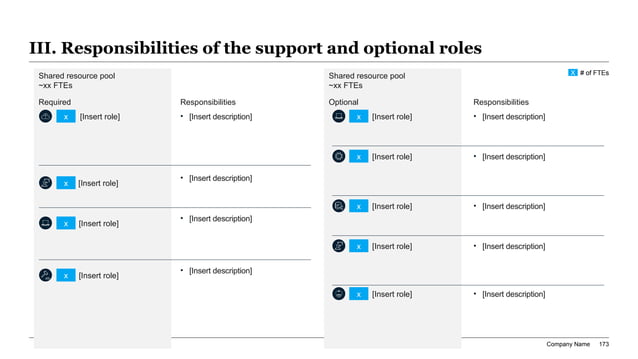
Who Should Read, Attend, And Edit The Deck
The review works best when each role has a clear job before and during the meeting.
| Role | What They Should Contribute | What They Should Care About Most |
|---|---|---|
| CEO or GM | Set the management priorities and decide what needs escalation | Whether the business is converging on the right actions |
| CFO or FP&A lead | Own the scorecard, bridge logic, and financial implications | Whether numbers are decision-ready and economically coherent |
| COO or operations leader | Explain throughput, quality, backlog, and execution constraints | Whether operating fixes are feasible and timely |
| Business unit leaders | Provide causal commentary and the intervention plan for their area | Whether their issues are framed honestly and with ownership |
| Chief of staff | Shape the narrative, action register, and follow-up process | Whether decisions are captured and carried into the next cycle |
| PE operating partner or sponsor | Challenge the logic and calibrate which issues need board visibility | Whether management is surfacing the right problems early enough |
What AI Should Automate In The Review Workflow And What Humans Must Still Judge
AI is useful in operating reviews because the inputs are repetitive and fragmented. There are spreadsheets, forecast files, issue logs, prior action registers, budget commentary, and scattered leadership notes. XLSlides can turn those inputs into a first draft with a scorecard layout, proposed action titles, variance-bridge placeholders, and a cleaner section flow. That is valuable because the management team should spend its time debating causes and decisions, not reformatting the same deck structure every month.
What AI cannot reliably do on its own is determine causality, political sensitivity, and escalation threshold. A model may summarize that services margin is down, but it cannot know whether the true cause is one exceptional project, a bad pricing rule, a staffing gap management has avoided naming, or a temporary accounting timing issue. It also cannot decide whether a problem belongs in the operating review, should be taken directly to the board, or should stay inside the function for another cycle.
The right operating model is to automate drafting and standardization, then apply human judgment where the stakes are real. Use AI to structure the scorecard, draft first-pass commentary, and create editable PowerPoint-style pages. Then let finance and operating leaders rewrite the action titles, validate the bridge logic, remove unsupported claims, and sharpen the action register. That division of labor is where AI meaningfully improves the review instead of making it sound generic.
XLSlides Tools And Guides For Recurring Reviews
Action Title Rewrite Training Reference
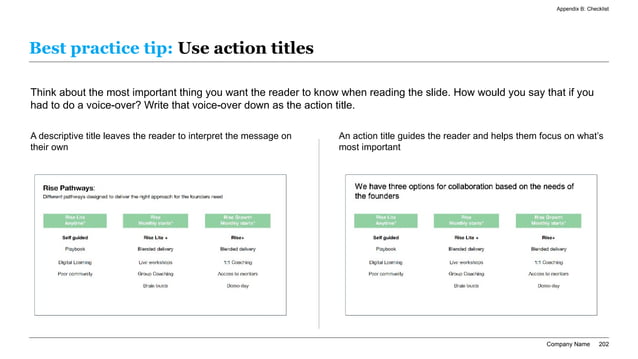
Action Title Rewrites For Common Operating Review Slides
Rewrite descriptive labels into management conclusions that speed the meeting.
| Weak Topic Label | Stronger Operating Review Title | Why The Rewrite Works |
|---|---|---|
| Revenue | Revenue exceeded plan, but mix shifted toward lower-margin implementation work | It links topline performance to the next economic question |
| EBITDA | EBITDA missed plan because overtime and rework erased commercial gains | It identifies the driver rather than repeating the symptom |
| Hiring | Delivery capacity will remain constrained until manager hiring closes in two regions | It connects headcount to execution risk |
| Renewals | Renewal risk is concentrated in five accounts with unresolved implementation issues | It narrows attention to the issue set that matters |
| Backlog | Backlog improved in the East but worsened in the West because scheduling discipline is uneven | It turns one metric into a diagnostic statement |
| Cash | Collections slippage now makes receivables the fastest lever for protecting runway | It shows the management implication of the number |
Final Review Standard Before The Deck Goes To Leadership
Before sending the pre-read, review the deck in three passes. First, read only the action titles. They should tell a coherent story about performance, causality, and response. If the titles look like topic labels, the meeting will be slower and more argumentative because leaders will have to infer the message themselves. Second, review the largest gaps and ask whether each one has both a bridge explanation and an owner-backed next step. If either is missing, the page is still incomplete.
Third, pressure-test the deck for audience fit. A management operating review should be tighter and more operational than a board deck. It should be more internal and more diagnostic than an investor update. It should be less customer-facing than a QBR. If the presentation sounds too polished, too promotional, or too governance-heavy, the wrong format is bleeding into the deck. Recenter it on management control and near-term action.
Finally, keep the file editable and reusable. The point of an operating review workflow is not to create one beautiful artifact. The point is to create a repeatable management document that gets sharper every cycle. XLSlides is useful here because the structure can stay stable while the numbers, titles, and interventions change. That is exactly how serious executive review systems compound value over time.
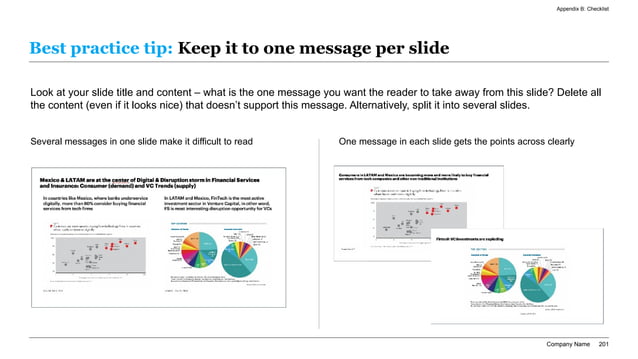
One Message Per Slide Critique Reference
Create The First Draft In XLSlides
Use XLSlides to turn KPI exports, budget commentary, action logs, and functional updates into an editable operating review deck with variance bridges, owner-based actions, and PowerPoint-ready structure.