Direct Answer: What A CFO Board Presentation Must Actually Do
A serious CFO board presentation should do more than show the latest dashboard. It should tell directors what changed, why it changed, how material the change is, what management recommends next, and what the board needs to approve, pressure-test, or monitor. If the finance pages only restate KPI tiles and budget lines, the board will reconstruct the story on its own, usually in the meeting, under time pressure, and often with less context than the management team had when preparing the materials.
That is why CFO board work sits between two different reporting jobs. It is more finance-disciplined than a broad strategy deck because the evidence standard is tighter and the board will challenge definitions, timing, comparability, and implied assumptions. At the same time, it is more governance-oriented than an internal operating review because the point is not merely to explain performance. The point is to frame how that performance changes management judgment and what consequences follow for capital allocation, hiring, risk appetite, and board oversight.
For XLSlides, this is a strong workflow fit because the raw inputs are repetitive and messy: dashboards, screenshots, budget-versus-actual commentary, controller notes, business-unit explanations, prior board commitments, and last-minute CEO edits. AI should accelerate the first structured draft by converting those materials into action titles, a credible finance narrative, bridge pages, and editable PowerPoint-style output. Human CFO judgment still decides whether the story is complete, appropriately candid, and politically ready for the room.
Board Cover And Signal Setting Reference

Key Takeaways
- A CFO board presentation should interpret the numbers, not merely display them.
- The opening finance summary needs a verdict, the main variance driver, the management recommendation, and the explicit board ask.
- Board-facing finance slides should separate timing noise from structural issues and connect both to decisions.
- Bridge charts, KPI scorecards, and appendix discipline matter more than decorative slide design.
- AI is most valuable when it drafts a structured finance storyline from dashboards and commentary while keeping the deck fully editable for CFO and CEO review.
CFO Board Presentation Vs. Budget Review Vs. Board Pack Vs. Operating Review
These formats overlap, but the finance board story is its own job. Treating them as interchangeable is why many executive packets feel confused.
| Format | Primary Audience | Main Question | What Must Be Visible Early |
|---|---|---|---|
| CFO board presentation | Directors, CEO, CFO, audit or finance committee | What do the latest financial signals mean for board judgment and management action? | Finance verdict, main variance, recommendation, board ask |
| Budget vs actual review | CFO, CEO, FP&A, business leaders | Where are we off plan and what operational or forecast change is required? | Largest variance, economic driver, updated outlook |
| Broad board pack | Full board and executive leadership | What should directors approve, challenge, or monitor across the business? | Decision asks, performance state, major risks, recommendation |
| Operating review | Management team and functional owners | What changed in execution and who owns the fix? | Root cause, owner, timing, intervention plan |
| Investor update | Existing or prospective investors | How is the company progressing and what should external stakeholders believe now? | Milestones, KPI trend, confidence level, support needed |
Why Finance Dashboards Fail In The Boardroom
The common mistake is assuming the dashboard is the slide. It is not. A dashboard is a data surface. A board slide is a judgment document. Directors are rarely asking for more raw metrics; they are asking whether the business is on track, why management believes the current trend is acceptable or unacceptable, and whether they should approve a different operating posture. A screenshot without interpretation leaves all the actual board work unfinished.
The second mistake is compressing too many financial movements into one headline. Revenue may be ahead, margin behind, EBITDA down, and cash temporarily tight. Those do not all matter equally. A useful CFO board presentation ranks the signals and explains which one changes the board conversation. Sometimes the main story is a margin issue disguised by topline strength. Sometimes it is working-capital timing that increases governance sensitivity even though the P&L looks acceptable. The deck must make that hierarchy explicit.
The third mistake is explaining the variance without stating the implication. If backlog rose, what happens next? If collections slipped, does runway change? If services mix moved, should management slow hiring, pause expansion, or accept a short-term EBITDA hit because the strategic tradeoff is still worth it? Finance communication becomes executive communication only when the slide moves from numbers to consequences.
Inputs To Gather Before Drafting The CFO Board Deck
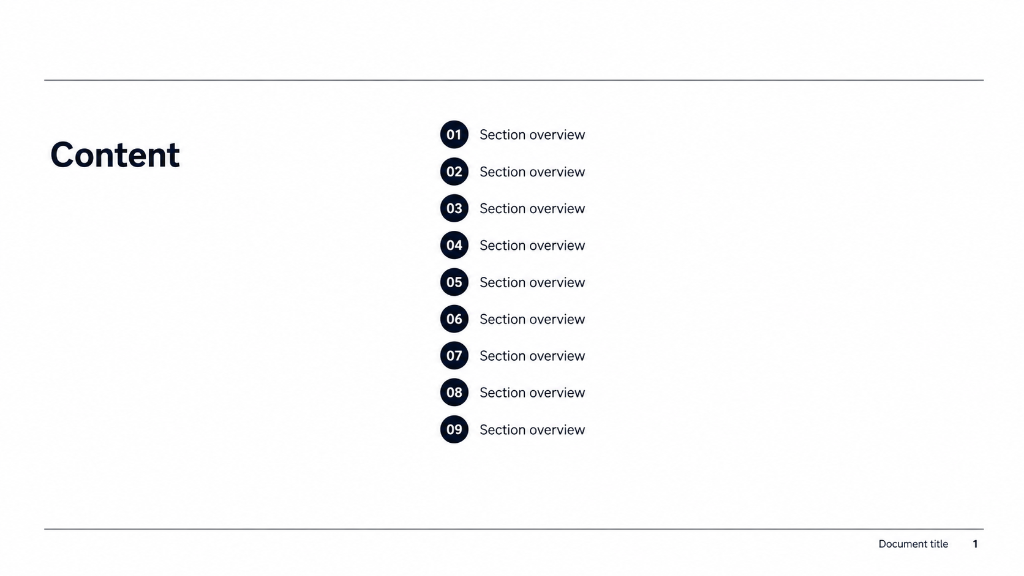
Board Navigation And Sectioning Reference
Questions Directors Expect The CFO Slide To Answer
If the page does not answer these quickly, the board will ask for the spreadsheet or delay the real discussion.
| Director Question | What The Slide Should Show | What Weak Pages Usually Miss |
|---|---|---|
| What changed versus plan or versus the last board packet? | A sharp performance verdict and the few deltas that moved the story | A wall of KPIs with no prioritization |
| Why did the number move? | Driver-level explanation with evidence and management interpretation | A generic label such as macro or execution |
| Is this temporary or structural? | Timing call, trend evidence, and risk to the next period | No distinction between slippage and broken assumptions |
| What is management recommending now? | Explicit financial or operating response tied to the metrics | Implied actions hidden in narrative text |
| What does the board need to approve or monitor? | A named board ask with timing and consequence | A vague next-steps label with no governance mechanism |
| What backup exists if challenged? | Appendix references for cash, bridge logic, segment detail, and forecast assumptions | No backup plan beyond the dashboard screenshot |
How To Translate A Dashboard Into A Board Narrative
Start by writing the board verdict in plain language before touching layout. A good sentence sounds like this: revenue finished ahead of plan, but the mix shift into lower-margin implementation work pulled EBITDA below plan and makes a short-term hiring gate the right move until backlog normalizes. That sentence gives every chart a role. Without it, the board sees isolated metrics rather than a single finance judgment.
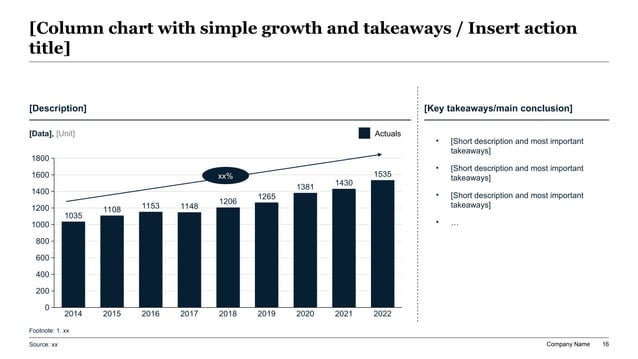
Next, isolate the minimum evidence needed to support the verdict. The board usually needs a scorecard, a bridge or trend chart, one view that shows whether the issue is concentrated or broad, and a recommendation page that connects the finance signal to management action. Everything else should be appendix material unless it changes the decision. This is the discipline most finance teams skip when they try to preserve every dashboard tile on the main page.
Finally, decide what belongs to the CFO slide versus the broader board pack. The CFO section should answer what changed in financial performance, why it matters, and what the management recommendation means for cash, profitability, growth, and oversight. It should not try to absorb every commercial or operating detail itself. A board-ready deck gets stronger when finance evidence is precise and the storyline around it stays narrow.
KPI Trend And Commentary Reference
Recommended 10-Slide CFO Board Presentation Sequence
Use this when the finance section is a major part of the board packet rather than a short appendix add-on.
| Slide | Purpose | Board Question Answered |
|---|---|---|
| 1. Finance summary | State the verdict, main driver, and board ask | What should we know first? |
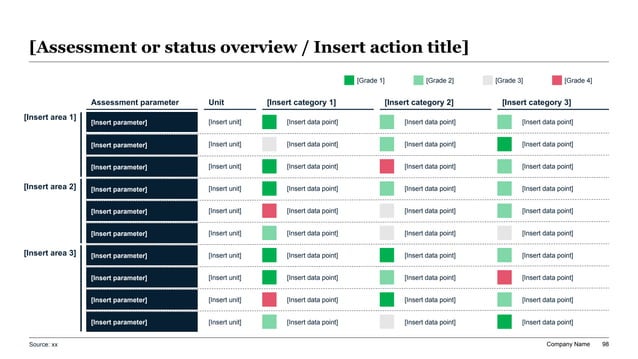
| 2. KPI scorecard | Show plan, actual, and latest forecast for the few core metrics | Which numbers matter most now? |
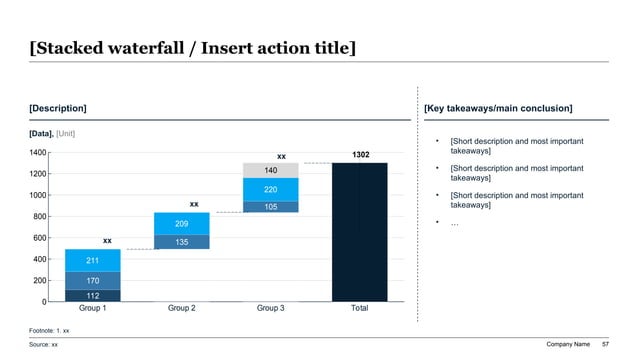
| 3. Variance bridge | Explain the movement from plan to actual | Why are we above or below plan? |
| 4. Cash and liquidity view | Show runway, collections, working capital, or covenant implications | How much flexibility do we really have? |
| 5. Concentration cut | Show which unit, region, segment, or initiative is driving the signal | Where is the issue actually coming from? |
| 6. Forecast reset | Present the updated base case and assumptions | Should the board believe the outlook has changed? |
| 7. Risk and sensitivity | Bound the downside and the key triggers | What could still go wrong? |
| 8. Management recommendation | Translate the numbers into a capital, hiring, pricing, or sequencing decision | What does management want to do? |
| 9. Board asks | List approvals, guidance requests, or watch items | What are we being asked to decide? |
| 10. Appendix | Preserve detailed backup without slowing the main storyline | Where is the proof if challenged? |
Prompt Recipe For A CFO Board Presentation
Create a 10-slide CFO board presentation for a monthly board pack at a PE-backed B2B software and services company. Audience: board of directors, CEO, CFO, and audit/finance committee. Situation: revenue finished 4% above plan, but EBITDA landed 24% below plan because services mix expanded, backlog rose, collections slipped, and two strategic hires pulled forward costs. Decision needed: approve a temporary hiring gate, a 45-day international expansion pause, and a targeted pricing and delivery recovery plan. Include an answer-first finance summary, KPI scorecard, variance bridge, cash view, concentration cut, forecast reset, downside sensitivity, management recommendation, explicit board asks, and appendix source-note placeholders. Use consultant-style action titles, plain finance language, and editable PowerPoint-style structure.
Variance Bridge Reference
Action Title Rewrite Matrix For CFO Board Slides
Board readers should not have to infer the meaning of a finance page from a neutral topic label.
| Weak Topic Label | Stronger CFO Board Title | Why The Rewrite Works |
|---|---|---|
| May financial performance | May revenue outperformed, but delivery mix compressed EBITDA below board tolerance | It states the result and the board implication immediately |
| Cash update | Collections slippage narrows short-term flexibility until June cash recovery is proven | It turns cash into a governance signal rather than a metric recap |
| Forecast review | The full-year plan still holds only if backlog falls within six weeks and hiring stays gated | It exposes the assumptions behind management confidence |
| Expansion plan | Management recommends pausing the EMEA launch until support capacity and collections stabilize | It makes the recommendation explicit |
| Risks | Margin recovery depends more on staffing discipline than on demand improvement this quarter | It identifies the real operating pressure behind the risk label |
| Next steps | The board is asked to approve the hiring gate, launch pause, and June cash checkpoint today | It converts a vague close into a concrete board ask |
What Belongs In The Main Flow And What Belongs In Appendix
The main flow should carry only the information required to support board judgment. That usually means the finance verdict, the key metrics, the bridge logic, the outlook, the recommendation, and the board ask. If a page does not change the way directors interpret the situation or the recommendation, it probably belongs in backup. This is how you keep a CFO section crisp without becoming superficial.
Appendix pages matter because finance credibility often depends on what happens after the first question. When directors challenge a variance, they may want to see the weekly cash bridge, business-unit mix, headcount phasing, or customer concentration cut. Those pages are essential, but they should not sit in the core storyline unless they materially alter the conclusion. Good board prep assumes the challenge and stores the proof in an organized appendix rather than stuffing every detail into the main deck.
A practical test is to ask whether the board could make the intended decision by reading only the titles and the first page of each section. If not, the main flow is still too dashboard-led. The appendix should answer the next layer of questions, not rescue a weak headline story.
Main-Flow Test Before The CFO Slide Goes To The Board
KPI Scorecard Reference
Choose The Right Chart For The Finance Question
The best CFO slides match the visual to the board question instead of defaulting to whatever the dashboard exported.
| Board Question | Best Visual | Why It Works |
|---|---|---|
| What explains the gap from plan to actual? | Waterfall bridge | Shows the contribution of each driver to the final delta |
| Is the business trending up or down against plan? | Plan versus actual trend chart | Makes timing and inflection points obvious |
| Where is the problem concentrated? | Ranked bar chart or segmented scorecard | Pulls focus to the units or metrics driving the issue |
| Did the forecast change meaningfully? | Actual plus forecast comparison chart | Separates observed performance from the revised management view |
| What should the board approve today? | Decision panel or action register | Turns analysis into a governance mechanism |
| What backup will likely be challenged? | Appendix table | Preserves detail without cluttering the main finance story |
What AI Should Automate In The CFO Board Workflow
AI should automate the presentation mechanics that consume time but do not require board judgment. That includes drafting action titles from spreadsheet commentary, converting KPI deltas into short narrative blocks, proposing a board-friendly slide sequence, and packaging the first draft into editable PowerPoint-style pages. This saves finance teams from spending the last two days before the board meeting formatting dashboards by hand.
What AI should not automate blindly is the actual management judgment. The model does not know whether a variance explanation is politically complete, whether a forecast reset is defensible, whether a risk should be framed as temporary, or whether a board chair will interpret the recommendation as aggressive or cautious. Those calls still belong to the CFO, CEO, and chief of staff. The right AI workflow creates a sharper draft, faster, and then hands the file back to human operators for judgment-level revision.
This is why XLSlides should be positioned as a serious business deck workflow rather than a generic pretty-slides generator. The value is not that it adds design flair to dashboards. The value is that it helps finance teams turn fragmented evidence into a structured board narrative that can survive scrutiny, remain editable, and move cleanly from management prep into board discussion.
XLSlides Resources For CFO And Board Reporting Workflows
Short Answers For CFO Board Reporting Teams
What should the first CFO board slide say?
It should state the financial verdict, the main driver behind it, whether the issue is temporary or structural, what management recommends next, and the exact board ask.
How is a CFO board presentation different from a budget review deck?
A budget review is usually finance-led and management-facing. A CFO board presentation is governance-facing. It has to translate the same numbers into capital, risk, and oversight implications for directors.
Can AI build a good CFO board presentation?
AI can build a strong first draft when the audience, metrics, variance drivers, recommendation, and board ask are clearly defined. Human review is still required for causality, tone, legal sensitivity, and whether the recommendation is truly ready for the board.
Which visuals work best for board finance slides?
Usually a KPI scorecard, a bridge chart, a trend chart, and a simple action register. The point is to match each visual to a director question rather than pasting the full dashboard into the packet.
Follow-Through Tracker Reference
Draft The CFO Board Presentation In XLSlides
Use XLSlides to turn dashboards, budget commentary, cash views, board-prep notes, and management recommendations into an editable CFO board presentation with answer-first headlines, variance bridges, board asks, and PowerPoint-ready structure.