XLSlides
Episode premiere: 14 November 2026 at 7:30 am IST. Read the full case study before the premiere.
A watchdog’s urgent memo
On Friday 11 December 2020, the Inspector General of the U.S. General Services Administration, Carol Ochoa, sent a four-page memorandum to the agency’s head. GSA buys goods and services for the federal government, and the memo said the matter “warrants your immediate attention”. It concerned one contract, held by Boston Consulting Group. GSA had extended BCG’s schedule contract without determining that its prices were fair and reasonable, and the Inspector General estimated that $860 million in sales were at risk of overpayment. She recommended that GSA cancel the contract immediately. This case is about a price that was never shown to be fair, and the decisions that kept it in use.
The client
The client here was a buyer, not a business. According to the Inspector General’s office, federal agencies spent more than $39 billion in a single fiscal year through GSA’s Multiple Award Schedules. A schedule works like a government price list: GSA negotiates prices with a firm once, and agencies can then order without negotiating the base prices again.
That only works if GSA has already checked the price. Its rules require a determination that prices are “fair and reasonable”, usually by comparing the firm’s offer with what it charges its best commercial customers. BCG had held a schedule contract since 2009 and priced its work by the team. In 2020 it reported global revenue of $8.6 billion.
The audit
In 2019, BCG’s contract came up for a five-year option. The Inspector General’s auditors examined its pricing in a preaward examination reported on 11 July 2019. They found that BCG’s commercial sales practices information was not accurate and was not a suitable basis for negotiation, in part because BCG had no commercial customers who bought services in the same way the government did.
The auditors therefore asked for a cost buildup: a breakdown of how the prices were built. According to the Inspector General, BCG refused to provide one. The auditors advised GSA to require the cost data or cancel the contract.
Cancel, then un-cancel
The contracting officer had already exercised the option in May 2019, extending the contract to July 2024, subject to renegotiation. After the audit, the officer asked BCG for the cost buildup, which did not arrive. On 30 January 2020 the officer issued a modification to cancel the contract, effective 29 February. Then, according to the memo, the GSA Ombudsman and a senior official in the Federal Acquisition Service asked the officer to withdraw the cancellation, to give agencies time to be notified. On 26 February the officer asked BCG once more; BCG offered only what it asserted was comparable commercial pricing information. On 27 February the cancellation was withdrawn, without a fair and reasonable pricing determination.
Source context: [1]
The pandemic exception
Then the pandemic arrived. In April 2020 the officer paused new work: BCG agreed not to quote for or accept new orders, except under its existing blanket purchase agreements. In June, an agency sought a waiver to use BCG’s schedule for a COVID-related service, and the waiver was granted. The Inspector General noted that there was no requirement to use BCG’s schedule contract for that work.
In July 2020, the contracting officer concluded that the new commercial information BCG had supplied in April did not support its proposed prices either. Even so, orders could continue under the existing purchase agreements until July 2024.
Source context: [1]
The memo
GSA’s Federal Acquisition Service gave three reasons for keeping the contract: BCG’s work was critical to agencies, its purchase agreements had been competed, and replacing them would cost agencies time and money. The Inspector General rejected all three. Cancelling the schedule would not bar BCG from federal work, because agencies could still buy its services by other means. And the purchase-agreement competitions had started from schedule prices that had never been determined to be fair.
The exposure was growing. In the year to 30 June 2020, BCG’s schedule sales exceeded $215 million, about $100 million more than in the year before. Projected to July 2024, the Inspector General estimated more than $860 million in sales at risk of overpayment.
Source context: [1]
Prove the price before you list it
- 01Find a comparator
Establish whether commercial customers buy the same service in the same way.
- 02If none, show the build
Provide labour categories, rates, overheads and profit so the buyer can test the price.
- 03Document every exception
Record why any extension, withdrawal or waiver proceeds without a determination, and set an end date.
The precedent
GSA had faced the same issue before. In July 2019, the Inspector General’s office reported on McKinsey’s schedule contract and estimated that improper pricing could cost the government about $69 million. That audit led to a review of all of the Federal Acquisition Service’s contracts with team-based pricing, including BCG’s. In 2020 GSA cancelled McKinsey’s schedule contract.
The principle is the same for every firm. If a supplier has no comparable commercial sales and will not show how its price is built, the government cannot call the price fair and reasonable.
Follow the money
Over the contract’s life, about $759 million in orders were obligated under BCG’s schedule contract, according to USAspending.gov. In its busiest year, according to the memo, schedule sales exceeded $215 million. Set against BCG’s $8.6 billion of global revenue, that was large for the schedule and small for the firm. The $860 million was never a fine, a penalty or a proven overpayment. It was the Inspector General’s estimate of future sales at prices that had not been shown to be fair. No public report reviewed for this article says how much, if anything, was overpaid.
The reckoning
Three months after the memo, GSA acted. On 19 March 2021, the contracting officer issued a modification cancelling BCG’s schedule contract, effective 18 April 2021, according to the Inspector General’s semiannual report to Congress. No one was charged. The findings concerned pricing data and GSA’s own decisions, not fraud. In December 2020, BCG told the legal news service Law360, as reported by Consultor, that it had given GSA thorough and complete explanations, that its work was essential, including support for the federal COVID-19 response, and that it would continue to answer GSA’s questions. A new GSA schedule contract for BCG began in October 2021; federal records show about $57 million in orders under it so far. The sources reviewed do not describe how that contract was priced.
THE SEQUENCE
A timeline of the case
Schedule contract begins
BCG’s GSA Multiple Award Schedule contract starts. [4]
Option exercised
The contract is extended to July 2024, subject to renegotiation. [1]
Preaward audit
The IG finds BCG’s commercial sales data unsuitable; according to the IG, BCG declines to provide a cost buildup. [1]
Cancellation issued
The contracting officer moves to cancel, effective 29 February. [1]
Cancellation withdrawn
Withdrawn after requests from the Ombudsman and a senior official, without a price determination. [1]
COVID waiver
An agency is allowed to use BCG’s schedule for a COVID-related service. [1]
Inspector General’s memo
The IG urges immediate cancellation, citing $860m in sales at risk. [1]
Contract cancelled
GSA cancels the schedule contract, effective 18 April 2021. [2]
New schedule contract
A new BCG schedule contract begins; about $57m in orders so far. [10]
Value pricing meets a public buyer
Strategy firms often price by the team or by the value of the outcome, not by the hour. That is a legitimate commercial choice, and many private clients prefer it. A public buyer is in a different position. GSA cannot simply agree that a price feels reasonable. Its rules require it to determine that the price is fair and reasonable, usually by comparing it with what the supplier charges its best commercial customers.
The difficulty in this case followed from that rule. According to the Inspector General, BCG had no commercial customers who bought services in the same way the government did, so there was no meaningful comparison. The auditors therefore asked for the next best evidence, a cost buildup showing how the price was built. According to the Inspector General, BCG refused to provide it. BCG said it had given GSA thorough and complete explanations. Whatever the reasons, the effect was that GSA had no basis for the determination its own rules required. The pricing strategy presentation guide is a useful reminder that a pricing model has to work for the buyer’s approval process as well as for the seller.
Every exception was a decision
The Inspector General’s memo reads as a sequence of exceptions. The option was exercised in May 2019, subject to renegotiation. A cancellation issued in January 2020 was withdrawn in February at the request of the Ombudsman and a senior official, to give agencies time to be notified. A pause on new orders in April allowed existing purchase agreements to continue. A pandemic waiver in June allowed a COVID-related service to be bought through the same schedule.
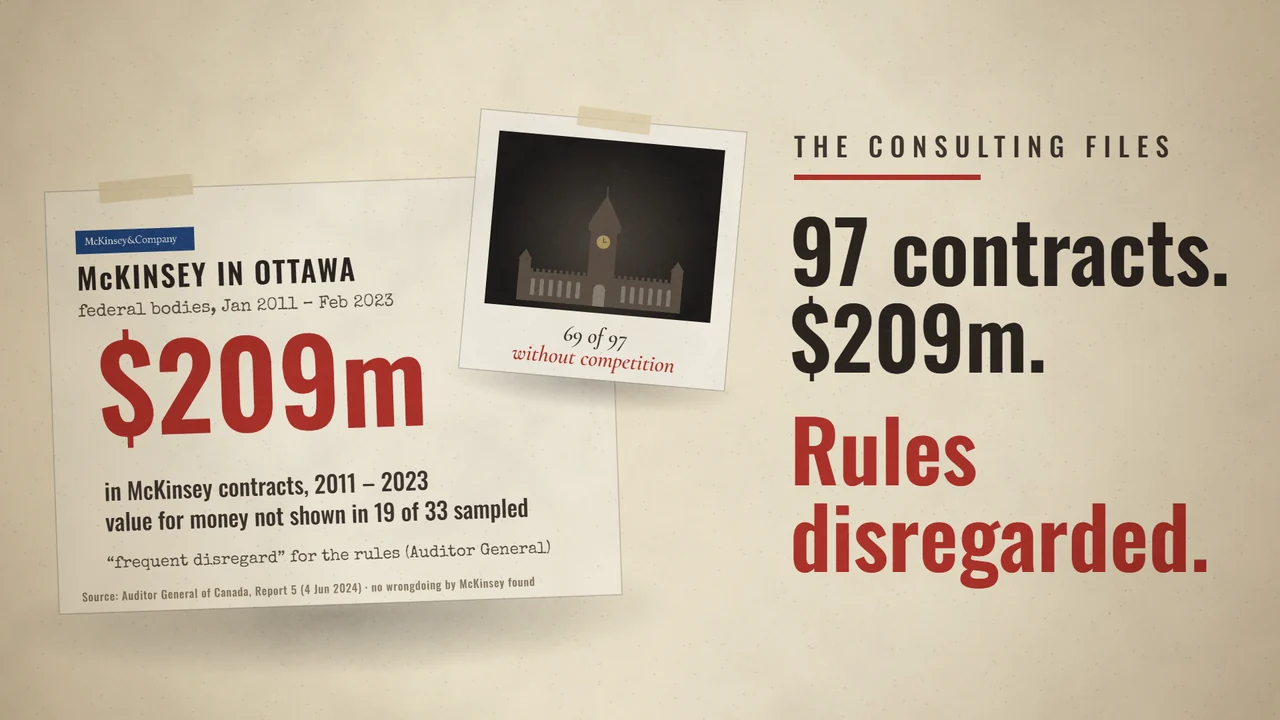
Each step had a plausible reason. Agencies needed notice, the pandemic was real and the purchase agreements had been competed. But each exception also kept the contract running without the price determination, and together they extended the exposure for more than a year. The practical lesson for any organisation is to give every exception an owner, a written reason and an end date. An exception without an end date tends to become the rule. The Canadian federal contracts case shows the same pattern from a different angle, where follow-on awards and non-competitive orders accumulated over time.
The $860 million was an estimate of exposure
The figure that made headlines was the Inspector General’s estimate that more than $860 million in sales were at risk of overpayment. It is important to read it correctly. It was not a fine, not a penalty and not a finding that BCG had overcharged. It was a projection of future sales, through July 2024, at prices that no one had shown to be fair. No public report reviewed for this article quantifies any actual overpayment.
That distinction is easy to lose in a headline, and responsible communication keeps it. Any presentation that uses this figure should label it as an estimate of exposure and state the basis: sales of more than $215 million in the year to June 2020, about $100 million more than in the previous year, projected forward to July 2024. A business case calculator can help make such projections transparent, showing the assumptions behind a large number so that readers can judge it.
Competition does not cure an unchecked starting price
One of GSA’s reasons for keeping the contract was that BCG’s blanket purchase agreements had been competed. The Inspector General’s answer was that those competitions started from schedule prices that had never been determined to be fair and reasonable. Competition among suppliers can reduce prices from a starting point; it cannot validate the starting point itself.
This is a useful principle well beyond federal procurement. Framework agreements, preferred-supplier lists and rate cards are all starting points. If the initial prices were never tested, later competitions or discounts may simply move around an unverified number. Buyers should check the baseline before relying on any process that builds on it.
The same rule applied to McKinsey
The case did not single out BCG. In July 2019, the Inspector General’s office estimated that improper pricing on McKinsey’s schedule contract could cost the government about $69 million, and GSA cancelled that contract in 2020. The McKinsey audit led to a review of all of the Federal Acquisition Service’s contracts with team-based pricing, which included BCG’s.
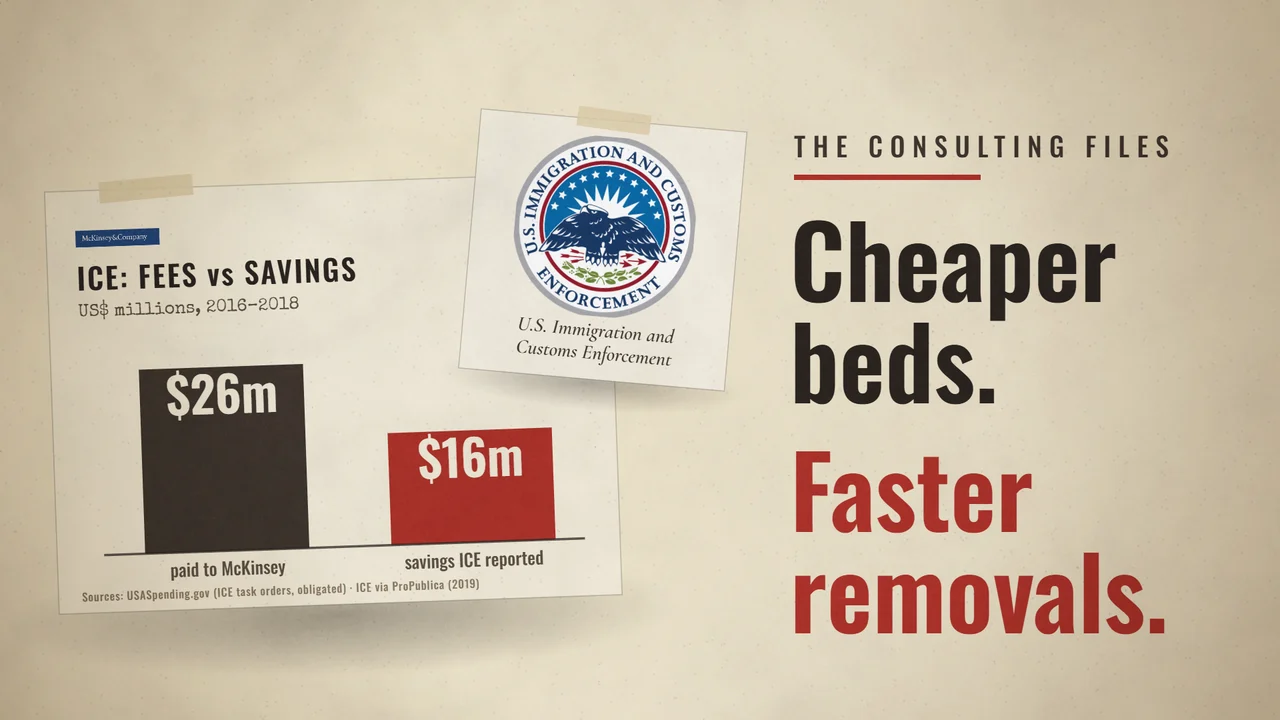
For firms, the lesson is that a pricing issue identified at one competitor is likely to be examined across the market. When a regulator or auditor questions a pricing model used by a peer, the prudent response is to review one’s own contracts on the same basis before the auditors arrive. The ICE detention-budget case shows a different kind of federal contract controversy, but the same point holds: federal work is examined in public, and patterns are noticed.
Show your workings early
The simplest way to avoid this outcome would have been to provide pricing evidence that the government could use. That does not mean disclosing every internal cost. It means offering enough structure, such as labour categories, rates, overheads and margins, for the buyer to make a reasoned determination. Firms that are unwilling to provide this should consider whether a price-list contract is the right vehicle for their work, rather than accepting one and then declining the evidence it requires.
A consulting proposal deck guide can help structure the commercial section of a public-sector proposal so that the price is explained, not just stated. The Test and Trace day-rate case shows how a single unexplained figure can become the focus of public criticism.
The watchdog reads the file
The final lesson is about records. Every step in this story, from the request to withdraw the cancellation to the waiver for a pandemic service, appears in the Inspector General’s memo because someone wrote it down. That is how public accountability is meant to work. It also means that every email, request and decision in a public contract may later be quoted.
For consultants, the takeaway is not to avoid documentation but to make sure the documentation shows a reasonable process. If the client asks for an exception, record why it was necessary and when it will end. If pricing evidence is requested, provide it or explain clearly why it cannot be provided. In this case, the work was not found to be poor. The problem was that no one could prove the price was fair, and in public procurement, that proof is part of the product.
TAKE IT INTO THE NEXT MEETING
Three practical lessons
Value pricing meets public rules
Pricing by outcome or by team is legitimate, but a public buyer must still show that the price is fair. If you will not show your workings, you are asking the buyer to break its own rules.
An exception is still a decision
A withdrawn cancellation and a pandemic waiver each kept the contract in use. Record who decided, why, and when the exception ends.
Assume the watchdog reads the file
Every request, waiver and withdrawal in this case was written down and later quoted. Make sure your correspondence with a public client can stand being published.
Questions about the case
Did BCG overcharge the U.S. government by $860 million?
No such finding exists. The $860 million was the Inspector General’s estimate of future sales at prices not shown to be fair and reasonable. No public report reviewed quantifies any actual overpayment.
What is a GSA schedule contract?
It is a long-term government price list. GSA negotiates prices once, and federal agencies can then order from it. GSA must first determine that the prices are fair and reasonable, usually by comparison with what the firm charges commercial customers.
What happened to BCG’s GSA contract?
GSA cancelled it on 19 March 2021, effective 18 April. A new GSA schedule contract for BCG began in October 2021; the sources reviewed do not describe how it was priced.
THE EVIDENCE TRAIL
Sources & editorial notes
Adapted from the original XLSlides documentary, with additional analysis. Published 13 November 2026. Sources have different roles: primary records, investigative reporting and the positions of affected parties.
- GSA Office of Inspector General: memorandum A180091 on BCG’s schedule contract, 11 December 2020 ↗Primary four-page memo: the audit, the cancellation and its withdrawal, the waiver, GSA’s reasons, the IG’s rebuttal and the $860m estimate.
- GSA Office of Inspector General: Semiannual Report to the Congress, October 2020 – March 2021 ↗Summary of the memo and the March 2021 cancellation, effective 18 April 2021.
- GSA Office of Inspector General: Semiannual Report to the Congress, April – September 2019 ↗Lists the 11 July 2019 preaward examination of BCG’s schedule contract.
- USAspending.gov: BCG schedule contract GS10F0253V ↗Official award data: contract dates and about $759m obligated in orders under the schedule.
- Consultor: BCG judged far too expensive by the U.S. General Services Administration, 28 December 2020 ↗French trade report quoting BCG’s statement to Law360.
- Law360: Watchdog urges axing BCG contract to avoid $860M risk, 14 December 2020 ↗Contemporaneous legal-news report; headline and introduction only, behind a paywall.
- Consulting.us: GSA stops McKinsey’s contract, 27 May 2020 ↗The McKinsey precedent: cancellation after the IG’s estimate of up to $69m.
- GSA Office of Inspector General: report on continued concerns about GSA contract pricing practices, 2022 ↗Context: more than $39bn spent through the schedules in a fiscal year.
- Consulting.us: Boston Consulting Group records $8.6 billion in revenue, March 2021 ↗BCG’s 2020 revenue; context, not evidence about the contract.
- USAspending.gov: BCG schedule contract 47QRAA21D00AU ↗Official award data for the new schedule contract signed in September 2021: about $57m obligated in orders.
Image credits & licences
Original illustrations and typography: XLSlides. Documentary stills have been resized and converted to WebP for this article. Underlying images retain the credits supplied with the episode.
- McKinsey logo: public domain (text logo), via Wikimedia Commons.
- XLSlides logo: XLSlides.
- People are shown as silhouettes and organisations as name cards; buildings, documents and everything else are drawn. Scenes marked "illustrative" are not to scale.
FROM EVIDENCE TO A RECOMMENDATION
Make the reasoning visible.
Use clear action titles, sourced exhibits and an explicit decision. XLSlides helps turn your analysis into an editable presentation; the evidence and judgment remain yours to verify.
Build a case-study presentation