Executive Context: Transforming the General Counsel Board Presentation from Reactive Legal Advice into Strategic Risk Governance
Key Fiduciary Takeaways for General Counsels, Chief Legal Officers, and Corporate Boards
- Replace Ambiguous Qualitative Phrases with Probabilistic Exposure Modeling: Eradicate empty phrases like 'vigorously defend' from board materials. Classify active commercial disputes across quantitative probability corridors (Remote <10%, Reasonably Possible 10%–50%, Probable >50%) and present Expected Monetary Value (EMV) decision trees balancing trial verdicts against mediated settlement thresholds.
- Rigidly Align Legal Disclosures with FASB ASC 450 Loss Reserve Accounting: Work in lockstep with the CFO, Corporate Controller, and external audit committee to ensure board litigation schedules harmonize with balance sheet accruals and footnote disclosures, establishing formal financial boundaries that preserve confidential settlement leverage.
- Govern Outside Counsel Spend as a Strategic Capital Budget, Not an Open Billable Tab: AmLaw 100 hourly billing rates inflating at 8%–12% annually represent a major governance failure. Mandate strict Legal Operations (Legal Ops) billing guidelines, electronic LEDES invoice auditing, and transition at least 45% of outside counsel spend into Alternative Fee Arrangements (AFAs), capped fee collars, and milestone-based fixed fees.
- Document Caremark Compliance Oversight via Objective Quantitative Dashboards: Satisfy the board's fiduciary duty of oversight by delivering empirical, recurring dashboards tracking corporate ethics hotline intake, investigation cycle times (target <30 calendar days), substantiated misconduct rates, and root-cause remediation under DOJ ECCP standards.
- Enforce Strict Attorney-Client Privilege Ringfencing & Executive Session Protocols: Treat written board decks as potentially discoverable documents. Redact highly sensitive bottom-line settlement figures from written slide distributions, mark materials 'Privileged & Confidential - Prepared at Request of Counsel for Legal Advice,' and reserve sensitive liability assessments for in-camera executive sessions.
Exhibit 1: General Counsel Executive Briefing Architecture & Legal Risk Heatmap
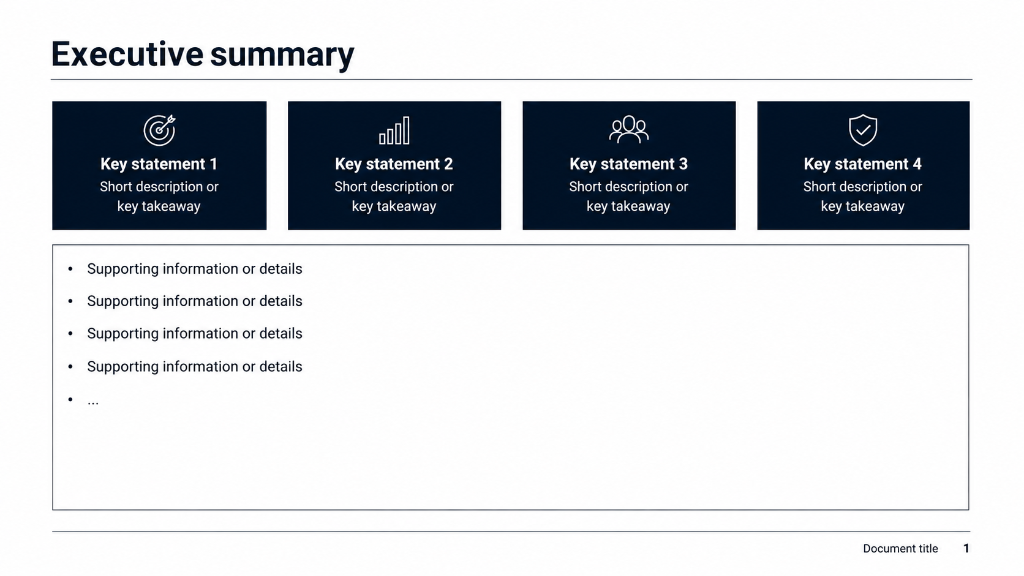
Structuring the General Counsel Board Deck: The 4 Core Fiduciary Governance Pillars
Table 1: The General Counsel Board Reporting Framework: Core Pillars, Board Governance Mandates, and Decision Thresholds
Litigation Portfolio Governance: Probabilistic Loss Modeling, Trial Scenarios & ASC 450 Accruals
Exhibit 2: Litigation Risk & Probability-to-Loss Exposure Matrix (ASC 450 Evaluation)
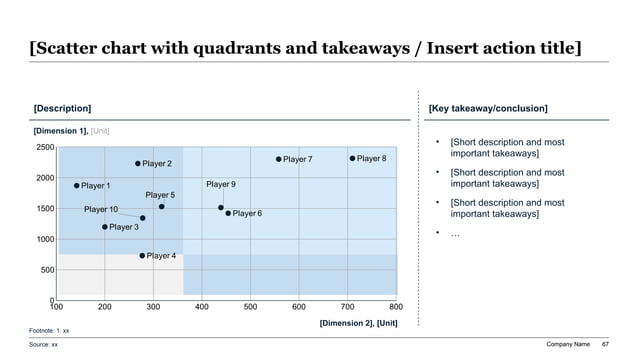
Table 2: Active Enterprise Litigation Portfolio & ASC 450 Contingency Reserve Ledger ($ Millions)
Outside Counsel Spend Management: Controlling AmLaw Hourly Rates with Alternative Fee Arrangements (AFAs)
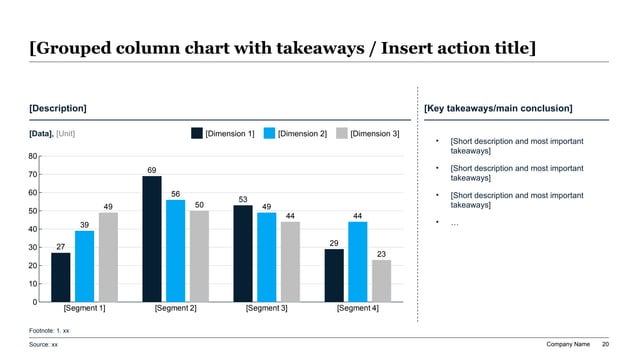
Exhibit 3: Outside Counsel Spend Optimization: Hourly Billing vs. Alternative Fee Arrangements
Enterprise Compliance Program Health: Aligning with the DOJ Evaluation of Corporate Compliance Programs (ECCP)
Exhibit 4: DOJ Corporate Compliance Program Evaluation Architecture: 5 Core Compliance Pillars
Simulate & Prototype: General Counsel Board Presentation Guide: Institutional Legal Risk, Litigation Portfolios & Compliance Governance
Drag to draw custom components, test consulting layout presets, and preview presentation architecture live before generating with AI.
Table 3: Corporate Compliance & Ethics Hotline Intake, Investigation Triage & Remediation Dashboard
Government Inquiries, Grand Jury Subpoenas & Regulatory Investigation Escalation Protocols
Exhibit 5: The 5-Stage Regulatory Subpoena & Government Investigation Escalation Protocol
The Master General Counsel Board Deck Architecture: The 9-Slide Decision-Ready Blueprint
Table 4: The Master General Counsel Board Deck Blueprint: The 9-Slide Decision-Ready Architecture
Checklist 1: The General Counsel Pre-Board Deck Preparation & Privilege Gate: 10 Mandatory Fiduciary Audits
Checklist 2: The Chief Legal Officer Annual Legal Department Performance & Governance Gate: 10 Operational Milestones
XLSlides General Counsel Board Deck & Legal Risk Framework Prompt Recipe
Act as an Enterprise General Counsel (GC) and former AmLaw 50 Litigation Practice Chair advising a Fortune 500 Board of Directors. Generate an institutional, decision-ready 9-slide presentation blueprint for a quarterly General Counsel Board Legal & Compliance Briefing. Context & Strategic Parameters: - Enterprise Profile: Global multi-division publicly traded enterprise ($3.8B annual revenue) operating across North America, Europe, and Asia-Pacific. - Legal Risk Landscape: Active litigation portfolio comprising 5 material disputes ($472M aggregate claimed exposure, with $14.5M accrued on balance sheet under ASC 450); active DOJ Civil Investigative Demand (CID) regarding commercial distribution practices; quarterly outside counsel expenditure of $6.8M ($24.3M annualized) across 10 relationship firms. - Compliance Operations: Robust corporate ethics program with 156 annual hotline reports, 38% substantiation rate, and average investigation cycle time of 22 calendar days. - Strategic Imperatives: Transition outside counsel billing to >45% AFAs; bulletproof director oversight under Delaware Caremark standards; manage regulatory subpoena escalation; and protect attorney-client privilege in board materials. Presentation Blueprint Requirements: 1. Slide 1 (Executive Summary): Craft a high-impact action title, 4-card strategic briefing panel (Litigation Exposure, Regulatory Inquiries, Outside Spend Variance, Compliance Health), and core risk metrics. 2. Slide 2 (Material Litigation Portfolio): Structure an institutional ASC 450 ledger table categorizing 5 key claims by venue, claim type, claimed exposure, probability assessment (Remote, Possible, Probable), balance sheet accrual, and lead outside counsel budget. 3. Slide 3 (Antitrust Class Action Deep-Dive): Detail factual claims, motion to dismiss defenses, damages tree ($240M claim vs. $35M expected exposure), and phased trial timeline. 4. Slide 4 (Regulatory Subpoena & Government Inquiries): Detail the 5-stage escalation framework from legal hold through independent special committee scoping, forensic review, and white-paper negotiation. 5. Slide 5 (DOJ Compliance Program Health): Present the 5 core ECCP pillars, hotline intake by allegation category, substantiation metrics, and root-cause disciplinary actions taken. 6. Slide 6 (Outside Counsel Spend & Legal Ops): Construct a comparative analysis contrasting hourly billing ($28.5M baseline) against negotiated AFAs ($24.3M actual), demonstrating $4.2M in legal spend containment. 7. Slide 7 (Commercial Contracting & IP Velocity): Highlight contract lifecycle turnaround velocity (MSAs <5 days) and patent portfolio defensive filings supporting core revenue lines. 8. Slide 8 (Macro Legal & Regulatory Horizon): Provide forward-looking intelligence on the EU AI Act, FTC non-compete litigation, and SEC cybersecurity reporting mandates. 9. Slide 9 (Executive Session Briefing): Present an in-camera placeholder slide outlining confidential settlement authorizations and attorney-client advice. Formatting Standards: Enforce strict consulting-style action titles (not topic labels), data-dense analytical bullet points, quantitative takeaways on every slide, and structured visual exhibit layouts.
Frequently Asked Questions: General Counsel & Board Legal Presentations
How do General Counsels protect attorney-client privilege when presenting to the Board of Directors?
Protecting privilege in board presentations requires a multi-layered defense. First, prominently mark every slide and distributed briefing document 'Privileged & Confidential - Prepared at Request of Counsel for Legal Advice.' Second, ensure that non-privileged attendees—such as outside public relations consultants, investment bankers, or third-party advisors—are formally excused from the boardroom when confidential legal counsel is delivered, as the presence of third parties routinely waives attorney-client privilege under federal and state evidence rules. Third, never put confidential bottom-line settlement dollar figures or explicit legal risk evaluations into written slide decks that are uploaded to digital board portal software, as board materials may be subject to discovery in subsequent litigation. Communicate specific monetary settlement ranges verbally during a dedicated in-camera executive session with independent directors.
How should loss contingencies and litigation reserves be presented without waiving settlement leverage?
General Counsels should strictly adhere to FASB ASC Topic 450 (Contingencies) accounting standards. Categorize matters into Remote, Reasonably Possible, and Probable loss tiers. In written materials, disclose only what is legally required: the factual nature of the claim, the procedural posture, and whether a loss is probable or estimable. Avoid publishing a single specific dollar settlement target in board decks. Instead, present broad mathematical sensitivity ranges or explain the methodology behind accounting accruals. Specific settlement authorization requests (e.g., requesting authority to negotiate up to $15M) should be delivered orally in closed executive session, accompanied by a board resolution granting the GC and CEO negotiating authority within a confidential ceiling.
What is the operational difference between reporting to the full Board versus the Audit Committee?
The full Board of Directors requires a high-level strategic overview focused on macro legal risks that threaten corporate solvency, strategic transactions (M&A, joint ventures), major regulatory enforcement actions, and existential intellectual property or class action exposure. In contrast, the Audit & Compliance Committee is charged with detailed operational and accounting oversight. The Audit Committee receives granular reviews of ASC 450 accounting accruals, quarterly whistleblower ethics hotline intake and substantiation rates, internal control deficiency investigations, outside auditor reliance letters, and detailed Legal Operations budget-to-actual variances.
How should outside counsel billing rates and law firm budgets be communicated to directors?
Avoid presenting raw lists of law firm invoices or reciting hourly billing rates in isolation. Frame outside legal spend as a disciplined capital allocation decision. Present legal expenditure as a percentage of gross enterprise revenue (benchmark <0.50% for mature corporations) and showcase year-to-date actual spend against approved annual budgets. Highlight Legal Operations value by displaying metrics on Alternative Fee Arrangement (AFA) penetration (>45% of total spend), fee discounts achieved through strategic panel convergence, and cost avoidance realized through e-billing LEDES invoice auditing.
What specific compliance metrics does the DOJ expect to see in corporate board minutes under the Caremark doctrine?
Under the DOJ Criminal Division's Evaluation of Corporate Compliance Programs (ECCP) and Delaware Caremark case law, federal prosecutors and courts expect to see recurring, substantive board review of compliance data. Board minutes should specifically document: (1) anonymous ethics hotline reporting volume and reporting channels; (2) investigation velocity (average calendar days from report intake to closure, targeted under 30 days); (3) substantiated misconduct percentages (benchmarked at 35% to 45%); (4) disciplinary parity proving that executives face identical consequences as entry-level staff; and (5) root-cause analysis and operational control remediations implemented after misconduct is identified.
How does an in-house legal department calculate and demonstrate cost avoidance to executive leadership?
Legal cost avoidance must be measured using objective, defensible methodologies rather than speculative estimates. Legal Ops calculates cost avoidance across four empirical categories: (1) Outside Counsel Billing Reductions: invoice deductions captured by automated LEDES e-billing audits (blocking unauthorized staffing, billable travel, and unapproved rate hikes); (2) AFA Savings: the mathematical delta between standard law firm rack-rate hourly billing and negotiated fixed-fee or collared portfolio pricing; (3) Settlement Arbitrage: the difference between an adversary's initial formal demand and the final mediated settlement amount, adjusted for anticipated trial defense costs; and (4) Regulatory Penalty Mitigation: demonstrating reductions in statutory fine ranges achieved through voluntary self-disclosure and prompt remediation under DOJ Corporate Enforcement Policy standards.
When is a Special Litigation Committee (SLC) required instead of regular Board oversight?
A Special Litigation Committee (SLC) is legally required under corporate law when a shareholder files a derivative lawsuit alleging breach of fiduciary duty against members of the Board of Directors or senior executive officers, and a majority of the Board is disqualified by personal interest, financial involvement, or lack of independence. The Board must delegate full, unreviewable decision-making authority to an SLC composed entirely of independent, disinterested directors who were not involved in the challenged transaction. The SLC retains its own independent counsel (with zero historical ties to the company) to investigate the claims and determine whether pursuing, settling, or dismissing the litigation is in the best long-term interest of the corporation under the Zapata and Auerbach legal doctrines.