Executive Summary: Transforming Enterprise Contract Negotiation into an Institutional Governance Capability
Core Axioms of Enterprise Commercial Contract Negotiation
- Contract Negotiation is a Corporate Governance Function: High-stakes B2B agreements dictate multi-year revenue quality, gross margin stability, and legal exposure. Executive Deal Desk reviews must replace ad-hoc discounting with formal, cross-functional board-level rigor.
- The Law of Bilateral Concession Symmetry: Never grant a commercial, operational, or legal concession without securing a reciprocal concession of equal or greater economic value from the buyer. Unilateral discounting conditions procurement to demand further price reductions.
- Protect Net Realized Margin Over Vanity TCV: A $5M Total Contract Value (TCV) agreement diluted by 35% discounts, Net 90 payment terms, dedicated CSM staffing, and custom SLAs frequently delivers lower economic return than a disciplined $3.5M standard agreement.
- Decouple Commercial Pricing from Legal Risk: Sales teams must never trade balance-sheet-threatening legal protections (such as uncapped indemnification or super-capped liabilities) to defend commissionable software license fees.
- Enforce Transparent Delegation of Authority (DOA): Remove negotiation ambiguity by establishing explicit, mathematically defined approval tiers. Regional sales leaders, VP Sales, CFO/GC, and the CEO must operate within strictly partitioned concession authority bands.
- Implement the Give-Get Currency Hierarchy: Structure trade-offs across four distinct corporate currencies: Direct Pricing, Cash & Payment Terms, Operational Commitment & Volume, and Strategic Intellectual Property / Marketing Rights.
- Institutionalize the Answer-First Deal Desk Deck: Present non-standard agreements using an 8-slide executive presentation format featuring single-page transaction blueprints, margin dilution waterfalls, concession ledgers, and redline risk heatmaps.
Exhibit 1: Executive Deal Economics & Strategic Contract Blueprint
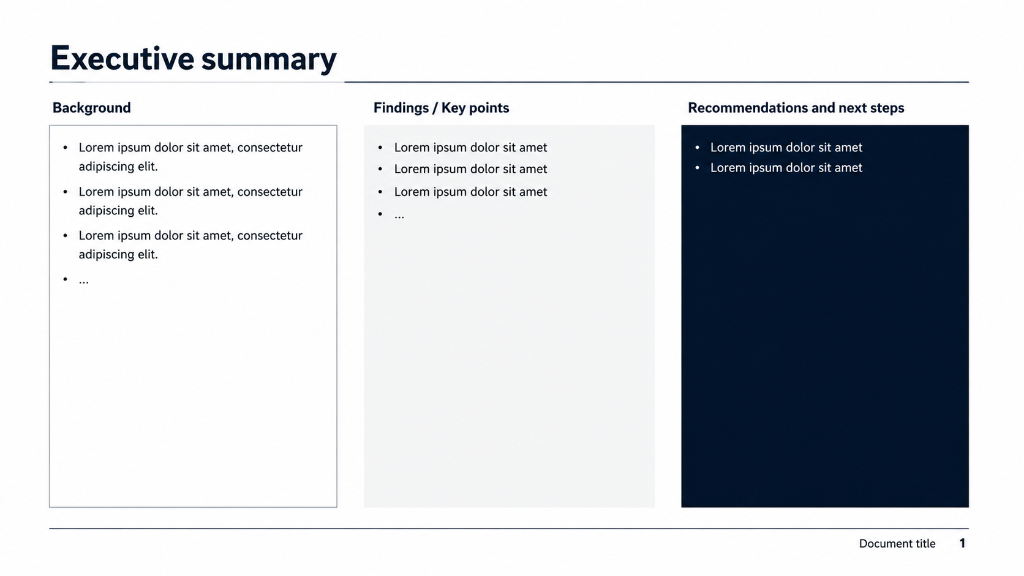
The Economics of Enterprise Contracting: Decoupling TCV, ACV, and Net Realized Contribution Margin
Enterprise Contract Commercial Term Archetypes & Economic Parameters
The Concession Engineering Framework: Replacing Unilateral Discounting with Value-Exchange Levers
Exhibit 2: The Commercial Concession & Strategic Value Exchange Matrix
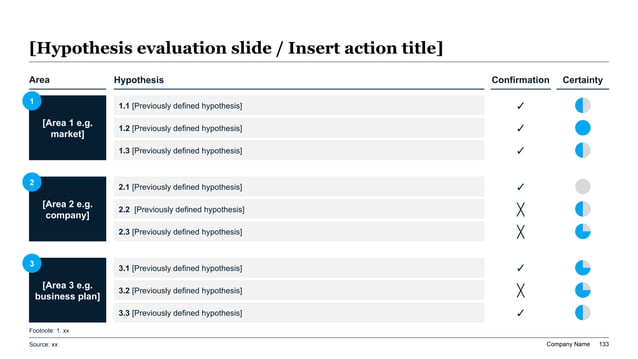
The Strategic Give-Get Negotiation Matrix: 12 Commercial & Operational Levers
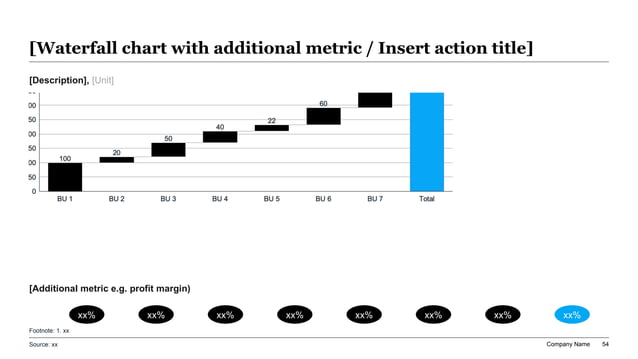
Financial Margin Modeling: Constructing the Contract Margin Dilution Waterfall
Exhibit 3: Enterprise Contract Profitability & Margin Dilution Waterfall Bridge
Contract Legal Clause Risk Matrix & Negotiation Fallback Hierarchy
Exhibit 4: Enterprise Contract Risk & Legal Guardrails Scorecard
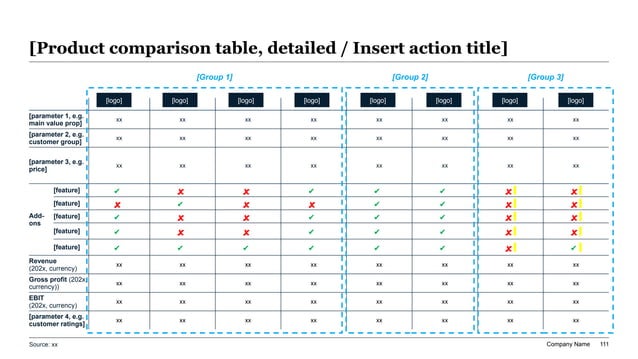
Simulate & Prototype: Commercial Contract Negotiation Presentation Guide: Structuring Enterprise Deal Desk Decks, Concession Matrices, and Legal Risk Guardrails
Drag to draw custom components, test consulting layout presets, and preview presentation architecture live before generating with AI.
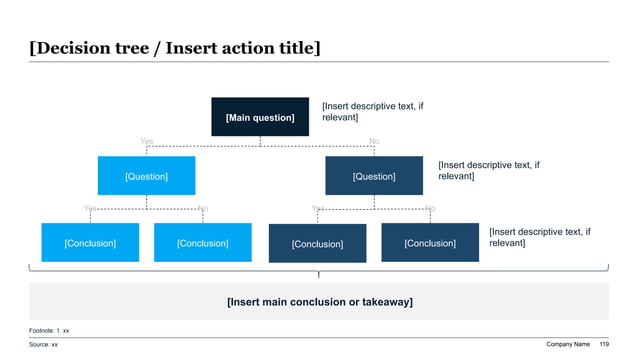
Exhibit 5: Deal Desk Delegation of Authority (DOA) & Escalation Decision Logic Tree
The 4-Stage Enterprise Contract Negotiation Flight Path
The Pre-Deal Desk Commercial Evaluation Gate: 10 Mandatory Approval Checks
Cross-Functional Executive Presentation: The 8-Slide Deal Desk Approval Deck Architecture
The Pre-Signature Legal & Financial Verification Checklist: 10 Institutional Gates
Common Enterprise Contract Negotiation Pitfalls and How Executive Teams Overcome Them
XLSlides System Prompt Recipe: Generating Executive Deal Desk & Commercial Contract Presentations
Frequently Asked Questions About Commercial Contract Negotiation and Deal Desk Presentations
What is the primary objective of an executive Deal Desk presentation?
The primary objective of an executive Deal Desk presentation is to provide senior decision-makers (CFO, General Counsel, CCO) with an institutional, objective evaluation of non-standard commercial agreements. It moves beyond emotional sales arguments to analyze whether a transaction's net realized contribution margin, cash flow timing, and legal liability profile justify corporate approval.
How does an enterprise Deal Desk differ from a standard sales pricing desk?
A standard sales pricing desk is typically a tactical function focused on calculating discount percentages and verifying list prices. In contrast, an enterprise Deal Desk is an institutional cross-functional governance engine that unifies Pricing, Finance, Legal, RevOps, Product, and Customer Success. It evaluates entire contract structures, including payment terms, margin dilution, indemnification exposure, ASC 606 revenue recognition, and multi-year customer lifetime value.
Why is unilateral discounting so dangerous in enterprise negotiations?
Unilateral discounting conditions customer procurement teams to view initial vendor proposals as arbitrary and signals that further concessions can be extracted through delayed signatures and aggressive negotiation tactics. By enforcing bilateral concession symmetry (where every price reduction requires an equal give-get trade such as longer contract terms or upfront prepay), the vendor protects profit margins and establishes professional commercial respect.
How should a Deal Desk handle requests for Net 60 or Net 90 payment terms?
Payment terms must be treated as an explicit financial cost. At an 8.5% cost of capital, Net 90 payment terms erode contract economic value by over 5% compared to annual upfront invoicing. The Deal Desk should require either an offsetting financial surcharge (e.g., 3-4%), mandatory automated electronic direct debit, or trade the payment concession for multi-year contract duration or reduced software discounts.
What is an acceptable Limitation of Liability (LoL) fallback for enterprise contracts?
The standard corporate position is an aggregate liability cap equal to 12 months of fees paid under the applicable order form. When Fortune 500 buyers demand higher protections for data breaches or confidentiality, the approved institutional fallback is a designated 'Super-Cap' of 2x to 3x annual fees paid (or a fixed dollar cap like $2M), provided the vendor maintains cyber insurance and the cap excludes indirect or consequential business loss damages.
What should sales teams do when procurement delays negotiations until the final days of the quarter?
Neutralize calendar leverage by enforcing pre-cleared Deal Desk approval deadlines at least 10 business days before quarter-end. Commercial leadership must empower negotiation teams to set firm expiration dates on concession bundles and demonstrate an authentic willingness to walk away into the subsequent quarter. In the vast majority of cases, procurement will execute the agreement once they realize the vendor will not panic.
How does XLSlides help commercial teams prepare Deal Desk decks?
XLSlides automates the generation of institutional, consultant-grade PowerPoint presentations. By structuring complex data into answer-first executive summaries, 7-step margin dilution waterfall bridges, bilateral give-get matrices, and legal risk heatmaps, XLSlides enables commercial teams to present complex enterprise transactions with boardroom clarity and accelerate Deal Desk approvals.