Sales Proposal Deck Takeaways
- A good sales proposal deck is not a prettier brochure. It is a decision document that helps the buyer understand the problem, the proposed approach, the proof, the commercial model, and the next approval step.
- The strongest proposal decks are written for the buying committee, not only for the champion who asked for the meeting.
- Pricing should be explained as a business choice tied to scope, outcomes, and assumptions, not dropped onto one slide with no framing.
- AI is most useful when it converts notes, RFP inputs, discovery calls, and case studies into a structured first draft that the deal team can sharpen.
Direct Answer: What A Sales Proposal Deck Must Do
A sales proposal deck should reduce buying friction. Its job is to make the buyer feel that your team understands the problem, knows how the work will be delivered, has evidence the recommendation is credible, and can explain the commercial terms without creating confusion. If the deck only describes your company, your product, or your enthusiasm, it is not doing proposal work.
That matters because most real proposals are reviewed asynchronously. A champion forwards the file to procurement, finance, operations, legal, an executive sponsor, or a broader buying committee. Each reader looks for a different answer. The CFO wants economic clarity, the operator wants execution confidence, the executive sponsor wants business impact, and procurement wants structure and comparability. A serious proposal deck has to survive that circulation.
The practical standard is simple: if someone reads only the slide titles, the executive summary, the commercials page, and the implementation plan, can they explain what you are proposing and why it is worth considering? If not, the deck is still a pitch narrative, not a proposal deck. XLSlides fits this workflow because proposal teams usually begin with scattered discovery notes, scopes, RFP language, pricing fragments, proof points, and case studies. The hard part is turning that material into a coherent, editable deck quickly.
Sales Proposal Deck Vs. Adjacent Deal Documents
Proposal decks overlap with other commercial documents, but they do different jobs. Clarity improves when each artifact has a defined role.
| Document | Primary Audience | Main Job | Common Failure Mode |
|---|---|---|---|
| Sales proposal deck | Buyer committee, champion, executive sponsor, procurement | Explain the recommended solution, proof, commercials, and next decision in a skimmable format | Turns into a generic company overview with a price tag at the end |
| Consulting proposal deck | Client sponsor, procurement, partner-level reviewers | Sell advisory work with methodology, team model, workplan, and transformation logic | Overweights methodology language without making the business case concrete |
| Pitch deck | Early-stage prospect or broad audience | Create interest and explain the category, product, or vision | Sounds persuasive but leaves scope and buying implications vague |
| Statement of work | Commercial and delivery stakeholders | Define contracted scope, responsibilities, exclusions, and legal precision | Arrives too early and forces the buyer to parse details before they buy the approach |
| Pricing sheet or quote | Procurement, finance, buyer operations | Document price, billing, and package details | Lists numbers with no context for value, assumptions, or outcome |
Inputs To Lock Before You Draft The Proposal
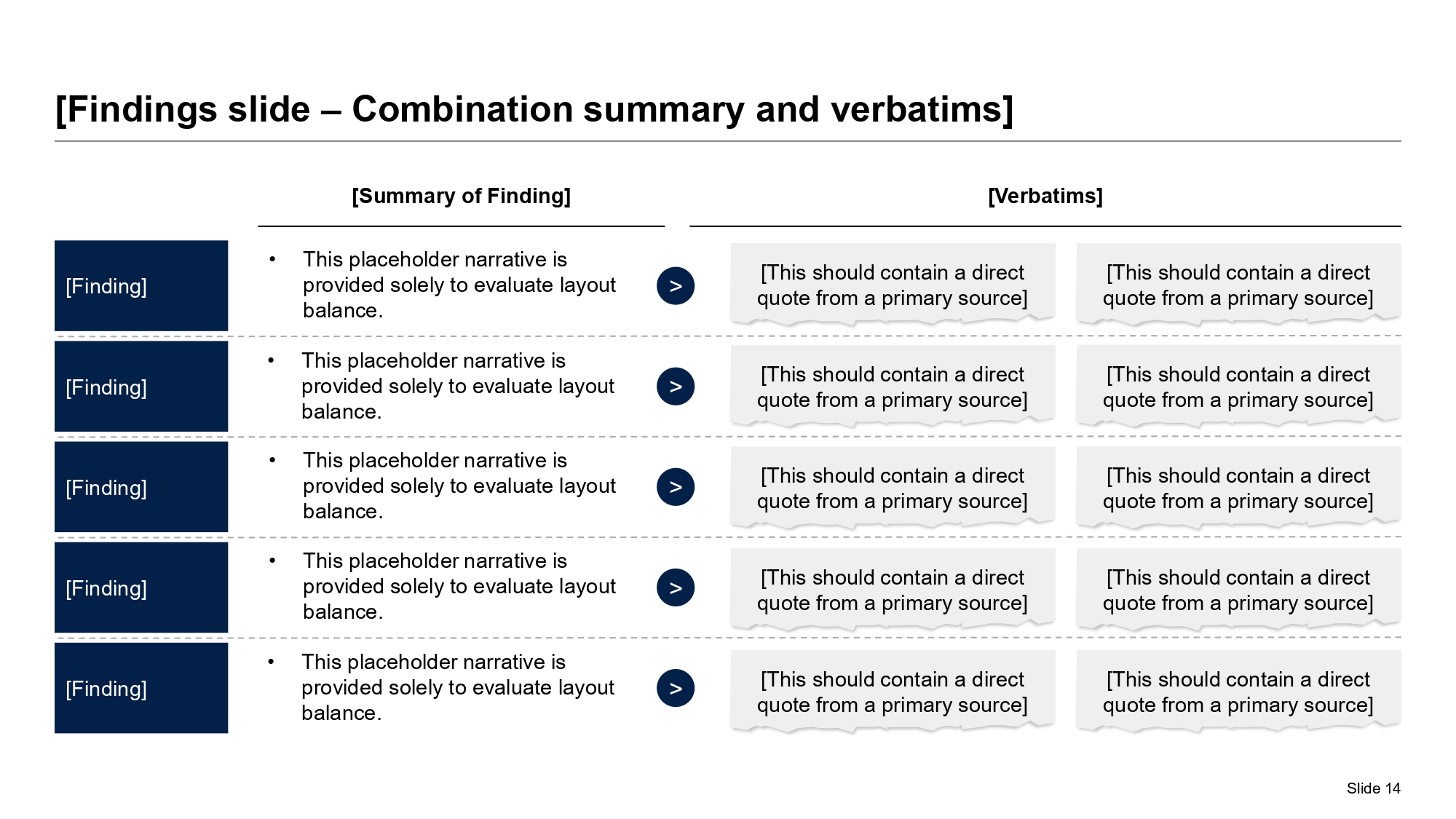
Buyer Discovery Synthesis Reference
Start With Buyer Stakes, Not Your Company Overview
Many proposal decks open with the vendor's company history, logo wall, office count, or platform tour. That sequence may be useful later, but it is usually the wrong opener. Buyers first want to know whether you understand the urgency, constraints, and outcome they care about. Proposal decks win when they begin with the buyer's situation and move quickly into the recommendation.
This does not mean deleting credentials. It means sequencing them properly. Put the decision context first, then explain the solution path, then show proof that your team can deliver it. When credentials arrive after the buyer problem and proposed outcome, they support the argument. When credentials arrive first, they force the reader to do interpretive work and guess why any of it matters.
This is especially important in multi-stakeholder deals. Champions may already know your story, but forwarded readers do not. If the first three slides are self-oriented, a CFO or operations leader may conclude the proposal is sales theater rather than a serious operating recommendation. Proposal decks need more answer-first discipline than broad marketing presentations.
Prompt Recipe For A Buyer-Ready Sales Proposal Deck
Create a sales proposal deck for an enterprise buying committee. Audience: executive sponsor, finance reviewer, procurement, and operational owner. Goal: explain the buyer problem, recommended solution, proof, commercials, implementation plan, risks, and exact next decision. Use answer-first slide titles, a concise executive summary, buyer-specific proof points, options only where they help the decision, clear assumptions behind pricing, and editable PowerPoint-style layouts rather than decorative AI slides.
Recommended 11-Slide Sales Proposal Deck Sequence
A disciplined proposal deck usually needs fewer slides than a company pitch, but each page must earn its place in the buying decision.
| Slide | Purpose | Buyer Question Answered |
|---|---|---|
| Executive summary | State the recommendation, expected outcome, and decision ask | What are you proposing and why should we care? |
| Current-state challenge | Define the business problem in the buyer's language | What issue are we solving? |
| Desired future state | Clarify the target result and success conditions | What does success look like? |
| Recommended solution | Explain the core approach or offer | What exactly are you recommending? |
| Why this solution now | Connect urgency, timing, or opportunity cost | Why should we act now rather than later? |
| Proof and case evidence | Show relevant outcomes, references, or implementation wins | Why should we trust you? |
| Scope and deliverables | Make included work concrete and bounded | What do we actually get? |
| Implementation plan | Show milestones, owners, and dependencies | How would this be delivered? |
| Commercials and options | Explain pricing logic, packages, and assumptions | What will it cost and how should we compare options? |
| Risks and mitigations | Surface the main adoption or execution concerns | What could go wrong and how will it be managed? |
| Decision and next steps | Make the approval path explicit | What must happen next to move forward? |
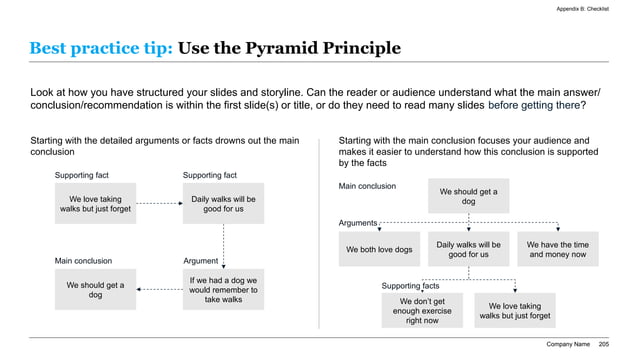
Executive Proposal Logic Reference
How To Build An Executive Summary That Survives Forwarding
The executive summary is the most important page in a proposal deck because it often becomes the only page some stakeholders read carefully. It should state the buyer problem, the recommended solution, the expected outcome, the commercial frame, and the immediate decision request in compact language. If the summary sounds like a teaser for the rest of the deck, it is too weak.
A strong proposal summary does not try to say everything. It compresses the essentials into a format that can be forwarded without explanation. The headline should tell the buyer what to conclude. The supporting bullets should show the problem, solution, proof, and ask. If a number matters, include it. If an assumption changes the commercial logic, name it. If success depends on buyer participation, make that visible here rather than hiding it in appendix.
The summary should also match the maturity of the opportunity. Earlier-stage proposals can carry more uncertainty and options framing. Late-stage proposals should sound firmer and more operational. In both cases, the deck should make the buyer feel that the vendor has translated discovery into a clear recommendation instead of dumping notes into slides.
Buyer Committee Questions By Stakeholder
Proposal decks improve when they are designed against the real readers who will challenge them after the meeting.
| Stakeholder | What They Usually Want To Know | What The Deck Should Show |
|---|---|---|
| Executive sponsor | Why this matters strategically and whether the proposal is decision-ready | A concise recommendation, expected business outcome, and a clear approval ask |
| Champion or functional lead | Whether the proposal solves the actual operational problem | Proof that the solution maps to the pain points raised in discovery |
| Finance reviewer | Whether the commercial logic and expected value are credible | Pricing assumptions, value frame, scope boundaries, and any economic tradeoffs |
| Procurement | How options compare and what contractual complexity to expect | Package structure, commercial terms, and what is standardized versus negotiable |
| Technical or implementation owner | How delivery will work in practice and what the team must contribute | Milestones, dependencies, client responsibilities, and risk mitigation |
| Legal or compliance reviewer | Where obligations, exclusions, or governance may create exposure | Clear scope language, assumptions, exclusions, and approval checkpoints |
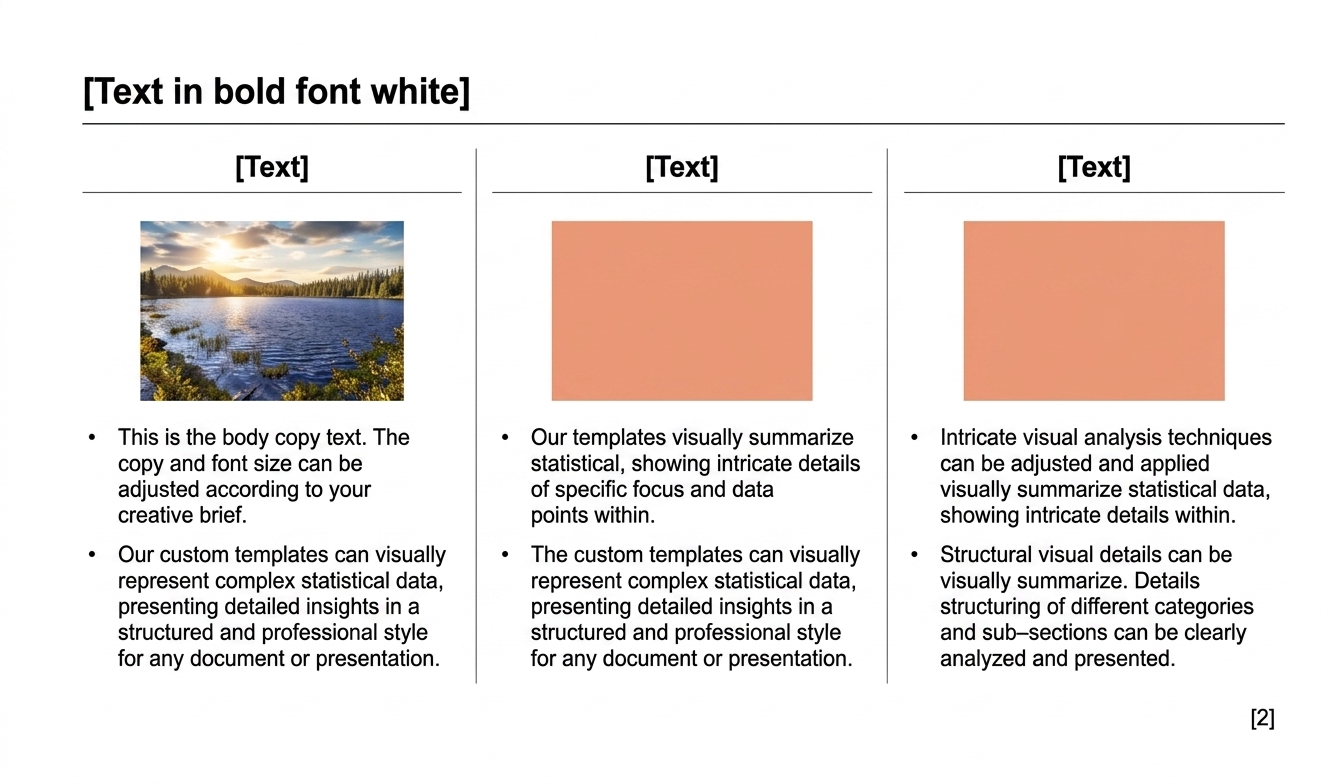
Proof And Case-Evidence Reference
Proof Beats Promise: Show Change, Not Only Capability
Proposal proof should answer one question: what changed for a client that looked like this buyer? Too many decks treat proof as a logo wall, a vague testimonial, or a list of capabilities. Those elements may help with reassurance, but they rarely remove decision friction on their own. Buyers need evidence that connects to their category of problem.
Useful proof can take several forms. A quantified before-and-after result is strongest when it is comparable to the buyer's situation. A case study with implementation context is valuable because it shows that the outcome did not appear magically. A reference architecture or rollout pattern can matter when the buyer worries more about execution than about strategic vision. The right proof depends on what the deal is likely to stall on.
The discipline is relevance. Three close examples are more persuasive than ten generic wins. Proposal teams should ask which buyer fear matters most: weak ROI, implementation risk, internal adoption, executive skepticism, or vendor credibility. Then they should pick proof that directly addresses that fear. That is why proposal decks often need sharper curation than marketing collateral.
What To Include On The Commercials Slide Without Triggering Procurement Fatigue
Commercial Architecture Patterns For Proposal Decks
Choose a pricing structure that matches how the buyer will evaluate risk, timing, and comparability.
| Commercial Pattern | Best Use Case | What To Clarify On The Slide |
|---|---|---|
| Single recommended option | Best when the buyer already aligned on scope and wants a yes or no decision | Tie the price to outcomes, assumptions, and delivery timing so the number does not feel arbitrary |
| Good / better / best | Useful when buyer budget or rollout ambition is still uncertain | Explain what actually changes across options so comparison is strategic, not cosmetic |
| Phased commercial path | Strong for pilot-to-scale programs or complex implementations | Show the decision gates, what unlocks the next phase, and whether later pricing is fixed or conditional |
| Module-based add-ons | Works when the core scope is stable but optional capabilities vary by buyer | Separate base scope from optional modules so procurement can compare cleanly |
| Milestone-based pricing | Useful when the buyer wants spend tied to delivery checkpoints | Name the milestone definitions and any buyer dependencies that affect billing cadence |
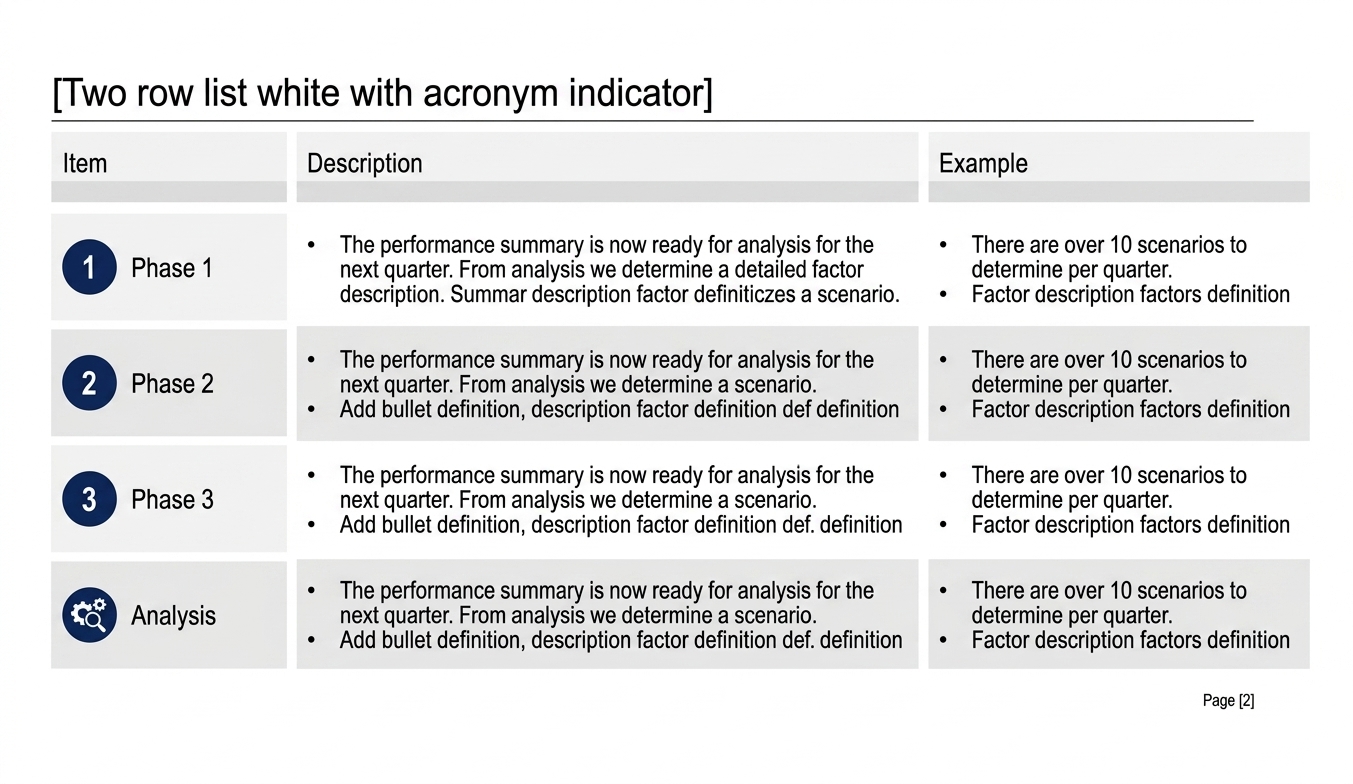
Delivery Roadmap Reference
Make Delivery Feel Managed Before The Client Signs
Implementation confidence is a major part of proposal quality. Even when the proposal is commercially attractive, buyers hesitate if they cannot picture how the work will actually start. A good implementation slide reduces that uncertainty by showing phases, milestones, ownership, dependencies, and what the client must provide. It makes the future operating model visible enough to trust.
This is one reason proposal decks should not rely only on a generic timeline. Buyers need to know what happens first, how success is judged, when they see value, and which work stays with them. A serious roadmap answers whether onboarding is lightweight or heavy, whether data or stakeholder access is required, where the main risks sit, and when leadership should expect a formal checkpoint.
The best roadmap pages also support commercial discipline. When scope and implementation are shown clearly, pricing feels easier to defend. Buyers can see why one option costs more, why a phased path lowers risk, or why a narrow pilot excludes certain work. Delivery clarity and commercial clarity reinforce each other.
Weak Proposal Headlines Vs. Decision-Ready Action Titles
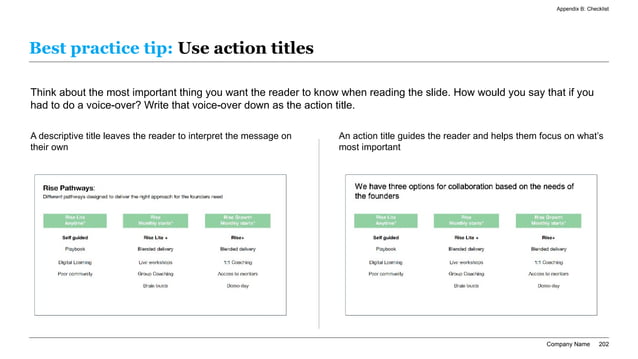
Proposal slides should tell the buyer what to conclude, not force them to decode a topic label.
| Weak Topic Title | Action-Title Rewrite | Why The Rewrite Works |
|---|---|---|
| Our solution | The recommended rollout removes the buyer's reporting bottleneck without adding new admin work | It links the offer to the buyer problem and expected outcome |
| Case studies | Comparable clients cut review-cycle time after standardizing the workflow and owner model | It makes the proof relevant instead of generic |
| Pricing | A phased commercial path lowers launch risk while preserving expansion flexibility | It reframes price as a decision architecture |
| Implementation plan | The first 30 days focus on setup, stakeholder alignment, and the fastest measurable win | It tells the reader what the roadmap is designed to accomplish |
| Next steps | The buyer needs to confirm scope, executive sponsor, and start window to move into contracting | It makes the ask operational rather than polite |
Action-Title Rewrite Reference
What AI Should Draft, And What The Deal Team Must Still Own
AI is valuable in proposal work because the source material is messy. Discovery notes, call transcripts, RFP questions, pricing assumptions, implementation details, references, and internal review comments rarely begin in one clean narrative. AI can organize that material into a first-pass storyline, propose stronger slide titles, summarize buyer pains, draft option tables, and map a rough workplan onto a more executive structure.
What AI should not own is commercial judgment. It does not know which concessions are strategically acceptable, whether a proof point is truly comparable, how much political sensitivity exists around procurement, or whether the buyer's champion is overstating internal alignment. Those decisions stay with the account team, solutions lead, founder, or practice lead because they affect win strategy and margin quality.
The right workflow is therefore draft fast and review hard. Let AI compress the assembly step, create an editable PowerPoint-style proposal spine, and save the team from manual first drafting. Then review every claim that affects trust: the problem statement, commercial assumptions, scope boundaries, timeline, proof, and action titles. Proposal decks need more human judgment than generic marketing slides because they sit much closer to an actual purchase decision.
Proposal Review Passes Before The Deck Goes Out
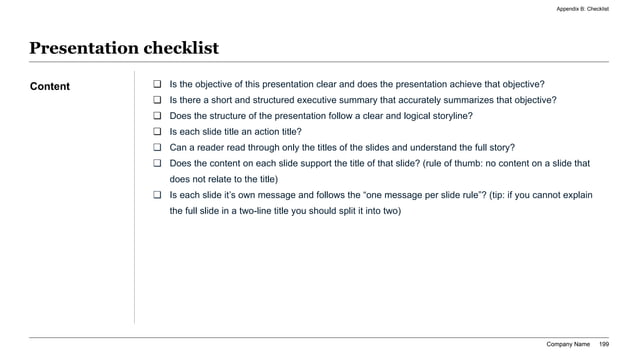
Proposal quality improves when the team reviews in layers instead of trying to perfect everything at once.
| Review Pass | What To Check | Typical Save |
|---|---|---|
| Storyline pass | Read only the titles and summary page to confirm the proposal forms a coherent argument | Catches decks that still sound like a pitch rather than a recommendation |
| Buyer-fit pass | Check whether each slide answers a real stakeholder question | Removes vendor-centric filler and adds missing commercial or implementation clarity |
| Proof pass | Verify every proof point is relevant, current, and not overstated | Prevents weak case studies and unsupported claims from undermining trust |
| Commercial pass | Ensure price, assumptions, exclusions, and options are easy to interpret | Reduces procurement confusion and avoidable back-and-forth |
| Formatting pass | Tighten labels, remove clutter, and make key numbers or asks visually obvious | Improves skim-readability for forwarded readers and executives |
Proposal Review Checklist Reference
XLSlides Resources For Proposal, Commercial, And Executive-Slide Work
Short Answers To Common Sales Proposal Deck Questions
How is a sales proposal deck different from a sales pitch deck?
A pitch deck is designed to create interest and explain the offer broadly. A sales proposal deck is designed to help a real buying committee evaluate a specific recommendation, proof set, price, scope, and next step.
Should pricing appear in the main proposal deck or only in an appendix?
Usually in the main deck. Buyers want the commercial frame close to the recommendation, scope, and implementation plan. Appendix can hold detailed calculations or expanded option notes, but the main story should still explain the price logic.
How long should a proposal deck be?
Most serious proposal decks work well at roughly 8 to 12 core slides plus appendix. The goal is not to maximize page count. The goal is to answer the buyer's decision questions with minimal wasted motion.
Can AI generate a usable sales proposal deck from notes or documents?
Yes, if the source material is specific enough. AI is especially useful for organizing discovery notes, RFP answers, proof points, and commercial fragments into a structured first draft. Human reviewers still need to own deal strategy, pricing judgment, scope commitments, and final wording.
Build The Proposal Deck In XLSlides
Use XLSlides to turn discovery notes, RFP inputs, case studies, pricing assumptions, and scope fragments into an editable sales proposal deck with action titles, executive summary logic, buyer-specific proof, commercial clarity, and a cleaner next-step ask.
Generate Proposal Deck