Direct Answer: What A Competitive Benchmarking Presentation Should Actually Do
A competitive benchmarking presentation should help an executive team answer a narrow business question: where are we winning, where are we structurally behind, and what should we do next because of that gap. A weak deck just lists competitors, features, and market claims. A useful deck turns competitor evidence into a recommendation about product priorities, go-to-market moves, pricing, positioning, diligence questions, or board decisions.
That means the deck has to do more than summarize research. It needs a decision frame, consistent comparison criteria, source discipline, and clear action titles. A CFO, strategy lead, operating partner, or founder should be able to skim the slide titles and understand the answer before reading every row of the benchmark table.
For XLSlides, this topic is a strong fit because teams rarely struggle with the existence of competitor data. They struggle with converting scattered notes, screenshots, pricing tables, call transcripts, and market observations into a clean PowerPoint-style narrative. The best AI workflow accelerates the first draft of that narrative while leaving judgment, evidence validation, and recommendation quality in human hands.
Key Takeaways
- Competitive benchmarking decks are decision documents, not research dumps.
- The core job is to compare competitors on criteria that matter to the business decision, not on every fact available.
- Good benchmark slides pair a clear conclusion with visible evidence, assumptions, and source notes.
- AI is most useful when it structures the first draft, proposes action titles, and organizes comparison logic into editable slides.
When You Need A Competitive Benchmarking Presentation
The structure changes depending on the decision. The same benchmark deck should not be reused for product strategy, pricing review, sales enablement, and diligence.
| Use Case | Primary Decision | What The Deck Must Prove | Common Failure Mode |
|---|---|---|---|
| Product strategy | Which capabilities should the roadmap prioritize? | Which gaps are strategically costly versus merely visible | Feature checklist with no customer or economics lens |
| Pricing and packaging | Should we change packaging, tiers, or discount posture? | How pricing architecture compares and what it implies for win rate or margin | Comparing list prices without packaging logic |
| Go-to-market battlecard | How should the field position against a specific rival? | Where the company has a defendable advantage in real selling situations | Marketing claims with no sales relevance |
| Board or executive review | What strategic response deserves approval now? | Why competitive shifts change the plan, risk profile, or capital allocation | Reporting competitor moves without a management ask |
| Private equity or diligence | Is the asset advantaged enough to underwrite the case? | Where the target is differentiated, exposed, or operationally behind peers | Narrative confidence without downside comparison |
| Launch planning | How should the offer be positioned in-market? | Which segment, value prop, and objection handling strategy are most credible | Broad market slides with no direct competitor read |
Structured Comparison Matrix Reference
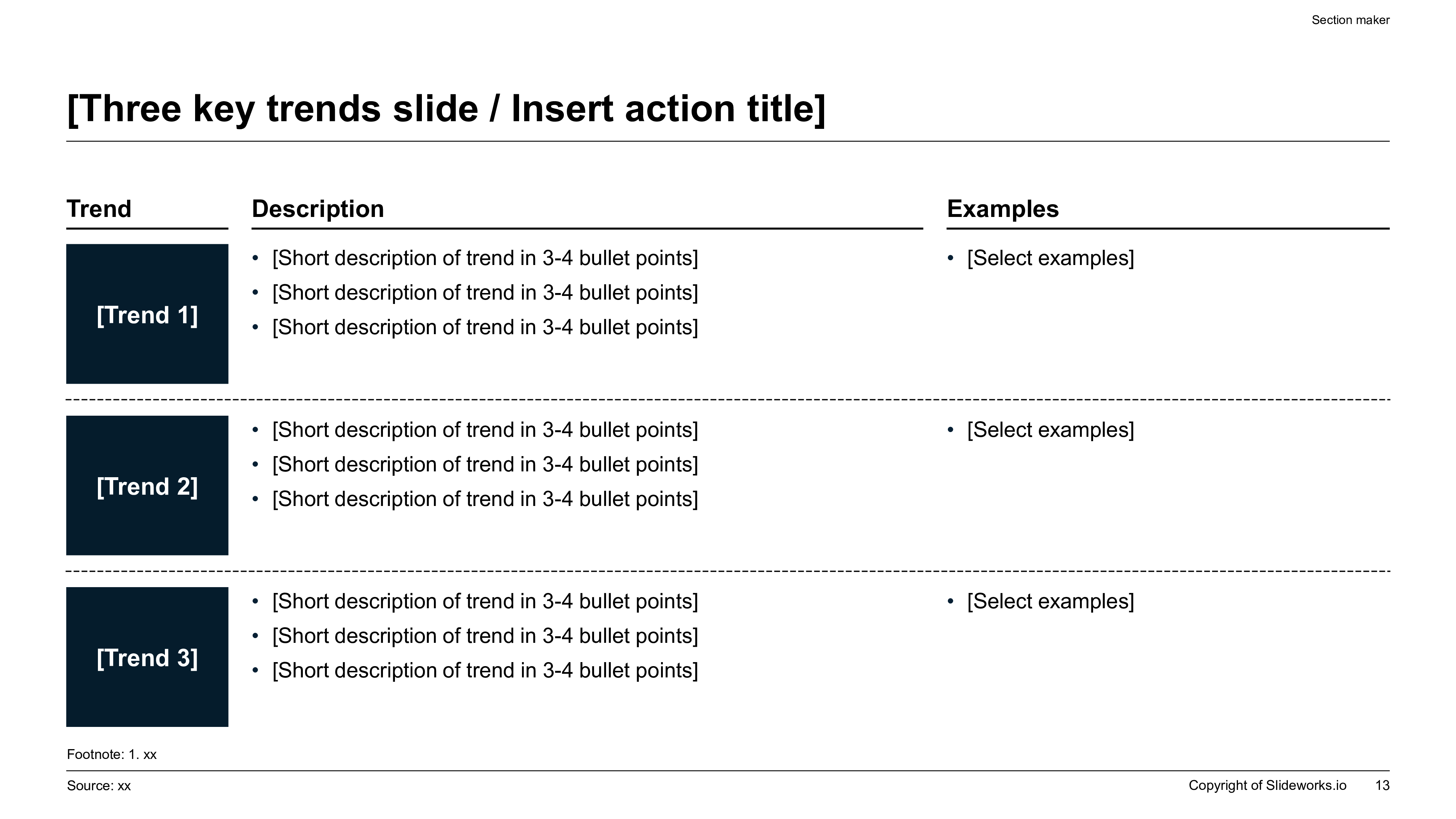
Why Most Benchmarking Decks Fail Executive Review
Most benchmarking decks are assembled bottom-up. A team collects screenshots, pricing pages, analyst notes, sales anecdotes, and feature lists, then drops everything into slides. The result looks busy but does not answer the executive question. Leadership is left asking which differences matter, whether the evidence is current, and what action follows.
The other failure mode is artificial precision. Teams score competitors on twenty categories with decimal-weighted totals even when half the inputs are qualitative or inconsistent. That creates a false sense of rigor. A better deck is transparent about what is measured, what is estimated, and where management judgment enters.
A serious competitive benchmarking presentation therefore starts with the decision frame. Are we deciding roadmap priority, pricing posture, acquisition attractiveness, or sales positioning? Once that is explicit, the deck can narrow the competitor set, simplify the comparison criteria, and show only the evidence that changes the recommendation.
Inputs To Gather Before Building The Deck
Benchmarking Criteria That Executives Usually Trust
Not every benchmark category belongs on the main page. Use the criteria that map directly to the decision under review.
| Criterion | Useful Questions | Best Evidence | Why It Matters |
|---|---|---|---|
| Positioning | What promise does each competitor make and to whom? | Homepage messaging, demos, sales decks, customer language | Shows whether the company is fighting in the same category or a different one |
| Capabilities | Which features are table stakes versus differentiated? | Product documentation, release notes, expert interviews, hands-on review | Prevents roadmap debates from collapsing into noise |
| Pricing and packaging | How do plans, contract shapes, and discount logic differ? | Pricing pages, proposals, field intelligence, procurement feedback | Reveals whether wins and losses stem from value or packaging design |
| Commercial traction | Where is each competitor gaining momentum or losing relevance? | Customer logos, hiring patterns, public case studies, distribution signals | Adds context beyond feature parity |
| Economics or delivery model | Is the business advantaged in cost, service model, or implementation speed? | Customer references, onboarding evidence, service design, margin logic | Critical for diligence and operating model decisions |
| Strategic implication | What should management do because of the comparison? | Synthesis of the full benchmark, not a raw source | Turns research into decision readiness |
KPI Benchmark Scorecard Example
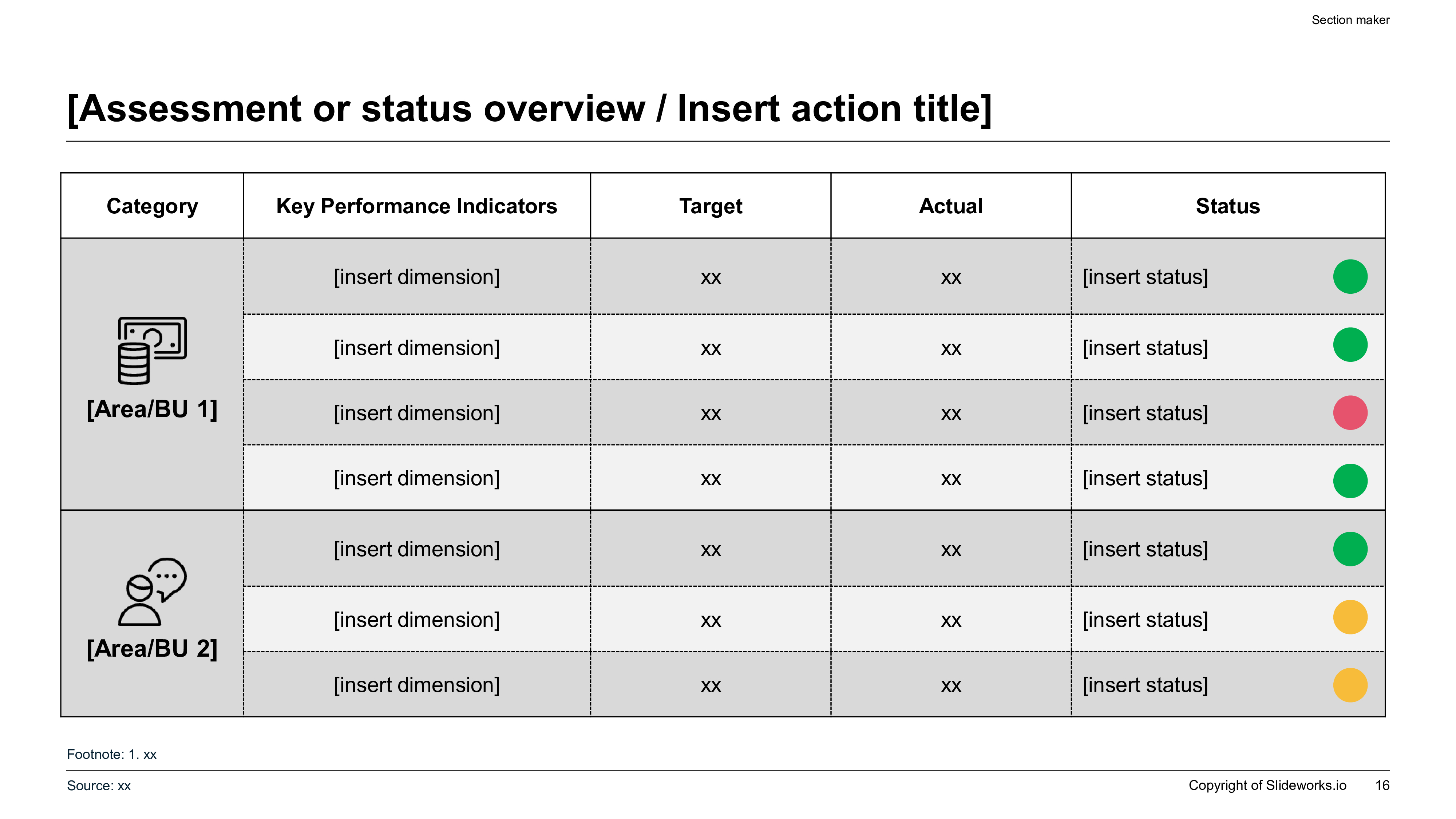
How To Structure The Story Before You Build Slides
A strong competitive benchmark follows a simple narrative. Start with the market question or strategic trigger. Then show the comparison criteria, the major findings, the implication for the business, and the recommended response. This order matters because the deck should explain why the benchmark exists before it shows the benchmark itself.
The opening summary should already contain a point of view. For example: the company is feature-competitive in the core workflow, but loses credibility in enterprise procurement because competitors package governance, analytics, and implementation support more clearly. That kind of opening immediately tells the audience what to inspect in the rest of the deck.
Only after the point of view is visible should the deck move into matrices, scorecards, pricing tables, or market maps. Otherwise the benchmark becomes a slide cemetery. Executives do not need to see every research artifact. They need to see the evidence that explains the recommendation.
Recommended 10-Slide Competitive Benchmarking Deck
This sequence keeps the comparison decision-focused while leaving room for appendix evidence.
| Slide | Purpose | Executive Question Answered |
|---|---|---|
| Executive summary | State the conclusion and recommendation | What should we do because of the benchmark? |
| Decision frame | Define why the benchmark matters now | Why is leadership reviewing this topic? |
| Peer set | Explain who is included and excluded | Which competitors matter for this decision? |
| Criteria | Set the comparison dimensions | How are we judging relative performance? |
| Head-to-head comparison | Show the major differences clearly | Where are we ahead or behind? |
| Pricing or packaging | Surface commercial implications | How does the offer compare economically? |
| Customer or field evidence | Add real-world proof | What do wins, losses, or customer reactions suggest? |
| Implication by segment or use case | Narrow the finding | Where does the gap matter most? |
| Recommended response | Prioritize action | What should management change first? |
| Appendix index | Preserve source notes and backup | Where can the audience inspect the detail? |
Competitor Prioritization Matrix
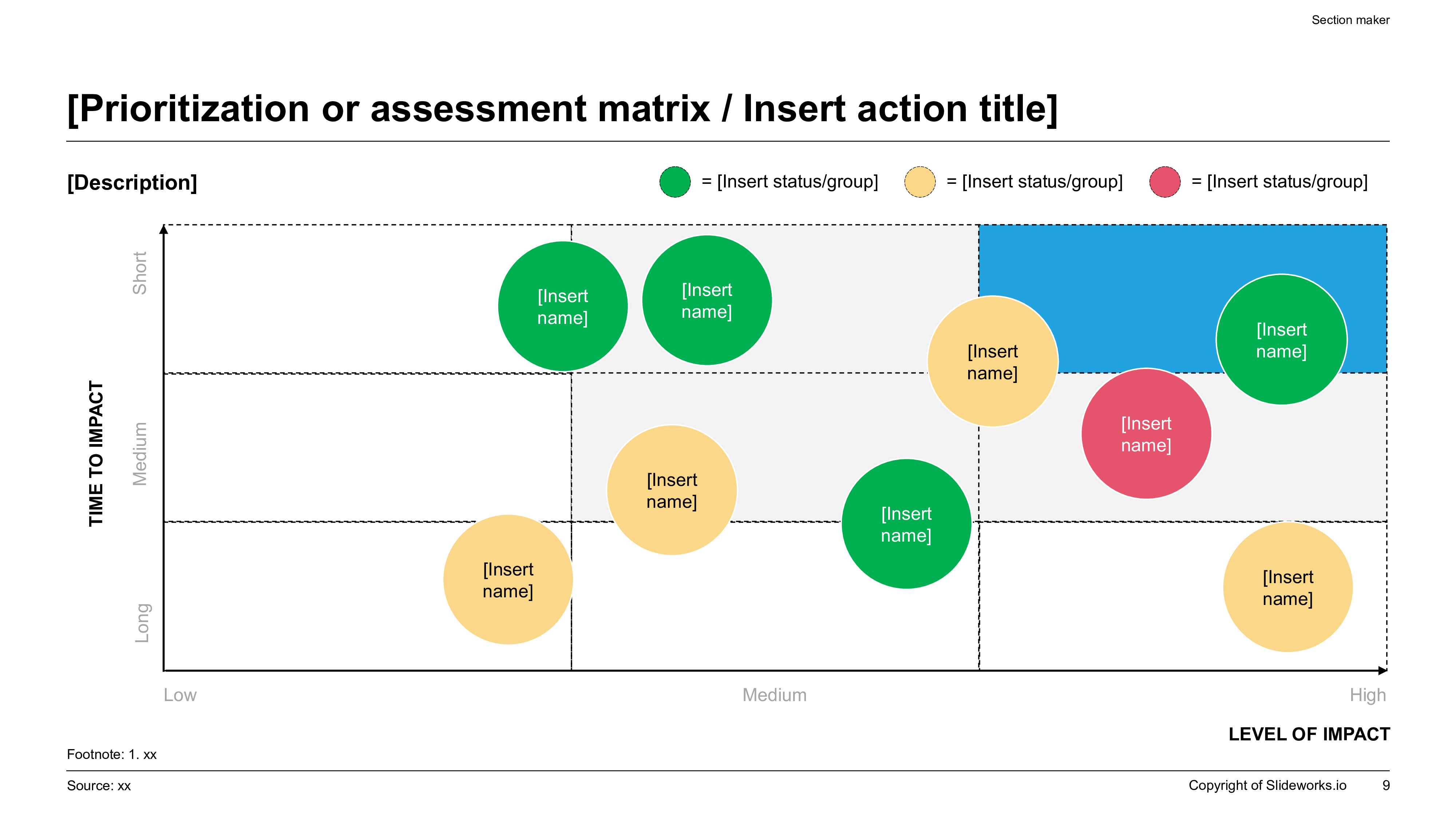
Action Title Rewrite Matrix For Benchmark Slides
The title should state the conclusion. Do not waste the headline on a topic label when the reader needs the implication.
| Weak Topic Title | Stronger Action Title | Why The Rewrite Works |
|---|---|---|
| Competitor overview | Two enterprise rivals outperform us on governance credibility, not core functionality | It names the real gap rather than the subject area |
| Pricing comparison | Packaging complexity, not list price, is the main reason deals stall in procurement | It shows the commercial implication of the comparison |
| Feature matrix | We have parity on table-stakes features but lag on workflow proof for regulated buyers | It separates commodity capabilities from differentiators |
| SWOT analysis | Our strongest wedge is implementation speed, but it is underused in current positioning | It turns a framework into a strategic insight |
| Market map | The market is crowded in SMB messaging but still fragmented in upper-midmarket control features | It tells the audience what the landscape means |
| Next steps | Management should simplify packaging and arm sales with three enterprise proof points this quarter | It makes the decision path explicit |
How To Keep The Evidence Credible
Credibility is the main risk in benchmarking work. Competitor websites change, pricing pages are often incomplete, customer references are selective, and sales anecdotes can overweight memorable losses. The deck should therefore show where evidence comes from and where it is directional rather than exact.
For public companies or well-documented categories, use primary sources where possible: filings, earnings materials, investor presentations, product documentation, official pricing pages, and direct product interactions. For private competitors, label inferred judgments as inferred judgments. The audience will trust a transparent estimate more than an unearned claim of certainty.
This is also where AI needs supervision. A generator can organize the evidence, rewrite the headlines, and turn a spreadsheet of competitor notes into a polished first draft. It cannot decide whether a pricing assumption is stale, whether a feature name means the same thing across vendors, or whether a sales objection reflects a true market pattern.
Multi-Competitor Grid With Embedded Data
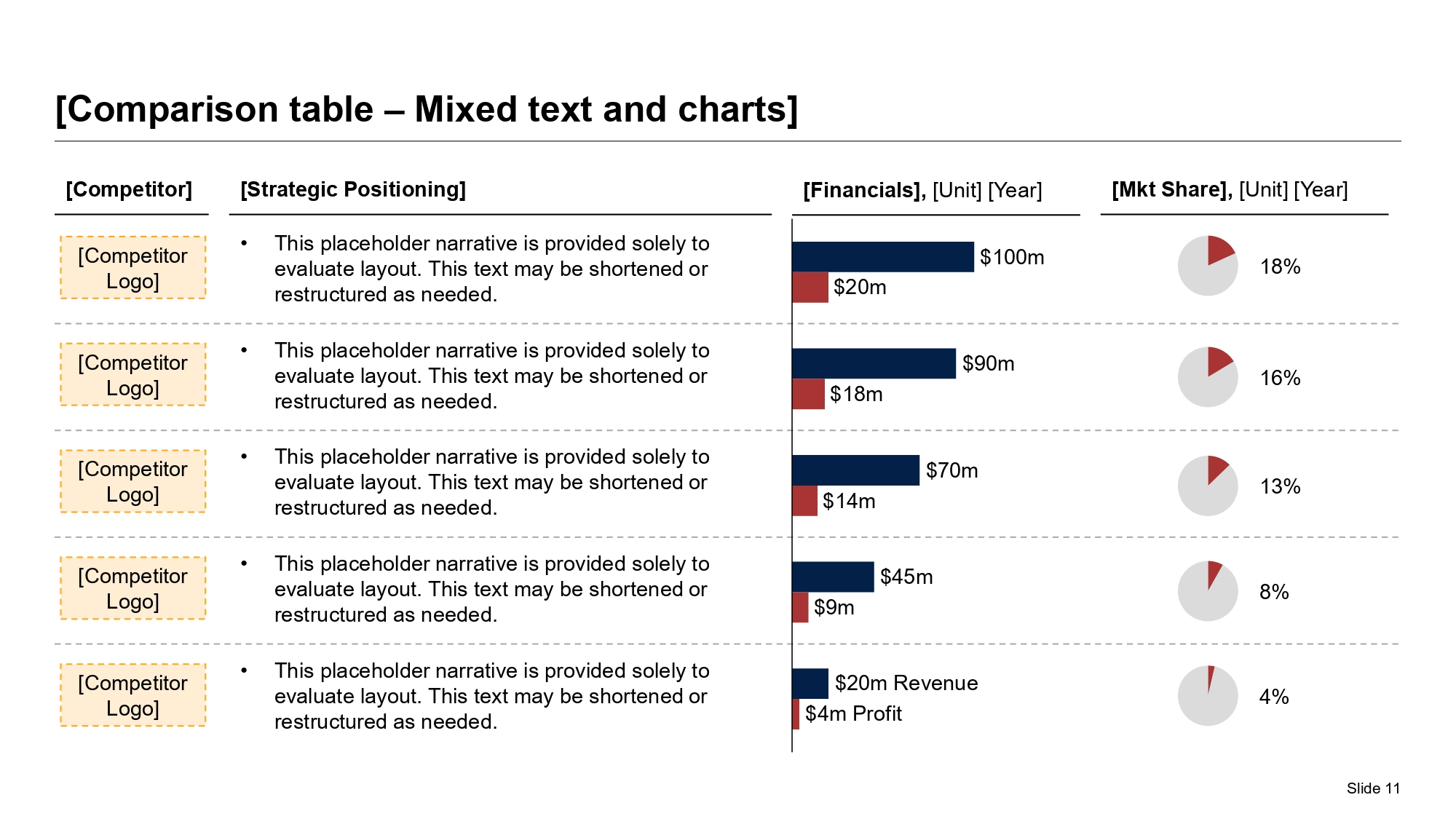
Prompt Recipe For A Competitive Benchmarking Presentation
Create a 12-slide competitive benchmarking presentation for an executive audience. Audience: chief strategy officer, product lead, and CFO. Decision needed: decide which product and pricing moves should be prioritized over the next two quarters in response to competitive pressure. Include an answer-first executive summary, decision frame, peer set definition, comparison criteria, feature and workflow benchmark, pricing and packaging comparison, customer or win-loss evidence, strategic implication by segment, prioritized response options, risks, and appendix source-note placeholders. Use consulting-style action titles on every slide. Make the tone analytical, concise, and board-ready. Design for editable PowerPoint-style output rather than decorative AI slides.
What To Feed XLSlides For A Better Benchmarking Draft
The quality of the first draft depends on whether the prompt contains business judgment inputs instead of generic competitor names.
| Input | Why It Matters | Good Example |
|---|---|---|
| Decision context | Prevents the output from becoming a generic market overview | Decide whether enterprise packaging changes should be funded this quarter |
| Peer set | Keeps the deck focused on the right rivals | Compare us against Competitor A, Competitor B, and the incumbent category leader |
| Criteria | Forces the deck to compare the same things across vendors | Governance features, pricing logic, implementation speed, and analytics depth |
| Evidence available | Lets the tool organize real material instead of inventing filler | Pricing screenshots, win-loss notes, analyst summary, demo notes, and customer objections |
| Audience sensitivity | Changes the density and framing of the slides | Board committee needs short answer and risk treatment; product team needs detail in appendix |
| Desired recommendation style | Shapes how the conclusion is written | Prioritized response plan with owner, timing, and investment implication |
| Output requirement | Aligns the draft to real workflow needs | Editable PowerPoint-style deck with action titles and source-note placeholders |
Quality Checklist Before Sharing The Benchmark Deck
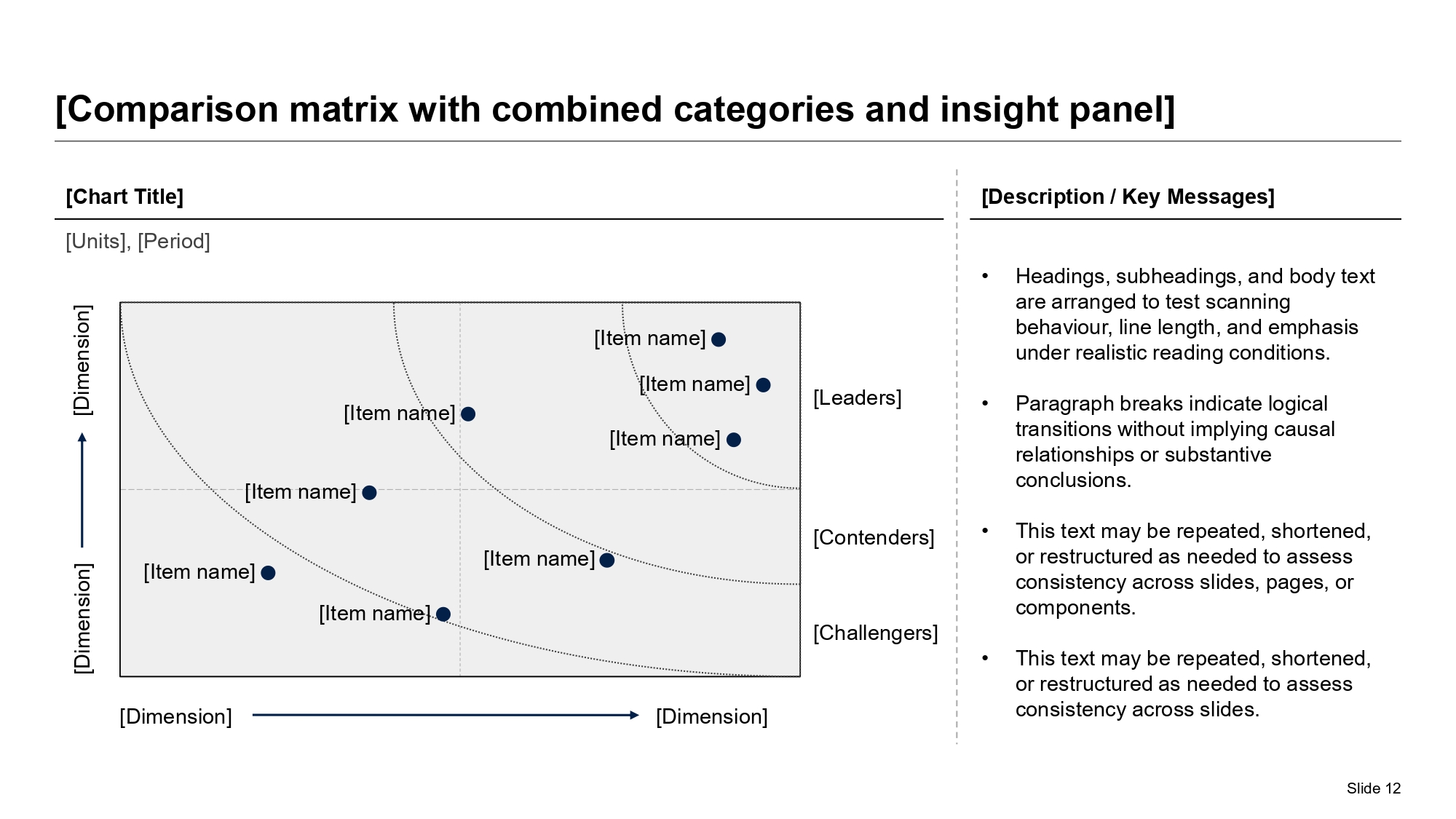
Competitive Positioning Quadrant
Frequently Asked Questions
What should a competitive benchmarking presentation include?
At minimum, include the decision context, peer set, comparison criteria, the main comparative findings, evidence sources, and a clear implication for management. The benchmark should end with a recommendation, not just a landscape summary.
How many competitors should be in the main deck?
Usually three to five. More than that often belongs in the appendix unless the audience genuinely needs a broad market scan. The main story should focus on the rivals that matter most to the decision.
Can AI generate a reliable competitor benchmarking deck?
AI can generate a strong first draft structure, slide flow, and headline logic, but the deck is only reliable after a human validates evidence, definitions, assumptions, and the recommendation.
What is the difference between a benchmark deck and a battlecard?
A benchmark deck is broader and usually supports management decisions such as roadmap, pricing, or strategy. A battlecard is narrower and optimized for a specific selling situation against a named competitor.
Build The First Draft In XLSlides
Use XLSlides to turn competitor notes, pricing screenshots, feature comparisons, and win-loss evidence into an editable first draft with action titles, scorecards, comparison matrices, and a concrete management recommendation.