Executive Summary & Direct Answer: The Fiduciary Standard for the Annual Internal Audit Plan & SOX Compliance Presentation
The Annual Internal Audit Plan and Sarbanes-Oxley (SOX 404) Compliance Presentation is the statutory touchstone between management and the Board of Directors. For the Chief Audit Executive (CAE), Vice President of Internal Audit, and Corporate Controller, presenting this deck to the Audit Committee is not an administrative status review; it is an evidentiary hearing. Under the Institute of Internal Auditors (IIA) Global Internal Audit Standards (GIAS) and Public Company Accounting Oversight Board (PCAOB) Auditing Standard No. 2201 (AS 2201), the Audit Committee carries non-delegable fiduciary responsibility for overseeing internal control over financial reporting (ICFR), evaluating enterprise risk management, approving the annual internal audit charter and budget, and assessing the external auditor's independence and reliance protocols.
Yet, a pervasive disconnect cripples corporate governance across public corporations and pre-IPO enterprises. Most internal audit presentations fall into one of three systemic failure modes:
1. The 150-Row Spreadsheet Dump: Internal audit teams project microscopic testing trackers, listing 120 auditable entities across 45 business units in 7-point font. Audit Committee members—distinguished outside directors, former CEOs, and audit committee financial experts (ACFEs)—are inundated with transactional minutiae while deprived of strategic risk context.
2. The Tick-and-Tie Compliance Illusion: The presentation reports hours logged and checklists completed, celebrating that "94% of planned controls were tested on schedule," while obscuring catastrophic control design flaws, enterprise system migrations, supply chain vulnerabilities, or unmitigated privileged access risks.
3. The Deficiency Severity Ambiguity: Presenters bury control breakdowns under euphemistic management jargon, blurring the statutory boundaries between a benign Control Deficiency (CD), a Significant Deficiency (SD) requiring formal committee disclosure, and a Material Weakness (MW) mandating public Form 10-K adverse opinions and SEC reporting.
An institutional, decision-ready Internal Audit and SOX presentation fundamentally reframes this relationship. It replaces defensive cataloging with an Answer-First executive architecture. Within the first two slides, the CAE establishes: - The Dynamic Risk-Based Audit Universe: How 180 auditable business entities were quantitatively triaged across Likelihood, Financial Materiality, and Velocity, resulting in 28 high-priority audits (Tier 1 Annual, Tier 2 Biennial, Tier 3 Rotational). - The SOX 404(b) Top-Down Scoping Envelope: Quantitative materiality thresholds (e.g., $18.5M planning materiality, $9.25M tolerable misstatement), in-scope locations covering 84% of consolidated revenue, and key financial statement line item (FSLI) assertions under review. - Capacity & Co-Source Resource Allocation: Total planned productive capacity (e.g., 18,400 direct audit hours across 10 internal FTEs and Big 4 co-source subject matter specialists), reconciling direct testing hours against budget constraints. - External Auditor Reliance Maximization: The structured coordination model with the external audit firm (PwC, EY, Deloitte, KPMG) designed to achieve 45%–60% direct testing reliance, avoiding duplicative fieldwork and preserving between $350,000 and $1,200,000 in unnecessary external audit fee inflation. - Forensic Deficiency Escalation & Remediation Aging: An unvarnished evaluation of open findings, classifying issues under PCAOB definitions, analyzing repeat root-causes, and enforcing executive accountability via Management Action Plans (MAPs) with strict re-testing verification gates before year-end financial close.
When structured through disciplined action titles, executive visual frameworks, and empirical data tables, the Internal Audit presentation transforms the CAE from a compliance policeman into the Audit Committee's most indispensable strategic advisor.
Key Institutional Takeaways for Chief Audit Executives, Corporate Controllers, and the Audit Committee
- Dynamic Risk-Based Scoping Outperforms Static Annual Calendars: Replace rigid 12-month audit plans with a dynamic, risk-weighted universe. Re-evaluate audit priorities quarterly against macroeconomic volatility, M&A integration, ERP deployments, and cyber threats, allocating 15%–20% of annual capacity as a discretionary reserve for emerging board requests.
- Enforce PCAOB AS 2201 Top-Down Risk Alignment: Scoping SOX 404 controls is not an exercise in testing everything. Structure testing strictly around financial statement materiality benchmarks (typically 5% of Pre-Tax Income or 0.5%–1.0% of Total Revenue), focusing testing intensity on significant accounts, non-routine transactions, and high-judgment accounting estimates.
- Optimize External Auditor Direct Reliance to Control Professional Fees: Structure internal audit documentation, workpapers, and sampling methodologies to satisfy external auditor direct reliance standards under PCAOB AS 2605. Achieving 45%–60% reliance across low-to-medium risk transactional controls directly eliminates redundant testing and curbs external audit fee escalation.
- Maintain Uncompromising Rigor in Deficiency Severity Classification: Enforce strict statutory adherence to SEC and PCAOB evaluation criteria. Never allow management pressure to downgrade an aggregated set of control breakdowns into a minor finding; clearly distinguish between Control Deficiencies, Significant Deficiencies, and disclosable Material Weaknesses.
- Integrate IT General Controls (ITGC) with Business Process Automation: ITGC design failures instantly contaminate automated application controls, interface feeds, and Information Produced by Entity (IPE). Prioritize privileged access management (PAM), terminate-on-departure user lifecycle testing, and strict software change controls before testing financial business cycles.
- Enforce Closed-Loop Management Action Plan (MAP) Accountability: An audit finding without a verified, re-tested remediation is an ongoing fiduciary exposure. Track remediation aging with transparent 30-60-90 day aging corridors, requiring executive business unit sponsors to defend overdue corrective actions directly before the Audit Committee.
Simulate & Prototype: Internal Audit Plan & SOX Compliance Presentation Guide: Building Decision-Ready Audit Committee Decks
Drag to draw custom components, test consulting layout presets, and preview presentation architecture live before generating with AI.
Exhibit 1: Dynamic Risk Assessment & Audit Universe Prioritization Matrix
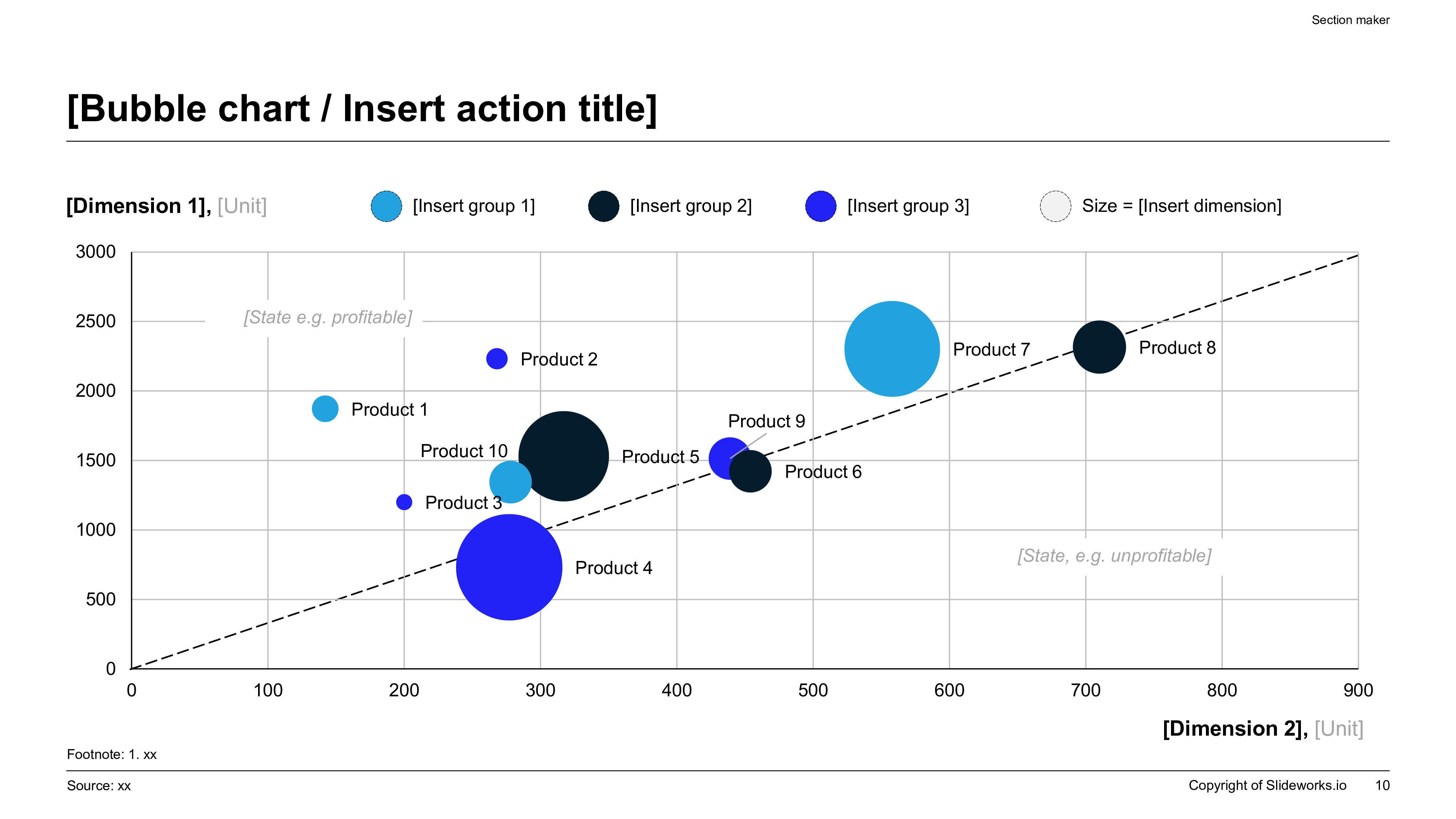
Table 1: The Three Lines of Defense (3LoD) Alignment: Audit Universe Entity Tiering & Frequency Standards
| Audit Universe Tier | Risk Velocity & Materiality Profile | Mandatory Audit Frequency | Scope & Core Coverage Focus | Typical Auditable Entities | Audit Committee Reporting Cadence |
|---|---|---|---|---|---|
| Tier 1: High Inherent Risk (Critical Fiduciary) | Financial materiality >$50M, high regulatory scrutiny, major system changes, or severe fraud susceptibility | Annual Mandatory (12-Month Cycle) | Full-scope financial close, SOX key controls, revenue recognition, treasury liquidity, cyber incident response, and executive authority controls | Corporate Treasury, Cloud Infrastructure, Core ERP, North America Commercial Sales, Revenue Operations, Digital Banking Platforms | Quarterly executive deep-dive, detailed finding memos, and formal pre-close remediation status |
| Tier 2: Medium-High Risk (Operational Core) | Financial materiality $15M–$50M, complex operational interdependencies, moderate manual processing, or localized turnover | Biennial (24-Month Alternating Cycle) | Procure-to-Pay, inventory valuation, physical warehouse logistics, vendor risk management, regional payroll processing, and regional tax compliance | European Distribution Center, LATAM Regional Office, Central Procurement, Factory Automation Workcells, Enterprise Benefits Administration | Semi-annual summary reporting with immediate off-cycle escalation upon discovery of repeat deficiencies |
| Tier 3: Moderate Risk (Cyclical Baseline) | Financial materiality $3M–$15M, mature and stable control environment, low personnel turnover, standardized policies | Rotational (36-to-48 Month Cadence) | Field office travel & entertainment, branch petty cash, regional lease accounting, localized health & safety compliance, fixed asset verification | Secondary Field Sales Offices, Dormant Legal Subsidiaries, Regional Shared Services Centers, Surplus Asset Holding Entities | Annual consolidated status review in the annual audit wrap-up memorandum |
| Tier 4: Dynamic / Emerging Risk Reserve | Rapidly emerging threat vectors, post-M&A transaction carve-outs, sudden executive departures, or whistleblower hotline allegations | Continuous Monitoring / Immediate Trigger | Targeted forensic data analytics, algorithmic AI deployment reviews, pre-implementation cloud migration gates, post-merger integration synergy audits | Newly Acquired SaaS Portcos, Generative AI Model Governance, Third-Party Logistics Outsource Partners, Specialized R&D Facilities | Ad-hoc executive session notification within 10 business days of investigation launch |
The Dynamic Risk-Based Audit Universe: Methodology for Scoping Inherent Risk, Velocity & Materiality
A static internal audit plan formulated twelve months in advance is an invitation to corporate surprise. Under the revised 2024 IIA Global Internal Audit Standards, the Chief Audit Executive must maintain a dynamic risk assessment process that continuously senses changes across the enterprise's operating model, technology stack, macroeconomic environment, and regulatory landscape.
To construct a defensible audit universe, leading internal audit functions employ a five-factor quantitative weighting model that scores every auditable entity on a scale of 1.0 to 5.0 across both Inherent Risk and Control Environment Maturity:
1. Financial Exposure & Transactional Materiality (Weight: 30%): Evaluates the gross dollar magnitude of the entity's P&L contributions, balance sheet assets, cash balances, and off-balance sheet contractual liabilities relative to consolidated materiality thresholds.
2. Operational Complexity & Process Fragmentation (Weight: 20%): Measures the degree of manual intervention, cross-border transaction flows, legacy bespoke software dependencies, and reliance on third-party service organizations (SOC 1 / SOC 2 Type II reports).
3. Regulatory, Legal & Contractual Exposure (Weight: 20%): Evaluates compliance requirements across SEC disclosures, PCAOB standards, GDPR/CCPA data privacy regulations, Foreign Corrupt Practices Act (FCPA) cross-border mandates, and industry-specific regulations (FINRA, HIPAA, FDA).
4. Velocity of Strategic & Systems Change (Weight: 15%): Tracks active organizational disruption, including recent M&A integrations, ERP cloud migrations (e.g., SAP S/4HANA or Workday rollouts), organizational restructuring, executive turnover, or robotic process automation (RPA) implementations.
5. Historical Audit Performance & Control Track Record (Weight: 15%): Considers prior audit ratings, the recurring nature of past audit findings, the responsiveness of management to corrective action plans, and the prevalence of whistleblower or fraud hotline reports over the preceding 24 months.
Dynamic Resource Buffer Allocation: Rather than budgeting 100% of available staff hours across pre-scheduled reviews, elite audit teams reserve 15% to 20% of their total productive annual capacity for "Special Investigations, Management Consultations, and Emerging Risk Deep-Dives." This unallocated capacity prevents the audit team from deferring mandatory SOX testing whenever the CEO, CFO, or Audit Committee requests an urgent off-cycle review—such as an investigation into a regional distributor's billing irregularities, an unannounced vendor conflict-of-interest inquiry, or a pre-implementation security audit of an enterprise generative AI deployment.
Audit Committee Presentation Technique: When presenting the audit universe, avoid displaying an undifferentiated, multi-page list. Instead, present an Executive Summary Waterfall showing: - Total Universe Entities (e.g., 180 entities) - Less: Entities audited within the past 12 months in satisfactory standing (42 entities) - Less: Low-risk rotational entities deferred under 36-month cycle rules (86 entities) - Add: High-risk entities flagged by dynamic risk triggers or systems migrations (8 new entities) - Equals: Selected Annual Audit Plan Candidates (36 discrete audits, comprising 12 Tier 1, 16 Tier 2, and 8 Special Review / SOX focus areas). This visual bridge proves to the Audit Committee that every included audit earned its place through empirical risk scoring, eliminating accusations of departmental bias or stale routine.
Table 2: Internal Audit Capacity & Resource Allocation: Planned vs. Available Audit Hours Matrix
| Audit Program Domain | Internal Staff FTE Hours | Co-Source Partner Hours | Total Direct Audit Hours | Share of Annual Capacity | Budgeted Direct Cost ($) | Primary Fiduciary Stakeholder |
|---|---|---|---|---|---|---|
| SOX 404(b) Financial Reporting Controls (ICFR) | 5,200 hrs (3.25 FTEs) | 1,800 hrs (Big 4 Co-Source) | 7,000 hrs | 38.0% | $875,000 | Corporate Controller & External Auditor (Reliance Lead) |
| Core Financial, Commercial & Revenue Cycle Audits | 3,200 hrs (2.0 FTEs) | 600 hrs (Specialized Valuation) | 3,800 hrs | 20.7% | $475,000 | VP of Finance, Chief Commercial Officer & Regional MDs |
| IT General Controls (ITGC), Cyber & Cloud Audits | 1,600 hrs (1.0 FTE) | 1,700 hrs (Cyber/Cloud SME) | 3,300 hrs | 17.9% | $560,000 | Chief Information Officer (CIO) & Chief Information Security Officer |
| Operational Efficiency, Supply Chain & ESG Audits | 2,000 hrs (1.25 FTEs) | 400 hrs (Supply Chain SME) | 2,400 hrs | 13.0% | $310,000 | Chief Operating Officer (COO) & Head of Global Procurement |
| Special Investigations, Fraud Risk & Regulatory Requests | 800 hrs (0.5 FTE) | 300 hrs (Forensic Accounting) | 1,100 hrs | 6.0% | $195,000 | General Counsel, Audit Committee Chair & Chief Compliance Officer |
| Dynamic Emerging Risk Buffer & Committee Consultations | 600 hrs (0.4 FTE) | 200 hrs (AI/Emerging Tech) | 800 hrs | 4.4% | $125,000 | Audit Committee of the Board of Directors |
| Total Productive Direct Audit Program (Reconciled) | 13,400 hrs (8.4 FTEs) | 5,000 hrs (Subject Matter Partners) | 18,400 hrs | 100.0% | $2,540,000 | Chief Audit Executive & Board Audit Committee |
Exhibit 2: Internal Audit Capacity & Resource Allocation: Planned vs. Available Audit Hours
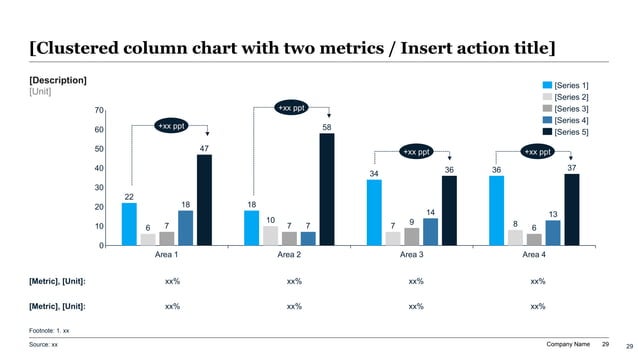
SOX 404(b) ICFR Scoping: Materiality Thresholds, Scoped Locations & Financial Statement Line Item (FSLI) Mapping
Under Section 404(b) of the Sarbanes-Oxley Act of 2002 and PCAOB AS 2201, management and the independent auditor must issue formal opinions on the design and operating effectiveness of Internal Control Over Financial Reporting (ICFR). For large accelerated filers and accelerated filers, SOX compliance is the most resource-intensive compliance initiative on the annual corporate calendar.
The hallmark of an unsophisticated SOX program is "bottom-up over-scoping"—testing hundreds of low-level transactional controls across minor business units out of fear of external auditor pushback. Conversely, an institutional SOX program strictly enforces a top-down, risk-based approach anchored in quantitative materiality:
1. Quantitative Materiality Benchmarking: - Planning Materiality (PM): Established in collaboration with the external auditor, typically calculated as 5.0% of Normalized Pre-Tax Income (or 0.5%–1.0% of Consolidated Revenue for high-growth or break-even businesses). For an enterprise generating $400M in revenue and $40M in pre-tax income, Planning Materiality is set at $2.0M. - Tolerable Misstatement (TM) / Performance Materiality: Calculated at 50% to 75% of planning materiality ($1.0M to $1.5M). Any Financial Statement Line Item (FSLI) with balances or transaction flows exceeding Tolerable Misstatement is automatically screened for risk. - Clearly Trivial Threshold (CTT) / De Minimis: Established at 3% to 5% of planning materiality ($60,000 to $100,000), below which misstatements are deemed inconsequential and excluded from formal summary tracking unless qualitative fraud indicators exist.
2. FSLI Scoping & Assertion Linkage: Every in-scope financial statement line item must be mapped to its relevant financial statement assertions: - Existence or Occurrence (e.g., recorded revenue represents genuine shipments to legitimate customers) - Completeness (e.g., all accrued liabilities and trade accounts payable are recognized at period-end) - Valuation or Allocation (e.g., inventory reserves, allowance for credit losses under CECL, and goodwill impairment reflect sound economic modeling) - Rights and Obligations (e.g., capitalized lease obligations and consignment inventory are accurately classified) - Presentation and Disclosure (e.g., non-GAAP adjustments, debt covenant compliance disclosures, and segment reporting comply with SEC Regulation S-K).
3. Entity & Location Scoping Tiers: Locations and legal entities are categorized into three distinct operational buckets: - Group 1 (Individually Significant): Locations whose revenue or assets exceed 20% of consolidated totals (e.g., US Commercial Operations, European Manufacturing). Full-scope control testing covering all identified business process and ITGC key controls. - Group 2 (Specific Significant Risks): Locations that do not meet the 20% threshold but house complex risk profiles—such as specialized derivatives trading desks, high-risk localized regulatory jurisdictions, or centralized shared service centers. Targeted testing of specific transaction cycles. - Group 3 (Low-Risk Residual Entities): Small distribution centers, newly incorporated sales subsidiaries, or dormant holding entities. Covered exclusively through company-level Entity-Level Controls (ELCs), quarterly analytical balance sheet reviews, and centralized internal control certifications.
4. Entity-Level Controls (ELC) Leverage: Under COSO Principle 1 through 5 (Control Environment, Risk Assessment, Control Activities, Information & Communication, Monitoring), strong entity-level controls reduce the required extent of transactional testing. If the Audit Committee maintains robust governance, tone-at-the-top oversight, a zero-tolerance whistle-blower protocol, and rigorous corporate accounting policies, internal audit can justify smaller transactional sample sizes and lower testing frequencies across routine operational cycles.
Exhibit 3: Annual SOX 404 & Internal Audit Execution Schedule: 4-Phase Operational Gantt
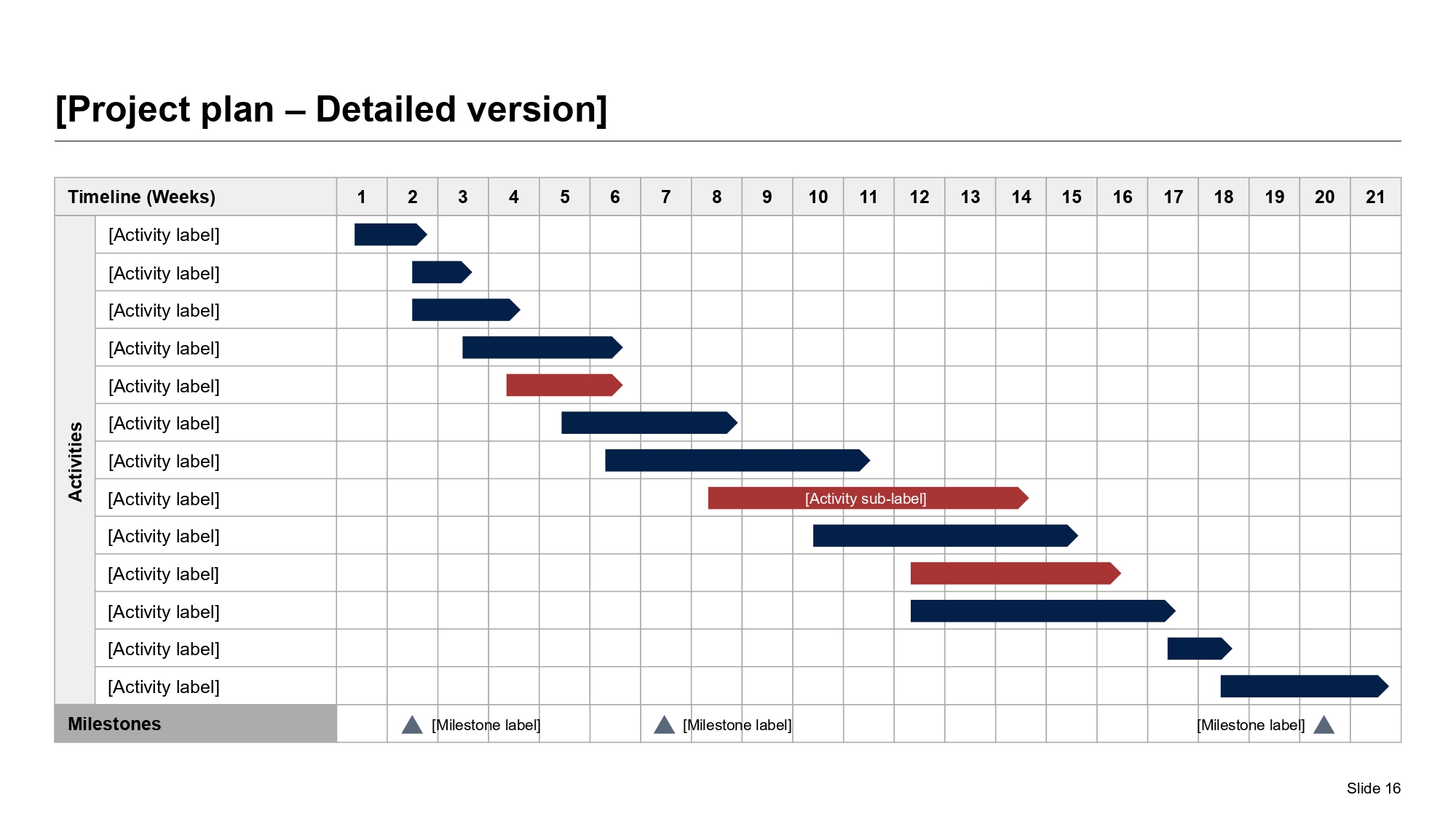
Table 3: The 4-Phase SOX Testing Lifecycle: Milestones, Sampling Benchmarks, and External Auditor Reliance
| Lifecycle Phase | Operational Window | Core Testing & Governance Activities | Sample Size Benchmarks | Primary Deliverables | External Auditor Reliance Coordination |
|---|---|---|---|---|---|
| Phase 1: Scoping, Materiality & RCM Refresh | Weeks 1–8 (January – February) | Update Risk & Control Matrices (RCM); establish quantitative planning materiality; incorporate new accounting standards (ASC 842, ASC 606); assess system implementations; align on external audit reliance strategy | N/A (Analytical scoping & qualitative risk interviews across 45 process owners) | Approved SOX Scoping Memorandum, Updated Risk & Control Matrices, Entity-Level Control Questionnaires | Joint scoping sign-off meeting with external audit engagement partner; agreement on controls targeted for direct reliance |
| Phase 2: Walkthroughs & Design Effectiveness Testing (DET) | Weeks 9–20 (March – May) | Perform end-to-end walkthroughs for all 185 key controls; evaluate control design; verify Information Produced by Entity (IPE) source logic; identify control gaps prior to operational execution | Sample of 1 transaction per control frequency (Daily, Weekly, Monthly, Quarterly, Annual) | Signed Process Narrative Documentation, Control Design Deficiency Memos, Flowcharts with Key Control Identification Badges | External audit team attends 40% of joint walkthrough sessions; confirms agreement on control design before interim testing begins |
| Phase 3: Interim Operating Effectiveness Testing (OET) | Weeks 21–36 (June – September) | Test operating effectiveness across 9 months of transaction activity (through Sept 30); evaluate automated application controls and interface parameters; identify initial operating control deficiencies | Annual: 1; Quarterly: 2; Monthly: 2–5; Weekly: 5–10; Daily: 25–40; Automated: 1 (with verified ITGC baseline) | Interim Testing Workpapers, Initial Deficiency Log, Early-Warning Remediation Memoranda to Process Owners | External audit team reviews completed interim workpapers; initiates sample re-performance for high-reliance operational controls |
| Phase 4: Roll-Forward, Re-Testing & Year-End Close | Weeks 37–48 (October – December) | Execute roll-forward testing covering Q4 transactions (Oct–Dec); conduct re-testing on remediated controls; evaluate year-end manual journal entries, tax provisions, and management estimates; finalize deficiency classifications | Roll-Forward Sample: 2–10 transactions depending on control frequency; Remediation Sample: full standard sample size (e.g., 25 items for daily) | Final Management Evaluation Report on ICFR, Aggregation Analysis Memo, Master Deficiency Dashboard for Audit Committee | Final external audit reliance workpaper delivery; joint alignment on Section 404 audit opinion and Form 10-K disclosures |
Internal Control Deficiency Evaluation: Differentiating Deficiencies, Significant Deficiencies & Material Weaknesses
The most legally sensitive responsibility borne by the Chief Audit Executive and Corporate Controller is the formal evaluation and severity classification of internal control deficiencies. Under SEC rules and PCAOB AS 2201, a control deficiency must be evaluated not merely by the magnitude of the actual dollar error detected during testing, but by the magnitude of the potential misstatement that could occur and remain undetected due to the control failure.
The Three Statutory Deficiency Tiers: 1. Control Deficiency (CD): Exists when the design or operation of a control does not allow management or employees, in the normal course of performing their assigned functions, to prevent or detect misstatements on a timely basis. A control deficiency is reported to process management and summarized annually for the Audit Committee, but carries zero external disclosure obligations. 2. Significant Deficiency (SD): A deficiency, or a combination of deficiencies, in internal control over financial reporting that is less severe than a material weakness yet important enough to merit attention by those charged with oversight of the company's financial reporting. By law, Significant Deficiencies MUST be formally reported in writing to the Audit Committee and independent auditor. However, they are NOT required to be disclosed publicly in SEC filings (Form 10-Q or Form 10-K). 3. Material Weakness (MW): A deficiency, or a combination of deficiencies, in ICFR such that there is a reasonable possibility that a material misstatement of the company's annual or interim financial statements will not be prevented or detected on a timely basis. Under Section 404, if a single Material Weakness exists at fiscal year-end, management and the independent auditor are legally prohibited from concluding that ICFR is effective. It triggers an adverse public audit opinion, public disclosure in Item 9A of Form 10-K, executive officer certification caveats under Section 302, and severe reputational damage.
The Four Critical Evaluation Pitfalls: - The "No Dollar Error" Defense: Management frequently argues that because substantive audit procedures discovered no actual financial misstatement, a control failure is merely a minor finding. The SEC explicitly rejects this logic: if a control breakdown creates a reasonable possibility of an undetected material error, a Material Weakness exists regardless of whether an actual error occurred. - The Reasonable Possibility Standard: In PCAOB terminology, "reasonable possibility" means the likelihood of the event is either "reasonably possible" or "probable" as defined in FASB ASC 450 (Contingencies). If the likelihood is more than remote, the condition is met. - The Compensating Control Test: To successfully downgrade a potential Material Weakness to a Significant Deficiency, management must prove that active, operating compensating controls operate at a level of precision sufficient to catch a material error. A generic "management review of monthly financial statements" is legally insufficient unless the review possesses documented investigation thresholds, underlying data reconciliation, and evidentiary sign-offs. - The Aggregation Trap: Multiple individual control deficiencies across the same financial statement cycle—such as inventory physical counting discrepancies, obsolete inventory reserve estimation errors, and manual journal entry authorization lapses—must be evaluated in the aggregate. If their combined exposure exceeds materiality, they aggregate into a Material Weakness even if each finding individually is immaterial.
Exhibit 4: Internal Control Deficiency Classification & Fiduciary Impact Matrix
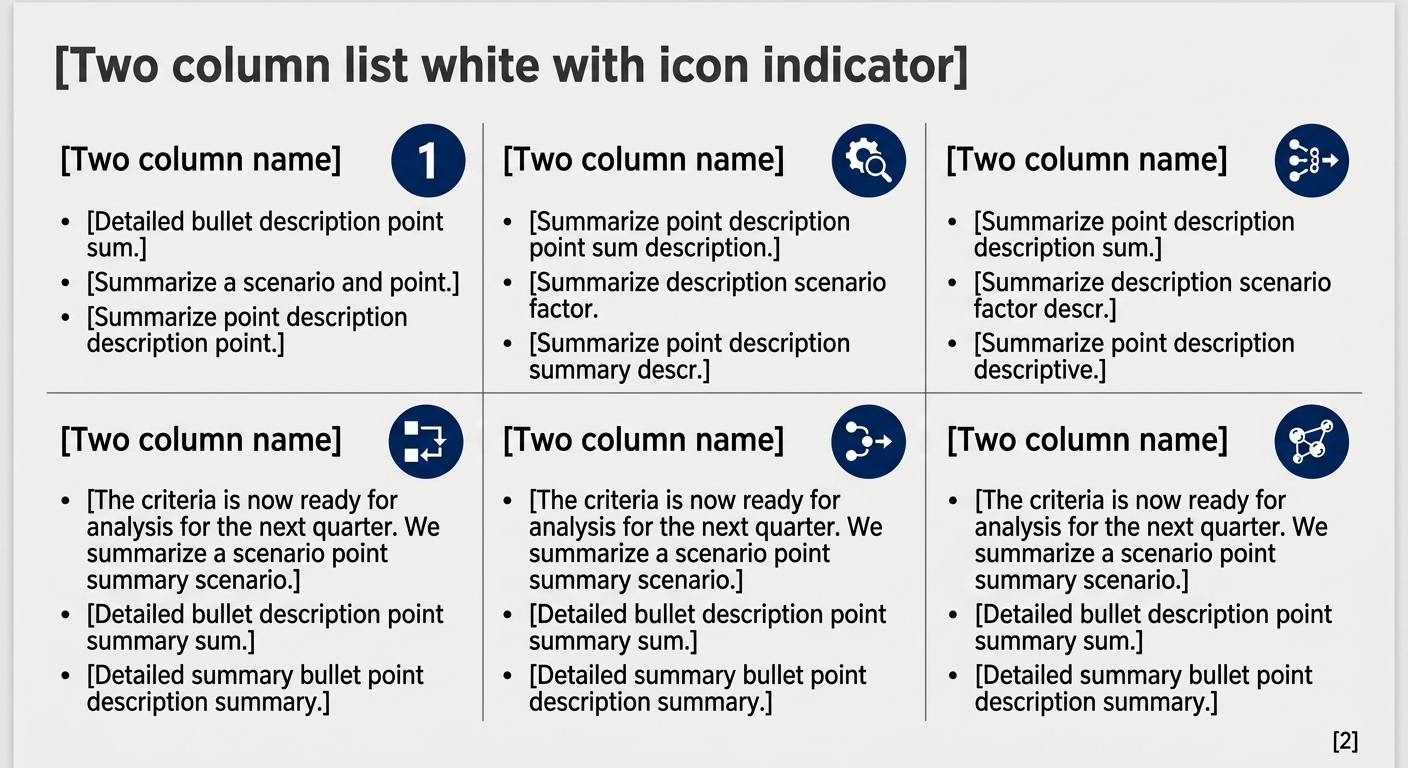
Table 4: SEC & PCAOB Control Deficiency Evaluation Framework: Classification Triggers, Mitigating Factors & Board Reporting Gates
| Severity Classification | PCAOB Likelihood Standard & Definition | Potential Misstatement Magnitude | Compensating Control Defense Requirements | Audit Committee Reporting Mandate | Public SEC Form 10-K Disclosure |
|---|---|---|---|---|---|
| Control Deficiency (CD) | Design or operational failure prevents timely prevention or detection of misstatements in normal course of business | Inconsequential (Less than Tolerable Misstatement and Clearly Trivial Threshold, e.g. <$100,000) | Standard operational controls or secondary supervisory reviews detect transactional errors before ledger posting | Summarized annually in the year-end internal controls status report; no mandatory individual review | No public disclosure required. Handled internally via process owner management action plans |
| Significant Deficiency (SD) | Reasonable possibility of misstatement; less severe than material weakness yet merits governance oversight by Audit Committee | More than inconsequential but less than Planning Materiality ($100,000 to $2,000,000) | Must demonstrate robust secondary detective controls operating at a precision level capable of preventing material P&L distortion | Mandatory formal written communication to Audit Committee and External Auditor prior to earnings release and Form 10-K filing | No public filing requirement. Remains private between Management, External Auditor, and the Audit Committee |
| Material Weakness (MW) | Reasonable possibility that a material misstatement of annual or interim financial statements will not be prevented or detected timely | Material (Exceeds Planning Materiality, e.g. >$2,000,000 or qualitatively critical to investor decisions) | No operating compensating controls operate at sufficient precision to catch the potential misstatement prior to filing | Immediate executive session notification, comprehensive root-cause analysis presentation, and board-level remediation oversight | Mandatory public disclosure in Item 9A of Form 10-K; adverse auditor opinion on ICFR; CEO/CFO certification caveats |
IT General Controls (ITGC) & Emerging Digital Risks: AI Governance, Cloud Infrastructure & Cyber Control Testing
In modern enterprise architectures, the integrity of financial reporting rests upon the foundation of IT General Controls (ITGC). When an ITGC fails—such as an unmonitored database administrator possessing unrestricted write-access to the production ERP ledger—the failure contaminates every automated business process control, automated calculation, and system-generated report (Information Produced by Entity - IPE) reliant on that system.
To provide credible assurance to the Audit Committee, the annual internal audit plan must test the four classical ITGC pillars while expanding coverage into modern infrastructure risks:
1. The Four Foundational ITGC Pillars: - Access to Programs and Data: Enforcement of least-privilege role-based access control (RBAC), multi-factor authentication (MFA) across all administrative endpoints, automated privileged access management (PAM) vaulting, and strict terminate-on-departure SLAs (mandating access revocation within 24 hours of employee separation). - Program Change Management: Strict physical and logical segregation of duties between software developers, QA testers, and production deployment engineers. Mandatory peer code review, automated CI/CD pipeline security gates, and documented rollback plans for every production release. - Computer Operations & Batch Scheduling: Automated job scheduling monitoring, interface failure alerts, daily enterprise data backup verification, offsite disaster recovery replication, and semi-annual failover testing. - Program Development & System Implementations: Pre-implementation and post-implementation audit gates for major ERP transformations (e.g., SAP, Oracle, NetSuite), data migration reconciliations, and custom application development lifecycles.
2. Information Produced by Entity (IPE) Integrity: External auditors under PCAOB scrutiny aggressively challenge the completeness and accuracy of system-generated reports used in key controls. Internal audit must verify report query parameters, SQL script logic, report modification controls, and user-defined sorting criteria to ensure that management is not reviewing filtered or truncated financial populations.
3. Emerging Digital Risk: Enterprise AI & Autonomous Workflows: As enterprise finance teams deploy algorithmic automation, robotic process automation (RPA), and generative AI models for contract review, customer billing, and account reconciliations, the CAE must integrate AI governance into the audit plan: - Model Explainability & Auditability: Verifying that automated decision-making engines leave tamper-evident audit trails. - Training Data & Financial Model Drift: Testing controls that monitor financial AI models for data corruption, algorithmic bias, and calculation degradation over time. - Data Privacy & IP Safeguards: Ensuring proprietary enterprise financial data is not ingested into public LLM training sets or exposed via unauthorized shadow AI software.
Checklist 1: The Pre-Audit Committee Deck Defense & External Auditor Alignment Gate: 10 Mandatory Checks
Exhibit 5: Management Action Plan (MAP) Remediation & Audit Committee Follow-Up Scorecard
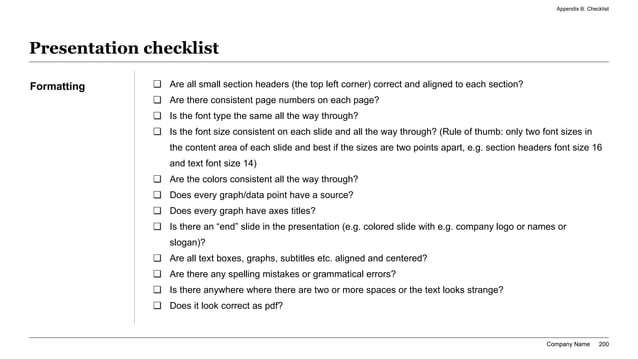
Management Action Plans (MAP) & Remediation Governance: Tracking Overdue Findings and Preventing Repeat Deficiencies
The ultimate measure of an internal audit organization's impact is not the number of deficiencies it discovers, but the permanence of the remediations it enforces. In recurring audit committee presentations, nothing erodes a management team's credibility faster than "chronic finding rollover"—the perpetual deferral of target remediation dates accompanied by superficial procedural tweaks that fail upon subsequent re-testing.
To establish institutional remediation governance, the Chief Audit Executive must implement a four-stage closed-loop remediation protocol:
Stage 1: Root-Cause Decomposition & SMART Corrective Action Design: Management must not simply fix the transactional symptom (e.g., re-performing a missed account reconciliation); they must remediate the underlying systemic failure. Every Management Action Plan (MAP) must satisfy the SMART criteria (Specific, Measurable, Achievable, Relevant, Time-bound) and designate a single executive owner (Vice President or Corporate Controller level). Group ownership ("Shared by Finance and Operations") is strictly prohibited.
Stage 2: Implementation & Evidence Assembly: The process owner executes the corrective action—redesigning the policy, reconfiguring ERP system validation rules, implementing automated reconciliation software, or retraining personnel. The owner compiles an evidentiary closure package documenting the new operating baseline.
Stage 3: The Mandatory Internal Audit Re-Testing Window: Internal audit never closes a finding based on management's verbal representation or policy documentation alone. The redesigned control must operate for a statistically valid operating window before re-testing can commence: - Annual Controls: Must be executed during the annual close cycle under audit observation. - Quarterly Controls: Must operate successfully across at least one full quarterly close (preferably two consecutive quarters). - Monthly Controls: Must operate effectively across a minimum of two to three consecutive month-end closes. - Daily Controls: Must execute cleanly across a minimum sample of 25 consecutive daily transactions without exception.
Stage 4: Formal Validation & Audit Committee Reporting: Upon successful re-testing, internal audit issues a formal Validation Memo and updates the Audit Committee remediation scorecard.
The Overdue Finding Escalation Protocol: To eliminate finding stagnation, leading audit charters incorporate a structured escalation ladder: - 1 to 30 Days Overdue: Notification to the responsible Vice President and Corporate Controller; mandatory explanation included in the monthly audit dashboard. - 31 to 60 Days Overdue: Formal escalation memo to the Chief Financial Officer and Chief Executive Officer; remediation plan subject to executive review. - >60 Days Overdue: The responsible business unit executive is required to attend the next quarterly Audit Committee meeting in person to explain the failure, justify the delay, and present an accelerated remediation commitment under board scrutiny.
Checklist 2: The Chief Audit Executive Annual Plan Execution & SOX Sign-Off Gate: 10 Operational Milestones
XLSlides Internal Audit Plan & SOX Compliance Presentation Prompt Recipe
Act as a seasoned Chief Audit Executive (CAE) and former Big 4 National Office Senior Partner advising a public company Board Audit Committee. Generate an institutional, decision-ready 9-slide presentation blueprint for the Annual Internal Audit Plan and SOX 404 Compliance Review. Context & Institutional Parameters: - Enterprise Profile: Global diversified enterprise generating $1.2B in annual revenue, operating across 14 countries with two core business segments (Commercial Products and Cloud Services). - Governance Frameworks: IIA Global Internal Audit Standards (GIAS 2024), COSO 2013 Internal Control - Integrated Framework, and PCAOB AS 2201. - Departmental Capacity: 18,400 direct productive audit hours across 8.4 internal FTEs and Big 4 co-sourced subject matter specialists. - SOX Scoping: Planning Materiality of $6.0M, Tolerable Misstatement of $3.6M, covering 185 key controls (135 business process, 50 ITGC/automated controls) across 8 in-scope entities representing 86% of consolidated revenue. Formatting & Style Requirements: 1. Every slide must feature a complete McKinsey/Bain-style action title that states the specific strategic finding and forward-looking implication, not a generic topic label. 2. Structure content with MECE logic, integrating quantitative benchmarks, hours reconciliations, and specific control cycles (Revenue, Financial Close, ITGC, Procure-to-Pay). 3. Include visual layout instructions specifying visual frameworks (e.g., multidimensional bubble risk matrices, clustered column capacity charts, operational Gantt plans, and deficiency severity grids). 4. Outline the exact 9-slide presentation architecture from Executive Summary to formal Committee Approval Resolution.
Frequently Asked Questions: Presenting Internal Audit Plans and SOX 404 Compliance to the Audit Committee
How many slides should an Audit Committee Internal Audit and SOX presentation contain?
An executive Audit Committee deck should consist of 8 to 12 core slides for the main presentation, supported by a comprehensive technical appendix. Audit Committee members typically have 20 to 30 minutes allocated on the agenda for internal audit. An executive 9-slide deck allows 10 minutes of answer-first briefing followed by 15 to 20 minutes of high-value strategic discussion. Detailed process walkthroughs, individual RCM matrices, and transactional testing logs belong strictly in the appendix.
What is the ideal ratio between internal staff hours and external co-sourcing partners?
Leading internal audit departments maintain an 80/20 or 70/30 ratio (70%–80% internal FTE hours, 20%–30% co-sourced partner hours). Internal staff provide vital institutional knowledge, organizational relationships, and continuous oversight of core financial cycles. External co-source partners (such as Big 4 or specialized risk consulting firms) are deployed strategically for highly technical, specialized domains—such as cloud security architecture, SAP S/4HANA configurations, algorithmic AI governance, and international forensic investigations—where maintaining full-time internal FTEs is economically inefficient.
How do you convince an Audit Committee that a control breakdown is a Significant Deficiency rather than a Material Weakness?
Defending a Significant Deficiency classification requires quantitative proof and evidentiary documentation under PCAOB AS 2201 standards. The CAE and Controller must present a formal Evaluation Memo demonstrating three elements: (1) The potential misstatement magnitude, even under worst-case assumptions, is bounded below planning materiality; (2) Documented, operating compensating controls (e.g., secondary supervisory reviews or reconciliations) operated at sufficient precision to detect any error before financial close; and (3) Substantive audit procedures and external auditor testing confirmed that zero actual material misstatements occurred in the underlying accounts.
How much discretionary buffer should be reserved in the annual internal audit plan?
Leading CAEs reserve 15% to 20% of total productive audit capacity (typically 2,000 to 3,500 hours for a mid-to-large department) as an unallocated dynamic reserve. This reserve accommodates M&A due diligence requests, post-merger integration reviews, sudden executive departure inquiries, special whistleblower hotline investigations, and pre-implementation system audit gates without disrupting mandatory annual SOX 404 testing schedules.
How can internal audit maximize the external auditor’s reliance on internal testing to reduce audit fees?
To maximize direct reliance under PCAOB AS 2605, internal audit must establish early alignment during Phase 1 scoping. Key requirements include: (1) Adopting identical sampling methodologies and workpaper standards to the external firm; (2) Conducting joint walkthroughs where the external auditor observes internal testing; (3) Completing interim operating effectiveness testing by Q3 (September 30) to allow timely external review; and (4) Focusing reliance on low-to-medium risk transactional controls (e.g., procure-to-pay, fixed assets, routine ITGCs), allowing the external auditor to focus their direct testing on high-judgment estimates and non-routine transactions.
How should overdue audit findings be presented to the Board without alienating executive management?
Present overdue findings through objective, factual data frameworks rather than confrontational rhetoric. Deploy an aging scorecard (0-30 days, 31-90 days, >90 days overdue) that highlights the operational root-cause, compensating controls currently in place, and management's revised remediation timeline. Frame overdue findings in terms of enterprise risk exposure and resource constraints. When chronic non-responsiveness occurs (>90 days), the CAE maintains a fiduciary obligation to inform the Audit Committee, requiring the responsible executive owner to present their remediation plan directly.
What is the difference between Section 302 and Section 404 of Sarbanes-Oxley?
SOX Section 302 requires the Chief Executive Officer and Chief Financial Officer to personally certify, on a quarterly basis (Form 10-Q and Form 10-K), that they have designed, evaluated, and disclosed any significant changes or material deficiencies in disclosure controls and procedures. SOX Section 404 requires an annual management assessment (404a) and independent auditor attestation (404b) on the effectiveness of Internal Control Over Financial Reporting (ICFR), supported by comprehensive testing of key controls across the entire fiscal year.
Table 5: The Master Internal Audit & SOX Deck Blueprint: The 9-Slide Decision-Ready Architecture
| Slide # & Chapter | Slide Architecture Name | Core Oversight Question Answered | Recommended Visual Framework | Key Quantitative Evidence Required | Audit Committee Takeaway |
|---|---|---|---|---|---|
| Slide 1: Executive Briefing | Executive Summary & Fiduciary State of the Controls | Is the company's internal control environment stable, and is internal audit aligned with enterprise risk? | Answer-First Executive Summary Card with 3 core takeaway banners | Total audits planned (36), overall ICFR health rating (Effective), and zero disclosable Material Weaknesses | Establishes immediate confidence; provides a clear roadmap for the 30-minute committee discussion |
| Slide 2: Audit Universe | Dynamic Risk Assessment & Audit Universe Coverage | How were audit priorities selected, and what auditable entities are covered this fiscal year? | Multidimensional Bubble Chart (Likelihood vs. Impact with materiality bubble volume) | 180 universe entities mapped into Tier 1 (12 annual), Tier 2 (16 biennial), Tier 3 (8 rotational) | Proves audit selection is grounded in empirical risk scoring rather than static routine |
| Slide 3: Capacity & Resources | Resource Allocation: Internal Staff vs. Co-Source Partner Mix | Do we have the specialized talent, budget, and hours required to execute the audit plan? | Tabulated Clustered Column Chart with aligned financial summary table | 18,400 direct hours, 8.4 internal FTEs, $2.54M total budget envelope, 27% co-source specialization | Demonstrates prudent fiscal management and strategic investment in specialized cyber/cloud expertise |
| Slide 4: SOX Scoping | SOX 404 Scoping Envelope & Financial Statement Line Item (FSLI) Mapping | What is the threshold for materiality, and which business units and accounts are in scope for SOX? | Top-Down Risk Scoping Waterfall paired with FSLI assertion matrix | Planning Materiality ($2.0M), Tolerable Misstatement ($1.0M), 185 key controls covering 84% revenue | Validates top-down risk alignment under PCAOB AS 2201; confirms comprehensive financial reporting coverage |
| Slide 5: Execution Schedule | Annual SOX & Internal Audit Testing Roadmap & Milestones | When will testing occur, and how will external auditor direct reliance be maximized? | Comprehensive 4-Phase Operational Gantt Chart (Weeks 1 through 48) | 4 testing phases, Q3 interim cutoff (Sept 30), 52% external auditor direct reliance target | Provides clear milestone transparency and confirms significant external audit fee avoidance ($420k savings) |
| Slide 6: ITGC & Digital | IT General Controls (ITGC) & Emerging Digital Technology Governance | Are our underlying enterprise IT systems, access privileges, and cloud pipelines secure? | 4-Pillar ITGC Architecture Card with automated control health indicators | 50 ITGC controls tested, 98% password/MFA compliance, zero unauthorized production code migrations | Assures the board that automated ERP calculations and system reports (IPE) are reliable |
| Slide 7: Deficiency Matrix | Internal Control Deficiency Evaluation & Severity Matrix | Did testing reveal any Significant Deficiencies or potential Material Weaknesses? | Six-Panel Icon-Led Evaluation Matrix with statutory PCAOB severity thresholds | 14 total exceptions: 12 Control Deficiencies, 2 Significant Deficiencies, 0 Material Weaknesses | Delivers honest, unvarnished accountability; frames deficiencies within compensating control context |
| Slide 8: Remediation Scorecard | Management Action Plan (MAP) Remediation & Aging Scorecard | Is management actively fixing identified issues, and are any remediations chronically overdue? | Structured Audit Follow-up Checklist with 30-60-90 day aging status bands | 34 total historical findings: 26 closed, 6 in-progress, 2 overdue (<30 days with verified mitigation) | Enforces executive management accountability and eliminates recurring audit finding rollover |
| Slide 9: Governance Resolution | Formal CAE Conclusions & Audit Committee Approval Resolution | What formal action is required from the Audit Committee today? | Formal Governance Charter Card with approval resolution motion | Formal approval of the 2027 Internal Audit Plan, Charter reaffirmation, and budget authorization | Fulfills the committee's statutory governance requirement under charter and SEC mandates |
Internal Resources: Board Governance, Risk Management & Executive Reporting Toolkits
Empower Your Internal Audit & SOX Leadership with Institutional, Board-Ready Presentations
Eliminate spreadsheet dumps and compliance checklists. XLSlides equips Chief Audit Executives, Corporate Controllers, and Internal Audit leaders with professional, editable PowerPoint presentations that communicate dynamic risk assessments, SOX 404 testing hours, and deficiency evaluations with unassailable board precision.