Direct Answer: What A Private Equity Portfolio Review Presentation Should Do
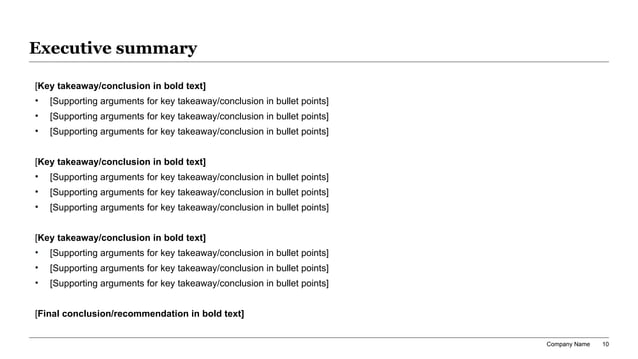
A private equity portfolio review presentation should tell the sponsor team where value creation is ahead, where it is slipping, which companies need intervention now, and what management actions should change in the next thirty to one hundred eighty days. It is not a polite portfolio newsletter, a board deck pasted together from every company packet, or a loose collection of KPI screenshots.
The best portfolio review decks compress multiple companies into one executive decision system. An operating partner, deal lead, portfolio CFO, or CEO should be able to read the opening pages and understand which assets are compounding, which ones are at risk, what the cross-portfolio pattern is, and where sponsor time should be spent first.
That is why the page standard is higher than generic reporting. Every slide needs an action title, a metric interpretation, and a clear implication for ownership. If a chart does not change the sponsor conversation, it belongs in appendix backup or in the company-level pack, not the main portfolio review.
PE Portfolio Review Vs. Investment Committee Deck Vs. Board Update
These decks sound similar, but they answer different sponsor questions and need different slide logic.
| Deck Type | Primary Audience | Core Question | What The Main Story Must Do |
|---|---|---|---|
| Portfolio review presentation | Operating partner, sponsor, portfolio CFO, value-creation lead | Where do we need to intervene or reallocate attention now? | Show exception performance, risks, and ownership actions across holdings |
| Investment committee deck | IC partners, deal team, operating partner | Should we approve or reject a transaction or major follow-on decision? | Prove underwriting logic, downside case, and recommendation quality |
| Board update | Directors, CEO, CFO | What should the board know, challenge, or approve? | Frame governance decisions, not portfolio-ops detail |
| Operating review | Management team inside one company | What changed this period and what do we do next? | Diagnose one business deeply rather than comparing many holdings |
| Lender or covenant update | Credit stakeholders, treasury, CFO | Is liquidity, leverage, or compliance at risk? | Highlight downside protection and funding discipline |
PE Portfolio Review Takeaways
- A sponsor-grade portfolio review starts with exceptions, not with every metric from every company.
- Cross-portfolio comparability matters more than company-specific design polish.
- Action titles should explain the operating implication, not just label the page.
- The most useful deck ends with owners, timing, and intervention choices, not only observations.
- AI is valuable when it structures messy KPI packs into a first draft that operators can still edit and pressure-test.
Sponsor Opening Summary Reference
Why Most Portfolio Reviews Underperform Even When The Data Is Fine
Most portfolio review presentations fail for the same reason: they confuse data collection with decision support. The team gathers EBITDA bridges, revenue trends, working-capital schedules, hiring plans, customer issues, and project milestones, but the deck never decides what deserves sponsor attention first. The result is a long pack that looks busy and still leaves the operating partner asking where the real problem is.
Another failure mode is inconsistency. If one company reports gross margin on a normalized basis, another uses an adjusted definition of EBITDA, and a third reports pipeline metrics with different stage rules, the portfolio view becomes visually comparable but analytically weak. Sponsor teams lose trust quickly when they sense that the page is comparing numbers that do not actually mean the same thing.
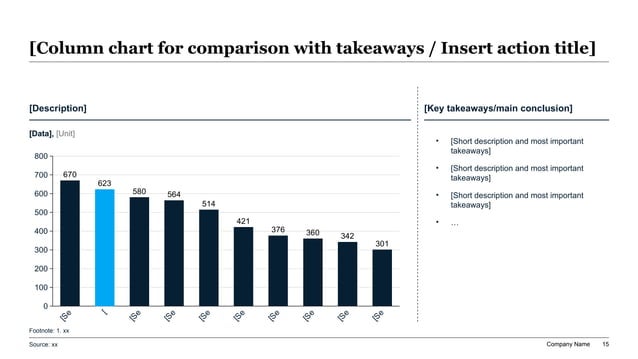
The better model is to treat the portfolio review as an escalation and resource-allocation mechanism. That means each exhibit needs to answer a practical sponsor question: where is value creation ahead or behind plan, which companies are consuming disproportionate leadership time, which interventions have highest payback, and where do we need sharper management follow-through.
Inputs To Assemble Before Drafting The Portfolio Story
KPI Blocks That Sponsors Actually Need Across The Portfolio
The point is not to report everything. The point is to standardize the few metric blocks that drive operating judgment.
| KPI Block | Examples | Why It Belongs In The Main Deck |
|---|---|---|
| Growth and demand | Revenue, order intake, bookings, pipeline conversion, churn | Shows whether the growth thesis is holding or weakening |
| Margin and cost | Gross margin, EBITDA, SG&A, plant or delivery productivity | Reveals where earnings creation is real versus delayed |
| Cash and leverage | Cash conversion, working capital, capex, liquidity headroom, covenant room | Flags downside risk before the board or lender pack becomes urgent |
| Value-creation program | Commercial initiatives, pricing, procurement, salesforce, footprint, systems projects | Connects operating work to the original ownership thesis |
| People and execution | Leadership gaps, hiring slippage, turnover, project ownership, decision cycle time | Shows whether the organization can actually deliver the plan |
| Red flags and decisions | Customer concentration, quality incidents, delayed ERP, stalled M&A, compliance issue | Makes sponsor attention explicit instead of implied |
Traffic-Light KPI Exception View
How To Write The Storyline For A Multi-Company Review
A strong private equity portfolio review should not walk company by company in alphabetical order. That is a management archive, not an executive narrative. Instead, start with the portfolio-level message: what is happening across the holdings, what that means for the fund's value-creation agenda, and where sponsor energy needs to concentrate now.
A useful storyline often moves through five levels. First, state the portfolio headline in one sentence. Second, show the performance clusters: which companies are outperforming, which are on plan, and which need intervention. Third, explain the drivers behind those clusters, such as pricing, sales productivity, execution slippage, working-capital stress, or leadership capacity. Fourth, translate those findings into sponsor decisions and operating-partner actions. Fifth, show the forward plan with owners and timing.
This approach keeps the deck answer-first. It also helps AI generate a better first pass. When the prompt includes portfolio segments, underwriting targets, exception companies, and sponsor decisions, XLSlides can draft a structured deck that is far closer to a real operating document than a generic 'quarterly update' prompt ever will be.
Recommended 12-Slide Private Equity Portfolio Review Sequence
| Slide | Purpose | Executive Question Answered |
|---|---|---|
| Portfolio executive summary | State the portfolio-level conclusion and top sponsor asks | What is the headline and where do we intervene? |
| Cross-portfolio scorecard | Normalize top KPIs across holdings | Which companies are ahead, on plan, or at risk? |
| Exception heatmap | Focus the conversation on the largest variances | Where is attention needed now? |
| Growth and commercial drivers | Show demand, pricing, funnel, or customer issues | Why are top-line outcomes moving? |
| Margin and cost drivers | Explain earnings expansion or compression | Which levers are actually creating EBITDA? |
| Cash, leverage, and liquidity | Surface downside protection issues | Where could financing or covenant pressure appear? |
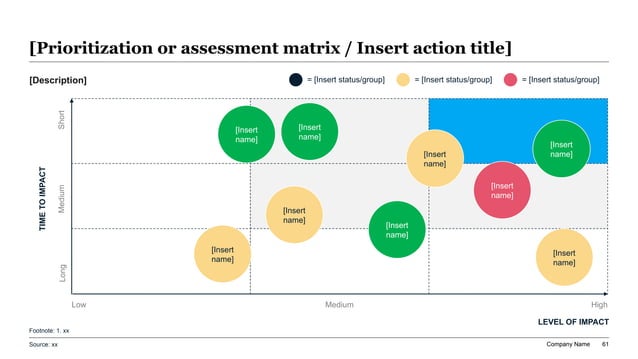
| Value-creation initiative portfolio | List the few initiatives that matter most now | Which programs deserve sponsor pressure? |
| Company deep dive 1 | Explain the highest-priority problem or opportunity | What is the root cause and recovery path? |
| Company deep dive 2 | Cover the next biggest exception | Which second asset needs a decision? |
| Cross-company pattern | Summarize what is systemic versus isolated | What are we learning across the portfolio? |
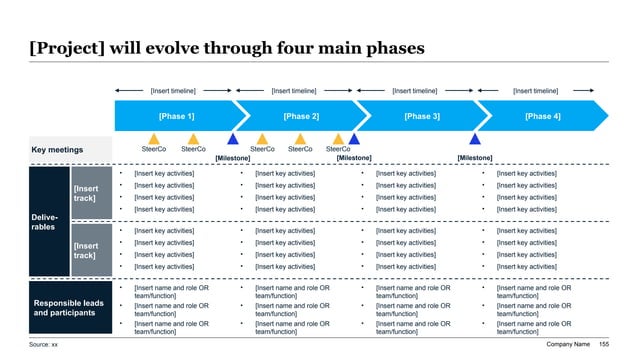
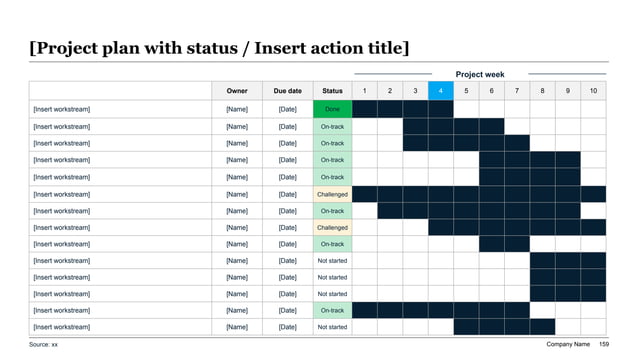
| 90- to 180-day action plan | Turn observations into sponsor-owned actions | What happens next and who owns it? |
| Decision and support asks | Close with sponsor choices and escalations | What needs approval, support, or reset now? |
Value-Creation Prioritization Matrix
Prompt Recipe For A PE Portfolio Review Deck
Create a private equity portfolio review presentation for an operating partner, deal lead, portfolio CFOs, and sponsor team. Portfolio context: five mid-market holdings across software, industrial services, and healthcare services. Goal: show which companies are ahead, on plan, or at risk against the value-creation plan. Include an answer-first executive summary, cross-portfolio KPI scorecard, top exception heatmap, growth and margin drivers, cash and leverage risks, initiative prioritization, two company deep dives, cross-portfolio pattern synthesis, 180-day action plan, and explicit sponsor decisions. Use consulting-style action titles, normalize metrics across holdings, highlight where definitions or data quality are inconsistent, and keep the deck editable in PowerPoint style.
Action Title Rewrite Matrix For Portfolio Review Slides
A sponsor deck reads faster when the headline states the operating implication rather than the topic label.
| Weak Topic Title | Sponsor-Ready Action Title | Why The Rewrite Works |
|---|---|---|
| Portfolio update | Two companies are driving most of the portfolio's earnings upside while one services asset now needs sponsor intervention | It turns a vague update into a conclusion and priority call |
| Revenue performance | Commercial momentum remains concentrated in three accounts, leaving two holdings exposed to slower second-half conversion | It explains the quality of growth, not just the number |
| Margin review | Margin expansion is tracking at four companies, but delivery inefficiency is erasing most gains at the largest asset | It connects mixed results to a specific operating implication |
| Cash flow | Working-capital slippage is now the fastest path to covenant pressure at one portfolio company | It makes the downside risk explicit |
| Initiatives | The next 90 days should focus on pricing, collections, and ERP stabilization before launching new growth projects | It shows sequencing and management judgment |
| Next steps | Sponsors need to reset one plan, add operating support to two companies, and hold the rest of the portfolio to current targets | It tells leadership exactly what decision is required |
What Sponsors Usually Challenge In The Meeting
Sponsor teams rarely challenge a portfolio review because the colors are wrong or the charts are not pretty enough. They push on whether the conclusions are crisp, whether the metrics are normalized, and whether management is taking the right actions at the right speed. If the deck says a company is 'behind plan,' the next question is why, whether that miss is structural or timing-related, and what management is changing now.
They also challenge comparability. A portfolio review that compares mixed definitions is not just untidy; it can lead to the wrong resource-allocation choice. That is why the deck should flag where metrics are fully normalized, where they are adjusted, and where the sponsor team should interpret caution. Clear footnotes are better than false precision.
The final area of pressure is action ownership. A sponsor meeting should not end with fifteen observations and no operator accountable for closing the gap. Good portfolio reviews make owner, date, and expected payback obvious. That is what turns a recurring meeting into a real management mechanism.
Questions Operating Partners And Sponsors Will Ask
180-Day Ownership Plan Reference
Portfolio Review Cadence By Ownership Situation
The right deck changes with the ownership moment. A new acquisition review should not look identical to a mature asset review.
| Ownership Situation | Review Rhythm | What The Deck Should Emphasize |
|---|---|---|
| First 100 days after close | Monthly or biweekly | Day 1 issues, management assessment, quick wins, and initiative sequencing |
| Active value-creation phase | Monthly | Operating KPIs, initiative payback, execution blockers, and sponsor support |
| Stabilized hold period | Quarterly with monthly exception pages | Performance consistency, cash, governance, and preparation for the next strategic event |
| Refinancing or covenant pressure | Monthly or more frequent | Liquidity, leverage, downside plan, collections, and lender-readiness |
| Pre-exit or recap | Monthly plus exit-specific modules | Equity story readiness, quality of earnings discipline, and forward credibility |
What AI Should Automate In The Portfolio Review Workflow
AI should automate the repetitive parts of portfolio review production: consolidating company commentary, normalizing rough status notes into cleaner language, mapping each module to an appropriate layout, drafting exception-based action titles, and turning a spreadsheet-heavy pack into a more coherent first-pass deck. Those tasks consume team time but do not require final sponsor judgment.
What AI should not own is the decision about whether a miss is structural, whether a CEO can recover the plan, whether leverage risk is acceptable, or whether a company needs a leadership or capital reset. Those are ownership decisions with real financial consequences. A serious product promise is therefore practical: XLSlides helps PE teams move from scattered KPI packs and meeting notes to a faster, editable first draft, while leaving underwriting and intervention judgment with human operators.
That boundary matters for credibility. Sponsors, CFOs, and operating partners do not want magical language about AI replacing investment discipline. They want a workflow that removes formatting friction, sharpens the narrative, and speeds up iteration before the real meeting.
Short Answers To Common Portfolio Review Questions
What should be on the first slide of a private equity portfolio review presentation?
The first slide should state the portfolio-level conclusion, identify the few companies that need sponsor attention now, summarize the top risk or upside pattern, and make the immediate sponsor asks explicit. Executives should understand the intervention agenda before they reach company detail.
How is a portfolio review different from a board deck?
A portfolio review is a sponsor operating document used to compare holdings, pressure-test value creation, and assign interventions. A board deck is a governance document for one company. The board pack should usually be shorter, more company-specific, and less focused on cross-portfolio resource allocation.
How many companies can one portfolio review deck cover effectively?
The main story should usually cover the whole portfolio at scorecard level, then go deep on the few holdings that need attention. If every company gets equal airtime in the main narrative, the deck usually becomes too long and too unfocused.
Can AI create a credible PE portfolio review deck?
Yes, if the team uses AI to structure notes, standardize language, draft action titles, and produce an editable first pass. Human review still needs to decide whether metrics are comparable, whether management explanations are credible, and which sponsor interventions are appropriate.
Operating Partner Action Tracker
Cross-Portfolio Pattern Framework
This is the synthesis page many teams skip. It turns isolated company updates into portfolio management insight.
| Pattern Type | What It Might Signal | How To Respond In The Deck |
|---|---|---|
| Several companies miss growth with similar funnel weakness | Commercial execution issue, pricing friction, or market softness across the portfolio | Show the shared pattern and decide whether sponsor support should focus on revenue acceleration |
| One company drives most of the downside | Localized management or business-model issue rather than a portfolio trend | Deep dive that asset and avoid overcorrecting the rest of the holdings |
| Growth is healthy but cash is weak across multiple companies | Working-capital discipline or project governance problem | Create a cross-portfolio cash action plan instead of treating each issue as isolated |
| Initiatives are on track but EBITDA is not moving | Programs may be activity-heavy without economic payback | Pressure-test initiative design, sequencing, and measurement |
| Management teams ask for more resources at the same time | Possible prioritization or capability bottleneck at the sponsor level | Use the page to force tradeoffs and explicit resource allocation |
The Review Standard Before The Deck Goes To Sponsors
Before the deck goes to sponsors, read only the action titles first. They should tell the story of the portfolio without the charts. If the titles read like 'Revenue performance,' 'Cash flow,' and 'Initiatives update,' the deck is not ready. If they read like decisions and implications, the sponsor team can scan the document the way they actually work.
Next, test metric integrity. Make sure the key scorecard compares like with like, note where definitions differ, and call out where data quality is still provisional. A sponsor-grade page is allowed to include judgment and uncertainty; it is not allowed to hide them.
Finally, check that every major observation leads to an owner, timing, or decision ask. That is the threshold between a reporting pack and a management document. XLSlides should help teams reach that standard faster, but the standard itself still has to be enforced by the humans who own the portfolio.
Draft The PE Portfolio Review Deck In XLSlides
Use XLSlides to turn monthly KPI packs, CFO commentary, operating-partner notes, and value-creation trackers into an editable private equity portfolio review presentation with action titles, sponsor-ready structure, and PowerPoint-style output.