Short Answer: What An IPO Readiness Presentation Must Control
An IPO readiness presentation is not a pitch deck for new investors and it is not just a prettier version of the S-1 project tracker. Its job is to show whether the company can operate like a public company on the date it files, prices, and starts reporting to the market. That means the deck has to connect governance, financial reporting, controls, legal drafting, equity story, banking process, and management decisions in one executive narrative.
The strongest IPO readiness decks answer three questions quickly. First, are we actually ready enough to move forward on the current timeline? Second, which gaps could still delay filing, pricing, or post-listing credibility? Third, what decisions does leadership need to make now on owners, sequencing, and risk tolerance? If the deck cannot answer those questions in clear action-title slides, it becomes a status report instead of a decision document.
For XLSlides, the useful framing is straightforward: use AI to turn scattered banker notes, audit findings, readiness checklists, legal drafts, and finance workplans into a structured first draft. Then let the CFO, controller, GC, IR lead, and board sponsors tighten the judgment, disclosure boundaries, and go-or-no-go decisions before anything reaches underwriters or directors.
IPO Readiness Deck Takeaways
- A serious IPO readiness deck is an operating-control document, not a branding exercise.
- The best version shows readiness by workstream, risk by dependency, and management decisions by date.
- S-1 drafting is only one part of the story; governance, close cadence, controls, and investor relations matter just as much.
- AI should accelerate the first structured draft, but legal, finance, and board judgment still control what can be said and when.
IPO Readiness Deck Vs. Adjacent Finance And Market Decks
This comparison helps teams avoid using the wrong presentation standard for a public-market transition.
| Deck Type | Primary Audience | Main Question | Common Failure Mode |
|---|---|---|---|
| IPO readiness presentation | Board, CFO, steering committee, underwriter workstreams | Can we operate and disclose at a public-company standard on the required timeline? | Treating readiness as a legal filing checklist instead of a cross-functional operating program |
| Board update | Directors and committee chairs | What decisions or escalations require board action now? | Too much workstream detail before the board-level implication |
| Earnings presentation | Public investors, analysts, IR audience | What changed this quarter and why does it matter to the market? | Using external-market messaging standards before the company is internally ready |
| Valuation presentation | Executives, bankers, deal team | What valuation logic and assumptions support the pricing discussion? | Overweighting valuation before disclosure and control readiness are credible |
| Roadshow deck | Institutional investors | Why should the market buy into the equity story at this price? | Trying to solve readiness gaps inside the investor narrative instead of beforehand |
Readiness Heatmap Reference
Why IPO Readiness Decks Break Down Before Filing
Most IPO readiness decks fail for a simple reason: the program is being run by workstream, but the leadership team needs to govern it by dependencies. Legal may say the draft is advancing, finance may say the close is improving, audit may say the control matrix is maturing, and bankers may say the market window is constructive. Yet none of those updates tells the executive team whether the company can move through the next gate without creating a later credibility problem.
That is why the page cannot read like a bundle of separate PMO updates. IPO preparation compresses multiple kinds of risk into one timeline: disclosure risk, controls risk, market timing risk, governance risk, systems risk, and management-bandwidth risk. A good deck makes those interactions visible. For example, a delayed controls remediation plan can affect comfort around disclosures, which can affect drafting quality, which can affect roadshow confidence. The deck should surface that chain, not hide it under green status labels.
The second failure mode is confusing preparedness with verbosity. Teams often respond to pressure by adding more tabs, more trackers, and more appendix pages. That can preserve detail, but it does not help the board or steering committee decide what matters. The right standard is whether a senior reader can understand the readiness posture by scanning the slide titles, workstream summaries, and key dependencies in a few minutes.
Inputs To Lock Before Drafting The IPO Readiness Pack
Governance And Oversight Structure Reference
Core IPO Readiness Workstreams And Executive Owners
A public-market transition becomes easier to govern when each workstream has one visible owner, one objective, and one decision trigger.
| Workstream | Primary Owner | What The Deck Must Show | Decision Trigger |
|---|---|---|---|
| S-1 and disclosure drafting | General counsel and finance leadership | Draft status, open dependencies, major risk-factor themes, and data still needed | Disclosure cannot move forward until facts, metrics, and legal positions align |
| Financial reporting and close process | Controller and CFO | Close speed, reporting quality, segment-readiness, audit status, and material weaknesses if any | If the company cannot close and review on schedule, the timeline is at risk |
| ICFR and SOX readiness | Controller, internal audit, and process owners | Control design, testing status, remediation owners, and remaining high-risk gaps | Unresolved control issues can undermine external confidence and post-listing execution |
| Governance and board readiness | CEO, GC, and nominating sponsors | Board composition, committee charters, independence progress, and meeting cadence | Committee structure or director gaps can block exchange-readiness posture |
| Equity story and investor relations | CEO, CFO, and IR lead | Core narrative, KPI discipline, roadshow themes, and consistency with filings | The story cannot outrun what the company can actually disclose and support |
| Banking, audit, and advisor coordination | CFO and corp dev or capital-markets lead | Critical deliverables, sequencing, diligence asks, and market-window assumptions | Escalate quickly when external workstreams depend on missing internal decisions |
Treat The Deck As A Transaction Control Tower, Not A Marketing Story
A strong IPO readiness presentation behaves more like a control tower than a generic corporate update. The audience is not asking whether the company has ambition. It is asking whether management can coordinate legal, finance, accounting, controls, governance, and market preparation without losing reliability under scrutiny. That changes what belongs on the page. The deck should emphasize readiness gates, unresolved decisions, workstream interactions, and management actions instead of brand positioning or purely celebratory growth slides.
This is also why action titles matter so much. Instead of a label like SOX, the slide title should tell leadership what to conclude: for example, controls remediation is on schedule except for revenue and stock-compensation workflows, or close cadence has improved enough to support draft timelines but not yet public-company repeatability. Those titles force the team to surface judgment rather than hide behind topic buckets.
When the deck is built this way, it becomes useful across several moments: weekly steering reviews, audit-committee discussions, banker update meetings, board sessions, and pre-roadshow readiness checks. The same underlying logic can feed multiple audiences because the story starts from operating readiness rather than from presentation cosmetics.
Recommended 12-Slide IPO Readiness Sequence
This is a practical sequence for internal board, steering, or underwriter-alignment decks before the company is fully in external roadshow mode.
| Slide | Purpose | Executive Question Answered |
|---|---|---|
| Readiness headline | State the current posture and the biggest gating risk | Are we broadly on track or not? |
| Timeline and target window | Anchor the plan against filing or pricing goals | What date are we steering toward? |
| Workstream scorecard | Summarize readiness across legal, finance, controls, governance, IR, and advisors | Which areas are green, yellow, or red? |
| Top dependencies | Show cross-workstream blockers and sequence risk | What can still delay the program? |
| S-1 drafting progress | Explain what is drafted, what is open, and what evidence is still needed | How close are we to a defensible filing draft? |
| Financial reporting readiness | Show close cadence, reporting quality, and audit posture | Can finance operate at public-company speed and discipline? |
| ICFR and SOX status | Surface control gaps, remediation timing, and testing progress | Where are the highest control risks? |
| Governance and committee readiness | Clarify board structure and oversight design | Do we have the right governance model on time? |
| Equity story and KPI discipline | Align operating narrative with supportable disclosure | Will the story hold up under diligence and market scrutiny? |
| Advisor and market coordination | Show key banking, audit, and legal milestones | What external sequencing assumptions are driving the plan? |
| Decisions needed now | List approvals, escalations, and resource asks | What must leadership approve this week? |
| Appendix roadmap | Point to detailed trackers, controls matrices, and draft support | Where does the deeper proof live? |
Five-Stage IPO Milestone Roadmap
Copy-Paste XLSlides Prompt For An IPO Readiness Presentation
Create an IPO readiness presentation for the CFO, CEO, general counsel, controller, and board sponsors. Include a readiness headline, target filing timeline, workstream scorecard across S-1 drafting, financial reporting, SOX or ICFR remediation, governance, investor relations, and advisor coordination, plus key dependencies, top risks, decisions needed this month, appendix placeholders, and consultant-style action titles. Keep the output editable in PowerPoint style and optimized for board, banker, and steering-committee review rather than external marketing.
Form S-1 Is Only One Workstream
Many teams over-focus on the registration statement because it is the most visible artifact. That is understandable, but it creates a dangerous simplification. The S-1 is where much of the readiness work becomes visible, not where most of the work originates. If the company has unresolved reporting discipline, weak close routines, unclear KPI definitions, unfinished governance design, or control gaps in important processes, those problems eventually surface in the drafting process anyway.
The better way to frame the readiness deck is that the S-1 depends on the operating truth of the business being strong enough to disclose clearly. That means the finance stack, systems, controls, governance model, and investor-message discipline must progress together. A deck that only reports drafting progress can look healthy even when the underlying readiness is fragile.
This is also why leadership teams should separate cosmetic momentum from real readiness. More marked-up pages, more comments, or more draft sections do not necessarily mean the company is safer to file. The slide story should make clear which items are document progress, which are operating capability, and which are unresolved judgment calls.
What Belongs In The Main Story, Appendix, And Data Room
Executives need compression, but the program still needs proof. Use this split to keep the deck readable without weakening credibility.
| Location | What Belongs There | Why |
|---|---|---|
| Main story | Readiness posture, top risks, milestone timing, governance status, decisions needed | These points determine whether leadership can move the program forward |
| Appendix | Detailed workstream trackers, controls matrices, KPI definitions, close-process evidence, committee charters | These details support challenge-level review without slowing the main narrative |
| Data room or working files | Draft documents, evidence files, issue logs, advisor markups, testing artifacts | These materials are necessary for execution but too detailed for an executive deck |
| Separate legal channel | Privileged counsel views, sensitive disclosure judgments, open litigation matters | Not every topic should be simplified into a broad distribution deck |
Gap-To-Remediation Planning Reference
Close Cadence, Controls, And Disclosure Discipline Need One Narrative
Serious IPO prep is where finance operations and capital-markets storytelling meet. The company may have an attractive growth profile, but if close cadence is unreliable, KPI definitions drift between functions, or control design is still weak in important financial processes, that story becomes harder to defend. The deck should therefore connect operating reliability with disclosure credibility instead of presenting them as unrelated workstreams.
This is where many executive audiences become impatient. They do not want a lecture on accounting mechanics, but they do need to understand whether finance can close, review, disclose, and answer questions on a repeatable schedule. The page should translate technical status into executive implications: which issues threaten schedule, which issues only affect efficiency, and which issues could damage confidence after listing if left unresolved.
A good readiness deck also distinguishes pre-listing adequacy from long-run maturity. Some processes may be good enough to file, but still immature for the first few quarters as a listed company. That nuance matters. It lets management choose where to spend incremental time and money now versus where to accept controlled post-listing improvement.
Public-Company Readiness Standards By Area
These are the categories executives usually need to see before they trust the readiness posture.
| Area | What Good Looks Like | What Still Raises Concern |
|---|---|---|
| Financial close | Management can close, review, and explain results on a predictable timetable | Heavy spreadsheet dependency, recurring manual reconciliations, or inconsistent definitions |
| Disclosure process | A repeatable drafting and review workflow exists across finance, legal, and leadership | Key sections depend on late manual collection or unresolved narrative positions |
| ICFR and controls | High-risk processes are documented, tested, owned, and remediated where necessary | Known control gaps remain without credible timing, ownership, or evidence |
| Governance | Board composition, committees, charters, and escalation routes are clear | Independence or committee design still depends on unfinished recruiting or legal cleanup |
| KPI and equity story discipline | Leadership uses metrics that are consistent, explainable, and supportable in diligence | The narrative changes by audience or outruns the actual operating evidence |
| Post-listing operating model | The company knows how it will run earnings prep, board cadence, and IR communication after listing | Teams are preparing for filing but not for the first quarters as a public company |
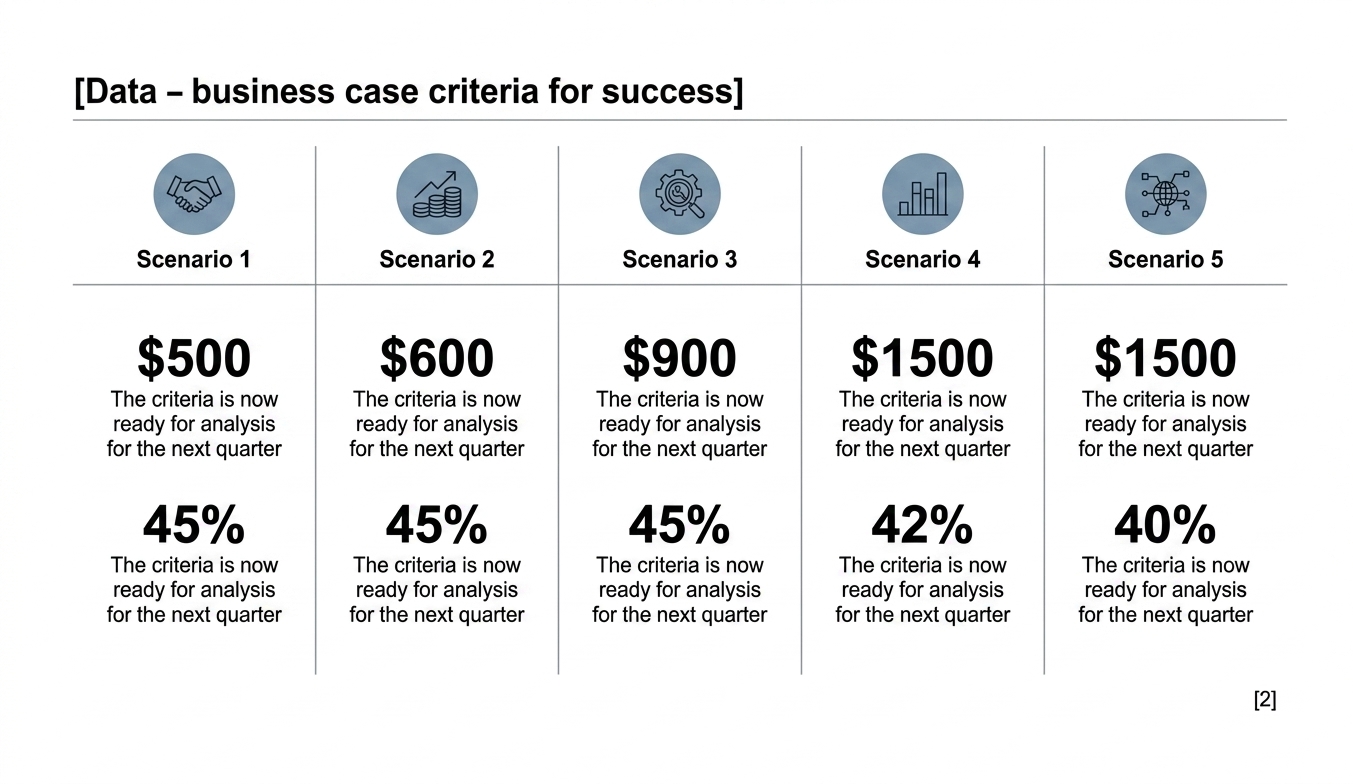
Go / Not-Yet-Go Scenario Scorecard
Action-Title Rewrite Matrix For IPO Readiness Slides
The title should tell directors and executives what the workstream means, not just what it is called.
| Weak Topic Title | Stronger IPO Readiness Action Title | Why The Rewrite Works |
|---|---|---|
| S-1 status | Drafting is progressing, but three operating disclosures still depend on unresolved finance inputs | It turns a status label into a decision-relevant implication |
| SOX readiness | Controls design is largely in place, but testing depth is still insufficient for two critical workflows | It tells leadership whether the issue is documentation or real execution risk |
| Board structure | Committee design is ready, but one independence gap still threatens the preferred timing path | It connects governance work directly to the schedule |
| Financial reporting | Close cadence has improved enough for draft milestones, but not yet for repeatable public-company rhythm | It separates temporary adequacy from long-term maturity |
| Investor relations | The equity story is directionally coherent, but KPI definitions need tighter alignment before external messaging | It prevents narrative enthusiasm from outrunning evidence |
| Next steps | Leadership must fund two remediation owners now to protect the target filing quarter | It makes the ask explicit instead of generic |
What AI Should Automate In IPO Prep And What Must Stay Human
AI is valuable in IPO prep when it reduces mechanical presentation work. It can cluster banker notes into workstreams, convert issue logs into clearer action titles, organize status updates by dependency, draft readiness scorecards, summarize repeated committee themes, and turn dense meeting notes into a cleaner first-pass storyline. Those steps save time because IPO prep generates a high volume of repetitive cross-functional communication.
What AI should not control is disclosure judgment, legal privilege, materiality calls, or the exact framing of unresolved risk. Those decisions require counsel, finance leadership, audit input, and board context. A model can draft a useful slide, but it cannot decide whether a description is appropriately balanced for a registration process or whether one disclosure omission creates a legal or credibility problem.
The right way to use XLSlides here is to accelerate the first structured draft for internal review. Feed it the readiness memo, workstream tracker, finance commentary, committee notes, and banker agenda. Let it propose the slide logic. Then use human review to tighten wording, evidence, and escalation points before the pack is used in a serious governance forum.
How To Run Weekly IPO Readiness Reviews Without Turning Them Into PMO Theater
Weekly reviews should not spend most of their time re-reading every workstream update. A better operating rhythm is to review the readiness headline, the movement since last week, the top dependencies, and the decisions that need executive intervention. That keeps the meeting focused on whether the timeline and risk posture actually changed.
A practical rule is to keep each workstream summary answer-first. Start with the implication, then show the evidence, then state the owner action. For example: revenue-disclosure support is on track because the KPI definitions are locked and the audit requests have been cleared, or committee readiness is still yellow because one director search and one charter decision remain open. This keeps the deck useful for leaders who are balancing the IPO alongside running the business.
The deck also becomes a forcing mechanism for escalation discipline. If a risk has been yellow for four weeks and the title still has no management action, the page is telling you that the program may be drifting. Good readiness decks do not merely track work. They expose where ownership is no longer enough and senior intervention is required.
Final Review Before The Board, Bank, Or Steering Meeting
XLSlides Resources For IPO, Board, And Finance Readiness Work
Short Answers For IPO Readiness Teams
How is an IPO readiness presentation different from the S-1 itself?
The S-1 is the registration document. The IPO readiness presentation is the internal executive deck that shows whether the company can support the filing, pricing process, and post-listing operating model. It connects workstreams, risks, owners, and decisions in a way the registration statement does not.
How early should a company start building an IPO readiness deck?
As soon as leadership is seriously evaluating the path to public markets. The deck becomes useful well before any roadshow because it helps the board and management team see governance, controls, financial reporting, and disclosure gaps before the timeline becomes expensive to change.
What usually belongs in the main deck instead of appendix?
The main story should carry the readiness headline, major dependencies, control and reporting posture, governance status, and decisions needed now. Appendix should hold the more detailed trackers, testing evidence, and supporting workstream documents.
Can AI draft an IPO readiness presentation credibly?
Yes, as a drafting layer. AI is useful for structuring workstream notes, rewriting slide titles, summarizing risks, and producing the first coherent deck. The final pack still needs finance, legal, audit, and board-level review because disclosure wording and materiality decisions are human responsibilities.
Draft The IPO Readiness Deck In XLSlides
Use XLSlides to turn banker notes, S-1 workstream trackers, audit updates, governance plans, and finance commentary into an editable IPO readiness presentation with action titles, dependency logic, and a clearer executive decision path.
Generate IPO Readiness Deck