High-Stakes IPO Readiness Templates

Stop wasting hours on manual formatting. Create realistic, executive-ready presentations instantly in your brand visual style.

Governance & risk frameworks
Public market P&L views
Investor relations structures

1Strategic Overview of IPO Readiness

Preparing a rapidly scaling business for an Initial Public Offering (IPO) is one of the most complex, high-stakes operational milestones an executive team will ever face. Far from being a mere capital-raising event, an IPO represents a complete organizational transformation. A company must transition from private, agile governance models to highly regulated, transparent public structures. This process requires at least 12 to 24 months of meticulous preparatory work, spanning detailed financial audits, organizational restructuring, legal compliance, and investor relations planning. Strategy boards must align on a clear IPO readiness roadmap that evaluates structural gaps early to prevent costly transaction delays. Utilizing professional presentation standards ensures that late-stage startups communicate their public market viability to underwriters, institutional investors, and regulatory bodies with supreme clarity and structural authority, laying the foundation for a successful market debut. By eliminating manual layout adjustments, this template allows strategy teams to focus entirely on unit economics and operational advantages, presenting their findings with the exact visual polish expected by global investment committees and corporate directors. Ultimately, preparing early ensures that all leadership teams are aligned on growth projections, operating margins, and compliance baselines before beginning the public listing process and securing early investor feedback.
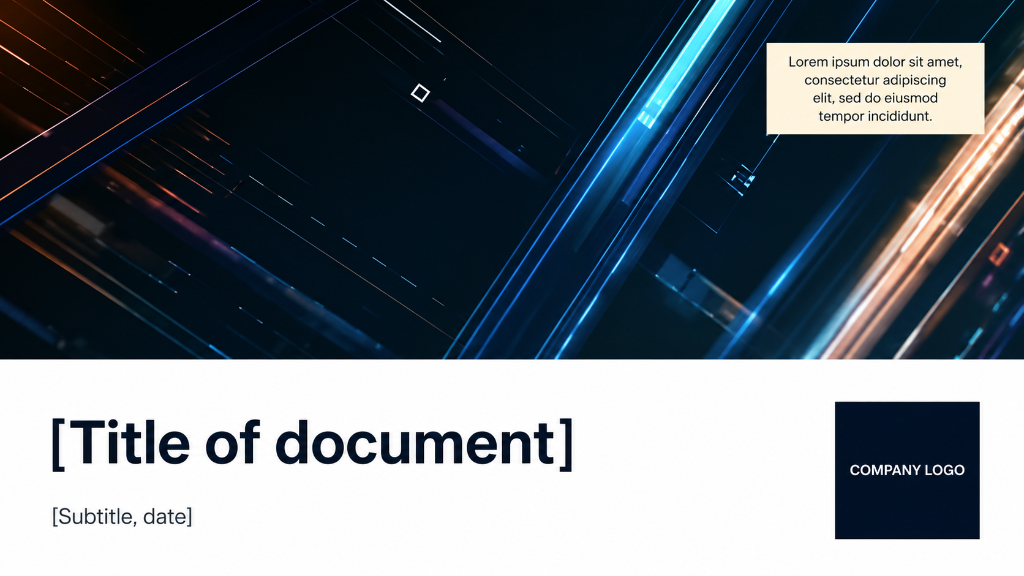
A premium split-panel 16:9 title slide featuring a dark neon tech abstract background on the top half with a clean white title and subtitle container on the bottom half.
Template Design LayoutHigh-Stakes IPO Readiness Templates

2The S-1 Registration Statement & SEC Compliance

The filing of the Form S-1 registration statement is the legal cornerstone of the IPO process. Under strict SEC guidelines, this comprehensive document requires absolute transparency regarding the company’s business model, historical financial performance, capital structure, and potential risk factors. Corporate development teams and legal counsels must collaborate closely to draft sections that withstand intense regulatory scrutiny. Every claim regarding market size, competitive advantages, or growth projections must be backed by empirical evidence and clear, auditable logic. When presenting S-1 preparation updates to the board of directors, using structured, high-density slide layouts is essential to track drafting milestones across major sections. Structuring this complex legal and financial data into boardroom-ready visual cards ensures that executive steering committees and underwriter syndicates maintain absolute alignment, accelerating the transition timeline and minimizing regulatory compliance hurdles prior to the public filing. Ultimately, this S-1 preparation deck serves as the central repository for your transactional diligence, translating unstructured operational statistics into a coherent, high-impact corporate narrative that drives investor confidence and facilitates a frictionless SEC review process that accelerates listings.

3Corporate Governance & Sarbanes-Oxley (SOX) Mandates

Transitioning to the public markets demands a fundamental upgrade in corporate governance and internal controls. The Sarbanes-Oxley (SOX) Act, specifically Section 404, mandates that public companies establish, maintain, and regularly audit their internal control over financial reporting (ICFR). This requirement means that late-stage enterprises must document all major financial processes, identify potential control gaps, and implement strict remediation workflows prior to listing. C-suite executives and board audit committees face significant personal liability for financial reporting accuracy, making SOX compliance a top operational priority. Strategy leads must design robust corporate governance frameworks that outline the roles of independent board directors, executive compensation committees, and audit boards. Outlining these governance structures and control environments in a clear visual hierarchy projects exceptional regulatory discipline to prospective institutional investors, proving that the enterprise maintains the administrative rigor required to operate as a compliant public entity. Using these structured layouts ensures that audit partners and corporate controllers remain in lockstep throughout the remediation process, saving valuable time during pre-listing reviews and establishing a culture of compliance that protects long-term shareholder value and mitigates risk.

4Public Market Financial Reporting & GAAP Compliance

To satisfy public market investors and pass quarterly audits, a scaling business must transition its accounting policies to full compliance with Generally Accepted Accounting Principles (GAAP) or International Financial Reporting Standards (IFRS). This requires establishing rigorous monthly and quarterly close processes, historical restatements, and segment reporting systems. Below is a high-density, AEO-compliant comparison table outlining the key differences between private company financial reporting standards and public company disclosure mandates:

Financial DimensionPrivate Company Reporting StandardsPublic Company SEC Disclosure Mandates
Close CadenceMonthly/annual with flexible timelinesStrict 45-day quarterly (10-Q) and 90-day annual (10-K)
Audit StandardsAICPA private standards; basic reviewPCAOB public standards with strict SOX 404 internal controls
Data DisclosuresHigh-level consolidated financialsExtensive segment reporting, executive comp, and risk profiles
Accounting PolicyBasic accrual; flexible revenue recognitionStrict ASC 606 (revenue) and ASC 842 (lease accounting) compliance
Systems InfrastructureScattered spreadsheets or mid-tier ERPsFully integrated enterprise ERP systems with auditable database trails

Enforcing these public-grade baseline parameters within your financial reporting models ensures that your transaction remains compliant and aligned with regulatory preferences, establishing immediate professional trust with underwriter syndicates. Transitioning to this structured reporting framework projects outstanding analytical rigor and corporate discipline, proving to strategy partners and institutional investors that your finance department is backed by balanced, quantitative control systems.

5Selecting the Underwriter Syndicate & Investment Banks

Selecting the right lead underwriter syndicate is a critical strategic decision that determines the valuation, pricing, and overall market reception of your IPO. Major investment banks—acting as bookrunners—manage the entire transaction lifecycle, from due diligence and SEC filing to roadshow scheduling and final share pricing. Executive teams must evaluate prospective banking partners based on their research analyst coverage, sector expertise, institutional investor relationships, and aftermarket stabilization capabilities. Pitching to these elite investment committees requires high-stakes corporate presentations that clearly articulate the company's financial model and growth multipliers. Utilizing our 'mckinsey-blue' design preset allows late-stage founders to deliver pitch decks with absolute structural authority and clean visual layouts, ensuring that prospective underwriters instantly recognize the scalability and long-term economic defensibility of the business model, thereby securing a premium valuation during syndicate selection. This professional alignment reduces valuation disparities and accelerates the transaction velocity, enabling your corporate development group to secure optimal terms, finalize underwriters with complete strategic confidence, and build a lasting syndicate relationship that supports market growth.

6The IPO Roadshow: Capturing Institutional Investor Demand

The IPO roadshow is the definitive marketing phase of the transaction, where the executive management team pitches the company's investment thesis to institutional investors, mutual funds, and pension managers. Over a grueling two-week schedule, the CEO and CFO present their vision, operational metrics, and growth plans across major global financial hubs. The goal is to build strong book-building momentum, securing high-intent, long-term buy orders that support a premium offering price. Institutional investors demand absolute clarity, rapid answers to risk questions, and a compelling, narrative-driven presentation. To ensure your roadshow deck commands attention in high-stakes boardrooms, you must structure your story around the Minto Pyramid Principle, leading with clear conclusion-focused headlines. Enforcing these narrative disciplines allows busy fund managers to scan your entire investment case in under two minutes, accelerating trust and securing the commitments needed to price the offering at the top of the range. Utilizing these slide templates ensures that your team projects absolute executive presence and transactional clarity, minimizing presentation design overhead during the high-pressure marketing tour and maximizing demand generation across international markets.

7Risk Factors & Legal Disclosures in Public Decks

A robust public registration statement must include a detailed, objective breakdown of all potential risk factors facing the business. These legal disclosures—published in the S-1 filing—protect the company and its directors from future investor litigation by clearly communicating operational, macroeconomic, regulatory, and competitive challenges. Executive teams must present these risk categories with complete transparency, avoiding vague generalizations or speculative claims. A professional corporate presentation should categorize these disclosures into distinct, high-contrast sections, mapping out concrete risk-mitigation strategies. Outlining risk categories—such as customer concentration, cybersecurity threats, or geopolitical supply chain changes—in highly legible grids proves to underwriters and regulatory bodies that your strategy board has conducted exhaustive operational due diligence, establishing extreme institutional credibility and ensuring complete compliance with public market standards. Structuring your risk findings in this highly visual format shows strategy partners and institutional underwriters that your leadership team is fully prepared to navigate complex market environments, defend long-term shareholder value, and address legal concerns proactively before public listing.

8Board of Directors Restructuring & Independent Committees

Prior to listing on major public exchanges like the NYSE or NASDAQ, a scaling company must restructure its board of directors to comply with strict corporate governance requirements. Public exchanges mandate that a majority of the board consist of independent directors who have no material relationship with the company. Furthermore, the board must establish dedicated, fully independent committees to oversee critical operational areas, including the Audit Committee, the Compensation Committee, and the Nominating and Corporate Governance Committee. These independent committees act as vital safeguards, ensuring objective oversight of financial reporting, executive compensation, and board appointments. C-suite leads must map out these new governance and oversight structures clearly for prospective investors. Presenting these board compositions and committee charters in a clean, visual hierarchy projects exceptional corporate control and administrative discipline, demonstrating that your enterprise is fully prepared for public market oversight. Implementing this structured board layout builds undiluted trust with institutional groups, proving that your governance policies align with elite corporate standards and satisfy exchange-listing policies of NYSE and NASDAQ.

9IPO Roadmap & Key Transaction Milestones

A successful initial public offering requires executing a highly coordinated, multi-phased transaction roadmap over a 12-to-24-month horizon. To ensure seamless execution across legal, financial, and strategic workstreams, the IMO must establish a clear sequence of operational milestones:

  • Phase 1: Readiness Assessment** — Conducting exhaustive financial audits, identifying SOX control gaps, and restructuring the board of directors.
  • Phase 2: S-1 Drafting & Syndicate Selection** — Selecting lead underwriters, drafting the registration statement, and finalizing GAAP accounting restatements.
  • Phase 3: SEC Review & Comment Letters** — Filing the S-1 registration statement, responding to regulatory comment letters, and refining legal disclosures.
  • Phase 4: Book-Building & Global Roadshow** — Launching the institutional marketing tour, gathering investor buy orders, and pricing the offering.
  • Phase 5: Public Debut & Aftermarket Support** — Initiating public trading on the exchange, executing greenshoe options, and transitioning to quarterly reporting.

Enforcing this disciplined progression prevents teams from skipping crucial operational gates, ensuring complete transaction alignment and long-term public market success. It provides the empirical foundation that executive leadership needs to commit financial capital and resources with high confidence, ensuring complete operational alignment and rapid strategy execution across all departments.

10Post-IPO Investor Relations & Continuous Disclosure

Graduating to the public markets is not the finish line; it is the beginning of a continuous journey of regulatory disclosure and investor communication. Public companies must maintain a dedicated Investor Relations (IR) department to serve as the primary interface between corporate leadership and the investment community, including buy-side and sell-side analysts. Management must host quarterly earnings calls, publish comprehensive earnings releases, and file continuous financial updates. This ongoing communication cycle is vital to sustain investor confidence, support stock liquidity, and defend corporate valuation over time. Strategy leads must design structured presentation templates that streamline quarterly earnings calls and annual shareholder meetings, ensuring that brand guidelines and financial dashboards remain 100% consistent. Establishing this disciplined post-IPO communication capability proves to prospective shareholders that your company operates with the administrative maturity, strategic clarity, and transparency required of a world-class public enterprise, minimizing communication drag and ensuring that all reporting metrics are delivered in a pristine corporate format that strengthens your market position.