Intellectual Property Audit Report Presentation Template

Stop wasting hours on manual formatting. Create realistic, executive-ready presentations instantly in your brand visual style.

Patent, trademark, copyright, trade secret, and ownership inventory layouts
IP risk, freedom-to-operate, licensing, and monetization option slides
Governance, remediation roadmap, KPI, and executive decision sections

1What Is an Intellectual Property Audit Report?

An intellectual property audit report explains what IP assets an organization owns or uses, how those assets support business value, and where legal, operational, or commercial risks need attention. It may cover patents, trademarks, copyrights, trade secrets, software, data rights, domain names, design rights, licenses, assignments, invention disclosures, and third-party dependencies. The deck should not be a raw inventory alone. It should translate portfolio data into decisions about protection, ownership cleanup, monetization, enforcement, licensing, product strategy, or diligence readiness. This gives general counsel, IP counsel, innovation leaders, product teams, executives, investors, licensing teams, and external advisors enough evidence to assess asset coverage, ownership confidence, infringement exposure, freedom-to-operate risk, commercial value, renewal priorities, governance maturity, and remediation sequencing. It keeps the discussion grounded in documented rights, business relevance, legal review, portfolio quality, and accountable next actions. The narrative should also identify evidence owners, unresolved documentation gaps, legal review needs, renewal dependencies, and executive approval gates.
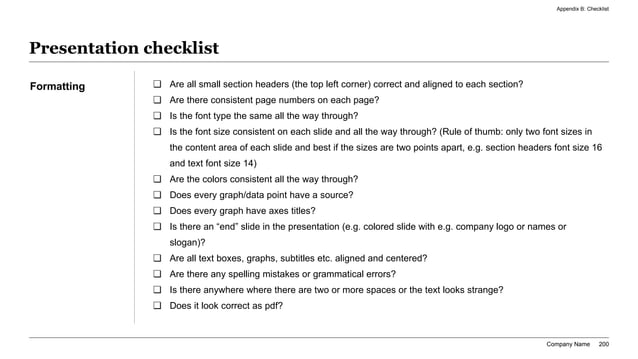
Intellectual property audit report slide with detailed checklist matrix for portfolio quality, ownership, risk, and governance review.
Template Design LayoutIntellectual Property Audit Report Presentation Template

2When to Use This IP Audit Report Template

Use this template when a company needs to review its IP position before fundraising, M&A, licensing, product launch, market expansion, litigation, portfolio rationalization, or governance cleanup. It is useful for startups preparing diligence, enterprise legal teams consolidating global assets, R&D teams reviewing invention capture, software companies checking ownership and open-source exposure, and investors assessing defensibility. The presentation helps stakeholders understand whether the IP portfolio actually protects the business model or only looks impressive in count. It should identify material gaps, priority assets, risky dependencies, and practical remediation steps. This gives general counsel, IP counsel, innovation leaders, product teams, executives, investors, licensing teams, and external advisors enough evidence to assess asset coverage, ownership confidence, infringement exposure, freedom-to-operate risk, commercial value, renewal priorities, governance maturity, and remediation sequencing. It keeps the discussion grounded in documented rights, business relevance, legal review, portfolio quality, and accountable next actions. The narrative should also identify evidence owners, unresolved documentation gaps, legal review needs, renewal dependencies, and executive approval gates.

3Recommended IP Audit Report Structure

A strong IP audit deck usually starts with the executive finding, portfolio scope, business context, and priority recommendations. It then moves into asset inventory, legal status, ownership evidence, product or technology mapping, jurisdiction coverage, license obligations, third-party dependencies, infringement or freedom-to-operate risks, monetization options, governance gaps, remediation roadmap, and executive decisions. The story should separate confirmed facts from legal analysis and open questions. It should also make the level of review clear, because a preliminary management audit is different from formal legal opinion or diligence. This gives general counsel, IP counsel, innovation leaders, product teams, executives, investors, licensing teams, and external advisors enough evidence to assess asset coverage, ownership confidence, infringement exposure, freedom-to-operate risk, commercial value, renewal priorities, governance maturity, and remediation sequencing. It keeps the discussion grounded in documented rights, business relevance, legal review, portfolio quality, and accountable next actions. The narrative should also identify evidence owners, unresolved documentation gaps, legal review needs, renewal dependencies, and executive approval gates.

4IP Inventory, Ownership, and Documentation Review

The inventory section should list material IP assets and show whether each has clear owner, status, jurisdiction, filing or registration data, renewal date, assignment record, inventor or creator documentation, license terms, and business linkage. Ownership review is often where audits create immediate value because missing assignments, contractor agreements, acquisition records, or employee invention documents can weaken diligence readiness. The deck should identify critical documentation gaps and rank them by business materiality. It should also clarify which assets are registered rights, pending rights, contractual rights, know-how, or operationally protected trade secrets. This gives general counsel, IP counsel, innovation leaders, product teams, executives, investors, licensing teams, and external advisors enough evidence to assess asset coverage, ownership confidence, infringement exposure, freedom-to-operate risk, commercial value, renewal priorities, governance maturity, and remediation sequencing. It keeps the discussion grounded in documented rights, business relevance, legal review, portfolio quality, and accountable next actions. The narrative should also identify evidence owners, unresolved documentation gaps, legal review needs, renewal dependencies, and executive approval gates.

5Patent, Trademark, Copyright, and Trade Secret Coverage

The portfolio coverage section should explain how different IP categories protect the business. Patent slides may cover claim scope, family status, prosecution stage, remaining term, jurisdictions, and product mapping. Trademark slides may cover brand coverage, classes, geographies, renewals, and enforcement issues. Copyright and software slides may cover code ownership, content rights, open-source exposure, documentation, and contributor agreements. Trade secret slides should show confidentiality controls, access restrictions, employee obligations, vendor controls, and operational safeguards. A mature audit does not treat every asset equally; it identifies which rights protect revenue, differentiation, market entry, or negotiation leverage. This gives general counsel, IP counsel, innovation leaders, product teams, executives, investors, licensing teams, and external advisors enough evidence to assess asset coverage, ownership confidence, infringement exposure, freedom-to-operate risk, commercial value, renewal priorities, governance maturity, and remediation sequencing. It keeps the discussion grounded in documented rights, business relevance, legal review, portfolio quality, and accountable next actions.

6Risk Assessment, FTO, and Third-Party Dependencies

The risk section should identify issues that could affect launch, investment, partnership, or enforcement decisions. Depending on the situation, this may include ownership uncertainty, expired rights, weak claim coverage, brand conflicts, missing licenses, open-source obligations, contractor-created assets, encumbrances, standards-essential patents, data usage restrictions, or potential infringement exposure. Freedom-to-operate analysis should be framed carefully and reviewed by counsel, but the deck can still summarize known risk areas and required follow-up. The objective is to show which risks are material, which are manageable, and which require further legal work. This gives general counsel, IP counsel, innovation leaders, product teams, executives, investors, licensing teams, and external advisors enough evidence to assess asset coverage, ownership confidence, infringement exposure, freedom-to-operate risk, commercial value, renewal priorities, governance maturity, and remediation sequencing. It keeps the discussion grounded in documented rights, business relevance, legal review, portfolio quality, and accountable next actions. The narrative should also identify evidence owners, unresolved documentation gaps, legal review needs, renewal dependencies, and executive approval gates.

7Commercial Value, Licensing, and Monetization Options

An IP audit should connect legal assets to business value. The monetization section may show which assets support core products, block competitors, enable partnerships, create licensing potential, improve valuation, reduce negotiation risk, or open new markets. It should also identify dormant assets that may be candidates for licensing, sale, abandonment, or defensive publication. Commercial analysis should avoid overclaiming value based only on asset count. Better slides connect IP to revenue, customer adoption, margin, technical differentiation, regulatory barriers, and competitor behavior. This gives general counsel, IP counsel, innovation leaders, product teams, executives, investors, licensing teams, and external advisors enough evidence to assess asset coverage, ownership confidence, infringement exposure, freedom-to-operate risk, commercial value, renewal priorities, governance maturity, and remediation sequencing. It keeps the discussion grounded in documented rights, business relevance, legal review, portfolio quality, and accountable next actions. The narrative should also identify evidence owners, unresolved documentation gaps, legal review needs, renewal dependencies, and executive approval gates.

8Governance, Process Controls, and Portfolio Hygiene

The governance section should explain how the organization captures, protects, reviews, and maintains IP over time. Useful slides may cover invention disclosure process, filing decision rights, renewal review, brand clearance, contract templates, contractor and employee assignment process, open-source review, data rights review, trade secret controls, and audit cadence. Weak governance creates recurring risk even when the current portfolio looks acceptable. The deck should show where ownership, documentation, licensing, and renewal processes need tighter controls. It should also recommend who owns each process and which checkpoints belong in product, legal, procurement, HR, and engineering workflows. This gives general counsel, IP counsel, innovation leaders, product teams, executives, investors, licensing teams, and external advisors enough evidence to assess asset coverage, ownership confidence, infringement exposure, freedom-to-operate risk, commercial value, renewal priorities, governance maturity, and remediation sequencing. It keeps the discussion grounded in documented rights, business relevance, legal review, portfolio quality, and accountable next actions.

9Remediation Roadmap, KPIs, and Executive Decisions

The roadmap should turn audit findings into practical actions. It may include assignment cleanup, renewals, prosecution decisions, trademark filings, trade secret controls, open-source remediation, license renegotiation, documentation recovery, product mapping, portfolio pruning, or deeper freedom-to-operate review. Each action should have owner, deadline, dependency, materiality, and decision gate. KPIs may include percentage of priority assets with clear ownership, number of unresolved documentation gaps, renewal exposure, filing backlog, product-to-IP mapping coverage, open-source findings closed, and monetization opportunities advanced. This gives general counsel, IP counsel, innovation leaders, product teams, executives, investors, licensing teams, and external advisors enough evidence to assess asset coverage, ownership confidence, infringement exposure, freedom-to-operate risk, commercial value, renewal priorities, governance maturity, and remediation sequencing. It keeps the discussion grounded in documented rights, business relevance, legal review, portfolio quality, and accountable next actions. The narrative should also identify evidence owners, unresolved documentation gaps, legal review needs, renewal dependencies, and executive approval gates.

10How XLSlides Speeds Up IP Audit Reporting

XLSlides helps teams convert portfolio exports, docket summaries, patent family notes, trademark schedules, license lists, diligence findings, ownership notes, risk issues, and governance recommendations into a structured IP audit report presentation. The AI workflow can organize the story into portfolio scope, asset inventory, ownership review, coverage assessment, risk findings, third-party dependencies, monetization options, governance gaps, remediation roadmap, KPIs, and executive decisions. This is useful when legal and innovation teams have detailed source material but need a polished deck for leadership, investors, or transaction teams. The generated output is not legal advice and must be reviewed by qualified counsel, but it gives teams a strong working draft. This gives general counsel, IP counsel, innovation leaders, product teams, executives, investors, licensing teams, and external advisors enough evidence to assess asset coverage, ownership confidence, infringement exposure, freedom-to-operate risk, commercial value, renewal priorities, governance maturity, and remediation sequencing. It keeps the discussion grounded in documented rights, business relevance, legal review, portfolio quality, and accountable next actions.