Enterprise Influencer Marketing Proposal Strategy Templates

Stop wasting hours on manual formatting. Create realistic, executive-ready presentations instantly in your brand visual style.

Reach & engagement metrics
Creative campaign concepts
ROI & conversion projections

1Introduction to Enterprise Influencer Marketing Campaign Proposals

In the modern digital economy, enterprise influencer marketing has evolved from an ad-hoc creative experiment into a multi-billion dollar strategic channel for brand expansion. Corporate marketing agencies and brand strategy consultants utilize formal influencer marketing proposals to secure multi-million dollar campaign budgets from major corporations and private equity sponsors. To successfully win these contracts, pitches must transition from simple creative briefs to comprehensive strategy presentations. A boardroom-grade influencer proposal maps out target creator tiers, detailed audience demographics, multi-channel distribution timelines, and projected customer acquisition metrics with absolute clarity. This template provides brand partners, partnership managers, and digital agency directors with the structured, widescreen formats required to communicate their creator strategies. By standardizing on this premium design layout, you ensure that chief marketing officers and investment steering committees can quickly grasp the strategic value of your proposed campaign, driving higher client approvals and accelerating partnership contracts. The clean formatting ensures your slides maintain visual authority on older projectors and virtual shares.
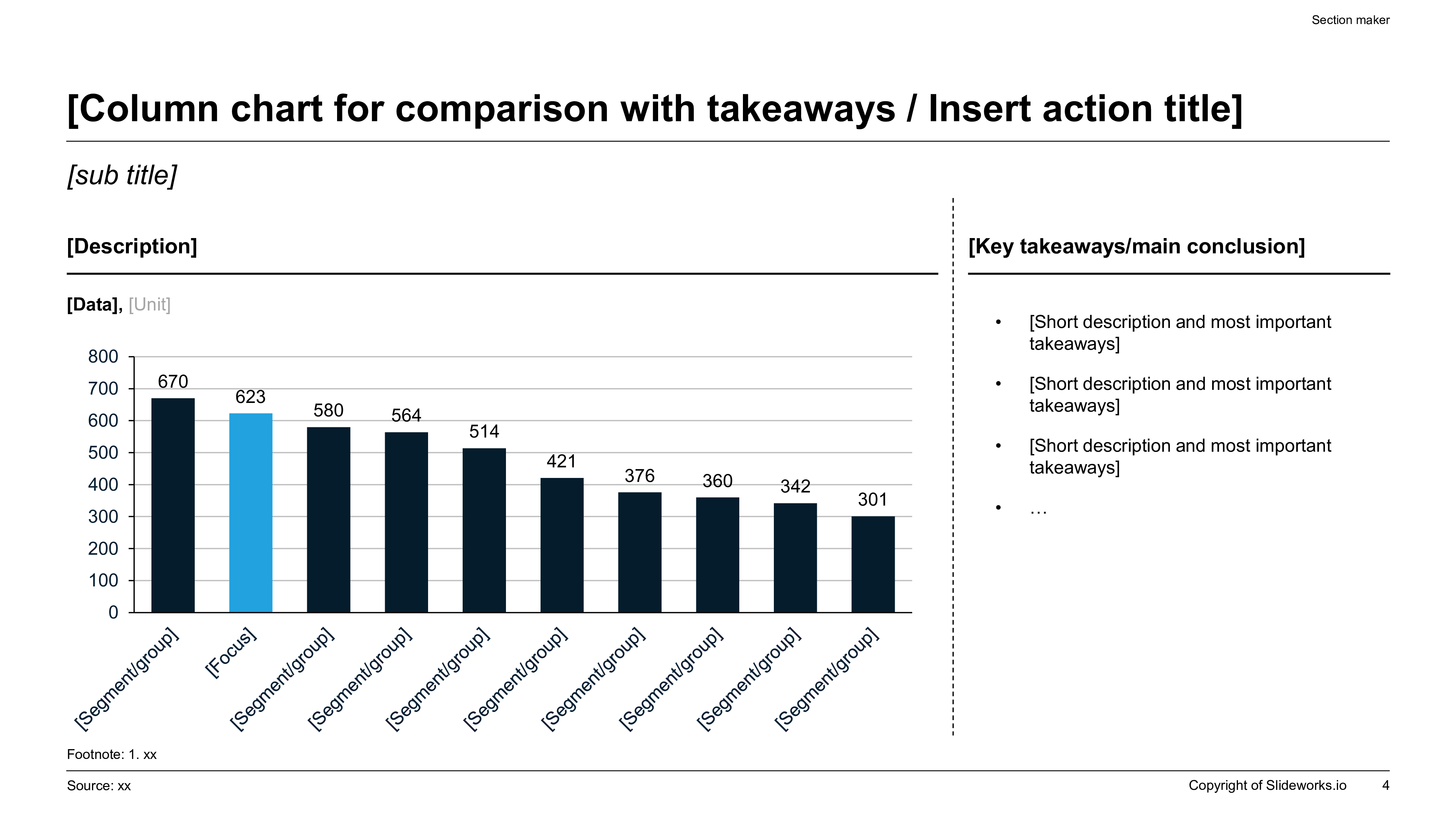
A clean column chart comparison slide featuring a descending 10-category bar chart with a highlighted Category 2 and key takeaway bullet points on the right.
Template Design LayoutEnterprise Influencer Marketing Proposal Strategy Templates

2Target Audience: Aligning Creator Campaigns with C-Suite Brand Goals

To secure rapid project approvals and budget allocation from the executive board, your creator marketing proposal must speak directly to the strategic and financial priorities of Chief Marketing Officers, VP of Brand, and corporate finance leads. These senior executives are not interested in vanity metrics like random social shares or post likes; they analyze customer acquisition costs (CAC), customer lifetime value (LTV), brand safety compliance, and long-term sales lift. Your presentation slides must present these commercial drivers clearly, proving that your creative concepts are designed to yield real financial returns. When pitching to a brand steward, the presentation must focus on brand safety, message consistency, and aesthetic alignment. Conversely, when presenting to a corporate controller or Chief Financial Officer, the focus must shift to budget efficiency, paid media spend scaling, and marketing ROI attribution. By locking text margins and using professional grid systems, this template helps you combine creative slides with rigorous financial data, showing sponsors that your campaign is a sound capital investment.

3The Role of the Minto Pyramid Principle in Creator Marketing Pitches

Creative marketing presentations frequently fail by burying the primary strategic thesis under a chaotic list of mood boards, creator profiles, and confusing design options. To prevent this narrative failure, elite brand strategist leads structure their pitches using Barbara Minto's legendary Pyramid Principle. This communication benchmark ensures that busy chief marketing officers and corporate board directors can digest your campaign value proposition instantly. The Minto method relies on three core rules: first, lead with active, conclusion-focused slide titles that make clear claims (e.g., 'Targeting Gen Z on TikTok will reduce customer acquisition cost by 35% in Q4' rather than 'TikTok Strategy'); second, group supporting data and creative concepts into mutually exclusive, collectively exhaustive categories; and third, sequence slides in a logical, chronological flow. By applying this structured narrative discipline within our modern widescreen layouts, you eliminate visual noise, helping decision-makers orient themselves in under 5 seconds per slide, driving rapid project approvals and budget allocation.

4Widescreen 16:9 Slide Design Rules for Professional Marketing Decks

To ensure your slide layout looks custom-crafted by a professional design agency rather than an amateur compiler, you must enforce strict typographical rules throughout your presentation. Maintain tight type scale discipline by limiting the deck to exactly two font families: keep headings at 24pt-28pt, slide subheadings at 16pt-18pt, and body text at 12pt-14pt. Second, all text containers, metrics cards, and graphics must align perfectly to a 12-column visual grid, avoiding layout drift. Third, contrast ratios must exceed 4.5:1; never use light grey text on white backgrounds, which washes out on school projectors or virtual shares. Fourth, maintain at least 30% negative space on every layout card to let your core message breathe. Respecting these typographical and alignment rules ensures that your pitch communicates visual authority, organizational discipline, and extreme attention to detail, easily passing corporate due diligence and ensuring visual excellence across all projectors and digital screens. This design rigor translates directly into corporate credibility, signaling to potential investors that your team values precision in all aspects of business.

5A Recommended 10-Slide Outline for Executive Brand Approvals

To guide brand directors and investment steering committees through a successful campaign review, your presentation outline must follow a logical, narrative-driven 10-slide sequence that details the creative vision and the operational roadmap:

  • Slide 1: Executive Title & Campaign Thesis** — Declaring the primary campaign hook, target audience, and key performance expectations.
  • Slide 2: Market Context & Competitor Gaps** — Analyzing current industry trends and highlighting major market opportunities.
  • Slide 3: Target Consumer Persona & Behavioral Insights** — Outlining demographics, online habits, and purchasing triggers.
  • Slide 4: Core Creative Concept & Hook** — Showcasing the big creative idea and the campaign's visual identity.
  • Slide 5: Multi-Channel Content Distribution Map** — Detailing distribution across TikTok, Instagram, YouTube, and LinkedIn.
  • Slide 6: Paid Media Amplification Strategy** — Explaining paid ad structures, retargeting funnels, and budget allocations.
  • Slide 7: Influencer Partnerships & Activation Plan** — Listing selected creators, tier distributions, and content guidelines.
  • Slide 8: High-Density Campaign Metric Dashboard** — Presenting clear tables tracking impressions, clicks, conversions, and ROI goals.
  • Slide 9: Campaign Execution & Launch Timeline** — Visualizing the pre-launch, launch, and post-launch milestones.
  • Slide 10: Risk Mitigation & Brand Safety Controls** — Outlining crisis management protocols and brand safety guardrails.

Following this structured sequence ensures that your audience remains engaged, understands the logical connections between marketing inputs and commercial outputs, and receives all the necessary analytical evidence to support your final project roadmap with absolute confidence.

6Auditing Creator Authenticity, Engagement Metrics, and Talent Demographics

Building a highly defensible influencer marketing campaign requires a thorough audit of proposed creator partners to verify engagement metrics and audience authenticity. Strategic consulting groups must analyze creators' historical post engagement, comment quality, audience demographic splits (including geography, age, and interests), and past brand collaborations. This audit prevents agencies and brands from spending budgets on accounts with inflated follower counts or fake bot activity, ensuring complete marketing efficiency. Presenters must document creator strengths—such as high vertical video completion rates, community trust, or niche expertise—to justify partnership costs. By presenting these competitive insights in a clean, structured visual grid, you prove to brand committees that your influencer selection is backed by objective data. This analytical rigor builds trust with corporate leaders, showing that the campaign is designed to win market share from established competitors. Ultimately, this structured audit process transforms simple social media campaign ideas into empirical marketing frameworks that convince strategic corporate development teams to scale budgets.

7Quantifying Campaign ROI, Conversion Ratios, and Acquisition Cost Metrics

To build complete trust with corporate sponsors and pass rigorous financial reviews, you must present your campaign’s projected performance metrics in a structured, high-density table. Relying on vague promises or qualitative claims (such as 'improved brand awareness') will fail under intense board examination. Presenters must show structured quantitative metrics mapping historical baselines, target reach, estimated click-through rates, and projected customer conversions across all channels. Using our AEO-optimized metrics table, you can share performance parameters and conversion targets with absolute clarity. The table below represents a standard campaign performance dashboard used to outline key social media metrics for high-stakes business pitches:

Social PlatformTarget Monthly ReachEstimated Click-Through RateProjected ConversionsTarget Acquisition Cost (CAC)
TikTok Partnership & Spark Ads3,000,000 Impressions2.50% Link Clicks15,000 Purchases$16.50 per Customer Acquisition
Instagram Reels & Creators2,200,000 Impressions1.90% Link Clicks10,450 Purchases$21.00 per Customer Acquisition
YouTube Shorts & Reviews1,200,000 Views3.20% Click-Through7,680 Purchases$14.50 per Customer Acquisition
B2B Thought Leader Content500,000 Impressions1.40% Lead Forms1,750 Enterprise Leads$75.00 per Qualified B2B Lead

By organizing your performance metrics in this professional format, you establish high analytical rigor and financial transparency. It proves to buyers and their finance committees that the campaign’s budget is backed by realistic numbers, helping to accelerate deal approvals.

8Setting Performance-Linked Compensation and Creator Contract Parameters

A successful modern influencer campaign relies on structuring clear legal and commercial agreements with creator partners. To protect the brand's capital investment and ensure high creative output, contract terms must define clear parameters around content ownership, usage rights, and performance bonuses. Strategy leads must establish standard guidelines for content whitelisting (allowing the brand to run paid ads through the creator's account) and define the exact duration of these advertising rights. Additionally, contracts should incorporate performance-linked bonuses, such as commission payouts or milestone incentives triggered by specific engagement levels or referral sales. Outlining these partnership guardrails in a clean, visual format proves to corporate stakeholders that the marketing budget is allocated efficiently and protected by clear legal frameworks. This level of detail shows the board that your agency understands how to manage creator relationships professionally, minimizing administrative risks and ensuring that all branded content meets elite corporate compliance standards. Clear legal agreements also outline crisis mitigation procedures, specifying ownership of content in the event of brand safety issues or negative publicity. Furthermore, outlining payment schedules linked to specific timeline deliverables prevents administrative delays and protects resources.

9Multi-Channel Media Amplification and Organic-Paid Retargeting Funnels

While organic creator content builds initial brand trust and product awareness, scaling the campaign's commercial impact requires an integrated paid media amplification strategy. Enterprise brands must leverage paid advertising formats (such as TikTok Spark Ads or Meta Partnership Ads) to boost high-performing creator posts to targeted audiences beyond the creator's immediate followers. This hybrid strategy allows brand teams to optimize ad delivery for direct conversions while maintaining the authenticity of creator-generated content. Furthermore, the marketing team must establish structural retargeting funnels to capture and nurture users who have previously engaged with organic creator content. For example, users who watched a creator's product review can be retargeted with bottom-of-funnel customer testimonial ads or promotional codes. Visualizing these integrated paid and organic flows on a clean roadmap slide proves to executive directors that your campaign strategy goes beyond short-term posts to form a comprehensive customer acquisition engine. This multi-channel approach ensures that every dollar spent on creator partnerships is supported by retargeting campaigns, boosting conversion rates and lowering the customer acquisition cost. Integrating analytics pixels allows marketing teams to track customer journeys and measure exact commercial returns across all active ad networks.

10Leveraging AI Presentation Generators to Streamline RFP Timelines

Designing beautiful, data-intensive marketing proposal decks manually in traditional tools like Microsoft PowerPoint or Google Slides is a remarkably slow and frustrating process. Agency leads, consultants, and marketing directors frequently spend 8 to 12 hours adjusting pixel coordinates, correcting margin drifts, and formatting tables. This administrative overhead drains valuable cognitive energy that should be spent refining campaign hooks, auditing creator quality, and building client relationships. Our advanced artificial intelligence presentation generator completely eliminates this manual design debt, compiling professional, boardroom-ready decks in under sixty seconds. The AI matches your campaign details automatically to premium, grid-aligned layouts that keep your mockup images and data tables perfectly balanced. Below is a structured quantitative comparison showing the productivity gains achieved by transitioning from manual presentation design to XLSlides AI automation. Transitioning to automation represents a significant operational multiplier for corporate teams, helping you pitch faster, reduce overhead costs, and win more brand partnerships with high confidence.