Infrastructure as Code Roadmap Presentation Template

Stop wasting hours on manual formatting. Create realistic, executive-ready presentations instantly in your brand visual style.

IaC maturity, cloud architecture, and deployment automation layouts
Governance, security, compliance, cost, and platform operating model slides
KPI dashboard, risk controls, toolchain roadmap, and rollout sections

1What Is an Infrastructure as Code Roadmap?

An Infrastructure as Code roadmap explains how an organization will move from manual infrastructure provisioning to automated, version-controlled, policy-governed cloud and platform delivery. It should connect current-state pain points, target architecture, IaC tooling, security controls, developer workflows, compliance needs, cost governance, operating model, and rollout milestones into one decision-ready story. The deck should not be a generic cloud automation overview. It should show which infrastructure patterns will be standardized, which teams will adopt them first, how controls will be enforced, and what measurable improvement leadership should expect. This gives CIOs, CTOs, platform teams, DevOps leaders, SRE teams, security stakeholders, compliance owners, finance teams, and transformation sponsors enough evidence to assess automation maturity, delivery velocity, control reliability, cloud cost impact, developer experience, operational risk, toolchain readiness, and adoption sequencing. It keeps decisions grounded in architecture standards, governance requirements, workflow evidence, security posture, and accountable next actions. The narrative should also define platform owners, exception paths, control evidence, migration dependencies, and adoption gates for each rollout wave.
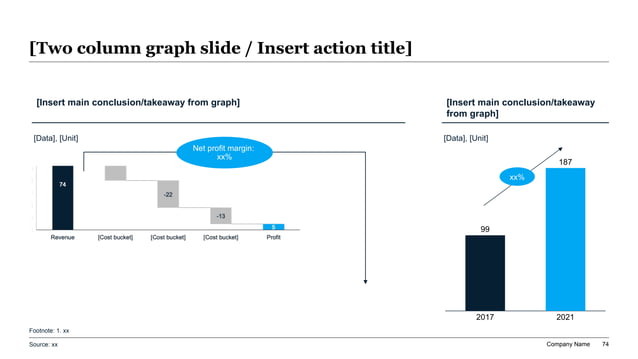
Infrastructure as Code roadmap slide with waterfall cost bridge, comparative growth dashboard, and blue highlight badges for cloud automation metrics.
Template Design LayoutInfrastructure as Code Roadmap Presentation Template

2When to Use This IaC Roadmap Template

Use this template when a team needs to present an IaC transformation, cloud platform modernization, DevOps enablement plan, security automation program, compliance uplift, platform engineering roadmap, or infrastructure operating model update. It works for organizations adopting Terraform, Pulumi, CloudFormation, Bicep, Crossplane, Ansible, Kubernetes GitOps, or internal developer platforms. The presentation is especially useful when leadership needs to understand why automation requires standards, ownership, and governance rather than only new tooling. It should clarify where manual provisioning creates delay, drift, audit exposure, inconsistent environments, and avoidable cloud waste. This gives CIOs, CTOs, platform teams, DevOps leaders, SRE teams, security stakeholders, compliance owners, finance teams, and transformation sponsors enough evidence to assess automation maturity, delivery velocity, control reliability, cloud cost impact, developer experience, operational risk, toolchain readiness, and adoption sequencing. It keeps decisions grounded in architecture standards, governance requirements, workflow evidence, security posture, and accountable next actions. The narrative should also define platform owners, exception paths, control evidence, migration dependencies, and adoption gates for each rollout wave.

3Recommended IaC Roadmap Deck Structure

A strong IaC roadmap deck usually starts with the executive recommendation, current-state friction, target outcomes, and maturity baseline. It then moves into architecture standards, reusable modules, toolchain design, workflow model, security and policy controls, compliance evidence, cost governance, team roles, adoption waves, KPI dashboard, risks, and funding ask. The structure should make it clear how engineering improvements translate into business outcomes such as faster release cycles, fewer incidents, stronger auditability, and lower cloud waste. Each section should distinguish the desired end state from the next practical milestone. This gives CIOs, CTOs, platform teams, DevOps leaders, SRE teams, security stakeholders, compliance owners, finance teams, and transformation sponsors enough evidence to assess automation maturity, delivery velocity, control reliability, cloud cost impact, developer experience, operational risk, toolchain readiness, and adoption sequencing. It keeps decisions grounded in architecture standards, governance requirements, workflow evidence, security posture, and accountable next actions. The narrative should also define platform owners, exception paths, control evidence, migration dependencies, and adoption gates for each rollout wave.

4Current-State Baseline and Automation Maturity

The baseline section should show how infrastructure is created, changed, reviewed, and operated today. Useful diagnostics include provisioning lead time, manual ticket volume, environment drift, failed deployments, incident causes, audit findings, unmanaged resources, configuration inconsistency, cloud spend leakage, and developer wait time. The deck should map current pain points to maturity levels, from ad hoc scripts and manual console work to reusable modules, automated pipelines, policy-as-code, and self-service platform workflows. This helps leaders see why IaC is an operating model change, not only a tooling purchase. This gives CIOs, CTOs, platform teams, DevOps leaders, SRE teams, security stakeholders, compliance owners, finance teams, and transformation sponsors enough evidence to assess automation maturity, delivery velocity, control reliability, cloud cost impact, developer experience, operational risk, toolchain readiness, and adoption sequencing. It keeps decisions grounded in architecture standards, governance requirements, workflow evidence, security posture, and accountable next actions. The narrative should also define platform owners, exception paths, control evidence, migration dependencies, and adoption gates for each rollout wave.

5Target Architecture, Modules, and Toolchain Choices

The architecture section should explain what will be standardized and how teams will consume it. Slides may cover cloud landing zones, network patterns, identity, secrets, compute, databases, Kubernetes, observability, backup, disaster recovery, module libraries, environment templates, and reusable reference architectures. Toolchain choices should be connected to team skills, existing cloud providers, compliance requirements, pipeline integration, state management, and long-term maintainability. A strong roadmap avoids fragmented automation by defining module ownership, versioning, review process, and deprecation rules. This gives CIOs, CTOs, platform teams, DevOps leaders, SRE teams, security stakeholders, compliance owners, finance teams, and transformation sponsors enough evidence to assess automation maturity, delivery velocity, control reliability, cloud cost impact, developer experience, operational risk, toolchain readiness, and adoption sequencing. It keeps decisions grounded in architecture standards, governance requirements, workflow evidence, security posture, and accountable next actions. The narrative should also define platform owners, exception paths, control evidence, migration dependencies, and adoption gates for each rollout wave.

6Security, Compliance, and Policy-as-Code Controls

IaC roadmaps need security and compliance built into the delivery model. The deck should show how policies will be codified, tested, approved, and monitored across identity, network exposure, encryption, tagging, logging, data residency, backup, vulnerability management, and privileged access. Policy-as-code can shift control review earlier in the workflow, but only if exceptions, ownership, and evidence capture are defined. Audit and security stakeholders will want to know how the program reduces drift, strengthens change traceability, and makes compliance evidence easier to produce. This gives CIOs, CTOs, platform teams, DevOps leaders, SRE teams, security stakeholders, compliance owners, finance teams, and transformation sponsors enough evidence to assess automation maturity, delivery velocity, control reliability, cloud cost impact, developer experience, operational risk, toolchain readiness, and adoption sequencing. It keeps decisions grounded in architecture standards, governance requirements, workflow evidence, security posture, and accountable next actions. The narrative should also define platform owners, exception paths, control evidence, migration dependencies, and adoption gates for each rollout wave.

7Operating Model, Developer Experience, and Governance

The operating model section should define who owns platform standards, who builds modules, who approves exceptions, how product teams request infrastructure, and how support is handled after deployment. A good IaC roadmap improves developer experience while preserving control. It should show self-service workflows, golden paths, documentation, training, support channels, review cadence, backlog prioritization, and service-level expectations. Governance should cover module lifecycle, cloud account structure, naming standards, tagging, cost allocation, and change management. Without ownership discipline, IaC can create a new layer of unmanaged complexity. This gives CIOs, CTOs, platform teams, DevOps leaders, SRE teams, security stakeholders, compliance owners, finance teams, and transformation sponsors enough evidence to assess automation maturity, delivery velocity, control reliability, cloud cost impact, developer experience, operational risk, toolchain readiness, and adoption sequencing. It keeps decisions grounded in architecture standards, governance requirements, workflow evidence, security posture, and accountable next actions. The narrative should also define platform owners, exception paths, control evidence, migration dependencies, and adoption gates for each rollout wave.

8Business Case, Cost Governance, and KPI Dashboard

The business case should connect IaC adoption to measurable improvements. Useful KPIs include provisioning lead time, deployment frequency, change failure rate, MTTR, policy violations blocked, audit evidence cycle time, cloud spend variance, percentage of resources under code management, module reuse, developer satisfaction, and incident reduction. Cost governance slides should show how tagging, budgets, automated guardrails, rightsizing, and environment lifecycle controls reduce cloud waste. Leadership will want to understand investment needs for tooling, platform team capacity, migration effort, training, and operating support. This gives CIOs, CTOs, platform teams, DevOps leaders, SRE teams, security stakeholders, compliance owners, finance teams, and transformation sponsors enough evidence to assess automation maturity, delivery velocity, control reliability, cloud cost impact, developer experience, operational risk, toolchain readiness, and adoption sequencing. It keeps decisions grounded in architecture standards, governance requirements, workflow evidence, security posture, and accountable next actions. The narrative should also define platform owners, exception paths, control evidence, migration dependencies, and adoption gates for each rollout wave.

9Rollout Roadmap, Risks, and Adoption Waves

The roadmap should sequence IaC adoption by platform foundations, pilot workloads, reusable modules, policy controls, migration waves, developer enablement, and scaled self-service. It should identify which applications or teams go first and why. Risks may include module sprawl, weak standards, state-file management issues, insufficient testing, security exceptions, cloud-provider differences, team resistance, and migration backlog. Each rollout wave should have entry criteria, support model, training plan, KPI targets, and decision gates. A practical roadmap shows how the organization will learn before broad enforcement. This gives CIOs, CTOs, platform teams, DevOps leaders, SRE teams, security stakeholders, compliance owners, finance teams, and transformation sponsors enough evidence to assess automation maturity, delivery velocity, control reliability, cloud cost impact, developer experience, operational risk, toolchain readiness, and adoption sequencing. It keeps decisions grounded in architecture standards, governance requirements, workflow evidence, security posture, and accountable next actions. The narrative should also define platform owners, exception paths, control evidence, migration dependencies, and adoption gates for each rollout wave.

10How XLSlides Speeds Up IaC Roadmap Planning

XLSlides helps teams convert architecture notes, DevOps metrics, cloud standards, security requirements, platform backlog items, toolchain decisions, cost findings, and adoption plans into a structured Infrastructure as Code roadmap presentation. The AI workflow can organize the story into current-state baseline, target architecture, module strategy, toolchain, policy-as-code, operating model, developer experience, business case, KPIs, risks, and rollout waves. This is useful when engineering teams have detailed inputs but need a polished deck for executives, security teams, finance, or transformation sponsors. The generated output is not a substitute for architecture review, security validation, or implementation planning, but it gives teams a strong working draft. This gives CIOs, CTOs, platform teams, DevOps leaders, SRE teams, security stakeholders, compliance owners, finance teams, and transformation sponsors enough evidence to assess automation maturity, delivery velocity, control reliability, cloud cost impact, developer experience, operational risk, toolchain readiness, and adoption sequencing. It keeps decisions grounded in architecture standards, governance requirements, workflow evidence, security posture, and accountable next actions.