Lab-Grown Dairy Market Analysis Presentation Template

Stop wasting hours on manual formatting. Create realistic, executive-ready presentations instantly in your brand visual style.

Market size, category segmentation, and consumer adoption slides
Cost curve, unit economics, bioprocess scale, and profitability framework dashboards
Regulatory, sustainability, partnership, risk, and commercialization roadmap visuals

1What a Lab-Grown Dairy Market Analysis Needs to Prove

A lab-grown dairy market analysis should prove that the technology can address a real market opportunity with credible economics, regulatory feasibility, and consumer acceptance. Leaders need to understand which dairy categories are attractive, which ingredients or products are technically viable, how the cost curve improves, and what commercialization path creates defensible value. The deck should connect market size, consumer needs, formulation performance, bioprocess scale, regulatory review, sustainability claims, and partnership strategy into one investment thesis. It should also separate near-term ingredient opportunities from longer-term mass-market dairy replacement. This gives FoodTech founders, precision fermentation teams, investors, dairy companies, ingredient suppliers, consumer brands, R&D leaders, regulatory teams, sustainability stakeholders, PMOs, and consultants enough evidence to assess market fit, consumer adoption, cost trajectory, scale-up risk, regulatory readiness, sustainability value, and commercialization sequencing. The narrative should also define product owners, application priorities, cost gates, evidence requirements, and launch checkpoints for each rollout wave clearly.
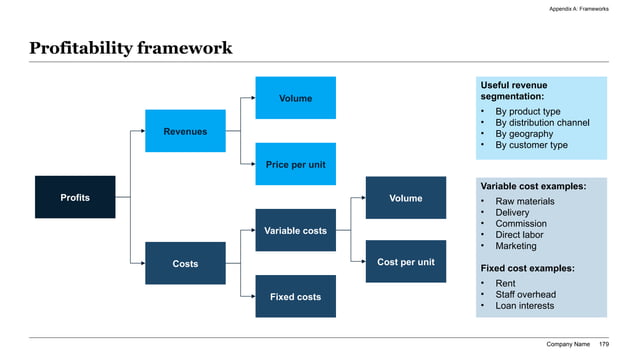
Lab-grown dairy market analysis slide with profitability logic tree decomposing revenue and cost drivers for cultivated dairy commercialization.
Template Design LayoutLab-Grown Dairy Market Analysis Presentation Template

2Who This Template Is Built For

This template is built for teams that need to present lab-grown dairy as a market and commercialization opportunity rather than only a scientific breakthrough. Typical users include precision fermentation startups, FoodTech founders, dairy alternative teams, ingredient companies, investors, corporate venture teams, consumer packaged goods leaders, R&D teams, regulatory teams, sustainability leaders, and consultants. It is useful when stakeholders must evaluate category entry, raise capital, brief a board, compare product applications, or build a market-entry roadmap. The audience usually wants to know whether taste, function, price, regulation, supply, and consumer trust can align at scale. This gives FoodTech founders, precision fermentation teams, investors, dairy companies, ingredient suppliers, consumer brands, R&D leaders, regulatory teams, sustainability stakeholders, PMOs, and consultants enough evidence to assess market fit, consumer adoption, cost trajectory, scale-up risk, regulatory readiness, sustainability value, and commercialization sequencing. The narrative should also define product owners, application priorities, cost gates, evidence requirements, and launch checkpoints for each rollout wave.

3Market Size and Category Prioritization

The market section should identify where lab-grown dairy has the strongest commercial fit. It should segment opportunities across milk, cheese, yogurt, ice cream, protein powders, infant nutrition, foodservice ingredients, bakery, confectionery, and specialty functional ingredients. The deck should compare category size, margin potential, functional requirements, consumer willingness to try, incumbent alternatives, regulatory complexity, and channel access. A useful prioritization page separates high-value early applications from broad replacement categories that require lower cost and greater manufacturing scale. This helps investors and operators avoid treating the entire dairy market as immediately addressable. This gives FoodTech founders, precision fermentation teams, investors, dairy companies, ingredient suppliers, consumer brands, R&D leaders, regulatory teams, sustainability stakeholders, PMOs, and consultants enough evidence to assess market fit, consumer adoption, cost trajectory, scale-up risk, regulatory readiness, sustainability value, and commercialization sequencing. The narrative should also define product owners, application priorities, cost gates, evidence requirements, and launch checkpoints for each rollout wave.

4Consumer Adoption and Brand Positioning

Consumer adoption pages should show who will buy lab-grown dairy, why they will try it, and what concerns must be addressed. The deck should cover taste expectations, nutrition, allergen considerations, naturalness perception, price sensitivity, sustainability motivation, animal welfare, trust in fermentation, labeling, and willingness to switch from conventional or plant-based options. It should identify priority segments such as flexitarians, sustainability-conscious consumers, lactose-sensitive consumers where relevant, high-protein users, foodservice buyers, or premium ingredient customers. Positioning should avoid overclaiming and focus on the benefits most relevant to the category. This gives FoodTech founders, precision fermentation teams, investors, dairy companies, ingredient suppliers, consumer brands, R&D leaders, regulatory teams, sustainability stakeholders, PMOs, and consultants enough evidence to assess market fit, consumer adoption, cost trajectory, scale-up risk, regulatory readiness, sustainability value, and commercialization sequencing. The narrative should also define product owners, application priorities, cost gates, evidence requirements, and launch checkpoints for each rollout wave clearly.

5Product Performance and Application Fit

The product section should explain how the lab-grown dairy ingredient performs in target applications. It may cover protein functionality, flavor, texture, solubility, melt, foam, emulsification, nutrition, shelf life, allergen profile, formulation compatibility, and sensory results. The deck should show where the ingredient can match or outperform conventional dairy and where formulation work remains. Application fit matters because a cultivated dairy ingredient may be more valuable in cheese, ice cream, nutrition, or specialty applications than in commodity milk at early scale. Technical performance should be linked to customer pain points and willingness to pay. This gives FoodTech founders, precision fermentation teams, investors, dairy companies, ingredient suppliers, consumer brands, R&D leaders, regulatory teams, sustainability stakeholders, PMOs, and consultants enough evidence to assess market fit, consumer adoption, cost trajectory, scale-up risk, regulatory readiness, sustainability value, and commercialization sequencing. The narrative should also define product owners, application priorities, cost gates, evidence requirements, and launch checkpoints for each rollout wave.

6Bioprocess Scale-Up and Cost Curve

The scale-up section should describe the production pathway and what must improve for commercial viability. It should cover strain performance, fermentation yield, titer, productivity, media cost, downstream processing, purification, facility utilization, contract manufacturing, quality systems, and capex requirements. The deck should show a cost curve from pilot to commercial scale and identify the key drivers that reduce cost per kilogram. A profitability logic tree can break economics into revenue, price, volume, yield, conversion cost, feedstock, labor, energy, depreciation, and overhead. This helps leadership see which variables determine margin. This gives FoodTech founders, precision fermentation teams, investors, dairy companies, ingredient suppliers, consumer brands, R&D leaders, regulatory teams, sustainability stakeholders, PMOs, and consultants enough evidence to assess market fit, consumer adoption, cost trajectory, scale-up risk, regulatory readiness, sustainability value, and commercialization sequencing. The narrative should also define product owners, application priorities, cost gates, evidence requirements, and launch checkpoints for each rollout wave.

7Regulatory, Labeling, and Food Safety Path

Regulatory pages should explain the approvals, safety evidence, and labeling decisions required before launch. The deck may cover ingredient safety, production organism, allergen considerations, manufacturing controls, quality assurance, market-specific approvals, novel food requirements where relevant, and claims substantiation. Labeling should be discussed carefully because consumer trust, dairy standards, and jurisdiction-specific rules can shape adoption. The presentation should identify open questions, documentation needed, reviewer engagement, and launch markets by regulatory readiness. A credible market analysis does not assume approval timing; it makes the regulatory path part of the commercialization plan. This gives FoodTech founders, precision fermentation teams, investors, dairy companies, ingredient suppliers, consumer brands, R&D leaders, regulatory teams, sustainability stakeholders, PMOs, and consultants enough evidence to assess market fit, consumer adoption, cost trajectory, scale-up risk, regulatory readiness, sustainability value, and commercialization sequencing. The narrative should also define product owners, application priorities, cost gates, evidence requirements, and launch checkpoints for each rollout wave.

8Sustainability Claims and Impact Evidence

Sustainability sections should show what benefits are measurable and how they are verified. The deck can cover land use, water use, greenhouse gas emissions, animal welfare, waste, energy source, feedstock inputs, bioreactor efficiency, packaging, and logistics. It should compare lab-grown dairy against conventional dairy and plant-based alternatives using transparent boundaries and assumptions. If the business relies on sustainability-driven pricing or retail adoption, claims need evidence strong enough for customer diligence and public communication. The deck should also show where impacts depend on energy mix, facility location, ingredient yield, and downstream processing. This gives FoodTech founders, precision fermentation teams, investors, dairy companies, ingredient suppliers, consumer brands, R&D leaders, regulatory teams, sustainability stakeholders, PMOs, and consultants enough evidence to assess market fit, consumer adoption, cost trajectory, scale-up risk, regulatory readiness, sustainability value, and commercialization sequencing. The narrative should also define product owners, application priorities, cost gates, evidence requirements, and launch checkpoints for each rollout wave.

9KPI Dashboard and Investment Case

The KPI section should translate market analysis into measurable progress. Useful indicators include category TAM, target price premium, sensory scores, formulation wins, titer, yield, productivity, cost per kilogram, batch success rate, regulatory milestones, customer pilots, offtake commitments, gross margin, capex per capacity unit, sustainability metrics, and launch readiness. The investment case should show funding need, use of proceeds, milestone gates, expected value creation, and sensitivity to scale-up timing or cost reduction. The dashboard should separate scientific progress from commercial readiness so investors can see whether the business is moving toward revenue, margin, and repeatable supply. This gives FoodTech founders, precision fermentation teams, investors, dairy companies, ingredient suppliers, consumer brands, R&D leaders, regulatory teams, sustainability stakeholders, PMOs, and consultants enough evidence to assess market fit, consumer adoption, cost trajectory, scale-up risk, regulatory readiness, sustainability value, and commercialization sequencing. The narrative should also define product owners, application priorities, cost gates, evidence requirements, and launch checkpoints for each rollout wave.

10Commercialization Roadmap and XLSlides Workflow

The commercialization roadmap should sequence lab-grown dairy through category prioritization, product proof, sensory validation, regulatory planning, pilot production, customer trials, cost reduction, manufacturing scale-up, launch market selection, and broader category expansion. Early waves should focus on applications where function, price, and customer willingness to pay are strongest. Later waves can pursue larger categories as cost and capacity improve. XLSlides helps teams convert market research, technical performance data, cost assumptions, regulatory notes, sustainability evidence, customer pilots, and investment milestones into a structured market analysis deck. The generated output gives teams a strong working draft that can be refined with current testing results, regulatory counsel, customer feedback, and financial model details. This gives FoodTech founders, precision fermentation teams, investors, dairy companies, ingredient suppliers, consumer brands, R&D leaders, regulatory teams, sustainability stakeholders, PMOs, and consultants enough evidence to assess market fit, consumer adoption, cost trajectory, scale-up risk, regulatory readiness, sustainability value, and commercialization sequencing. The narrative should also define product owners, application priorities, cost gates, evidence requirements, and launch checkpoints for each rollout wave.