Direct Answer: What A Change Management Presentation Must Do
A serious change management presentation is not an announcement deck. It is a decision and alignment document that helps leadership explain why the change is necessary, which behaviors must shift, where resistance will appear, how adoption will be measured, and what governance will keep the program on track.
That means the deck has to do more than list milestones and communication channels. Executives want to see the case for change, the groups most exposed to disruption, the business risks of slow adoption, the specific messages that need to land, and the review cadence that will catch problems early. Managers want clarity on what they must say, when they must say it, and what evidence proves the message is changing behavior rather than just creating awareness.
The most useful change deck reads like an operating plan for human adoption. It opens with the business rationale, translates that rationale into audience-specific implications, maps the communication and manager actions that support the shift, and closes with metrics, ownership, and escalation paths. If the presentation cannot answer those questions quickly, it may still be a nice communication artifact, but it is not an executive-ready change management deck.
Organizational Alignment Diagnostic Reference
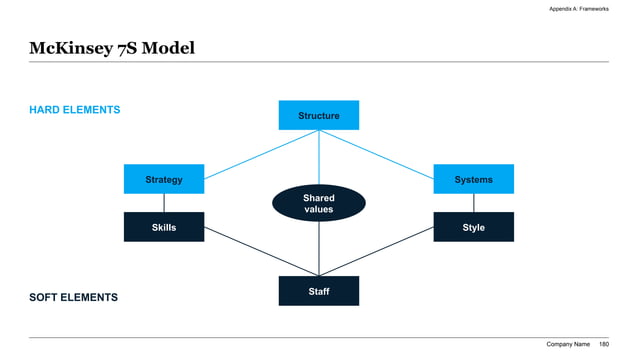
Change Management Deck Takeaways
- A strong change deck explains the business logic of the change before it explains the communication plan.
- The audience should be able to tell which stakeholder groups face the biggest behavior shift and why resistance is likely to show up there first.
- Communication alone is not enough; the deck should connect messages to manager actions, enablement, reinforcement, and governance.
- AI is most useful when it assembles a structured first draft from scattered program notes, while leaders still own the truth of the messages, risks, and adoption signals.
Change Management Deck Vs. Transformation Roadmap Vs. Board Update Vs. Training Pack
Many teams blur these artifacts together. The result is usually a deck that is too vague for leadership and too abstract for the people expected to change behavior.
| Artifact | Primary Job | Core Audience | What It Must Prove | Common Failure Mode |
|---|---|---|---|---|
| Change management presentation | Align leaders and managers on the adoption plan | Executives, PMO, HR, function leaders, people managers | The organization knows what changes, who is affected, how risk will be managed, and how adoption will be measured | Confuses activity reporting with behavior change |
| Transformation roadmap | Sequence workstreams and delivery milestones | Program leadership, PMO, workstream owners | The plan is feasible and dependencies are explicit | Shows dates without the people-side implications |
| Board update | Surface decisions, risks, and oversight items | Board, CEO, CFO, steering committee | Leadership sees material risks, required approvals, and the link to business outcomes | Overloads directors with internal communication detail |
| Training pack | Teach new processes, tools, or behaviors | Frontline teams and managers | People know how to perform the new work | Teaches mechanics before explaining why adoption matters |
Why Most Change Decks Fail Even When The Program Is Real
The most common failure is treating the presentation as a broadcast. The deck explains that a new system, process, operating model, or policy is coming, but it never identifies what the audience must believe, do, or stop doing. That creates passive awareness without operational adoption. Leadership leaves the room thinking communication happened, while frontline managers still do not know which objections they are supposed to anticipate or which actions they must reinforce.
A second failure is separating the people story from the business story. Change presentations often include a polished rollout calendar, a stakeholder map, and a few generic reminders about engagement. What is missing is the hard business logic: what goes wrong if adoption lags, which KPIs are at risk, which roles experience the biggest disruption, and why the organization is choosing this path now instead of later. Without that logic, the deck reads like internal messaging support rather than an executive control system.
The third failure is weak review discipline. Good change management is iterative. The first messages will not land perfectly, resistance patterns will shift, and some managers will over-communicate while others go silent. A useful deck makes room for that reality by showing how leadership will listen, measure, escalate, and adjust. That is the difference between a communication artifact and a management tool.
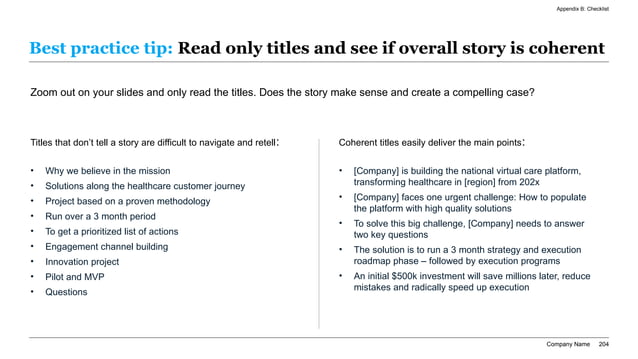
Change Message Rewrite Reference
Inputs To Collect Before You Draft The Deck
The fastest way to get a credible first draft is to gather the minimum evidence pack before anyone starts designing slides.
| Input | Why It Matters | Typical Owner |
|---|---|---|
| Case for change | Gives the deck a business reason that goes beyond generic modernization language | Executive sponsor or transformation lead |
| Target-state behaviors | Clarifies what people must do differently after the change | Process owner or functional lead |
| Affected stakeholder groups | Prevents one-size-fits-all communication plans | PMO, HR, or business change lead |
| Known resistance themes | Turns manager talking points into real objection handling | Managers, HRBPs, change partners |
| Rollout timing and milestones | Connects messages to real implementation moments | PMO or program manager |
| Adoption and risk metrics | Lets the deck prove whether the change is landing | Analytics lead, PMO, or business owner |
| Governance and escalation paths | Makes it clear who intervenes when adoption slips | Sponsor, PMO, and workstream leadership |
Build The Story Around Case For Change, Audience Risk, And Required Behaviors
The cleanest change management presentation follows a simple logic. Start with the case for change. Then show which groups are affected and what the shift means for them. Next, make the risks visible: where confusion, capacity strain, capability gaps, or resistance are most likely to slow adoption. Only then should the deck move into the communication sequence, manager expectations, enablement plan, and measurement approach.
This order matters because people do not adopt change just because the timeline is well formatted. They adopt when the message feels connected to business reality, local incentives, and daily work. A finance team needs different framing from a sales team. A people manager needs different guidance from an executive sponsor. A good deck reflects those differences explicitly rather than hiding them behind a single generic stakeholder box.
For XLSlides users, this is where AI can save meaningful time. If the prompt includes the case for change, stakeholder groups, manager concerns, rollout dates, and adoption metrics, the first draft starts with a real operating narrative instead of a vague announcement deck. The user can then sharpen the titles, validate the objections, and bring the document up to executive standard.
Stakeholder Questions The Deck Must Answer Before Launch
Readiness Assessment Matrix Reference
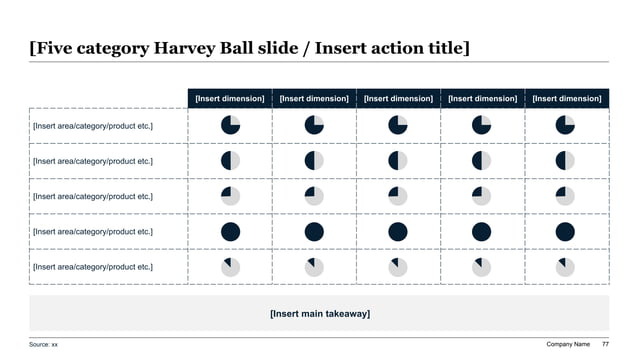
Recommended 12-Slide Change Management Presentation Sequence
This structure works best when the deck needs to align sponsors, managers, and program leads around a real rollout rather than simply explain a concept.
| Slide | Purpose | Executive Question Answered |
|---|---|---|
| 1. Executive summary | State the change, business rationale, and leadership ask | What is changing and what do you need from us? |
| 2. Case for change | Explain the operational or strategic pressure behind the shift | Why act now? |
| 3. Audience impact | Show which groups face the largest behavior shift | Who is most affected? |
| 4. Risk and resistance map | Surface friction points early | Where could adoption fail? |
| 5. Core messages by audience | Tailor the narrative to each stakeholder group | What should each audience hear? |
| 6. Manager role | Clarify what people leaders must reinforce | What do managers need to do? |
| 7. Communication channels and cadence | Sequence messages by moment and medium | How will the message travel? |
| 8. Enablement and support | Show training, tools, and reinforcement assets | How will people learn the new way? |
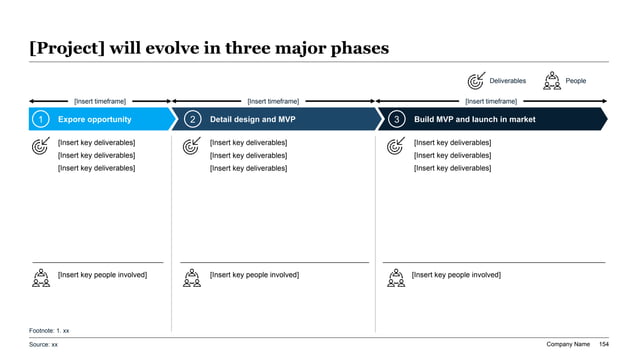
| 9. Rollout roadmap | Make timing and milestones explicit | When does each phase happen? |
| 10. Adoption metrics | Define how success is measured | How do we know the change is landing? |
| 11. Governance and escalation | Assign review ownership and intervention paths | Who acts if adoption slips? |
| 12. Immediate decisions and next steps | Close with approvals, owners, and timing | What must happen next? |
What Belongs In The Main Story, Appendix, And Weekly PMO Update
The main story should stay focused on executive judgment. That means the headline risk areas, affected populations, required behaviors, key messages, major milestones, adoption metrics, and governance model belong in the core flow. These are the elements leaders need in order to approve the plan, coach managers, and intervene quickly when the program starts to wobble.
Detailed distribution lists, exhaustive communication-copy variants, full training curricula, and long issue logs usually belong in the appendix or in a linked operating pack. They are important, but they slow down the executive narrative if they appear too early. A board or steering committee does not need every email draft. They need to know whether the communication design is credible and whether the business is controlling the biggest adoption risks.
Weekly PMO updates should sit somewhere in between. Those decks can go deeper on milestones, workstream health, and escalation items, but they should still inherit the same change logic. If the weekly update measures only activity completion and never shows sentiment, manager response, adoption KPIs, or unresolved resistance, the team will miss the human risks until the implementation calendar is already slipping.
Prompt Recipe For A Change Management Presentation
Create a 12-slide change management presentation for an enterprise transformation. Audience: executive sponsor, PMO, HR change leads, function leaders, and frontline managers. Context: a multi-phase process and systems rollout that changes team workflows, manager responsibilities, and reporting expectations. Include an answer-first executive summary, case for change, affected stakeholder groups, resistance themes, audience-specific messages, manager role, communication channels and cadence, enablement plan, 90-day rollout roadmap, adoption metrics, governance and escalation model, and next-step decisions. Use action titles, practical executive language, source-note placeholders where needed, and editable PowerPoint-style structure rather than decorative slides.
Action Title Rewrite Matrix For Change Slides
A useful change deck tells the audience what to conclude, not just which topic is on the page.
| Weak Topic Title | Executive Action Title | Why The Rewrite Works |
|---|---|---|
| Communication plan | Frontline managers need weekly reinforcement before phase-one launch | It turns a generic artifact into a clear implication for leaders |
| Stakeholder analysis | Operations supervisors face the highest adoption risk because approval workflows are changing first | It identifies who matters most and why |
| Training | System training alone will not close the behavior gap without manager coaching | It separates awareness from real adoption |
| Timeline | The highest-risk communication window is the two weeks before cutover | It tells the reader where attention should go |
| Metrics | Adoption should be tracked through usage, manager compliance, and error rates rather than attendance alone | It shows how success will actually be judged |
| Next steps | Leadership must approve owner, message sequence, and escalation thresholds this week | It makes the ask explicit |
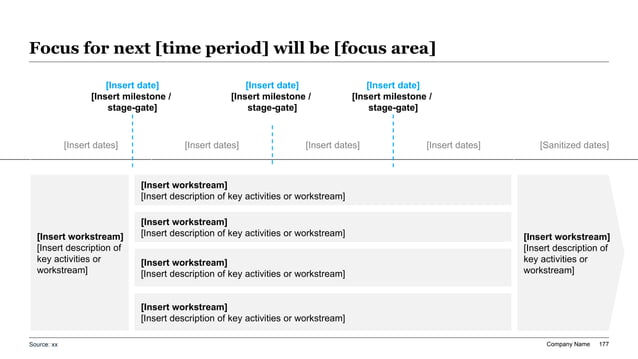
90-Day Communication And Adoption Roadmap Reference
What AI Should Automate In A Change Workflow And What Leaders Must Still Decide
AI is valuable in change management because the inputs are fragmented. Transformation teams usually have sponsor notes, workshop outputs, project plans, risk logs, org charts, training plans, FAQs, and manager talking points scattered across folders and meetings. XLSlides can turn that messy input set into a first structured deck with a usable slide sequence, draft action titles, communication-plan tables, roadmap pages, and initial metrics framing.
What AI should not decide on its own is the truth of the change narrative. A model cannot know whether the sponsor is actually credible with the audience, whether a milestone date is politically realistic, whether a frontline team has the capacity to absorb two changes at once, or whether a resistance theme is minor noise or a serious adoption blocker. Those are management judgments that require context, relationships, and sometimes hard tradeoff calls.
The practical operating model is simple: use AI for assembly and formatting-heavy first drafts, then let program leaders sharpen the sponsor message, edit the stakeholder logic, challenge the timeline assumptions, and tighten the review cadence. That is the strongest XLSlides positioning for this topic because it matches how serious business teams actually want to work.
Metrics That Prove The Change Is Landing
Attendance and open rates are useful inputs, but they are not enough on their own. Executive readers care about whether the operating behavior is changing.
| Metric Block | Example Measures | Why It Matters |
|---|---|---|
| Awareness and reach | Town hall attendance, email reach, manager cascade completion, intranet visits | Shows whether the message is reaching the intended population |
| Manager reinforcement | Manager briefing completion, team-level discussion cadence, Q&A follow-up rate | Managers are the force multiplier in most enterprise changes |
| Behavior adoption | System usage, process compliance, policy adherence, workflow completion quality | Measures whether the new way of working is actually happening |
| Capability readiness | Training completion, role-based proficiency checks, time to competence | Separates message acceptance from real ability |
| Risk and friction | Error rates, help-desk spikes, exception volume, resistance themes, attrition risk | Surfaces where adoption is breaking down |
| Business outcome linkage | Cycle time, service level, close rate, margin leakage, compliance outcomes | Connects the change effort back to the reason the business funded it |
Red Flags That Signal Communication Theater Instead Of Adoption
Governance And Workstream Coordination Reference
XLSlides Resources For Transformation And Change Work
Common Questions About Change Management Presentations
What should a change management presentation include?
At minimum, include the case for change, affected stakeholder groups, expected behavior shifts, resistance themes, communication and manager plans, rollout milestones, adoption metrics, governance, and the leadership decisions required next.
How is a change management deck different from a project roadmap?
A roadmap sequences tasks and milestones. A change management presentation focuses on whether people will adopt the new way of working, what messages and reinforcements are needed, and how leadership will detect and manage resistance.
Should adoption metrics be in the main presentation?
Usually yes. Executive readers need to know how success will be measured and which signals trigger intervention. Detailed logs can stay in appendix or PMO reporting, but the top adoption measures should be visible in the main story.
Can AI create the first draft of a change management presentation?
Yes, if the prompt includes the case for change, stakeholder groups, rollout milestones, likely objections, and adoption metrics. AI is useful for structuring the first draft, but leaders still need to validate the messages, risks, and political realities.
Generate The Change Management Draft In XLSlides
Use XLSlides to turn sponsor notes, PMO workplans, stakeholder maps, communication drafts, resistance themes, and rollout milestones into an editable change management presentation with action titles, adoption scorecards, and executive-ready structure.
Generate Change Management Deck