Executive Overview: Structuring Joint Venture & Strategic Alliance Presentations
A joint venture or strategic alliance presentation is an institutional decision-support and deal-structuring artifact presented to Parent Boards of Directors, Investment Committees, and Alliance Steering Committees. Its primary objective is not merely to celebrate shared commercial ambitions, but to establish an unassailable economic, operational, and legal blueprint that governs multi-party capital allocation, intellectual property rights, operational control, and downside risk distribution across sovereign corporate entities.
Corporate executives and strategy consultants frequently discover that joint ventures are significantly more complex to structure and sustain than outright corporate acquisitions. In a 100% buy-side acquisition, control is consolidated under a single hierarchy, cultural integration is enforced through executive fiat, and operational disputes are resolved through standard chain-of-command authority. In sharp contrast, joint ventures—especially 50/50 equity partnerships—operate in an environment of shared authority, divergent corporate cultures, competing parent priorities, and persistent conflicts of interest. More than 53% of corporate joint ventures and strategic alliances undergo acrimonious restructuring, valuation write-downs, or early termination within 36 to 60 months of formation. Overwhelmingly, these failures do not stem from market shifts or commercial inadequacy; they trace directly to structural ambiguities pre-wired into early executive presentations that were never resolved before definitive Shareholder and LLC Operating Agreements were signed.
Generic presentation tools and consumer-grade AI slide generators fail catastrophically in this domain. They populate slides with superficial bullet points about 'leveraging synergies', 'collaborative innovation', and 'win-win ecosystems', while completely ignoring the rigorous structural questions that corporate directors, general counsels, and CFOs demand: How will non-cash intellectual property contributions be independently appraised? What specific supermajority thresholds govern capital expenditure variances exceeding $10 million? How are parent-provided services (TSAs) priced to comply with OECD transfer pricing guidelines and IRS Section 482? What multi-stage escalation protocol prevents operational deadlocks from paralyzing the business? And under what exact valuation formulas can either parent exercise buy-sell shotgun rights upon fundamental disagreement?
An institutional joint venture presentation must address six non-negotiable architectural layers: (1) The Build vs. Buy vs. Partner Hurdle Analysis, proving why an alliance delivers superior risk-adjusted return on invested capital (ROIC) over M&A or organic development; (2) Contributed Asset & Capital Envelope, monetizing tangible cash commitments alongside intangible patents, brands, and distribution rights; (3) Multi-Tier Governance Architecture, delineating clear boundaries between Parent Boards, the JV Board of Directors, functional Steering Committees, and independent JV Management; (4) Day-1 Inter-Company Operating Interfaces, covering transfer pricing, Transition Services Agreements (TSAs), and seconded executive ringfencing; (5) Capital Call & Distribution Waterfalls, codifying dilution formulas and liquidity management; and (6) Pre-Engineered Exit & Deadlock Mechanics, detailing Texas Shootout, Russian Roulette, and termination protocols before capital is committed.
Comparative Framework: The 4 Core Joint Venture & Strategic Alliance Archetypes
A comprehensive structural comparison across non-equity contractual alliances, co-development partnerships, minority equity joint ventures, and 50/50 standalone operating holdcos.
| Alliance Archetype | Legal & Capital Structure | Governance & Control Model | IP & Asset Rights | Capital Call & Funding Risk | Optimal Strategic Context |
|---|---|---|---|---|---|
| Contractual Strategic Alliance (Non-Equity) | Commercial collaboration agreement with zero shared equity; balance sheets remain strictly segregated; mutual performance covenants. | Joint Steering Committee (JSC) with equal advisory representation; no fiduciary board; decisions require mutual consensus or unilateral escalation. | Cross-licensing of pre-existing Background IP strictly limited to collaboration scope; Foreground IP retained by creating party or jointly owned. | Zero joint capital calls; each party funds its own internal operational workstreams, R&D budgets, and commercial headcount. | Go-to-market partnerships, co-marketing arrangements, OEM distribution agreements, and cross-selling across non-competing geographies. |
| Co-Development & Joint R&D Partnership | Contractual joint development agreement (JDA) with shared milestone funding; pre-negotiated royalty pools and commercial milestone payments. | Joint R&D Project Steering Committee with alternating technical leadership; quarterly milestone gating reviews; dispute escalation to Parent CTOs. | Field-of-use IP segmentation; exclusive worldwide rights granted within defined sector; shared prosecution of new patents created in collaboration. | Capped milestone-based funding obligations; failure to fund results in automatic loss of commercial exclusivity or stepped-down royalty share. | High-risk, capital-intensive technology or therapeutic development (e.g., biopharma drug discovery, aerospace sub-systems, clean energy pilots). |
| Minority / Majority Equity Joint Venture (e.g., 60/40 or 70/30) | Independent legal entity (LLC, Corporation, or HoldCo); equity ownership mirrors capital contribution; consolidated onto majority parent balance sheet. | Board seats allocated proportionately to equity; majority parent holds operational control; minority parent protected via extensive Reserved Matters list. | Foreground IP assigned directly to the JV entity; parents receive perpetual, royalty-free non-exclusive licenses outside JV restricted territory. | Pro-rata capital calls; non-participating parent subject to contractual dilution formulas (punitive 1.5x book value haircut or fair market dilution). | Market entry into foreign jurisdictions with foreign ownership caps (e.g., GCC, East Asia), corporate carve-outs, or supplier equity alliances. |
| 50/50 Standalone Equity Joint Venture (HoldCo LLC / Inc.) | Standalone legal entity with 50/50 capitalization and profit distribution; off-balance sheet equity method accounting for both parent companies. | Equally balanced Board of Directors (e.g., 3 seats per parent); independent JV CEO; mandatory supermajority thresholds for all material decisions. | Complete transfer or perpetual exclusive license of core IP into the JV; severe non-compete covenants restricting parent competition in JV domain. | Strictly symmetrical capital calls; pre-engineered debt facilities; default triggers mandatory share purchase options or entity liquidation. | Multi-billion-dollar industrial scale transformations, telecom infrastructure rollouts, automotive platform co-development, and energy megaprojects. |
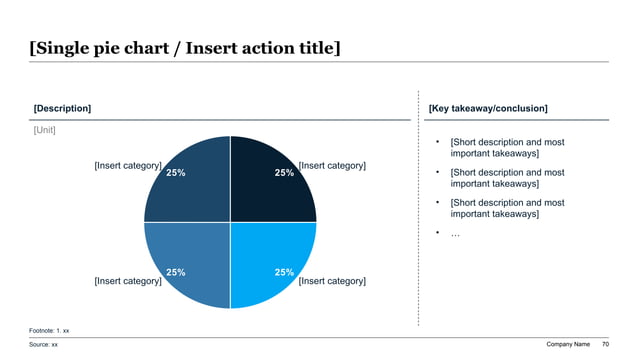
Exhibit 1: Joint Venture Equity Ownership, Economic Split & Contributed Capital Envelope
Executive Takeaways for Joint Venture & Strategic Alliance Presentations
- Answer-First Strategic Hurdle: Always initiate the deck by answering why an alliance delivers superior risk-adjusted ROIC over 100% M&A (too expensive/antitrust hurdles) and organic internal R&D (too slow/missing operational capabilities).
- Rigorous Non-Cash Asset Appraisal: Never accept unverified book values for contributed intangibles. Require independent discounted cash flow (DCF) relief-from-royalty appraisals for patents, commercial distribution rights, and software.
- Four-Tier Governance Separation: Legally and operationally segregate Parent Boards (ultimate shareholder authority), the JV Board of Directors (fiduciary governance), functional Steering Committees (operational coordination), and the JV CEO (autonomous daily execution).
- Reserved Matters Supermajority Grid: Explicitly categorize decisions into delegated CEO authority (<$5M CapEx), simple board majority, and supermajority/unanimous shareholder consent (>15% budget variance, related-party contracts, M&A).
- Pre-Wired Deadlock Escape Protocols: Eliminate structural paralysis in 50/50 joint ventures by incorporating multi-stage escalation (14-day CEO mediation, technical appraisal) followed by Texas Shootout or Russian Roulette shotgun buy-sell clauses.
- Arm's-Length Transfer Pricing Discipline: Structure all parent services, IT hosting, and component supply under formal Transition Services Agreements (TSAs) priced at cost-plus 5-10% to eliminate parent margin-siphoning and satisfy tax authorities.
- Day-1 Exit & IP Carve-Back Readiness: Codify pre-agreed exit triggers, put/call option multiples (e.g., 8.0x TTM EBITDA), and reversion of pre-existing Background IP before capital contracts are signed.
The Strategic Rationale: The Build vs. Buy vs. Partner Hurdle Analysis
The most critical section of any joint venture presentation to a Parent Board of Directors or Investment Committee is the strategic hurdle analysis: why is a multi-party alliance superior to an outright corporate acquisition ('Buy') or internal greenfield development ('Build')? Corporate boards are naturally skeptical of alliances because they bring shared profits, governance complexity, and persistent execution friction. If the presentation cannot prove within the first three slides that M&A and internal builds are structurally inferior, the proposal will be rejected or bogged down in endless exploratory committees.
From an academic and strategic advisory standpoint, the decision to form an alliance hinges on Transaction Cost Economics (TCE) and the Resource-Based View (RBV) of the firm. When evaluating the 'Buy' option (100% M&A), transaction costs are often prohibitive: target company valuations may command a 40% to 60% control premium; regulatory authorities may block full mergers on antitrust grounds (e.g., FTC, European Commission, CMA); sovereign restrictions may legally mandate domestic majority ownership (e.g., telecommunications, defense, natural resources); or target leadership may refuse an outright sale while welcoming an equity partnership. Furthermore, acquiring an entire company forces the acquirer to absorb unwanted business units, legacy debt, and pension liabilities, creating massive balance sheet bloat.
Conversely, the 'Build' option (organic internal development) carries fatal time-to-market vulnerabilities and high capital intensity. Developing proprietary technology from scratch, securing global regulatory approvals, constructing greenfield manufacturing plants, and recruiting specialized engineering talent can consume five to seven years. In fast-moving technology, energy transition, or biopharma markets, a seven-year organic build guarantees that competitors capture market share before the product launches. Internal builds also force the parent company to bear 100% of the downside capital risk if the technological bet fails.
A joint venture or strategic alliance optimizes this trade-off by achieving Collaborative Advantage. It enables two or more corporate leaders to pool non-replicable, complementary assets: Parent A brings patented technological architecture, advanced manufacturing automation, and engineering expertise; Parent B brings entrenched local market distribution, sovereign regulatory relationships, enterprise sales forces, and local customer contracts. By sharing the required capital expenditure 50/50, both parents achieve sub-scale mitigation, accelerate time-to-market by 36+ months, cut standalone cash exposure by half, and preserve precious balance sheet debt capacity for core corporate operations.
Exhibit 2: Mutual Strategic Contributions & Economic Synergies Architecture
Mutual Strategic Contributions & Valuation Matrix: Monetizing Cash and Non-Cash Assets
Detailed valuation methodologies and contractual treatment for cash capital, contributed IP, commercial market access, manufacturing facilities, and executive personnel.
| Asset Contribution Category | Parent A Contribution | Parent B Contribution | Valuation Methodology | Contractual Ringfencing & Protection | Post-Termination Reversion Treatment |
|---|---|---|---|---|---|
| Cash Equity & Debt Commitments | $125M cash capital contribution; $50M committed revolving credit support facility. | $125M cash capital contribution; $50M parent performance guarantee for equipment leasing. | Face value dollar-for-dollar cash contribution; verified via escrow account closing statements. | Segregated in independent JV commercial banking accounts; subject to dual-signoff treasury controls. | Ranked senior to equity upon liquidation; remaining cash distributed strictly pro-rata after third-party creditor settlement. |
| Proprietary IP & Technology Architecture | 14 core patents in automated precision manufacturing; proprietary software source code algorithms. | Zero technological IP contributed; provides application programming interfaces (APIs) to legacy ERP. | Third-party fairness appraisal; DCF relief-from-royalty model valuing patent portfolio at $85M. | Non-exclusive, royalty-free license granted strictly for JV product applications; strict code repository firewalls. | All Background IP instantly reverts to Parent A with zero residual rights for Parent B; Foreground IP assigned per contract. |
| Commercial Market Access & Distribution | No domestic enterprise sales channel; contributes 3 international customer contracts ($12M ARR). | Exclusive commercial distribution rights across North America; 140 enterprise sales reps; 250+ accounts. | Multi-Period Excess Earnings Method (MPEEM) valuing customer relationships and distribution at $90M. | Territory exclusivity contingent on achieving minimum annual sales volume targets ($45M in Year 2, $75M in Year 3). | Parent B retains all customer contracts; JV products transitioned to non-exclusive distributor status or unwound. |
| Physical Manufacturing & Logistics Facilities | Contributes 180,000 sq ft specialized manufacturing plant, cleanroom facilities, and tooling ($65M book value). | Contributes shared warehousing space under a long-term commercial lease agreement ($8M net present value). | Independent commercial real estate appraisal and replacement cost valuation for specialized industrial machinery. | Leased or transferred to JV under formal title deeds; Parent A retains right of first refusal (ROFR) upon facility sale. | Parent A retains immediate right to repurchase specialized plant and tooling at prevailing fair market value. |
| Executive Leadership & Seconded Personnel | Seconds Chief Technology Officer (CTO) and 25 senior systems engineering specialists. | Seconds Chief Executive Officer (CEO), VP of Sales, and 40 commercial field operations staff. | Fully burdened annual compensation cost schedules; benchmarking by executive search advisory firms. | Formal secondment agreements; 100% bonus compensation tied strictly to JV EBITDA and operational KPIs. | Seconded personnel automatically return to originating parent; 24-month mutual non-solicitation covenants enforced. |
Pre-Signing Partner Alignment & Joint Venture Diligence Checklist
Multi-Tier JV Governance Architecture: Balancing Parent Oversight with Operational Autonomy
The core governance paradox of every joint venture is that both parent companies desire complete control over strategic decisions, capital allocation, and intellectual property protection, yet excessive parent intervention directly paralyzes the joint venture's operational agility. When every minor purchasing decision, customer discount, or software release requires approval from two separate corporate headquarters, the joint venture becomes slower than either parent. Competitors exploit this bureaucratic sclerosis to win enterprise market share.
To resolve this structural tension, elite management consulting firms (McKinsey, BCG, Bain) and premier corporate law firms enforce a Four-Tier Governance Architecture. This model establishes crystalline boundaries between shareholder sovereignty, fiduciary board governance, operational steering coordination, and autonomous executive management.
Tier 1: Parent Executive Boards & C-Suites. Operating at the highest altitude, Parent Boards represent the ultimate shareholders. Their authority is restricted to fundamental existential decisions: approving foundational amendments to the Joint Venture LLC Agreement or Articles of Incorporation, authorizing additional pro-rata equity capital calls beyond the initial envelope, approving cross-border mergers, or voting on the voluntary dissolution and liquidation of the enterprise.
Tier 2: The JV Board of Directors. The governing fiduciary body of the operating entity. In a 50/50 joint venture, the board typically consists of an equal number of directors appointed by each parent (e.g., three directors from Parent A and three directors from Parent B), often supplemented by one mutually agreed independent industry director. The board meets quarterly to review audited financial statements, evaluate executive performance, approve the annual operating plan and capital expenditure budget, and decide on matters reserved exclusively for board authorization.
Tier 3: Joint Steering & Operating Committees (JSCs). Designed to manage complex inter-company interfaces without burdening the board. Typically organized into three specialized councils: (1) The Commercial Steering Committee, aligning product pricing, territory sales rights, and channel conflicts between the JV and parent sales forces; (2) The Technology & IP Steering Committee, overseeing joint R&D sprints, software interoperability, and patent filings; and (3) The Operations & Supply Chain Council, managing component procurement, manufacturing scheduling, and logistics coordination. These committees meet monthly or bi-weekly and report directly to the JV CEO.
Tier 4: The JV Chief Executive Officer & Executive Leadership Team. The day-to-day operating engine. The JV CEO must be granted full operational autonomy to manage the business within the parameters of the approved Annual Operating Plan (AOP). The CEO possesses unilateral hiring authority, commercial contract execution power up to agreed monetary caps (e.g., <$5M), and operating budget discretion. To eliminate conflicts of interest, the CEO should ideally be an independent external executive hired specifically for the role, or a seconded parent executive who permanently transitions their employment contracts and equity incentive package entirely to the joint venture.
Exhibit 3: The 4 Core Alliance Workstreams & Inter-Company Operational Interfaces
Reserved Matters & Supermajority Voting Thresholds: Protecting Minority and 50/50 Rights
In corporate governance, 'Reserved Matters' represent the critical operational, financial, and strategic decisions that cannot be decided by ordinary management authority or simple board majority. They constitute the fundamental legal shield that protects partnering corporations—whether in an asymmetric 70/30 minority structure or a symmetric 50/50 joint venture—from being marginalized, diluted, or commercially exploited by their partner.
Constructing the Reserved Matters slide in an executive presentation requires delicate strategic calibration. If the list is too narrow, a rogue partner or management team can incur massive third-party debt, pivot the product line into direct competition with a parent, or license core IP to unauthorized competitors without consent. If the list is too broad, the JV CEO is forced to obtain dual-parent board signoff for routine operational expenses, grinding commercial momentum to an abrupt halt.
Market standard practice categorizes Reserved Matters into three distinct approval thresholds: (1) Delegated Management Authority: Ordinary course of business operations executed autonomously by the JV CEO and executive committee. This encompasses customer sales agreements under standard terms, operating expenditures within approved budget lines, and headcount hiring within approved organizational charts. (2) Simple Majority Board Approval: Decisions requiring a standard 51% board vote, typical for operational adjustments such as minor budget reallocations (<10%), commercial contracts between $5M and $15M, and standard supplier selections. (3) Supermajority / Unanimous Shareholder Consent: High-stakes existential decisions requiring affirmative votes from both parent company designees (or a 75%+ supermajority).
A rigorous presentation to a Parent Board must explicitly showcase the exact financial thresholds governing Supermajority Reserved Matters: Any capital expenditure exceeding the approved annual budget by more than 15% or $10M; any debt incurrence, credit facility agreement, or financial guarantee exceeding $15M; any related-party transaction between the JV and either parent company or affiliate; any material expansion into new geographic territories outside the core charter; any change in dividend distribution policies or working capital cash reserve floors; any hiring or termination of the JV CEO, CFO, or General Counsel; and any initiation of material legal litigation exceeding $5M in claim value.
Standard Joint Venture Board Reserved Matters & Approval Thresholds Matrix
Benchmarked governance voting rules categorizing operational decisions under delegated management authority, simple majority board approval, and supermajority/unanimous shareholder consent.
| Governance Decision Domain | Approval Threshold Required | Review Cadence | Escalation Trigger | Rationale & Shareholder Protection |
|---|---|---|---|---|
| Annual Operating Plan (AOP) & CapEx Envelope | Supermajority (Unanimous Parent Consent) | Annual (Q4 prior to fiscal year) | Failure to agree by Jan 1 triggers default to prior year baseline + CPI inflation. | Prevents one parent from forcing aggressive, unfunded expansion capital outlays onto a conservative partner. |
| Operating Budget Line Variance (<15% and <$5M) | Simple Board Majority (or JV CEO Delegated) | Quarterly Board Review | Variance exceeding 15% or $5M escalates to Supermajority Board Consent. | Maintains operational agility for day-to-day procurement while bounding parent financial exposure. |
| Related-Party Contracts & Parent Services (TSAs) | Supermajority (Affirmative vote of Non-Interested Parent) | Per Transaction / Annual Review | Any proposed modification to transfer pricing formulas or service fees. | Eliminates parent margin-siphoning and transfer pricing abuse; complies with Delaware duty of loyalty rules. |
| Incurrence of Third-Party Debt Facilities (>$15M) | Supermajority (Unanimous Parent Consent) | Ad-Hoc / Event Driven | Proposed bank syndicate debt covenants requiring parent cross-guarantees. | Protects parent corporate credit ratings and prevents unauthorized encumbrance of joint venture assets. |
| Appointment or Termination of JV CEO, CFO & General Counsel | Supermajority (Unanimous Parent Consent) | Ad-Hoc / Performance Reviews | Unresolved dispute between parent board representatives regarding executive tenure. | Ensures executive leadership commands full mutual trust and prevents either parent from placing partisan operatives. |
| M&A, Divestitures, Core IP Licensing & Dissolution | Supermajority (Unanimous Parent Consent) | Event Driven | Any proposed merger, carve-out, sale of >10% of assets, or commercial bankruptcy filing. | Guarantees that foundational corporate assets, proprietary technology, and entity existence cannot be compromised unilaterally. |
Operationalizing Day-1: Parent Support Agreements (TSAs), Transfer Pricing & IP Ringfencing
A joint venture agreement signed by corporate CEOs is merely a legal framework; on Day 1 of operations, the new entity possesses zero standalone corporate infrastructure. It lacks an independent Enterprise Resource Planning (ERP) platform, human resources payroll infrastructure, treasury bank routing numbers, regulatory tax compliance filings, and office facilities. In 90% of joint ventures, the newly formed entity must rely on one or both parent corporations to deliver foundational back-office services for the first 12 to 36 months under formal Transition Services Agreements (TSAs).
Structuring parent support services in an executive presentation requires meticulous financial discipline around transfer pricing. If Parent A provides IT cloud hosting, accounting, and supply chain logistics to the JV at inflated fee structures, it siphons off cash flow before profits can be split 50/50 with Parent B. Conversely, if Parent A provides services below market cost, its own shareholders are effectively subsidizing Parent B's investment. To maintain complete fairness and withstand regulatory scrutiny under OECD Transfer Pricing Guidelines and IRS Section 482, all TSAs must be codified under formal Service Level Agreements (SLAs) with fully burdened, audited cost-plus pricing (typically Cost + 5% to 8%). These agreements must feature clearly defined performance key performance indicators (KPIs), maximum turnaround response times, and pre-negotiated termination schedules that incentivize the JV to build independent standalone capabilities over time.
Equally critical is the intellectual property ringfencing architecture. Deal presentations must establish an absolute structural distinction between Background IP and Foreground IP: (1) Background IP encompasses all pre-existing patents, software libraries, algorithms, customer data, and engineering know-how developed by either parent prior to JV formation. Background IP must never be transferred or assigned into the joint venture entity; it is granted to the JV solely via a non-exclusive, non-transferable, royalty-free license strictly restricted to the defined commercial scope and territory of the joint venture. (2) Foreground IP encompasses all novel inventions, software code, process improvements, and patentable technology generated collaboratively by JV personnel and contractors during active operations. Foreground IP is legally assigned directly to the JV legal entity. However, the agreement must stipulate that both parents receive perpetual, royalty-free non-exclusive licenses to utilize Foreground IP for their internal corporate operations outside the JV's restricted competitive market domain.
Finally, the deck must articulate the secondment policy governing parent employees transferred to the JV. Seconded personnel frequently suffer from 'dual-loyalty syndrome'—attempting to serve the JV's commercial goals while simultaneously reporting back-channel intelligence to their originating parent to safeguard their future corporate promotions. The JV presentation must mandate that all seconded executives sign formal confidentiality and conflict-of-interest undertakings, that their annual performance bonuses (STIP) derive 100% from JV operational targets, and that the JV CEO exercises full authority to terminate underperforming seconded staff and return them to the parent company.
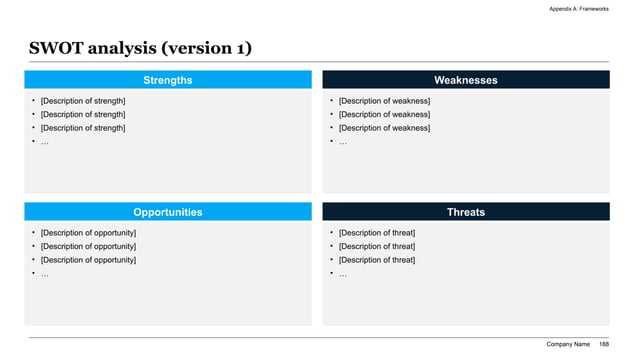
Exhibit 4: 4-Quadrant Partner Capability Compatibility & Diligence Risk Evaluation Grid
Day-1 Operational Launch & Steering Committee Governance Checklist
Capital Calls, Dilution Schedules & Dividend Distribution Waterfalls
A joint venture's multi-year financial health depends directly on how capital injections and cash distributions are governed. Nothing poisons partner relationships faster than an unexpected, unbudgeted capital call that one partner is eager to fund while the other partner cannot or will not support. Without crystal-clear contractual mechanics pre-wired into early board presentations, capital call disputes lead directly to operational insolvency, lender covenant defaults, or acrimonious dilution lawsuits.
Executive presentations must distinguish sharply between Mandatory Capital Calls and Voluntary Growth Capital Calls: (1) Mandatory Capital Calls are strictly restricted to emergency liquidity events—preventing imminent corporate insolvency, curing a material third-party debt covenant default, or meeting mandatory statutory health, safety, or environmental remediation mandates. Mandatory capital calls are binding on both parents and must be funded pro-rata within 30 calendar days of written notice by the JV Board. (2) Voluntary Growth Capital Calls represent capital injections intended to fund new strategic growth initiatives, add-on acquisitions, or accelerated factory capacity expansions exceeding the approved AOP. Voluntary capital calls require unanimous parent consent; neither parent can be compelled to fund speculative growth projects against its will.
When a partner fails or refuses to fund its pro-rata share of an approved capital call, the operating agreement must enforce automatic, pre-negotiated remedies. The contributing partner must be granted three sequential contractual options: (1) Debt Advance Option: The funding partner may advance the non-funding partner's deficit as a senior subordinated emergency loan to the JV, earning an aggressive penalty interest rate (e.g., SOFR + 10% to 12% per annum), repayable out of 100% of the non-funding partner's future dividend distributions. (2) Non-Punitive Fair Market Dilution: The funding partner contributes the capital as equity, and both partners' equity percentages are recalculated based on a third-party independent appraisal of the JV's prevailing post-money equity value. (3) Punitive Squeeze-Down Dilution: In cases of willful default on a mandatory emergency call, the operating agreement enforces a punitive dilution formula, valuing the new equity contribution at a steep discount (e.g., 50% of book value or a 1.5x to 2.0x multiple weighting), drastically shrinking the defaulting partner's equity stake and automatically stripping it of board representation if its ownership falls below an agreed threshold (e.g., <20%).
On the cash distribution side, the presentation must define an institutional Dividend Waterfall. To prevent one parent from hoarding cash inside the JV to build an empire while the other parent starves for corporate dividends, the agreement must mandate quarterly distribution of 100% of Free Cash Flow above a pre-agreed Working Capital Reserve Floor (e.g., 90 days of forward operating cash expenses plus scheduled debt service for the next two quarters). Distributions must flow strictly pro-rata according to equity ownership, with zero preferential parent holdbacks.
Exhibit 5: Multi-Tier Governance Architecture & Deadlock Escalation Hierarchy
Deadlock Resolution & Exit Mechanisms: Russian Roulette, Texas Shootout, and Put/Call Options
In a 50/50 joint venture, deadlock is not a remote theoretical risk; it is an inevitable mathematical certainty. When two equal partners possess equal board voting power, disagreements will eventually arise over multi-million-dollar capital investments, CEO succession, new geographic expansion, or dividend payouts. If the joint venture agreement lacks pre-engineered contractual escape hatches, a deadlock results in commercial paralysis, lender acceleration, and catastrophic value destruction in the Delaware Court of Chancery or international arbitration tribunals.
An institutional joint venture presentation must showcase a Three-Stage Deadlock Escalation Hierarchy that resolves disputes progressively without immediately triggering the corporate nuclear option: (1) Stage 1: Tiered Good-Faith Negotiation (Days 1 to 30). Upon formal declaration of a deadlock on a Reserved Matter, the issue is instantly removed from the operating committee and elevated to the Parent C-Suites. The respective Parent CEOs and Board Chairs are contractually mandated to hold at least two in-person formal mediation sessions within 21 calendar days to explore commercial compromises. (2) Stage 2: Independent Senior Industry Expert Mediation (Days 31 to 60). If the CEOs cannot reach agreement, the dispute is referred to a pre-agreed independent technical, accounting, or industry expert (such as a retired federal judge or senior investment banking managing director). The expert issues non-binding recommendations within 30 days to re-anchor negotiations in objective commercial reality.
Stage 3: Contractual Exit Trigger Execution. If mediation fails and the operational deadlock persists beyond 60 calendar days, the joint venture agreement must automatically unlock binding, pre-negotiated exit mechanisms. The four premier exit structures utilized in institutional joint ventures include:
Russian Roulette (Shotgun Buy-Sell Clause): The classic game-theoretic solution for 50/50 corporate partnerships. Parent A serves formal notice specifying a precise cash price per share for the joint venture. Parent B is contractually bound to execute one of two choices within 30 days: it must either (a) buy out all of Parent A's shares at that exact specified price per share, or (b) sell all of its own shares to Parent A at that exact specified price per share. The game-theoretic beauty of the Russian Roulette clause is that it mathematically eliminates low-ball offers: if Parent A attempts to low-ball Parent B by naming a depressed valuation, Parent B will instantly elect to buy Parent A out at that bargain price. Conversely, if Parent A names an inflated price, Parent B will happily sell its shares at the premium valuation. It forces the initiating parent to price the joint venture at true fair market value.
The Texas Shootout (Sealed Bid Auction): Ideal when both corporate parents possess deep financial resources and both passionately desire to own 100% of the joint venture. Both parents submit confidential, sealed all-cash bids to an independent umpire or escrow agent specifying the enterprise valuation at which they are willing to buy the entire business. The party submitting the higher cash bid wins the auction and is legally obligated to acquire the other party's equity stake at that winning bid price within 60 calendar days.
Formulaic Put/Call Options at Pre-Agreed Multiples: In asymmetric alliances or partnerships where one parent is clearly the natural ultimate owner, the agreement incorporates formulaic options. For example, upon persistent deadlock or after an initial 5-year lockup period, Parent A holds a Call Option to purchase Parent B's shares at 8.5x Trailing Twelve Months (TTM) Adjusted EBITDA, while Parent B holds a Put Option to compel Parent A to purchase its shares at 7.0x TTM EBITDA. Basing options on objective financial metrics eliminates valuation disputes.
Orderly Liquidation & Asset Wind-Down: The ultimate fallback. If neither party elects to buy out the other, the joint venture appoints an independent liquidator. Third-party physical assets, machinery, and customer inventory are auctioned; outstanding bank debt, trade creditors, and employee severance packages are settled; Background IP instantly reverts back to each originating parent with zero post-termination licenses; and the remaining net cash balance is wired to parent bank accounts in exact accordance with pro-rata equity ownership.
XLSlides Prompt Recipe: Generating an Institutional Joint Venture Presentation
Role: Senior Managing Director & Global Head of Joint Ventures & Strategic Alliances at an elite strategy advisory firm (McKinsey, BCG, Bain, or Evercore) Context: You are advising the CEO, CFO, and Board Transaction Committee of an enterprise corporation preparing a 15-slide institutional joint venture formation deck for board approval and partner negotiation. Task: Synthesize the strategic alliance business case, 50/50 capitalization envelope, multi-tier governance architecture, reserved matters voting grid, transfer pricing policies, and deadlock exit mechanisms into decision-ready, executive PowerPoint slides. Instructions: 1. Format every slide with a quantitative, assertive Action Title (e.g., 'A 50/50 Equity Structure Accelerates Market Entry by 36 Months While Halving Standalone Capital Exposure to $125M') rather than passive topic headers. 2. Structure Slide 3 as a rigorous Build vs. Buy vs. Partner Hurdle Matrix proving why a joint venture delivers superior risk-adjusted ROIC over full M&A and internal greenfield R&D. 3. Structure Slide 5 as a comprehensive Mutual Contribution Matrix monetizing both cash commitments and intangible IP/distribution assets using independent DCF relief-from-royalty benchmarks. 4. Structure Slide 7 as a Four-Tier Governance Hierarchy clearly delineating boundaries between Parent Boards, the JV Board of Directors, functional Steering Committees, and independent JV Management. 5. Structure Slide 9 as a Reserved Matters Decision Grid classifying operational thresholds into delegated CEO authority (<$5M), simple board majority, and supermajority/unanimous shareholder consent (>15% budget variance, related-party contracts, M&A). 6. Structure Slide 11 as a Transition Services Agreement (TSA) and Transfer Pricing schedule detailing parent-provided services at audited cost-plus (5-8%) rates and Background vs. Foreground IP ringfencing. 7. Structure Slide 13 as a Multi-Stage Deadlock Escalation Tree detailing 14-day CEO good-faith negotiation, independent expert mediation, and game-theoretic Russian Roulette shotgun buy-sell / Texas Shootout exit triggers. Output Format: Structured slide-by-slide executive outline including Slide Number, Action Title, Core Analytical Subtitle, Visual Layout Specification (e.g., 3-column split, 4-tier hierarchy, 2x2 matrix), Data-Dense Analytical Table, and Board Takeaway Note.
Frequently Asked Questions: Joint Venture & Strategic Alliance Presentations
How should a Corporate Development team structure an equity joint venture pitch to a corporate board?
An institutional joint venture pitch must adopt an answer-first, Minto Pyramid structure. Slide 1 must state the recommended transaction, partner identity, and expected return on invested capital (ROIC). Slide 2 must establish the Build vs. Buy vs. Partner hurdle analysis, proving why an alliance is superior to a 100% acquisition (too expensive, antitrust constraints) and internal organic development (too slow, missing capabilities). Slides 3-5 should detail the mutual capitalization and contribution envelope, valuing both cash and intangible assets. Slides 6-8 must outline the four-tier governance model and reserved matters voting thresholds. Slides 9-11 should establish Day-1 operating interfaces, transfer pricing, and TSAs. Finally, Slides 12-14 must address downside protection: mandatory vs. voluntary capital calls, dilution formulas, and game-theoretic deadlock exit mechanisms (Russian Roulette / Texas Shootout).
What is the structural difference between a 50/50 equity joint venture and a contractual strategic alliance?
A contractual strategic alliance involves zero shared equity and creates no new legal entity. Both corporations maintain strictly segregated balance sheets, fund their own internal headcount, and collaborate via a joint steering committee under a commercial agreement. In contrast, an equity joint venture forms an independent legal entity (typically a Delaware LLC or HoldCo Corporation) with capitalization, dedicated executive leadership, and shared equity ownership. Equity JVs allow balance sheet deconsolidation, independent debt financing, and formal equity sharing, but carry significantly higher governance complexity, legal formation costs, and deadlock exposure.
How do you value non-cash asset contributions like patents, customer access, and manufacturing plants in a JV?
Never accept unverified parent book values for non-cash contributions. Both parents should commission an independent third-party valuation firm (Big 4 or specialized valuation advisory) to issue formal appraisal reports using recognized methodologies: (1) Intellectual Property & Patents: Valued using the Discounted Cash Flow (DCF) Relief-from-Royalty method or Multi-Period Excess Earnings Method (MPEEM); (2) Commercial Distribution & Customer Relationships: Valued via MPEEM based on customer attrition rates and historical gross margin contribution; (3) Manufacturing Plants & Specialized Equipment: Appraised via depreciated replacement cost and independent real estate market assessments. Establishing fair market values pre-signing ensures equity ownership percentages reflect genuine economic contributions.
What are the most effective deadlock resolution mechanisms for a 50/50 joint venture?
Market standard practice establishes a three-stage escalation hierarchy: Stage 1 is mandatory internal escalation, requiring the respective Parent CEOs and Board Chairs to conduct good-faith mediation within 21 to 30 days. Stage 2 involves non-binding mediation by a pre-agreed independent industry or legal expert within 30 days. If the impasse persists, Stage 3 unlocks binding contractual exit clauses: the Russian Roulette (Shotgun) clause, where one parent names a share price and the other must either buy or sell at that exact valuation; the Texas Shootout, where both parents submit sealed cash bids to an independent umpire and the highest bidder acquires the business; or formulaic put/call options tied to trailing EBITDA multiples.
How should seconded parent employees be managed and compensated in a joint venture?
Seconded personnel must be governed under formal tripartite secondment agreements that legally mandate their primary fiduciary duty is to the joint venture entity during their tenure. To eliminate conflicts of interest, their short-term and long-term incentive compensation (STIP/LTIP) must derive 100% from the JV's audited EBITDA and operational milestones, rather than parent metrics. Furthermore, the JV CEO must possess full authority to reassign or return underperforming seconded personnel to the originating parent company.
What are typical Supermajority Reserved Matters in a joint venture operating agreement?
Typical supermajority reserved matters requiring affirmative consent from both parent company designees include: (1) Capital expenditure variances exceeding 15% or $5M above the approved annual budget; (2) Incurrence of third-party debt facilities or financial guarantees exceeding $15M; (3) Entering, modifying, or terminating any related-party agreement or parent TSA; (4) Hiring, evaluating, or terminating the JV CEO, CFO, and General Counsel; (5) Material geographic or product market expansion outside the defined charter; (6) Adoption of or changes to dividend distribution policies; and (7) Mergers, acquisitions, core IP sales, or voluntary bankruptcy filings.
How should intellectual property be partitioned upon joint venture termination or dissolution?
The joint venture agreement must strictly differentiate Background IP from Foreground IP upon exit: (1) Background IP (pre-existing technology brought into the JV by a parent) instantly reverts 100% to the originating parent, and all licenses granted to the JV or the other partner terminate immediately with zero residual rights. (2) Foreground IP (novel technology created by the JV during operations) is either sold to third parties as part of an orderly liquidation, acquired by one partner under a pre-agreed buyout option, or licensed to both parents on a perpetual, royalty-free, non-exclusive basis for applications outside the JV's restricted domain.
Essential Internal Resources for Corporate Strategy & Deal Presentations
Build Board-Ready Joint Venture Presentations with XLSlides
Transform complex partnership structures, equity models, and multi-tier governance frameworks into executive-grade PowerPoint presentations in seconds. XLSlides automates MECE structure, action titles, and consulting-style exhibits so your corporate development team can focus on negotiating enduring value.
Methodology And Sources
- Collaborative Advantage: The Art of Alliances & Strategic Partnership Governance(Harvard Business Review (Rosabeth Moss Kanter & Gary P. Pisano) • 2022)
Foundational empirical management research on inter-firm governance, partner compatibility criteria, and structural mechanisms that prevent joint venture failure.
- Joint Ventures and Alliances: Structuring Partnerships for Enduring Value Creation(McKinsey & Company Strategy & Corporate Finance Practice • 2023)
Authoritative benchmarks analyzing over 500 cross-border joint ventures, identifying the structural causes of the 50%+ renegotiation rate and defining optimal operating committee charters.
- The ASAP Handbook of Alliance Management: A Practitioner's Guide(Association of Strategic Alliance Professionals (ASAP) • 2023)
Industry standard operating frameworks governing the end-to-end alliance lifecycle, relational governance, value realization metrics, and partner dispute management.
- Cross-Border Joint Ventures and Complex Carve-Out Partnerships in Volatile Markets(Bain & Company Corporate Finance & M&A Report • 2024)
Strategic transaction methodologies addressing non-cash asset valuation, transfer pricing integrity, intellectual property firewalls, and pre-negotiated termination mechanisms.
- Deadlock Resolution Mechanics and Fiduciary Duty Waivers in Delaware 50/50 Joint Ventures(Delaware Court of Chancery & Harvard Law School Forum on Corporate Governance • 2024)
Judicial analysis and drafting standards for Russian Roulette shotgun clauses, Texas Shootouts, independent tie-breaking umpires, and minority shareholder protections.