Executive Summary & Direct Answer: What Is an Institutional Crisis Management & Incident Response Presentation?
Key Takeaways: Core Principles of Decision-Ready Crisis Incident Decks
The Hour-Zero Executive Triage & Escalation Gate: 10 Instant Decision Checks
The 4-Tier Severity Classification Taxonomy: Operational, Financial, Legal, and Brand Impact
Exhibit 1: 4-Tier Incident Severity Triage & Impact Classification Matrix
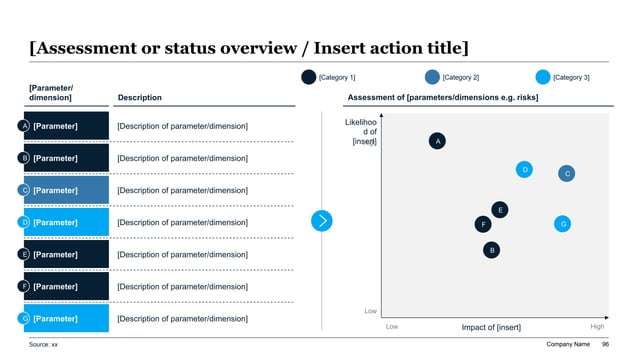
Comprehensive Incident Severity Triage & Response Escalation Matrix
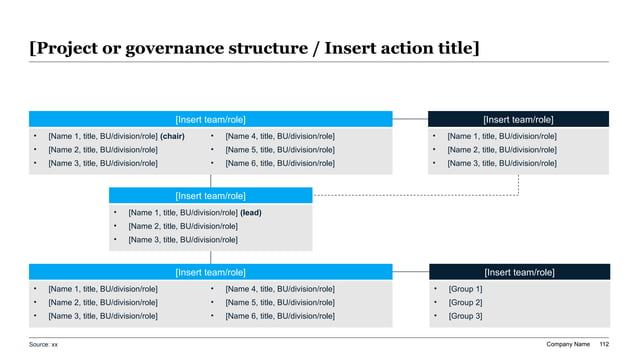
Incident Command System (ICS) & Governance: Gold, Silver, and Bronze Leadership Tiers
Exhibit 2: Corporate Crisis Governance & Incident Command System Hierarchy
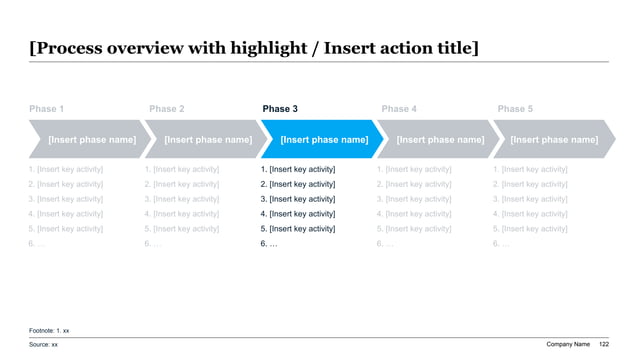
The 72-Hour Rapid Response Timeline: From Hour-Zero Containment to Board Briefing
Exhibit 3: Phased 72-Hour Rapid Response & Operational Containment Sequence
Multi-Stakeholder Communication Strategy: Regulators, Law Enforcement, Customers, and Media
Omnichannel Crisis Communication & Disclosure Matrix
Exhibit 4: Multi-Stakeholder Crisis Containment & Communications Framework
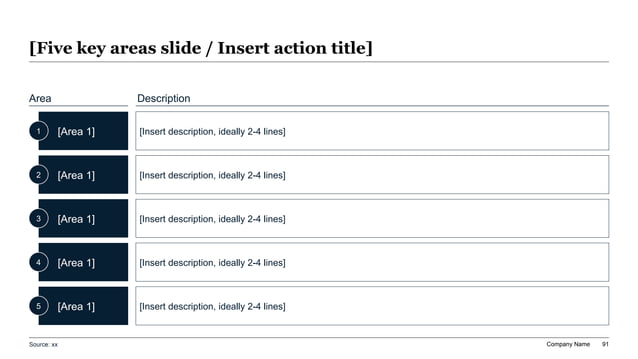
Simulate & Prototype: Crisis Management & Incident Response Presentation Guide: Executive Command, Severity Triage & Board Decks
Drag to draw custom components, test consulting layout presets, and preview presentation architecture live before generating with AI.
Financial Exposure & Legal Liability Modeling: Forensic Costs, SLA Credits, and Cyber Insurance Offsets
Exhibit 5: Financial Exposure & Total Incident Cost Waterfall Bridge
Gross Financial Impact Decomposition & Insurance Recovery Bridge
The 8-Slide Decision-Ready Crisis Command Deck Architecture
The Pre-Board Incident Briefing Verification Checklist: 10 Operational Gates
Post-Incident Root Cause Analysis (RCA), Remediation Roadmaps, and Institutional Hardening
How Enterprise Teams Build Decision-Ready Crisis Decks with XLSlides
XLSlides System Prompt Recipe: Generating Board-Ready Crisis Command & Severity Briefings
Frequently Asked Questions About Crisis Management & Incident Response Presentations
How do you present an executive crisis briefing when key forensic facts are still unknown?
By enforcing strict fact-conjecture partitioning. Never delay an executive briefing simply because complete forensic certainty has not been achieved. Structure the situation assessment slide with two distinct visual columns: 'Confirmed Forensic Facts' on the left and 'Unverified Working Hypotheses & Active Investigations' on the right. Explicitly communicate the degree of confidence for each data point, state the investigative timeline required to achieve certainty, and focus executive decisions on immediate containment and resource allocation rather than speculative debate.
How should an incident presentation balance corporate transparency with legal privilege protection?
All crisis briefing presentations must be commissioned and reviewed by outside breach counsel under formal attorney-client privilege. The document should bear the header 'CONFIDENTIAL ATTORNEY-CLIENT PRIVILEGED & WORK PRODUCT PREPARED AT DIRECTION OF COUNSEL FOR LEGAL ADVICE.' Speaking notes and slide copy should focus on factual operational containment, business continuity, and verified timelines, while strictly avoiding speculative admissions of liability, culpability, or regulatory non-compliance that could be weaponized in subsequent class-action or regulatory litigation.
What is the biggest mistake corporate teams make when presenting a crisis deck to the Board of Directors?
Drowning the Board in technical engineering jargon and operational minutiae rather than framing the business risk, financial exposure, regulatory disclosure obligations, and required governance decisions. Board members do not need to read firewall packet logs; they need to understand the blast radius, solvency impact, mandatory statutory filing deadlines (such as SEC Form 8-K), customer churn vulnerability, and the specific capital authorizations requested from them.
How should financial exposure and insurance recoverability be presented during an ongoing incident?
Use a multi-step Horizontal Financial Exposure Waterfall Bridge. Deconstruct gross potential liability across discrete categories: business interruption, forensic response costs, customer contractual SLA clawbacks, statutory regulatory fines, and legal defense reserves. Then, step down through verified cyber and D&O insurance policy coverage—accounting for Self-Insured Retentions (deductibles), policy sub-limits, and potential carrier reservation-of-rights exclusions—to demonstrate net balance sheet cash exposure and compare it against available credit facility headroom.
Who should be designated as the primary presenter during an executive crisis command briefing?
The briefing should be co-led by the Chief Executive Officer (Gold Strategic Command) and the designated Incident Commander (Silver Tactical Command), supported directly by General Counsel or Lead Outside Breach Counsel. The CEO frames the strategic context and board decision requests; the Incident Commander presents the operational containment status, technical timeline, and restoration flight path; and Legal Counsel addresses regulatory disclosure clocks and privilege considerations. Individual engineering leads should remain focused on technical containment rather than presenting to the Board.
How do you prevent premature or contradictory external communications during a multi-day incident?
Codify an Omnichannel Stakeholder Containment Matrix within the presentation. Establish a strict single-voice policy where all media, customer, and regulatory communications are routed exclusively through designated, pre-approved corporate spokespersons. Enforce an enterprise-wide communication embargo on all other personnel, and maintain an immutable decision log of every external communication issued, complete with timestamp, approved text, and legal counsel sign-off.
When should the Incident Command System formally stand down following a crisis?
The Incident Command System should not stand down until three mandatory exit gates are satisfied: (1) Operational containment and business-critical platform restoration have operated stably without incident for a minimum of 48 consecutive hours, (2) All mandatory statutory regulatory notifications and tier-1 customer contractual disclosures have been executed, and (3) A formalized 30-60-90 day remediation program office (PMO) has been chartered and funded by the Executive Committee to oversee long-term root cause hardening.