Investor-Ready Startup Pitch Deck Templates

Stop wasting hours on manual formatting. Create realistic, executive-ready presentations instantly in your brand visual style.

Standard 10-slide deck structure
Modern Silicon Valley aesthetics
High-impact data visualization

1What is the Startup Pitch Deck Presentation?

The Startup Pitch Deck Presentation is a highly cohesive, strategic visual framework designed to convey a high-growth business model and technology roadmap to early-stage investors, venture capital partners, and startup accelerators. Far beyond a generic set of slides, an investor-ready startup pitch deck serves as the central equity storyline that bridges the gap between disruptive technology concepts and rigorous market viability. In high-stakes fundraising rounds—such as seed funding, Series A, or strategic venture partnerships—this presentation is your primary tool for securing capital allocation and organizational alignment. Modern early-stage venture capitalists review hundreds of slide decks weekly and allocate an average of less than three minutes to analyze a pitch. Consequently, a successful startup pitch deck must enforce immediate logical progression, MECE problem isolation, and absolute structural precision. It eliminates decorative layout clutter in favor of clean vertical alignment, prominent executive metrics, and direct analytical storytelling that commands partner attention from the first widescreen title card.
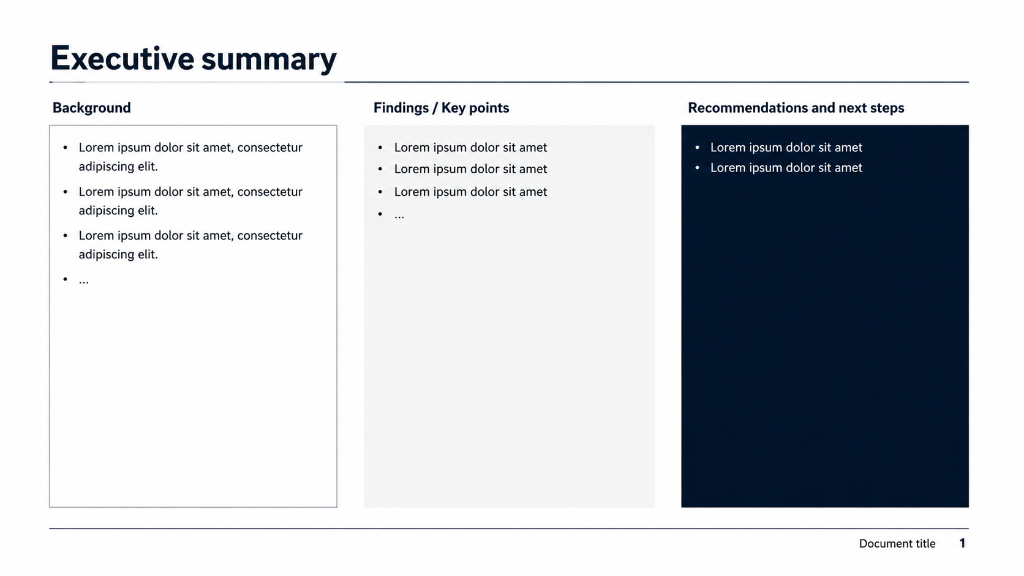
Silicon Valley style visual executive summary slide
Interactive Layout Preview1. Executive Summary

2Ideal Audience: Who is this template built for?

This premium slide template is explicitly engineered for high-intent founders, tech entrepreneurs, chief technology officers (CTOs), and corporate development leads who are seeking venture funding or strategic industry partnerships. The layout structures are optimized to meet the strict analytical expectations of venture capital general partners, angel investors, startup incubator boards, and investment committee analysts. Early-stage venture capitalists expect a pitch deck to instantly communicate product-market fit, scalable unit economics, a defensible technology moat, and a clear phased execution timeline. Software founders, SaaS directors, and hardware innovators utilize this template to remove formatting drag, ensuring their strategic metrics adhere perfectly to a 12-column visual grid. By eliminating visual noise and margin drift, the template enables busy startup advisors and advisory teams to present quarterly growth, customer acquisition funnels, and balance sheet capitalization plans with maximum authority, professional polish, and structural credibility. It is highly suited for seed-stage to Series B entrepreneurs looking to establish deep operational trust.

3Practical Use Cases: When and where to deploy this deck

Deploying the Startup Pitch Deck template is highly recommended during critical business milestones where organizational alignment and capital acquisition are paramount. The most common use cases include pitching early-stage institutional venture rounds, securing strategic corporate venture capital (CVC), applying to top-tier global startup accelerators, pitching joint-venture enterprise partnerships, and conducting internal board reviews for corporate innovation groups. In seed and Series A fundraising pitches, the presentation structures your financial feasibility and customer LTV/CAC traction metrics into standard executive blocks. For enterprise retail or joint venture pitches, the layout easily transitions to show horizontal phased timeline plans, epic product sprints, and detailed integration milestones. Regardless of the specific corporate transaction, using this standardized, high-contrast visual blueprint establishes immediate creditability and transaction velocity, ensuring your pitch is received as a strategic asset rather than an arbitrary assembly of slides. It acts as the definitive roadmap for presenting seed capital asks and allocation strategies.

4Structural Blueprint: Recommended slide-by-slide outline

To achieve maximum fundraising success and pass rigorous partner due diligence, your presentation outline must follow a logical, narrative-driven 12-slide sequence:

  1. 1Title & Elevator Hook: Defining the single-sentence strategic value proposition and startup mission.
  2. 2The Problem: MECE-isolated market challenges and validated customer pain points.
  3. 3The Solution: Your unfair technological or operational advantage that resolves the target problem.
  4. 4Market Sizing (TAM/SAM/SOM): Concentric market sizing layouts proving a massive, addressable business opportunity.
  5. 5Business & Monetization Model: Clear structured pricing models, revenue engines, and unit economic structures.
  6. 6Product & Technological Architecture: Widescreen cloud-grid diagrams showing software interfaces or data pipelines.
  7. 7Traction & Growth Metrics: Quantitative CAGR charts, cohort analysis, and customer acquisition milestones.
  8. 8Go-To-Market (GTM) Strategy: Clear omnichannel marketing funnels and enterprise sales conversion models.
  9. 9Competitive Moat: A 2x2 matrix outlining your unique relative positioning against legacy players.
  10. 10The Team: Executive bios highlighting past exits, technical expertise, and functional advisory roles.
  11. 11Financial Projections: High-density 3-year cash flow, operating margin, and EBITDA charts.
  12. 12The Capital Ask & Use of Funds: A horizontal chevron bar showing capital allocation and upcoming operational launch phases.
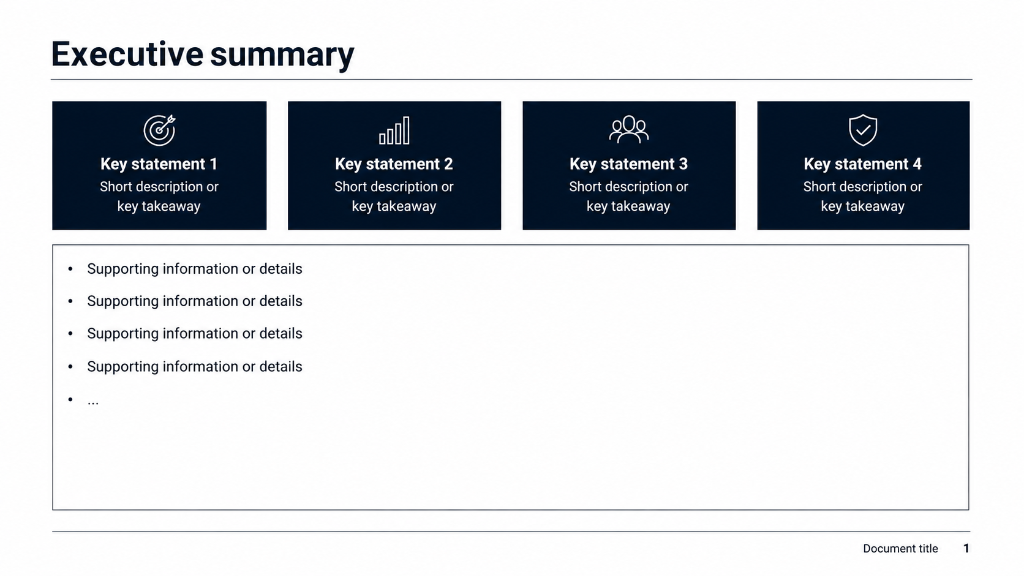
Two-column split panel description slide layout
Interactive Layout Preview2. Split Panel Layout

5Aesthetics & Design Rationale of the silicon-pitch Theme

Our custom design system replicates the visually striking, high-impact aesthetics of top-tier Silicon Valley startups and venture firms. The theme enforces absolute typographical contrast, utilizing clean, modern font families and digital color weights tailored specifically to high-growth tech ecosystems. The visual hierarchy relies on a strict 60% dominant background canvas tone, a 30% professional neutral container structure, and a 10% high-contrast accent key (such as digital teal or vibrant corporate blue) to guide the investor's eye to key data parameters. Margins are locked to native 16:9 widescreen proportions to ensure perfect visual translation across board projectors, high-resolution desktop screens, and mobile devices. A critical element of premium design is preserving at least 30% negative space on every layout card. This prevents cognitive friction and visual clutter, allowing your strategic problem statements and financial EBITDA metrics to breathe and capture attention instantly. The silicon-pitch aesthetic establishes instant authority and captures early-stage investment commitment.

6Strategic Frameworks to Integrate with this Template

To command credibility and pass partner due diligence scrutiny during VC presentations, your pitch deck must be built upon recognized, academically validated strategic frameworks. We recommend integrating several key models:

* TAM/SAM/SOM Market Sizing: Breaking down your Total Addressable, Serviceable Addressable, and Serviceable Obtainable markets to show the depth of the opportunity.

* Porter's Five Forces: Evaluating competitive rivalry, buyer bargaining power, and technological substitute barriers to prove market defensibility over time.

* LTV/CAC Metric Ratios: Proving that your customer lifetime value is at least three times your customer acquisition cost to show long-term viability.

* MECE Logic Trees: Structuring your slide outlines so that customer problem segments are mutually exclusive and collectively exhaustive.

* CAGR Growth Curves: Visualizing your historical and projected revenue trends with standard compound annual growth rates.

Leveraging these established strategic frameworks proves to investment committees that your startup's business plan is backed by rigorous economic logic rather than optimistic operational projections, showcasing strategic maturity and quantitative thoroughness in every metric.

7Storylining & Narration: The Minto Pyramid Principle

Early-stage venture capital decisions are driven by narrative momentum rather than raw data dumps. To maximize pitch impact, structure your equity story around Barbara Minto's legendary Pyramid Principle. Under this standard, every single slide's header must serve as an active, key conclusion rather than a passive label. For example, instead of titling a slide 'Our Traction,' write an active headline like 'Our SaaS platform achieved 145% YoY growth, validating product-market fit.' Every supporting slide detail must represent a MECE sub-argument that logically validates the main conclusion of that specific card. Ideas must flow in chronological, structural, or comparative order to ensure a seamless widescreen narrative. This strategic discipline ensures that a venture capitalist scanning your deck in under 120 seconds can extract the entire investment thesis just by reading the slide headers, significantly increasing funding probability. It converts a standard product walk-through into a compelling financial investment proposition that demonstrates clarity and analytical depth.

8Professional Design and Typography Rules to Follow

To ensure your slide layout looks custom-crafted by a premium design agency, you must enforce strict typographical rules throughout the design. First, maintain tight type scale discipline by limiting the deck to exactly two font families; headings must be kept at 24pt-28pt, slide subheadings at 16pt-18pt, and body text at 12pt-14pt. Second, all text containers, metrics cards, and graphics must lock into a 12-column visual grid, avoiding layout drift. Third, contrast ratios must exceed 4.5:1 to guarantee legibility on old boardroom projectors or mobile screens; never place light gray text on white backgrounds or dark gray on dark panels. Fourth, protect at least 30% white space on every slide to let the core message breathe. Respecting these simple typographical rules ensures that your strategic business pitch communicates visual authority, organizational discipline, and extreme attention to detail, passing VC standards easily and ensuring visual excellence across all projectors and digital screens.

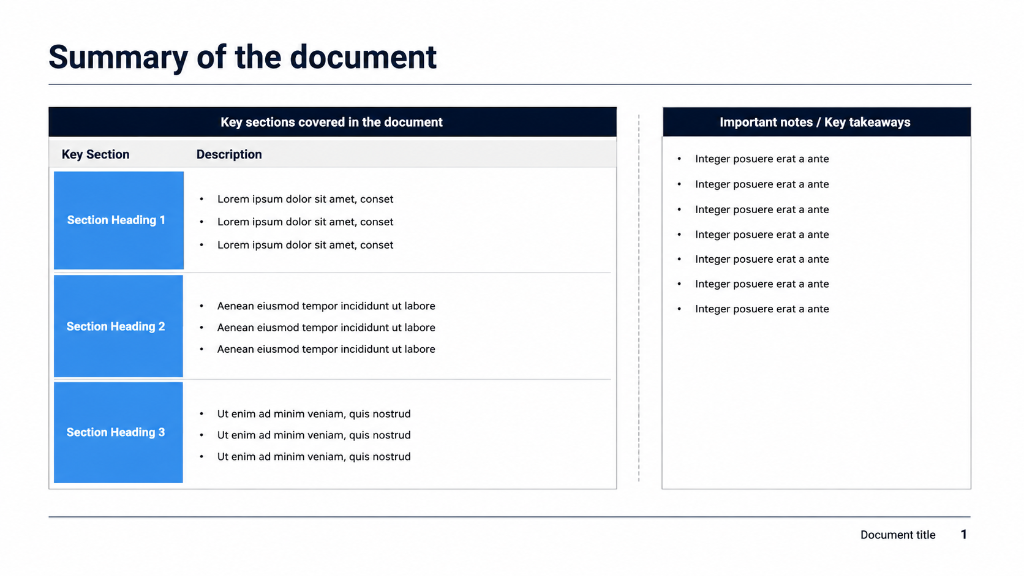
Three column structured metric layout slide
Interactive Layout Preview3. Three Column Focus

9XLSlides AI Capability: Customizing the Startup Pitch Deck

Manually formatting pitch decks in PowerPoint usually drains 12 to 16 hours of frustration, dealing with misaligned margins, font drift, and messy data labels. Our advanced AI engine handles this design debt in under 60 seconds. The model performs context-aware slide matching, analyzing your text brief to map elements automatically to premium layouts like SWOT matrices, chevrons, or comparison blocks. Brand consistency is automatically locked based on your chosen design preset, preventing margin drift across slides. Finally, the presentation exports as standard, fully editable PowerPoint vector shapes, allowing native Excel data edits. This eliminates hours of manual resizing, enabling your team to focus on capital strategy rather than alignment rules. You get boardroom-ready widescreen layouts that are fully compatible with Microsoft Office and Google Slides instantly, giving you a massive operational multiplier during high-stakes investment rounds, pitch events, and partner presentations, while ensuring your brand assets are strictly locked to professional guidelines.

10Visual Workspace: Editing in the AI Visual Studio Canvas

This premium template integrates directly with the AI Visual Studio Canvas, our drag-and-drop reference workspace. To draft custom visual layouts, founders can click and drag anywhere on the 16:9 canvas area to draw custom text container placeholders, making layout drafting exceptionally visual. You can assign structural tags (such as metrics grid, column table, process timeline, or visual quote) to each drafted card to define the AI's rendering constraints. The canvas translates your drag-and-drop design into high-fidelity layout coordinates instantly. This visual workspace bridges the gap between raw text ideas and structured spatial design, giving you ultimate creative control while maintaining the rigorous alignment guardrails of professional presentations. To try it now, click the Open Interactive Canvas button in the sidebar or mobile stream to map out your slide layouts in real time, making custom presentation drafting exceptionally responsive, clear, highly visual, and perfectly aligned to your startup fundraising goals. This spatial control ensures that your pitch has direct visual impact when presenting to institutional investors.

11Common Presentation Pitfalls to Avoid

To ensure your startup deck passes investor due diligence and captures venture funding, you must avoid these 5 critical presentation mistakes:

  1. 1Wall of Text: Slides are not documents; if a slide contains long paragraphs, convert them into clean, horizontal column blocks or card summaries.
  2. 2Invisible Moat: Describing competition with generic bullet points; use a 2x2 relative grid to visually prove your unfair advantage.
  3. 3Cluttered Visuals: Cramming too many metrics on a single slide; keep at least 30% white space to let the investor focus on critical takeaways.
  4. 4Low-Contrast Text: Using light gray text on white backgrounds, which washes out on older projectors; high-contrast coloring is mandatory.
  5. 5Non-Widescreen Margins: Outdated 4:3 layouts stretch poorly on modern displays; always build on locked 16:9 margins.

Avoiding these common design pitfalls guarantees that your presentation retains investor attention, communicates operational excellence, and builds professional fundraising traction across all presentation contexts.

12Performance Comparison: Manual Creation vs. XLSlides AI

Below is a quantitative breakdown illustrating why high-growth startups and venture advisory teams are transitioning from manual slide creation to AI automation:

Performance ParameterManual Pitch Deck DraftingXLSlides AI Generation
Average Time Invested12 to 16 hours of alignmentUnder 60 seconds total
Grid Alignment PrecisionEyeballed (prone to errors)Automated 12-column pixel grid
Brand ConsistencyMargins and fonts drift easily100% locked to system templates
PowerPoint CompatibilityHard to format and exportNative 16:9 vector PPTX files
Academic FrameworksDrafted manually from scratchBuilt-in MECE & TAM blocks
Average Design Cost~$250/hour designer feeIncluded in monthly Pro plans

Transitioning to automation represents a significant operational multiplier for fundraising strategy leads. While manual slide drafting drains hourly resources on alignment and layout formatting, AI generation guarantees that a pixel-perfect, brand-locked widescreen presentation is delivered instantly. This visual authority ensures that your team spends time on unit economics logic rather than alignment checks.