FoodTech and Alternative Protein Investor Pitch Deck Template

Stop wasting hours on manual formatting. Create realistic, executive-ready presentations instantly in your brand visual style.

Turn product science, market demand, production strategy, and food system impact into an investor-ready FoodTech deck.
Explain cultivated meat, fermentation, plant-based, or hybrid protein opportunities with credible economics and scale-up logic.
Build slides for founders, food innovation teams, accelerators, strategic partners, and climate-focused investors.

1What Is an Alternative Protein FoodTech Pitch Deck?

An alternative protein FoodTech pitch deck explains how a product, ingredient, platform, or production process can create value in the future food system. It should connect the consumer problem to a credible solution: taste, texture, nutrition, price, availability, sustainability, animal welfare, food security, or supply chain resilience. Depending on the company, the deck may cover plant-based protein, precision fermentation, biomass fermentation, cultivated meat, hybrid products, functional ingredients, or enabling infrastructure. The strongest pitch does not rely only on category excitement. It shows why this product can scale, why consumers or customers will adopt it, and why the economics can improve over time. This gives investors, food strategics, retailers, manufacturing partners, regulators, and innovation teams enough context to evaluate product-market fit, scientific proof, production risk, margin potential, channel strategy, and funding readiness. It also helps the team separate validated traction from assumptions, so diligence conversations can focus on evidence, open risks, milestones, and capital priorities.
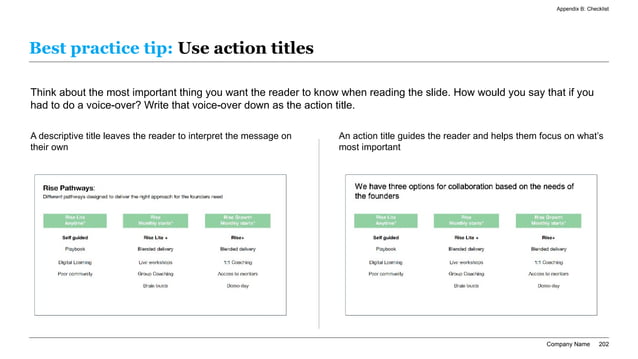
Alternative protein FoodTech pitch slide comparing descriptive headers with action-oriented investor messages in side-by-side frames.
Template Design LayoutFoodTech and Alternative Protein Investor Pitch Deck Template

2When to Use This FoodTech Pitch Template

Use this template when you need to present an alternative protein opportunity to investors, strategic partners, accelerators, corporate innovation teams, or commercialization committees. It works for seed and Series A pitch decks, demo day presentations, product launch proposals, partnership discussions, internal venture reviews, market entry plans, and manufacturing scale-up updates. A founder can use it to explain a business model, a food science team can use it to translate technical progress into business value, and a corporate team can use it to compare alternative protein bets. The structure is useful because it balances excitement with diligence. It makes space for product proof, cost curve, regulatory status, production roadmap, and consumer adoption evidence. This gives investors, food strategics, retailers, manufacturing partners, regulators, and innovation teams enough context to evaluate product-market fit, scientific proof, production risk, margin potential, channel strategy, and funding readiness. It also helps the team separate validated traction from assumptions, so diligence conversations can focus on evidence, open risks, milestones, and capital priorities.

3Recommended Alternative Protein Deck Structure

A strong alternative protein deck should start with the market problem and category timing. Explain why current protein systems leave room for improvement and which customer segment is most attractive. The next section should define the product, technology, formulation, ingredient, or platform in simple terms, followed by evidence on taste, texture, nutrition, functionality, or technical feasibility. After that, show market sizing, target channels, competitive positioning, regulatory path, manufacturing roadmap, unit economics, and go-to-market plan. The investor section should include traction, milestones, team capability, funding ask, and use of proceeds. This order helps audiences understand the business before they evaluate detailed science. This gives investors, food strategics, retailers, manufacturing partners, regulators, and innovation teams enough context to evaluate product-market fit, scientific proof, production risk, margin potential, channel strategy, and funding readiness. It also helps the team separate validated traction from assumptions, so diligence conversations can focus on evidence, open risks, milestones, and capital priorities.

4Product Science, Differentiation, and Proof Points

Alternative protein pitches need enough science to be credible without overwhelming the audience. The deck should explain the core product or technology, whether it is a protein isolate, mycoprotein, fermentation-derived ingredient, cultivated cell line, fat analog, texture system, flavor platform, or finished food product. It should show what is defensible: formulation know-how, process IP, strain engineering, cell culture media improvements, sensory performance, nutrition profile, cost advantage, ingredient functionality, or data around consumer preference. Proof points might include pilot batches, taste panels, chef feedback, nutritional tests, shelf-life results, manufacturing runs, or letters of intent. Avoid vague claims such as breakthrough taste or scalable platform unless the deck shows evidence. This gives investors, food strategics, retailers, manufacturing partners, regulators, and innovation teams enough context to evaluate product-market fit, scientific proof, production risk, margin potential, channel strategy, and funding readiness. It also helps the team separate validated traction from assumptions, so diligence conversations can focus on evidence, open risks, milestones, and capital priorities.

5Market Sizing, Consumer Segments, and Channel Strategy

The market section should make the opportunity specific. Instead of only showing the total protein market, the deck should define the initial category, buyer, use occasion, price point, and channel. A plant-based seafood company, a fermentation ingredient supplier, a cultivated meat platform, and a dairy alternative brand have different market entry paths. The deck should show which segment is reachable first and why. Consumer evidence may include taste acceptance, repeat purchase intent, dietary motivation, health needs, sustainability preference, or foodservice demand. Channel strategy should clarify whether the business starts with restaurants, retail, foodservice, ingredient sales, private label, licensing, or strategic partnerships. This gives investors, food strategics, retailers, manufacturing partners, regulators, and innovation teams enough context to evaluate product-market fit, scientific proof, production risk, margin potential, channel strategy, and funding readiness. It also helps the team separate validated traction from assumptions, so diligence conversations can focus on evidence, open risks, milestones, and capital priorities.

6Manufacturing Scale-Up, Cost Curve, and Unit Economics

Manufacturing is one of the most important sections in an alternative protein pitch. The deck should explain how the product is made today, what bottlenecks exist, and how capacity will expand. Plant-based products may need ingredient sourcing, extrusion, flavor masking, and co-manufacturer strategy. Fermentation products may need strain performance, fermentation yield, downstream processing, and bioreactor capacity. Cultivated products may need cell line stability, media cost, scaffolding, bioprocess design, and regulatory-grade facilities. The economics slide should show current cost, target cost, gross margin path, capital requirements, pricing assumptions, and utilization risks. Investors expect a cost curve, not just a vision. This gives investors, food strategics, retailers, manufacturing partners, regulators, and innovation teams enough context to evaluate product-market fit, scientific proof, production risk, margin potential, channel strategy, and funding readiness. It also helps the team separate validated traction from assumptions, so diligence conversations can focus on evidence, open risks, milestones, and capital priorities.

7Regulatory, Food Safety, and Claims Strategy

Alternative protein companies need a clear regulatory story because approvals, labeling, safety reviews, and claims can shape commercialization timing. The deck should explain the relevant regulatory pathway by market, including food safety documentation, novel food requirements, GRAS strategy, cultivated meat review, allergen considerations, labeling constraints, nutrition claims, sustainability claims, and quality systems. It should also show what has been completed, what remains open, and who is advising the process. Food safety and regulatory credibility matter to investors and partners because delays can affect launch timing and capital needs. Claims strategy should be disciplined: climate, animal welfare, health, and naturalness messages need evidence and compliance review. This gives investors, food strategics, retailers, manufacturing partners, regulators, and innovation teams enough context to evaluate product-market fit, scientific proof, production risk, margin potential, channel strategy, and funding readiness. It also helps the team separate validated traction from assumptions, so diligence conversations can focus on evidence, open risks, milestones, and capital priorities.

8Sustainability, Nutrition, and Food System Impact

Impact claims can strengthen an alternative protein pitch, but only if the deck explains the basis of measurement. Sustainability slides may cover land use, water use, greenhouse gas emissions, feed conversion, biodiversity, waste, supply chain resilience, or animal welfare. Nutrition slides may cover protein quality, amino acid profile, fat content, fiber, sodium, allergens, fortification, clean label strategy, or functional benefits. The deck should separate measured evidence from modeled assumptions and future targets. If a life cycle assessment is not complete, state the plan and assumptions clearly. The goal is to show why the product improves the food system while remaining commercially viable and desirable. This gives investors, food strategics, retailers, manufacturing partners, regulators, and innovation teams enough context to evaluate product-market fit, scientific proof, production risk, margin potential, channel strategy, and funding readiness. It also helps the team separate validated traction from assumptions, so diligence conversations can focus on evidence, open risks, milestones, and capital priorities.

9Milestones, Funding Ask, and Use of Proceeds

The fundraising section should connect the ask to measurable milestones. Alternative protein teams may need capital for pilot production, sensory testing, regulatory work, shelf-life validation, equipment, hires, co-manufacturing, ingredient sourcing, retail launch, foodservice partnerships, or technical scale-up. The deck should show the current stage, next eighteen to twenty-four months, key risks, and what evidence will unlock the next financing or strategic decision. Milestones should be concrete: yield improvement, cost reduction, pilot capacity, customer trial, regulatory submission, purchase order, gross margin target, or product launch. Use of proceeds should be specific enough to show financial discipline. This gives investors, food strategics, retailers, manufacturing partners, regulators, and innovation teams enough context to evaluate product-market fit, scientific proof, production risk, margin potential, channel strategy, and funding readiness. It also helps the team separate validated traction from assumptions, so diligence conversations can focus on evidence, open risks, milestones, capital timing, staged financing, and capital priorities.

10How XLSlides Speeds Up FoodTech Pitch Creation

XLSlides helps FoodTech teams turn product notes, market research, lab updates, cost models, sustainability assumptions, customer feedback, and investor narratives into a structured alternative protein pitch faster. The AI workflow can organize inputs into slides covering problem, solution, product science, market size, traction, competition, manufacturing scale-up, regulatory plan, unit economics, impact, roadmap, team, funding ask, and use of proceeds. This is useful when founders and scientists have the substance but need a polished investor story. The generated output is not a substitute for technical validation, legal review, regulatory advice, or financial modeling, but it gives teams a strong deck draft to refine. This gives investors, food strategics, retailers, manufacturing partners, regulators, and innovation teams enough context to evaluate product-market fit, scientific proof, production risk, margin potential, channel strategy, and funding readiness. It also helps the team separate validated traction from assumptions, so diligence conversations can focus on evidence, open risks, milestones, and capital priorities.