Generative AI Ethics and Corporate Policy Presentation Template

Stop wasting hours on manual formatting. Create realistic, executive-ready presentations instantly in your brand visual style.

Acceptable-use, risk-tiering, and governance framework slides
Legal, privacy, bias, security, and IP control layouts
Policy rollout, training, monitoring, and incident-response roadmap visuals

1What Is a Generative AI Ethics and Policy Deck?

A generative AI ethics and policy deck explains how an organization will use AI responsibly while still enabling practical business value. It should translate abstract principles into operating rules that employees, managers, legal teams, and technology owners can follow. A strong deck covers acceptable use, prohibited use, data handling, copyright and IP, bias and fairness, security, human review, vendor governance, model monitoring, and incident response. It should also clarify where policy decisions sit, such as what requires legal approval, what requires security review, and what business teams can do independently. The goal is not to stop adoption. The goal is to help the company use generative AI with discipline, transparency, and accountability. This template gives teams a boardroom-ready structure for presenting the risks, guardrails, workflows, and rollout plan behind a responsible AI program. That operating discipline helps teams turn ethics into practical rules, review evidence, ownership, training, exceptions, measurable controls, audit trails, user support, and escalation paths before high-risk AI use expands across sensitive workflows and public-facing decisions.
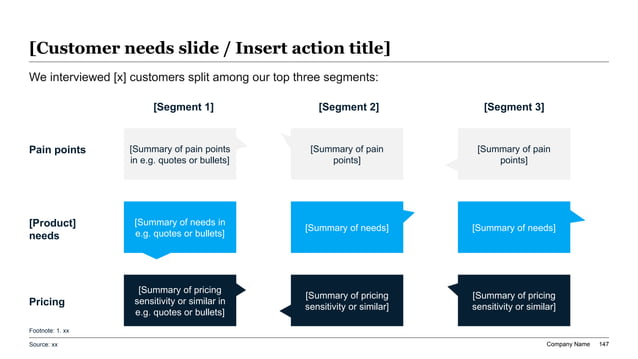
Generative AI ethics and policy slide with three-column speech bubble cards for employee risks, user needs, and governance controls.
Template Design LayoutGenerative AI Ethics and Corporate Policy Presentation Template

2When to Use This AI Policy Template

Use this template when a company is adopting generative AI tools, drafting an internal policy, updating technology governance, preparing a board briefing, training employees, or reviewing AI use across departments. It is especially useful when adoption has already started informally and leadership needs a consistent framework before risk grows. Legal and compliance teams can use it to explain privacy, copyright, regulatory, and disclosure expectations. CIO and CISO teams can use it to define approved tools, access controls, logging, and security review. HR and communications teams can use it for employee guidance, training, and change management. Business leaders can use it to understand which use cases are encouraged, restricted, or prohibited. The deck creates a shared language for risk and accountability so AI adoption does not depend on inconsistent judgment across functions. That operating discipline helps teams turn ethics into practical rules, review evidence, ownership, training, exceptions, measurable controls, audit trails, user support, and escalation paths before high-risk AI use expands across sensitive workflows and public-facing decisions.

3Recommended Generative AI Policy Deck Structure

A practical AI policy deck should move from principles to controls. Start with an executive summary that explains why the policy is needed, what decisions leadership must approve, and which risks are most material. Then define the scope of the policy, including employees, contractors, approved tools, business use cases, data types, and customer-facing applications. Add a risk-tiering framework that separates low-risk productivity use from regulated, sensitive, customer-impacting, or automated decision workflows. Include acceptable-use and prohibited-use pages with concrete examples. Follow with controls for data privacy, intellectual property, bias, security, model validation, human review, recordkeeping, and vendor assessment. Add a governance model that names owners, approval bodies, escalation paths, and monitoring cadence. Close with rollout, training, communications, metrics, and policy refresh timing. This structure makes the policy reviewable and executable. That operating discipline helps teams turn ethics into practical rules, review evidence, ownership, training, exceptions, measurable controls, audit trails, user support, and escalation paths before high-risk AI use expands across sensitive workflows and public-facing decisions.

4Acceptable Use, Prohibited Use, and Risk Tiers

The most useful policy slides give employees clear boundaries. Acceptable use may include drafting internal summaries, brainstorming, rewriting non-sensitive content, creating first-pass documentation, or analyzing approved internal data in sanctioned tools. Restricted use may include customer communications, legal analysis, financial advice, regulated workflows, hiring decisions, security-sensitive work, or confidential data handling that requires review. Prohibited use should be explicit, such as entering protected personal data into unapproved tools, uploading trade secrets, generating deceptive content, bypassing human approval, or using AI outputs as final decisions in sensitive contexts. A risk-tiering model helps employees understand why rules differ by use case. Low-risk productivity support should not face the same process as high-risk customer-impacting automation. Clear examples reduce ambiguity and make governance easier to enforce across departments. That operating discipline helps teams turn ethics into practical rules, review evidence, ownership, training, exceptions, measurable controls, audit trails, user support, and escalation paths before high-risk AI use expands across sensitive workflows and public-facing decisions.

5Data Privacy, Security, and Confidential Information Controls

Data controls are central to generative AI governance. The deck should define which data types can be used in approved tools, which require additional safeguards, and which must never be entered into external systems. Categories may include public information, internal business data, confidential strategy, source code, customer data, employee data, regulated data, credentials, and trade secrets. Security controls should cover approved tool lists, access management, logging, retention, vendor review, encryption, prompt and output storage, and integration boundaries. Privacy controls should address personal data minimization, consent, lawful basis, cross-border transfer, and data subject rights where relevant. The presentation should also explain how employees should anonymize or redact information before using AI. These slides turn policy language into practical behavior and help prevent accidental leakage through everyday AI use. That operating discipline helps teams turn ethics into practical rules, review evidence, ownership, training, exceptions, measurable controls, audit trails, user support, and escalation paths before high-risk AI use expands across sensitive workflows and public-facing decisions.

6Copyright, IP, and Output Review

Generative AI creates intellectual property and copyright questions that need simple policy treatment. A useful deck should explain how employees may use AI-generated drafts, when output requires human review, what sources must be checked, and how the company will avoid copying protected material. It should also clarify whether AI tools can be used for code, marketing claims, product names, design concepts, customer documents, or public-facing content. IP controls may include documenting material prompts, checking output originality, avoiding confidential third-party data, reviewing licenses, and confirming ownership terms in vendor agreements. Human review should be mandatory for external communications, legal claims, regulated content, and strategic materials. The policy should not make every use impossible, but it should make clear that AI output is a draft requiring accountability from the person or team using it. That operating discipline helps teams turn ethics into practical rules, review evidence, ownership, training, exceptions, measurable controls, audit trails, user support, and escalation paths before high-risk AI use expands across sensitive workflows and public-facing decisions.

7Bias, Fairness, Explainability, and Human Oversight

Ethics pages should address more than data security. Generative AI can amplify bias, produce misleading outputs, generate confident errors, or obscure accountability. The deck should identify where bias and fairness risks are material, such as hiring, lending, healthcare, education, customer support, pricing, compliance, or workforce decisions. It should require human oversight for use cases where AI output affects people, rights, opportunities, or obligations. Explainability expectations should be proportionate to risk. A low-risk brainstorming use may need light review, while a customer-impacting workflow may need documented rationale, testing, approval, and monitoring. The policy should also define escalation paths for harmful, discriminatory, or inaccurate output. This helps leadership show that responsible AI is not only a technology control, but a governance and trust commitment. That operating discipline helps teams turn ethics into practical rules, review evidence, ownership, training, exceptions, measurable controls, audit trails, user support, and escalation paths before high-risk AI use expands across sensitive workflows and public-facing decisions.

8Governance Model, Ownership, and Approval Workflow

A generative AI policy only works if ownership is clear. The governance section should name the accountable executive sponsor, policy owner, security owner, legal and privacy reviewers, business use-case owners, and operational monitoring roles. It should define which use cases can be self-approved, which require manager approval, which require legal or security review, and which require an AI governance committee. Approval workflows should be practical enough that teams follow them. Include intake criteria, risk assessment questions, documentation requirements, vendor review steps, and time-bound review commitments. The deck should also show how exceptions are handled and how policy decisions are recorded. Clear governance prevents uncontrolled tool adoption while avoiding a bottleneck that makes responsible AI adoption impossible. That operating discipline helps teams turn ethics into practical rules, review evidence, ownership, training, exceptions, measurable controls, audit trails, user support, and escalation paths before high-risk AI use expands across sensitive workflows and public-facing decisions.

9Monitoring, Metrics, and Incident Response

Monitoring slides explain how the organization will know whether the policy is working. Useful metrics include approved AI use cases, training completion, active users of sanctioned tools, policy exceptions, blocked high-risk requests, vendor reviews completed, incidents reported, security findings, privacy issues, output quality checks, and remediation cycle time. Monitoring should include both technical controls and human feedback. Employees need a safe channel to report hallucinations, sensitive data exposure, inappropriate outputs, suspected copyright issues, or policy confusion. The incident response section should define severity levels, escalation contacts, investigation process, communication rules, and corrective actions. A strong policy deck shows that governance does not end at publication. It becomes an operating cadence of measurement, learning, and policy improvement as tools, regulations, and business workflows change. That operating discipline helps teams turn ethics into practical rules, review evidence, ownership, training, exceptions, measurable controls, audit trails, user support, and escalation paths before high-risk AI use expands across sensitive workflows and public-facing decisions.

10Rollout, Training, and Change Management

Responsible AI policy adoption depends on employee understanding. The rollout section should show how the company will communicate the policy, train employees, publish quick-reference guidance, and support teams adopting approved tools. Training should be tailored by role. General employees may need rules for data handling and output review. Developers may need coding and security guidance. Marketing teams may need brand, copyright, and claim review rules. HR, legal, finance, and customer-facing teams may need stricter standards for sensitive workflows. Change management should also include manager toolkits, internal FAQs, office hours, policy acknowledgments, and refresh cycles. A rollout roadmap helps leadership see that the policy will become behavior, not just a document. It also gives employees permission to use AI responsibly within clear boundaries. That operating discipline helps teams turn ethics into practical rules, review evidence, ownership, training, exceptions, measurable controls, audit trails, user support, and escalation paths before high-risk AI use expands across sensitive workflows and public-facing decisions.

11Prompt Recipe for Better AI Ethics Policy Outputs

A strong AI prompt can help generate a better policy deck draft. Start by naming the organization type, industry, audience, AI tools in scope, risk appetite, regulatory concerns, and current adoption level. Ask for an executive generative AI ethics and corporate policy presentation covering principles, acceptable use, prohibited use, risk tiers, data privacy, security, IP, copyright, bias, human review, vendor governance, monitoring, incident response, training, and rollout. Include known constraints such as regulated data, customer-facing workflows, confidential information, or approved tool lists. Ask the output to separate policy rules from implementation roadmap and to provide examples employees can understand. This prompt helps XLSlides generate a practical governance deck rather than generic responsible AI slogans. Teams can then refine language with legal, privacy, security, and HR stakeholders. That operating discipline helps teams turn ethics into practical rules, review evidence, ownership, training, exceptions, measurable controls, audit trails, user support, and escalation paths before high-risk AI use expands across sensitive workflows and public-facing decisions.

12How XLSlides Speeds Up AI Policy Planning

XLSlides helps teams turn fragmented AI governance notes into a structured executive presentation quickly. Policy work often begins with scattered inputs from legal memos, privacy reviews, security requirements, HR training needs, vendor terms, board questions, and business use cases. The AI workflow organizes those inputs into a clear deck sequence: context, principles, scope, risk tiers, allowed and prohibited uses, controls, governance, monitoring, training, and roadmap. The output is not a substitute for legal review or policy approval, but it gives cross-functional teams a strong working draft for leadership discussion. Users can then refine risk categories, add company-specific examples, and align the policy with internal systems. This reduces time spent formatting governance material and increases time available for the real work: making AI adoption practical, safe, and trusted. That operating discipline helps teams turn ethics into practical rules, review evidence, ownership, training, exceptions, measurable controls, audit trails, user support, and escalation paths before high-risk AI use expands across sensitive workflows and public-facing decisions.