Storage Unit Portfolio Review Presentation Template

Stop wasting hours on manual formatting. Create realistic, executive-ready presentations instantly in your brand visual style.

Occupancy, rent, and NOI performance dashboards
Asset ranking and market-growth matrix slides
Capex, pricing, and hold-sell roadmap pages

1What a Storage Unit Portfolio Review Needs to Prove

A storage unit portfolio review needs to prove which assets are creating value, which assets need intervention, and which markets deserve more capital. The opening section should define the portfolio footprint, facility count, rentable square footage, unit mix, occupancy, revenue, NOI, capex exposure, and review objective. It should show whether the decision is about pricing, expansion, renovation, refinancing, acquisition, hold strategy, or disposition. A strong review separates temporary operating noise from structural asset quality. It also explains how market demand, competition, and management execution affect each facility. This gives self-storage operators, real estate investors, asset managers, lenders, acquisition teams, private equity sponsors, regional managers, finance leaders, PMOs, and consultants enough evidence to assess occupancy quality, pricing power, NOI durability, market attractiveness, capex risk, asset ranking, and action sequencing. The narrative should also define asset owners, metric sources, market assumptions, capex gates, pricing rules, and approval checkpoints for each portfolio decision.
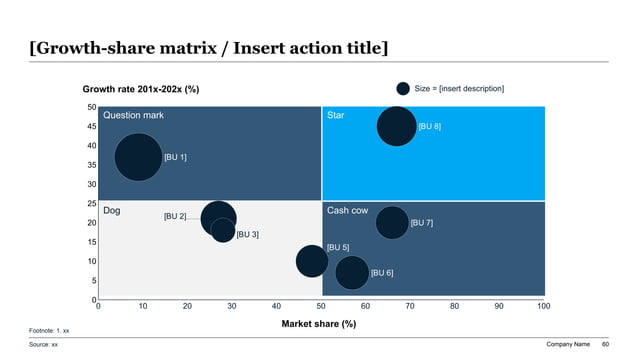
BCG-style bubble matrix slide for storage unit portfolio review comparing asset growth, occupancy, NOI, capex needs, and investment priority.
Template Design LayoutStorage Unit Portfolio Review Presentation Template

2Who This Template Is Built For

This template is built for teams that need to turn storage facility data into capital allocation decisions. Operators can use it to review occupancy, rate discipline, leasing performance, churn, collections, and local competition. Asset managers can use it to compare NOI, capex, lease-up progress, and underperforming properties. Investors can use it to evaluate acquisition targets, refinancing plans, and hold-sell decisions. Lenders can use it to understand cash flow stability, collateral quality, and market risk. Consultants can use it to structure portfolio diagnostics and improvement roadmaps for review meetings. This gives self-storage operators, real estate investors, asset managers, lenders, acquisition teams, private equity sponsors, regional managers, finance leaders, PMOs, and consultants enough evidence to assess occupancy quality, pricing power, NOI durability, market attractiveness, capex risk, asset ranking, and action sequencing. The narrative should also define asset owners, metric sources, market assumptions, capex gates, pricing rules, and approval checkpoints for each portfolio decision.

3Portfolio Snapshot and Asset Segmentation

The portfolio snapshot should summarize the assets under review and segment them in a way that supports decisions. Useful slides include facility count, geography, net rentable square feet, unit count, climate-controlled share, average occupancy, street rate, effective rent, NOI, debt exposure, ownership structure, and recent transaction history. Segmentation pages can group assets by market type, age, occupancy maturity, unit mix, revenue growth, operating margin, capex need, and competitive intensity. The goal is to show where performance differences are caused by market context versus management choices across facilities. This gives self-storage operators, real estate investors, asset managers, lenders, acquisition teams, private equity sponsors, regional managers, finance leaders, PMOs, and consultants enough evidence to assess occupancy quality, pricing power, NOI durability, market attractiveness, capex risk, asset ranking, and action sequencing. The narrative should also define asset owners, metric sources, market assumptions, capex gates, pricing rules, and approval checkpoints for each portfolio decision.

4Occupancy, Leasing, and Tenant Churn

Occupancy analysis should go beyond a single percentage and explain the quality of demand. Slides should compare physical occupancy, economic occupancy, move-ins, move-outs, net rentals, length of stay, churn, delinquency, concessions, and seasonal patterns. The deck should identify assets where occupancy is high but rates are underpriced, assets where occupancy is weak because of local demand, and assets where churn or delinquency signals management issues. Leasing pages should also show digital lead sources, conversion rates, call center performance, and local marketing effectiveness. Occupancy matters most when it is connected to rent growth and cash flow. This gives self-storage operators, real estate investors, asset managers, lenders, acquisition teams, private equity sponsors, regional managers, finance leaders, PMOs, and consultants enough evidence to assess occupancy quality, pricing power, NOI durability, market attractiveness, capex risk, asset ranking, and action sequencing. The narrative should also define asset owners, metric sources, market assumptions, capex gates, pricing rules, and approval checkpoints for each portfolio decision.

5Rent, Pricing Power, and Revenue Yield

The pricing section should explain whether each facility has room to increase rates, protect occupancy, or improve revenue management. Useful slides include street rate, effective rent, in-place rent, discounting, rent per square foot, revenue per available square foot, tenant rate increases, concession usage, competitive rate position, and online pricing trends. The deck should distinguish low rates caused by weak demand from low rates caused by conservative pricing. It should also show whether unit sizes, climate control, drive-up access, and market density support premium pricing. Pricing pages should lead to specific actions, not broad observations. This gives self-storage operators, real estate investors, asset managers, lenders, acquisition teams, private equity sponsors, regional managers, finance leaders, PMOs, and consultants enough evidence to assess occupancy quality, pricing power, NOI durability, market attractiveness, capex risk, asset ranking, and action sequencing. The narrative should also define asset owners, metric sources, market assumptions, capex gates, pricing rules, and approval checkpoints for each portfolio decision.

6NOI, Margin, and Operating Cost Review

The financial section should show how asset operations convert revenue into durable NOI. Useful slides include revenue growth, operating expense ratio, payroll, property tax, insurance, utilities, repairs, marketing cost, management fees, bad debt, security expense, EBITDA margin, NOI margin, and variance to budget. The deck should call out assets where expense growth is eroding rent gains or where margin is improving because of operating discipline. It should also separate recurring operating costs from one-time repairs or unusual items. A strong portfolio review helps leaders decide whether improvement comes from pricing, cost control, staffing, automation, or capex. This gives self-storage operators, real estate investors, asset managers, lenders, acquisition teams, private equity sponsors, regional managers, finance leaders, PMOs, and consultants enough evidence to assess occupancy quality, pricing power, NOI durability, market attractiveness, capex risk, asset ranking, and action sequencing. The narrative should also define asset owners, metric sources, market assumptions, capex gates, pricing rules, and approval checkpoints for each portfolio decision.

7Market Growth, Competition, and Location Quality

Storage assets are local businesses, so the deck should evaluate market conditions around each facility. Useful pages include population growth, household formation, multifamily supply, small business density, income levels, migration, traffic visibility, competitor count, new supply pipeline, comparable rates, saturation, and drive-time catchment. Location quality slides should show which assets are positioned in growing markets, which face oversupply, and which rely on operational execution to defend share. The review should also identify acquisition or expansion opportunities near attractive demand pockets. Market context prevents teams from blaming asset managers for structural headwinds or missing upside in strong locations. This gives self-storage operators, real estate investors, asset managers, lenders, acquisition teams, private equity sponsors, regional managers, finance leaders, PMOs, and consultants enough evidence to assess occupancy quality, pricing power, NOI durability, market attractiveness, capex risk, asset ranking, and action sequencing. The narrative should also define asset owners, metric sources, market assumptions, capex gates, pricing rules, and approval checkpoints for each portfolio decision.

8Unit Mix, Capex, and Facility Condition

The unit mix and condition section should show whether facility configuration supports current demand and future rent growth. Slides should compare unit sizes, climate-controlled mix, drive-up access, parking, RV and boat storage, security features, gate systems, office condition, roofing, paving, lighting, signage, elevators, and expansion land. Capex pages should classify maintenance needs, revenue-enhancing projects, compliance work, deferred repairs, and expansion investments. The deck should estimate cost, timing, disruption, expected return, and approval requirements for each project. A portfolio review becomes actionable when facility condition is linked to rent growth, occupancy, tenant experience, and valuation. This gives self-storage operators, real estate investors, asset managers, lenders, acquisition teams, private equity sponsors, regional managers, finance leaders, PMOs, and consultants enough evidence to assess occupancy quality, pricing power, NOI durability, market attractiveness, capex risk, asset ranking, and action sequencing. The narrative should also define asset owners, metric sources, market assumptions, capex gates, pricing rules, and approval checkpoints for each portfolio decision.

9Asset Ranking and Investment Actions

The asset ranking section should combine market attractiveness and asset performance into clear action categories. A matrix can classify facilities as scale winners, cash generators, improvement candidates, turnaround assets, expansion targets, or disposition candidates. Ranking criteria may include NOI growth, occupancy quality, pricing upside, market growth, competition, capex burden, lease-up progress, debt constraints, and management complexity. Each asset should have a recommended action such as reprice, renovate, expand, automate, refinance, acquire adjacent capacity, monitor, or sell. This section should make tradeoffs explicit so capital is not spread evenly across unequal opportunities. This gives self-storage operators, real estate investors, asset managers, lenders, acquisition teams, private equity sponsors, regional managers, finance leaders, PMOs, and consultants enough evidence to assess occupancy quality, pricing power, NOI durability, market attractiveness, capex risk, asset ranking, and action sequencing. The narrative should also define asset owners, metric sources, market assumptions, capex gates, pricing rules, and approval checkpoints for each portfolio decision.

10Portfolio Roadmap and XLSlides Workflow

The roadmap should sequence storage portfolio work through data validation, asset segmentation, market review, occupancy diagnostics, pricing actions, expense review, capex prioritization, refinancing analysis, investment committee decisions, and operating follow-up. Early actions can address pricing, delinquency, marketing, and controllable expenses. Medium-term actions can include capex approvals, automation, expansion studies, or manager changes. Longer-term decisions may involve acquisitions, refinancing, or asset sales. XLSlides helps teams convert facility exports, rent rolls, market notes, financial statements, capex lists, and operating commentary into a structured portfolio review. The generated draft can then be refined with exact asset names, financial models, lender metrics, and owner assignments. This gives self-storage operators, real estate investors, asset managers, lenders, acquisition teams, private equity sponsors, regional managers, finance leaders, PMOs, and consultants enough evidence to assess occupancy quality, pricing power, NOI durability, market attractiveness, capex risk, asset ranking, and action sequencing. The narrative should also define asset owners, metric sources, market assumptions, capex gates, pricing rules, and approval checkpoints for each portfolio decision.