Professional Real Estate Development Pitch Deck Slide Templates

Stop wasting hours on manual formatting. Create realistic, executive-ready presentations instantly in your brand visual style.

Property portfolio showcases
Financial feasibility charts
Market analysis blocks

1What is the Real Estate Development Pitch Deck?

The Real Estate Development Pitch Deck is a highly specialized capital prospectus designed to communicate a developer’s physical vision and financial pro-forma to institutional investors, private equity partners, and banking underwriters. Unlike general presentations, a real estate pitch deck must balance abstract architectural design with rigorous economic realities. It serves as the primary artifact for securing project funding, translating site analysis, demographic research, zoning guidelines, and cash flow models into a unified narrative. In professional development circles, this presentation acts as a strategic blueprint that drives transaction velocity and aligns diverse stakeholder groups. A boardroom-ready deck must establish immediate visual authority, using standard widescreen layouts, perfect alignment, and custom color weighting. By moving away from decorative design clutter, it ensures that institutional partners focus precisely on key performance metrics like Cap Rate, Net Operating Income, and Yield on Cost. It acts as the definitive roadmap for projects, bridging the gap between initial land acquisition and stabilized cash flows, providing an indispensable tool for elite builders globally.
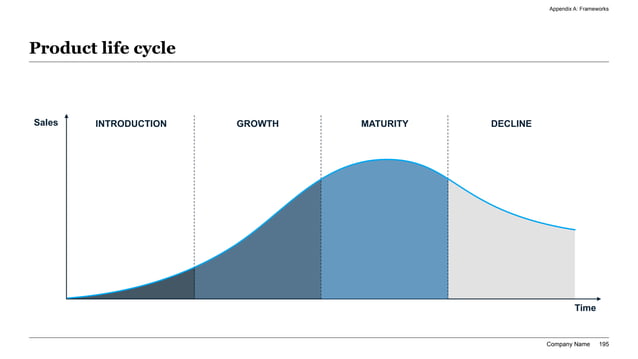
Product life cycle classical bell-curve wave chart visually shading the Introduction, Growth, Maturity, and Decline area boundaries below a continuous line layout.
Template Design LayoutProfessional Real Estate Development Pitch Deck Slide Templates

2Target Audience: Who is this template built for?

This premium presentation template is explicitly engineered for high-intent real estate professionals who present to investment committees, banking lenders, joint-venture equity partners, or public planning commissions. The primary user profiles include commercial real estate developers, REIT analysts, land acquisition managers, urban planners, investment brokers, and private equity sponsors. These professionals operate in capital-intensive environments where presenting an unpolished or mathematically inconsistent deck is an absolute dealbreaker. Our structured template removes design drag, allowing development teams to present property portfolios, mixed-use plans, and debt schedules with absolute structural integrity. By locking fonts, container shapes, and margins, solo sponsors and global development conglomerates alike can eliminate margin drift and focus entirely on core business logic. This template provides the exact visual language and analytical rigor expected by C-suite executives, institutional finance committees, and global lenders, establishing immediate operational trust and competence. Furthermore, it is highly suited for raising capital from family offices, retail syndicates, or international sovereign wealth funds. Every single pixel and margin is calibrated to deliver the elite standard expected by global capital allocators.

3Practical Use Cases: When and where to deploy this deck

The strategic deployment of the Real Estate Development Pitch Deck framework is critical at multiple stages of the property life cycle. The primary use case is pitching institutional equity funds or family offices for general partner and limited partner funding allocations. Additionally, the deck is deployed to secure senior construction debt or mezzanine financing from commercial banks and debt funds. In municipal approvals, developers use these layouts to present site plans, environmental impact reports, and community benefit structures to planning boards and zoning committees. Furthermore, during the pre-leasing phase, it acts as a high-fidelity prospectus to pitch national credit anchors and prospective commercial tenants. Utilizing this standardized visual blueprint during high-stakes transactions ensures that all parties receive the strategic information they require, significantly accelerating due diligence timelines and project momentum, while serving as a formal corporate record that anchors all future partnership agreements. It acts as a continuous operational bridge from initial land due diligence and property options to physical build phases, tenant stabilization, and eventual refinancing transactions, ensuring absolute organizational clarity.

4Structural Blueprint: Recommended 12-Slide Narrative Outline

A complete, boardroom-ready real estate development presentation must follow a logical, narrative-driven 12-slide progression to guide institutional partners from site overview to final capital exit:

  • Slide 1: Executive Cover** - High-impact property visual or architectural rendering with a compelling project thesis statement.
  • Slide 2: Market Opportunity** - Highlighting demographic tailwinds, regional supply gaps, and primary growth indicators.
  • Slide 3: Project Vision** - Outlining mixed-use allocation plans, site dimensions, and the overarching architectural theme.
  • Slide 4: Zoning & Regulatory Status** - Highlighting permitting timelines, zoning approvals, and local administrative milestones.
  • Slide 5: Demographic Analysis** - Data-dense dashboards showing population growth, income levels, and local absorption rates.
  • Slide 6: Underwriting & Pro-Forma** - Key financial parameters including IRR, Cap Rate, and Net Operating Income.
  • Slide 7: Construction Roadmap** - A structured timeline mapping site preparation, structural framing, and final fit-out.
  • Slide 8: LP/GP Capital Stack** - Detailing senior construction debt, mezzanine, and sponsor equity structures.
  • Slide 9: Leasing & Pre-leasing Strategy** - Highlighting tenant letters of intent and stabilized rent roll projections.
  • Slide 10: Exit Strategy & Valuation** - Capitalization rate exit scenarios, refinancing plans, and terminal exit values.
  • Slide 11: Developer Track Record** - Showcasing past completed projects, average investor yields, and execution competence.
  • Slide 12: Next Steps & LP Onboarding** - Active call-to-action detailing investment commitments, capital call dates, and subscription documents.

Following this comprehensive twelve-slide outline ensures that underwriters receive a complete analytical picture with absolute clarity.

5Aesthetics & Design Rationale of the Deloitte Teal Palette

Our development design system utilizes custom color weights tailored specifically to the real estate and institutional investment domain. The 'deloitte-teal' theme employs a dominant professional teal tone (10% accent) combined with high-contrast neutral backgrounds (60%) and structured container elements (30%). Contrast ratios strictly exceed 4.5:1, ensuring optimal readability on boardroom projectors and high-definition mobile screens alike. Widescreen 16:9 layout boundaries keep the narrative clean and structured, ensuring visual excellence across all projectors and digital screens. A crucial design rule is preserving at least 30% negative space on every layout card, which prevents cognitive friction and visual clutter. This ensures that the client's attention is focused precisely on critical data points, architectural renders, and underwriting metrics rather than being distracted by unnecessary decorations. The aesthetic projects organizational discipline, administrative competence, and supreme attention to detail, easily passing institutional due diligence standards. It avoids the childish neon colors found in casual design templates, offering instead a sober, boardroom-ready appearance that reassures institutional investors, bank underwriters, and sovereign wealth committees during complex capital allocation presentations.

6Integrating Rigorous Underwriting Frameworks

To command credibility and pass partner due diligence scrutiny, your real estate presentation must be built upon recognized, academically validated underwriting frameworks. We recommend integrating several key economic models: Net Operating Income (NOI) calculations to prove baseline operational profitability, Internal Rate of Return (IRR) models showing projected partner yields across a 5-to-10 year holding period, and Capitalization Rate exit metrics demonstrating terminal market valuations. Additionally, developers should present a detailed Weighted Average Cost of Capital (WACC) to substantiate project financing structures and a Debt Service Coverage Ratio (DSCR) to prove senior debt feasibility to commercial bank underwriters. Leveraging these established financial frameworks proves to investment committees that your real estate pro-forma is backed by rigorous quantitative underwriting rather than speculative projections, validating the integrity of your strategic planning process and accelerating capital commitment. Furthermore, you must detail your Sensitivity Analysis, demonstrating how changes in occupancy rates, interest rates, or raw construction costs impact your Levered IRR, thus showcasing deep risk management awareness.

7Narrative Architecture: Barbara Minto's Pyramid Principle

Venture capital and real estate investment decisions are driven by narrative momentum and logical clarity rather than raw data dumps. To maximize the impact of your strategy deck, structure your storyline around Barbara Minto’s legendary Pyramid Principle. Under this elite communication standard, every single slide headline must serve as an active, key conclusion rather than a passive label. For example, instead of titling a slide 'Financial Underwriting,' write an active headline like 'Our mixed-use development yields a 19.4% target IRR, outperforming local asset benchmarks.' Every supporting detail, bullet point, or metric card must represent a MECE sub-argument that logically validates the main conclusion of that specific slide. Ideas must flow in chronological, structural, or comparative order to ensure a seamless widescreen narrative. This narrative discipline allows busy stakeholders to grasp your entire investment thesis in under 2 minutes, significantly accelerating operational trust and helping to align diverse stakeholder groups on critical strategic priorities without administrative friction.

8Quantitative Pro-Forma: Metric Comparison Table

Below is a rigorous, quantitative pro-forma breakdown outlining the standard financial metrics and underwriting parameters across primary real estate asset classes. This structured table enables developers to demonstrate target metrics relative to regional market baselines:

Real Estate Asset ClassTarget Equity IRRStabilized Cap RateYield on Cost (YoC)Average Debt Service Coverage (DSCR)
Multifamily Residential12% - 15%4.5% - 5.5%6.0% - 6.5%1.25x
Mixed-Use Commercial15% - 18%5.2% - 6.2%6.8% - 7.5%1.30x
Logistics & Industrial13% - 16%4.8% - 5.8%6.2% - 7.0%1.25x
Premium Retail Centers14% - 17%5.5% - 6.5%7.0% - 8.0%1.35x

Enforcing these baseline parameters within your underwriting models ensures that your development plans remain realistic, fundable, and aligned with current institutional capital preferences. By organizing this data in a structured, high-contrast matrix, you present complex quantitative relationships with supreme clarity, allowing bank lenders and joint-venture partners to calibrate risk profiles and make investment commitments with absolute security.

9XLSlides AI Capabilities: Automating Real Estate Pitch Deck Generation

Building a high-quality real estate presentation manually in PowerPoint usually drains 8 to 12 hours of frustrating layout formatting. Our advanced AI engine handles this design debt in under 60 seconds. The model performs context-aware slide matching, analyzing your text brief to map elements automatically to premium layouts like pro-forma tables, Gantt roadmaps, and zoning chevrons. Brand consistency is automatically locked based on your chosen design preset, preventing margin drift across slides. Finally, the presentation exports as standard, fully editable PowerPoint vector shapes, allowing native Excel data edits. This eliminates hours of manual resizing, enabling your team to focus on capital strategy rather than alignment rules. You get boardroom-ready widescreen layouts that are fully compatible with Microsoft Office and Google Slides instantly, giving you a massive operational multiplier during high-stakes investment rounds, pitch events, and partner presentations, while ensuring your brand assets are strictly locked to professional guidelines. By modernizing your corporate workflow, you ensure that every deal partner receives a polished, brand-compliant document, eliminating standard administrative bottlenecking.

10The AI Visual Studio Canvas: Interactive Layout Prototype

This premium template integrates directly with the AI Visual Studio Canvas, our drag-and-drop reference workspace. To draft custom visual layouts, developers can click and drag anywhere on the 16:9 canvas area to draw custom text container placeholders, making layout drafting exceptionally visual. You can assign structural tags (such as metrics grid, column table, process timeline, or visual quote) to each drafted card to define the AI's rendering constraints. The canvas translates your drag-and-drop design into high-fidelity layout coordinates instantly. This visual workspace bridges the gap between raw text ideas and structured spatial design, giving you ultimate creative control while maintaining the rigorous alignment guardrails of professional presentations. To try it now, click the Open Interactive Canvas button in the sidebar or mobile stream to map out your slide layouts in real time, making custom presentation drafting exceptionally responsive, clear, highly visual, and perfectly aligned to your development goals. This spatial drafting is perfect for showcasing specific physical spaces like floor plans, site grids, and retail maps, ensuring that your ideas are translated into widescreen presentation layouts with pixel-perfect accuracy.

11Common Real Estate Pitching Mistakes to Avoid

To ensure your real estate development deck passes investment committee due diligence, avoid these 5 critical mistakes:

  • Wall of Text**: Slides are not documents; if a slide contains long paragraphs, convert them into clean, horizontal column blocks or card summaries to allow visual breathing room.
  • Speculative Underwriting**: Describing financials with vague approximations; utilize strict pro-forma matrices showing exact cap rates and DSCR parameters.
  • Zero Visual Hierarchy**: Cramming too many metrics on a single slide; keep at least 30% white space to let the investor focus on critical takeaways.
  • Low-Contrast Text**: Using light gray text on white backgrounds, which washes out on older projectors; high-contrast coloring is mandatory.
  • Ignoring Regulatory Hurdles**: Omitting zoning, permitting, and environmental statuses; declare them explicitly to prove operational competence.

Avoiding these common design and pitching errors guarantees that your presentation retains investor attention and builds transaction velocity across all presentation contexts.

12Performance Comparison: Manual PPTX Assembly vs. XLSlides AI

Below is a quantitative comparison of manual PowerPoint drafting versus automated slide generation:

  • Time Invested**: 10 to 14 hours of manual drafting versus under 60 seconds total with XLSlides AI.
  • Grid Alignment Precision**: Eyeballed manual layouts (prone to errors) versus automated, perfect 12-column pixel grids.
  • Brand Consistency**: Font and margin drift over time versus 100% lock to corporate style guides.
  • PowerPoint Compatibility**: Standard PPTX files that allow native Excel data and formula edits.
  • Framework Integration**: Hand-drawn financial tables versus built-in, ready-to-use template components.
  • Average Design Cost**: High designer hourly fees versus affordable, inclusive Pro plans.

Transitioning to automation represents a significant operational multiplier, ensuring professional excellence. It enables development leads to concentrate their efforts on capital strategy, land underwriting, and investor relations rather than losing hours to frustrating formatting, offering a modern, highly efficient alternative for real estate sponsors. It provides your entire organization with a scalable design system that works across local, remote, and hybrid strategy teams, guaranteeing standard boardroom quality at a fraction of the traditional cost.