Public Speaking and Pitch Prep Presentation Template

Stop wasting hours on manual formatting. Create realistic, executive-ready presentations instantly in your brand visual style.

Audience insight and story-structure slides
Rehearsal, timing, and feedback dashboards
Q&A readiness and delivery action-plan pages

1What a Public Speaking Prep Deck Needs to Prove

A public speaking prep deck needs to prove that the speaker understands the audience, has a clear message, can support the message with evidence, and is ready to deliver within the time and setting available. The opening section should define the event, audience, desired decision or reaction, talk length, speaker role, and preparation objective. It should show whether the presentation is an investor pitch, client proposal, keynote, internal update, webinar, demo day, or class presentation. A strong prep deck improves both content and delivery. This gives founders, executives, consultants, sales teams, trainers, students, keynote speakers, communication coaches, PMOs, and facilitators enough evidence to assess audience fit, message clarity, story logic, slide flow, rehearsal quality, Q&A readiness, and final delivery priorities. The narrative should also define audience assumptions, core message, timing rules, feedback owners, practice cadence, and readiness checkpoints for each presentation preparation cycle and final event readiness review before live delivery and post-event learning capture and speaker improvement planning documentation.
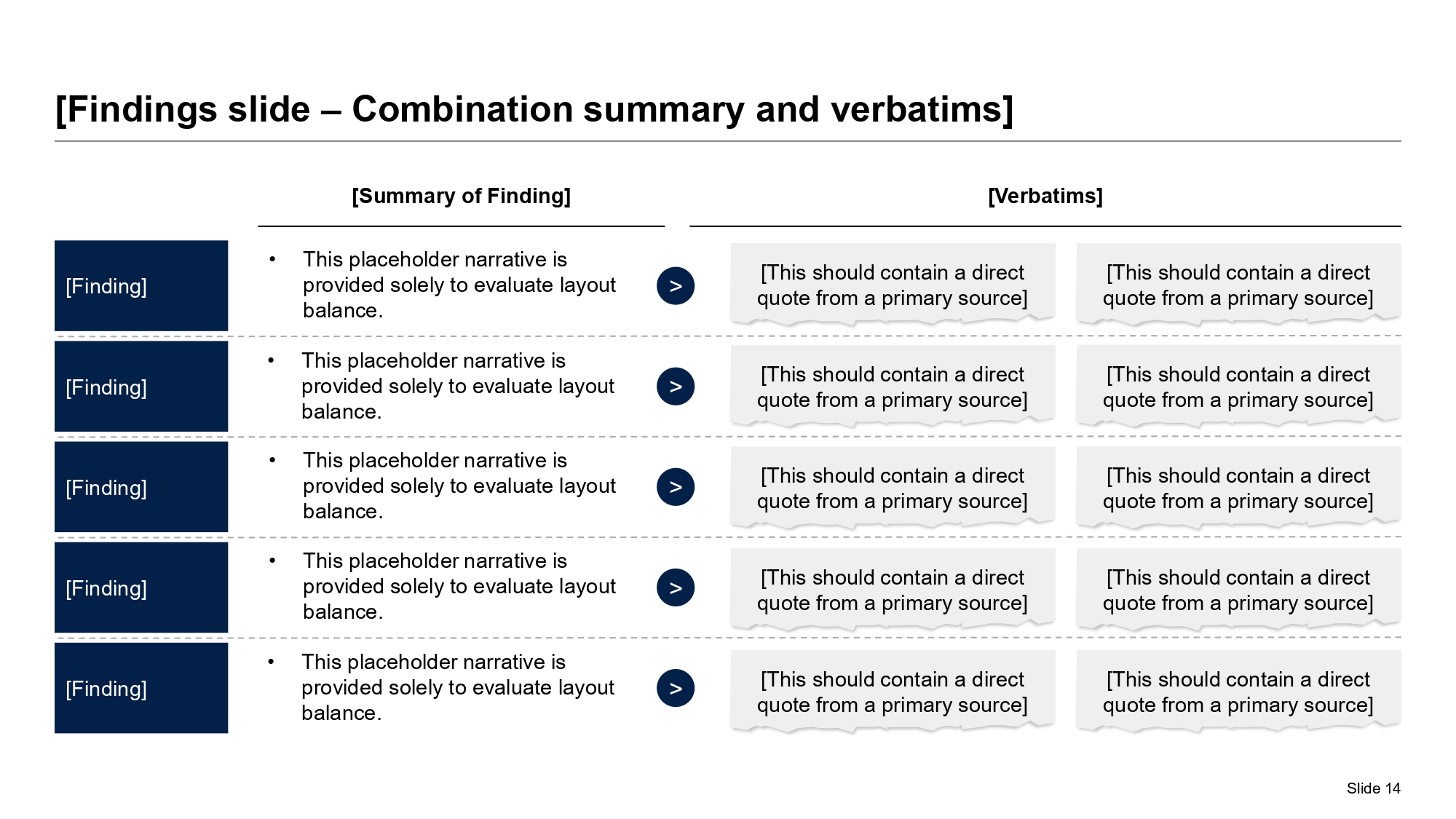
Synthesized interview findings slide for public speaking pitch prep showing audience insights, story feedback, objections, and rehearsal quotes.
Template Design LayoutPublic Speaking and Pitch Prep Presentation Template

2Who This Template Is Built For

This template is built for speakers and teams that need a structured way to prepare before a high-stakes presentation. Founders can use it to refine investor pitches and demo day narratives. Executives can use it to prepare board updates, keynote remarks, and strategic announcements. Sales and consulting teams can use it to improve client presentations and proposal delivery. Students and trainers can use it to organize public talks and learning sessions. Coaches can use it to guide practice and feedback. This gives founders, executives, consultants, sales teams, trainers, students, keynote speakers, communication coaches, PMOs, and facilitators enough evidence to assess audience fit, message clarity, story logic, slide flow, rehearsal quality, Q&A readiness, and final delivery priorities. The narrative should also define audience assumptions, core message, timing rules, feedback owners, practice cadence, and readiness checkpoints for each presentation preparation cycle and final event readiness review before live delivery and post-event learning capture and speaker improvement planning documentation.

3Audience Insight and Desired Outcome

The audience section should identify who will listen and what they need before they can believe, decide, or act. Useful slides include audience segments, prior knowledge, decision criteria, concerns, motivations, objections, expected questions, and stakeholder influence. The deck should define the primary outcome, such as funding approval, client buy-in, behavior change, learning retention, executive alignment, or audience inspiration. It should also identify what the audience already believes and what must change by the end of the talk. Audience insight prevents the speaker from building a presentation around personal interests alone. This gives founders, executives, consultants, sales teams, trainers, students, keynote speakers, communication coaches, PMOs, and facilitators enough evidence to assess audience fit, message clarity, story logic, slide flow, rehearsal quality, Q&A readiness, and final delivery priorities. The narrative should also define audience assumptions, core message, timing rules, feedback owners, practice cadence, and readiness checkpoints for each presentation preparation cycle and final event readiness review before live delivery and post-event learning capture and speaker improvement planning documentation.

4Core Message and Story Beats

The story section should clarify the one message the audience should remember and the beats that make it persuasive. Useful structures include problem-solution-proof, context-tension-resolution, before-after-bridge, recommendation-evidence-action, and demo narrative. Slides should identify opening hook, problem statement, stakes, insight, solution, proof, objection handling, call to action, and closing line. The deck should also show what content is optional if time is cut. Strong story beats help the speaker avoid rambling and keep the audience oriented. This gives founders, executives, consultants, sales teams, trainers, students, keynote speakers, communication coaches, PMOs, and facilitators enough evidence to assess audience fit, message clarity, story logic, slide flow, rehearsal quality, Q&A readiness, and final delivery priorities. The narrative should also define audience assumptions, core message, timing rules, feedback owners, practice cadence, and readiness checkpoints for each presentation preparation cycle and final event readiness review before live delivery and post-event learning capture and speaker improvement planning documentation.

5Slide Narrative and Visual Flow

The slide narrative section should explain the role of each slide in moving the audience through the argument. Useful pages include slide map, headline review, evidence placement, visual hierarchy, transitions, demo moments, backup slides, appendix structure, and speaker notes. The deck should show which slides persuade, which explain, which prove, and which support Q&A. It should also remove slides that exist only because information was available. A pitch or public talk becomes stronger when every slide has a clear job and a concise spoken transition. This gives founders, executives, consultants, sales teams, trainers, students, keynote speakers, communication coaches, PMOs, and facilitators enough evidence to assess audience fit, message clarity, story logic, slide flow, rehearsal quality, Q&A readiness, and final delivery priorities. The narrative should also define audience assumptions, core message, timing rules, feedback owners, practice cadence, and readiness checkpoints for each presentation preparation cycle and final event readiness review before live delivery and post-event learning capture and speaker improvement planning documentation.

6Evidence, Examples, and Credibility

The evidence section should identify what proof the audience needs and how it will be presented. Slides can cover customer quotes, user research, financial data, case studies, product metrics, market benchmarks, expert validation, demonstration results, pilot findings, or personal experience. The deck should match evidence to claims and avoid overloading the talk with unsupported numbers. It should also define where stories, examples, or analogies make abstract ideas easier to remember. Credibility improves when proof is specific, relevant, and timed to the audience's doubts. This gives founders, executives, consultants, sales teams, trainers, students, keynote speakers, communication coaches, PMOs, and facilitators enough evidence to assess audience fit, message clarity, story logic, slide flow, rehearsal quality, Q&A readiness, and final delivery priorities. The narrative should also define audience assumptions, core message, timing rules, feedback owners, practice cadence, and readiness checkpoints for each presentation preparation cycle and final event readiness review before live delivery and post-event learning capture and speaker improvement planning documentation.

7Rehearsal Plan and Timing Control

The rehearsal section should define how the speaker will practice before the live presentation. Useful slides include rehearsal schedule, timing targets by section, run-through checklist, recording review, feedback sessions, slide transition practice, demo contingency, opening practice, closing practice, and final dry run. The deck should identify which parts require memorization, which require flexible talking points, and which require backup paths if technology fails. Timing control is essential because good content can fail when the speaker rushes, exceeds the slot, or skips the close. This gives founders, executives, consultants, sales teams, trainers, students, keynote speakers, communication coaches, PMOs, and facilitators enough evidence to assess audience fit, message clarity, story logic, slide flow, rehearsal quality, Q&A readiness, and final delivery priorities. The narrative should also define audience assumptions, core message, timing rules, feedback owners, practice cadence, and readiness checkpoints for each presentation preparation cycle and final event readiness review before live delivery and post-event learning capture and speaker improvement planning documentation.

8Delivery, Presence, and Engagement

The delivery section should help the speaker practice how the message will feel in the room. Slides can cover voice, pace, pauses, emphasis, eye contact, posture, gestures, facial expression, camera setup, audience interaction, and energy management. Engagement pages should define questions, polls, stories, demos, moments of contrast, or call-and-response elements where appropriate. The deck should also help speakers identify nervous habits and replace them with specific delivery behaviors. Presence is strongest when delivery supports the message rather than distracting from it. This gives founders, executives, consultants, sales teams, trainers, students, keynote speakers, communication coaches, PMOs, and facilitators enough evidence to assess audience fit, message clarity, story logic, slide flow, rehearsal quality, Q&A readiness, and final delivery priorities. The narrative should also define audience assumptions, core message, timing rules, feedback owners, practice cadence, and readiness checkpoints for each presentation preparation cycle and final event readiness review before live delivery and post-event learning capture and speaker improvement planning documentation.

9Q&A, Objections, and Backup Slides

The Q&A section should prepare the speaker for the questions most likely to decide credibility. Useful slides include anticipated objections, tough questions, short answers, evidence references, backup visuals, decision criteria, competitor comparisons, risk responses, financial details, and escalation rules. The deck should show how the speaker will respond when they do not know an answer and how they will return to the core message after a difficult exchange. For investor, board, or client pitches, backup slides should be organized around expected diligence topics. This gives founders, executives, consultants, sales teams, trainers, students, keynote speakers, communication coaches, PMOs, and facilitators enough evidence to assess audience fit, message clarity, story logic, slide flow, rehearsal quality, Q&A readiness, and final delivery priorities. The narrative should also define audience assumptions, core message, timing rules, feedback owners, practice cadence, and readiness checkpoints for each presentation preparation cycle and final event readiness review before live delivery and post-event learning capture and speaker improvement planning documentation.

10Final Readiness and XLSlides Workflow

The final readiness section should confirm that the speaker, slides, room, timing, and backup plan are ready. The checklist can include file versions, clicker, demo setup, internet, recording, accessibility, speaker notes, intro handoff, Q&A plan, backup slides, timing, and follow-up materials. XLSlides helps speakers convert audience research, story notes, rehearsal feedback, slide outlines, and Q&A lists into a structured public speaking preparation deck. The generated draft can then be refined with final slides, exact event details, speaker notes, and practice feedback. This gives founders, executives, consultants, sales teams, trainers, students, keynote speakers, communication coaches, PMOs, and facilitators enough evidence to assess audience fit, message clarity, story logic, slide flow, rehearsal quality, Q&A readiness, and final delivery priorities. The narrative should also define audience assumptions, core message, timing rules, feedback owners, practice cadence, and readiness checkpoints for each presentation preparation cycle and final event readiness review before live delivery and post-event learning capture and speaker improvement planning documentation.