Proptech Investment Thesis Presentation Template

Stop wasting hours on manual formatting. Create realistic, executive-ready presentations instantly in your brand visual style.

Market map, asset-class focus, and investment theme overview slides
Revenue model, unit economics, and real estate value creation dashboards
Diligence, risk, portfolio fit, and investment committee roadmap visuals

1What Is a Proptech Investment Thesis Deck?

A proptech investment thesis deck explains why a real estate technology opportunity is attractive, investable, and defensible. It should connect property-market pain points with a technology wedge, buyer readiness, economics, adoption risk, and expected value creation. A strong deck avoids broad claims that real estate is being digitized and instead shows which asset class, customer segment, workflow, or data layer creates the opportunity. Proptech can include leasing, property management, construction technology, climate and energy tools, mortgage and title workflows, tenant experience, building operations, investment analytics, marketplaces, and data platforms. Each segment has different buyers, sales cycles, margins, and regulatory exposure. This discipline keeps the thesis grounded in real estate fundamentals, software economics, adoption behavior, asset-level ROI, competitive moats, diligence evidence, portfolio fit, and the next investment committee decision before capital is committed. That extra evidence helps the page withstand investment committee scrutiny around market timing, buyer urgency, revenue quality, cyclicality, implementation burden, and exit potential.
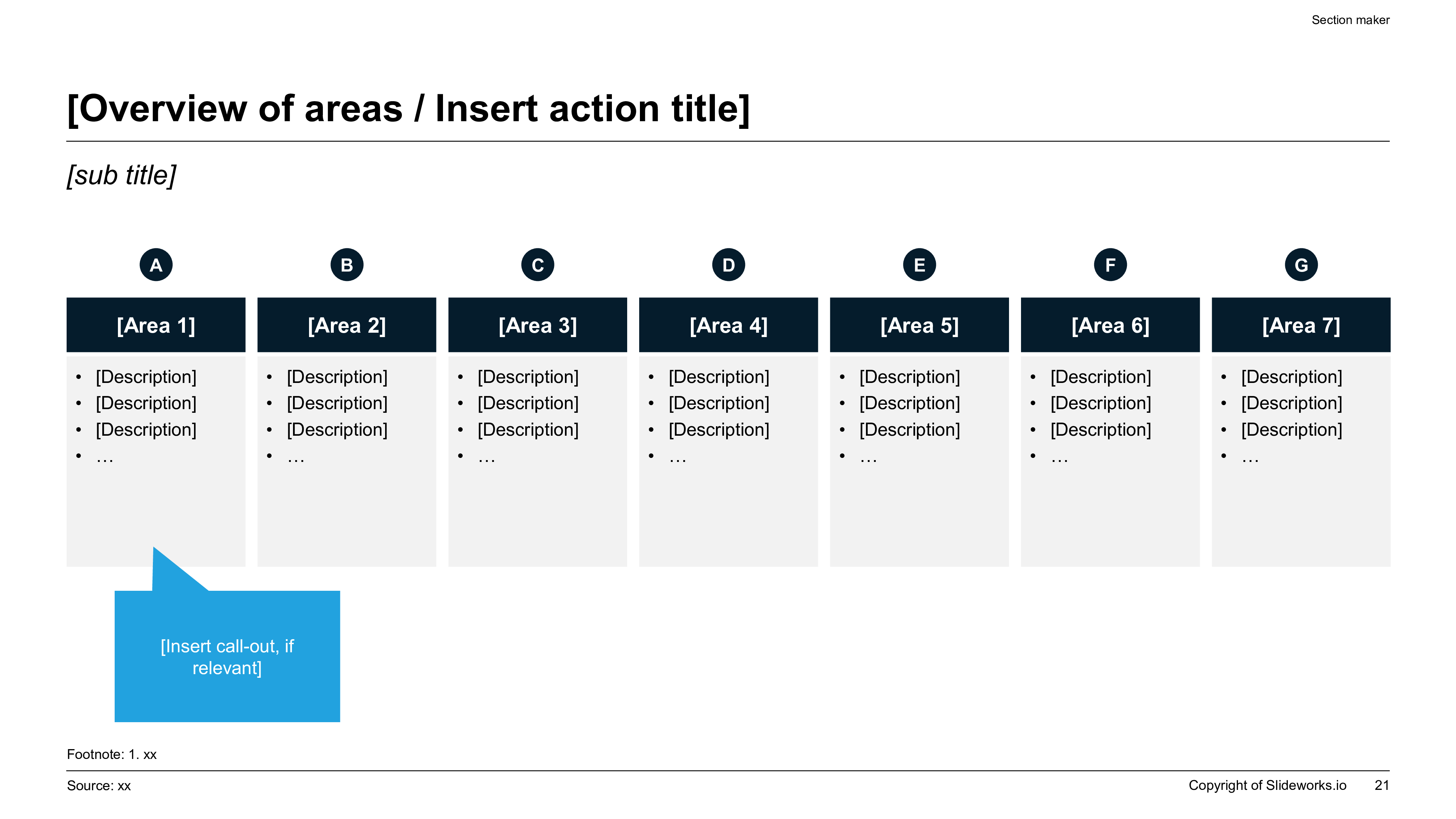
Proptech investment thesis slide with seven-column overview grid, labeled badges, bullet points, and callout bubble for market themes.
Template Design LayoutProptech Investment Thesis Presentation Template

2When to Use This Proptech Thesis Template

Use this template when an investor, founder, corporate development team, or consultant needs to present a proptech opportunity for review. It is useful for venture investment committee meetings, real estate technology market scans, corporate venture strategy, founder fundraising, platform acquisition analysis, thematic research, and portfolio value-creation planning. The deck is especially helpful when stakeholders need to separate durable proptech opportunities from cyclical real estate excitement. Investors can use it to compare segments by TAM, adoption friction, buyer urgency, data advantage, margin potential, and exit paths. Founders can use it to communicate why their wedge matters and how it expands. Corporate teams can use it to assess build, buy, partner, or invest decisions. This discipline keeps the thesis grounded in real estate fundamentals, software economics, adoption behavior, asset-level ROI, competitive moats, diligence evidence, portfolio fit, and the next investment committee decision before capital is committed. That extra evidence helps the page withstand investment committee scrutiny around market timing, buyer urgency, revenue quality, cyclicality, implementation burden, and exit potential.

3Recommended Proptech Investment Thesis Structure

A strong proptech investment thesis starts with the headline view: which segment is attractive, why now, and what investment action is recommended. Then define the market context, including asset classes, real estate cycles, regulatory drivers, capital flows, operating pain points, and technology adoption patterns. Add a market map that segments the proptech landscape by workflow or value pool. Include customer pain points and buyer economics because real estate operators adopt tools when they improve NOI, reduce risk, accelerate transactions, improve occupancy, or lower operating cost. Follow with product wedge, business model, unit economics, competitive landscape, moat, data advantage, and go-to-market. Add diligence questions, downside cases, valuation logic, exit paths, and portfolio fit. This discipline keeps the thesis grounded in real estate fundamentals, software economics, adoption behavior, asset-level ROI, competitive moats, diligence evidence, portfolio fit, and the next investment committee decision before capital is committed. That extra evidence helps the page withstand investment committee scrutiny around market timing, buyer urgency, revenue quality, cyclicality, implementation burden, and exit potential.

4Market Map, Asset-Class Focus, and Theme Selection

Proptech is too broad for a useful thesis unless it is segmented. The deck should map opportunities across asset classes such as multifamily, single-family rental, office, industrial, retail, hospitality, data centers, senior housing, student housing, and construction. It should also map workflows such as acquisition, leasing, property management, maintenance, capital planning, energy management, tenant experience, financing, insurance, title, and analytics. Theme selection should be tied to customer urgency and economics. For example, industrial operators may prioritize logistics visibility, while multifamily owners may focus on leasing automation, rent optimization, maintenance, and resident experience. A seven-column overview grid can help compare themes by buyer, pain point, market size, technology readiness, value lever, adoption barrier, and investment attractiveness. This discipline keeps the thesis grounded in real estate fundamentals, software economics, adoption behavior, asset-level ROI, competitive moats, diligence evidence, portfolio fit, and the next investment committee decision before capital is committed. That extra evidence helps the page withstand investment committee scrutiny around market timing, buyer urgency, revenue quality, cyclicality, implementation burden, and exit potential.

5Customer Pain Points and Real Estate Value Creation

The best proptech theses start with real customer pain rather than technology novelty. The deck should show which real estate stakeholders are under pressure: owners, operators, brokers, developers, lenders, tenants, facilities teams, asset managers, or construction managers. Pain points may include high vacancy, slow leasing, rising operating expenses, energy costs, maintenance backlogs, fragmented data, manual underwriting, transaction delays, compliance complexity, or tenant churn. Value creation should be translated into real estate metrics, such as NOI improvement, occupancy, rent growth, capex efficiency, maintenance cost, energy savings, downtime reduction, transaction speed, risk mitigation, or asset valuation impact. A strong slide links product capabilities to those economics. This discipline keeps the thesis grounded in real estate fundamentals, software economics, adoption behavior, asset-level ROI, competitive moats, diligence evidence, portfolio fit, and the next investment committee decision before capital is committed. That extra evidence helps the page withstand investment committee scrutiny around market timing, buyer urgency, revenue quality, cyclicality, implementation burden, and exit potential.

6Business Model, Unit Economics, and Go-to-Market

Proptech companies can look attractive at the product level but struggle with enterprise sales cycles, fragmented buyers, implementation complexity, and property-level adoption. The deck should explain the revenue model, such as SaaS subscription, transaction fee, marketplace take rate, data product, managed service, hardware-plus-software, or performance-based pricing. Unit economics should include ACV, gross margin, payback period, retention, expansion, implementation cost, support cost, sales cycle, and customer concentration. Go-to-market should identify the buyer, budget owner, sales channel, implementation path, partner leverage, and adoption motion. Real estate customers may require proof at the asset level before expanding portfolio-wide. This discipline keeps the thesis grounded in real estate fundamentals, software economics, adoption behavior, asset-level ROI, competitive moats, diligence evidence, portfolio fit, and the next investment committee decision before capital is committed. That extra evidence helps the page withstand investment committee scrutiny around market timing, buyer urgency, revenue quality, cyclicality, implementation burden, and exit potential.

7Competitive Landscape, Moat, and Data Advantage

A proptech investment thesis should identify why the opportunity is defensible. Competitive analysis should compare direct competitors, incumbent software, internal workflows, service providers, marketplaces, and point solutions. Moats may come from proprietary data, workflow lock-in, integrations, network effects, regulatory expertise, customer relationships, switching costs, asset-level benchmarks, or embedded payments. Many proptech markets are crowded, so the deck should make clear whether the company is creating a new category, replacing legacy tools, aggregating fragmented workflows, or adding intelligence to existing systems. Data advantage deserves careful treatment. Access to property, tenant, transaction, sensor, utility, or operating data matters only if it improves decisions or creates repeatable customer value. This discipline keeps the thesis grounded in real estate fundamentals, software economics, adoption behavior, asset-level ROI, competitive moats, diligence evidence, portfolio fit, and the next investment committee decision before capital is committed. That extra evidence helps the page withstand investment committee scrutiny around market timing, buyer urgency, revenue quality, cyclicality, implementation burden, and exit potential.

8Diligence Questions, Risks, and Downside Cases

A credible proptech deck should show what could go wrong. Diligence questions may cover customer ROI evidence, sales cycle length, implementation burden, churn, margin quality, data rights, integration dependency, regulatory exposure, cyclicality, competitive displacement, and reliance on real estate transaction volume. Risks may include slow buyer adoption, budget pressure during down cycles, low willingness to pay, service-heavy delivery, fragmented property systems, channel conflicts, data quality issues, and limited exit paths. Downside cases should test what happens if real estate volumes fall, customers delay software spend, pilot conversion is weak, or expansion revenue does not materialize. Naming these risks improves the investment discussion because it separates manageable execution risk from thesis-breaking assumptions. This discipline keeps the thesis grounded in real estate fundamentals, software economics, adoption behavior, asset-level ROI, competitive moats, diligence evidence, portfolio fit, and the next investment committee decision before capital is committed. That extra evidence helps the page withstand investment committee scrutiny around market timing, buyer urgency, revenue quality, cyclicality, implementation burden, and exit potential.

9Portfolio Fit, Valuation Logic, and IC Recommendation

The final investment case should explain how the opportunity fits the fund or company strategy. Portfolio fit may include exposure to a target asset class, data infrastructure theme, climate and energy transition, construction productivity, housing affordability, tenant experience, or financial technology adjacency. Valuation logic should connect market comps, growth rate, margin profile, retention, capital intensity, revenue quality, and exit paths. The recommendation should be explicit: invest, continue diligence, monitor, partner, acquire, or pass. An IC-ready page should summarize conviction, key evidence, unresolved questions, proposed check size or ownership target, diligence plan, and decision timeline. This helps stakeholders move from analysis to action. This discipline keeps the thesis grounded in real estate fundamentals, software economics, adoption behavior, asset-level ROI, competitive moats, diligence evidence, portfolio fit, and the next investment committee decision before capital is committed. That extra evidence helps the page withstand investment committee scrutiny around market timing, buyer urgency, revenue quality, cyclicality, implementation burden, and exit potential.

10How XLSlides Speeds Up Proptech Thesis Work

XLSlides helps investors and founders turn proptech research, market maps, customer notes, financial assumptions, and diligence findings into a structured investment thesis deck faster. Proptech analysis often involves scattered inputs from real estate operators, founders, customers, brokers, technology vendors, public comps, transaction data, and asset-level economics. The AI workflow organizes those inputs into a clear sequence: thesis summary, market map, asset-class focus, customer pain, value creation, business model, go-to-market, moat, risks, valuation logic, and recommendation. The output is not a substitute for investment diligence, but it gives teams a strong working draft for IC discussion or fundraising. Users can refine assumptions, add company data, and tailor the thesis by asset class or fund strategy. This discipline keeps the thesis grounded in real estate fundamentals, software economics, adoption behavior, asset-level ROI, competitive moats, diligence evidence, portfolio fit, and the next investment committee decision before capital is committed. That extra evidence helps the page withstand investment committee scrutiny around market timing, buyer urgency, revenue quality, cyclicality, implementation burden, and exit potential.