Negotiation Strategy for Deals Presentation Template

Stop wasting hours on manual formatting. Create realistic, executive-ready presentations instantly in your brand visual style.

BATNA, objectives, and stakeholder-map slides
Concession, value lever, and tradeoff dashboards
Deal economics, risk, and negotiation playbook pages

1What a Negotiation Strategy Deck Needs to Prove

A negotiation strategy deck needs to prove that the team knows what it wants, understands the other side, has credible alternatives, and can make disciplined tradeoffs during the conversation. The opening section should define the deal context, negotiation objective, value at stake, parties involved, decision timeline, and success criteria. It should show whether the negotiation is about price, scope, partnership terms, contract risk, exclusivity, payment timing, service levels, equity, or long-term relationship value. A strong strategy prevents reactive concessions. This gives sales leaders, procurement teams, founders, executives, legal counsel, finance teams, partnership owners, deal teams, PMOs, and consultants enough evidence to assess leverage, BATNA strength, stakeholder incentives, value levers, concession discipline, risk exposure, and decision sequencing. The narrative should also define approval limits, tradeoff rules, escalation paths, evidence sources, meeting cadence, and decision checkpoints for each negotiation round, executive alignment review, and final deal approval and post-meeting governance documentation requirements.
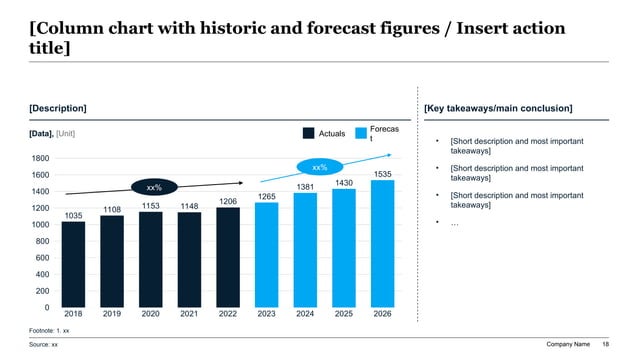
Actuals versus forecast column chart slide for negotiation strategy showing deal economics, target ranges, concession plan, and value upside.
Template Design LayoutNegotiation Strategy for Deals Presentation Template

2Who This Template Is Built For

This template is built for teams preparing for high-stakes negotiations where alignment matters before entering the room. Sales leaders can use it to prepare enterprise deals and renewal conversations. Procurement teams can use it to structure vendor negotiations and cost reduction plans. Founders and executives can use it for investor, partnership, and strategic customer discussions. Legal and finance teams can use it to assess risk, economics, and approval limits. Consultants can use it to facilitate deal preparation across stakeholders. This gives sales leaders, procurement teams, founders, executives, legal counsel, finance teams, partnership owners, deal teams, PMOs, and consultants enough evidence to assess leverage, BATNA strength, stakeholder incentives, value levers, concession discipline, risk exposure, and decision sequencing. The narrative should also define approval limits, tradeoff rules, escalation paths, evidence sources, meeting cadence, and decision checkpoints for each negotiation round, executive alignment review, and final deal approval and post-meeting governance documentation requirements.

3Deal Objectives and Success Criteria

The objective section should define what the team is trying to achieve and how success will be measured. Slides can cover target outcome, minimum acceptable outcome, stretch goals, economic value, strategic value, relationship goals, risk limits, timeline, and internal approval requirements. The deck should distinguish must-have terms from preferred terms and nice-to-have items. It should also clarify which objectives belong to sales, procurement, finance, legal, operations, product, or executive sponsors. Clear objectives prevent teams from winning visible concessions while losing value in hidden terms. This gives sales leaders, procurement teams, founders, executives, legal counsel, finance teams, partnership owners, deal teams, PMOs, and consultants enough evidence to assess leverage, BATNA strength, stakeholder incentives, value levers, concession discipline, risk exposure, and decision sequencing. The narrative should also define approval limits, tradeoff rules, escalation paths, evidence sources, meeting cadence, and decision checkpoints for each negotiation round, executive alignment review, and final deal approval and post-meeting governance documentation requirements.

4Stakeholder Map and Decision Dynamics

The stakeholder section should map who influences the deal and what each party cares about. Useful slides include buyer committee, seller team, procurement owner, executive sponsor, legal reviewer, finance approver, technical evaluator, user champion, blocker, and external advisor. The deck should identify priorities, pain points, likely objections, decision criteria, personal incentives, and relationship history. It should also show who must be persuaded directly and who can be influenced through evidence or internal champions. Negotiation strategy improves when the team understands the decision system, not only the person across the table. This gives sales leaders, procurement teams, founders, executives, legal counsel, finance teams, partnership owners, deal teams, PMOs, and consultants enough evidence to assess leverage, BATNA strength, stakeholder incentives, value levers, concession discipline, risk exposure, and decision sequencing. The narrative should also define approval limits, tradeoff rules, escalation paths, evidence sources, meeting cadence, and decision checkpoints for each negotiation round, executive alignment review, and final deal approval and post-meeting governance documentation requirements.

5BATNA, Leverage, and Walk-Away Points

The BATNA section should define the best alternative if the deal does not close and compare that alternative to the negotiated path. Slides can cover internal alternatives, competing vendors, competing customers, delay options, build-versus-buy, replacement cost, opportunity cost, switching risk, and no-deal impact. The deck should also define walk-away points for price, timing, scope, liability, exclusivity, performance commitments, or governance terms. Leverage should be assessed honestly, including the other side's alternatives and urgency. Clear BATNA thinking prevents emotional decision-making late in the negotiation. This gives sales leaders, procurement teams, founders, executives, legal counsel, finance teams, partnership owners, deal teams, PMOs, and consultants enough evidence to assess leverage, BATNA strength, stakeholder incentives, value levers, concession discipline, risk exposure, and decision sequencing. The narrative should also define approval limits, tradeoff rules, escalation paths, evidence sources, meeting cadence, and decision checkpoints for each negotiation round, executive alignment review, and final deal approval and post-meeting governance documentation requirements.

6Value Levers and Tradeoff Options

The value section should identify what can be traded beyond headline price. Useful levers include volume, term length, scope, implementation support, payment timing, service levels, exclusivity, data rights, renewal options, performance milestones, references, roadmap influence, warranties, and risk allocation. The deck should classify levers by value to us, value to them, cost to us, and difficulty to deliver. It should also identify win-win options that expand value before distributing it. Negotiators create better outcomes when they have a menu of trades rather than a single price argument. This gives sales leaders, procurement teams, founders, executives, legal counsel, finance teams, partnership owners, deal teams, PMOs, and consultants enough evidence to assess leverage, BATNA strength, stakeholder incentives, value levers, concession discipline, risk exposure, and decision sequencing. The narrative should also define approval limits, tradeoff rules, escalation paths, evidence sources, meeting cadence, and decision checkpoints for each negotiation round, executive alignment review, and final deal approval and post-meeting governance documentation requirements.

7Concession Roadmap and Scenario Planning

The concession section should define what the team can offer, when it can offer it, and what it must receive in exchange. Slides can cover opening position, target range, concession sequence, conditional trades, give-get logic, approval thresholds, red lines, and fallback packages. Scenario planning pages should show expected, optimistic, difficult, and no-deal outcomes with recommended responses. The deck should also prepare language for holding firm, reframing value, pausing, or escalating. Concession discipline is strongest when tradeoffs are planned before pressure rises. This gives sales leaders, procurement teams, founders, executives, legal counsel, finance teams, partnership owners, deal teams, PMOs, and consultants enough evidence to assess leverage, BATNA strength, stakeholder incentives, value levers, concession discipline, risk exposure, and decision sequencing. The narrative should also define approval limits, tradeoff rules, escalation paths, evidence sources, meeting cadence, and decision checkpoints for each negotiation round, executive alignment review, and final deal approval and post-meeting governance documentation requirements.

8Deal Economics and Risk Assessment

The economics section should show the financial impact of possible deal outcomes. Useful slides include revenue, margin, cost savings, implementation cost, payment timing, cash flow, discounts, penalties, liability exposure, renewal value, scenario sensitivity, and forecast impact. Risk pages should cover legal exposure, delivery risk, operational complexity, compliance, reputational risk, concentration, dependency, and post-signature governance. The deck should connect each concession to economic and risk consequences so decision-makers can approve tradeoffs quickly. A negotiation strategy is stronger when the financial model and risk view are visible together. This gives sales leaders, procurement teams, founders, executives, legal counsel, finance teams, partnership owners, deal teams, PMOs, and consultants enough evidence to assess leverage, BATNA strength, stakeholder incentives, value levers, concession discipline, risk exposure, and decision sequencing. The narrative should also define approval limits, tradeoff rules, escalation paths, evidence sources, meeting cadence, and decision checkpoints for each negotiation round, executive alignment review, and final deal approval and post-meeting governance documentation requirements.

9Live Meeting Playbook and Roles

The playbook section should prepare the team for the negotiation meeting itself. Slides can define meeting objective, agenda, opening statement, key messages, proof points, questions to ask, likely objections, response language, role assignments, note-taking, pause triggers, and escalation rules. The deck should identify who leads, who observes, who handles legal or financial questions, and who can approve changes. It should also include post-meeting follow-up actions and documentation requirements. Clear roles prevent teams from contradicting each other or conceding accidentally. This gives sales leaders, procurement teams, founders, executives, legal counsel, finance teams, partnership owners, deal teams, PMOs, and consultants enough evidence to assess leverage, BATNA strength, stakeholder incentives, value levers, concession discipline, risk exposure, and decision sequencing. The narrative should also define approval limits, tradeoff rules, escalation paths, evidence sources, meeting cadence, and decision checkpoints for each negotiation round, executive alignment review, and final deal approval and post-meeting governance documentation requirements.

10Negotiation Roadmap and XLSlides Workflow

The roadmap should sequence deal preparation through fact gathering, stakeholder mapping, objective setting, BATNA assessment, value lever design, concession planning, economics review, risk review, internal approval, live negotiation, follow-up, and final deal governance. Early work should build alignment and evidence. Later work should manage meeting execution and approval discipline. XLSlides helps teams convert deal notes, financial assumptions, stakeholder insights, legal concerns, and concession options into a structured negotiation strategy deck. The generated draft can then be refined with deal-specific terms, target ranges, approval limits, and meeting scripts. This gives sales leaders, procurement teams, founders, executives, legal counsel, finance teams, partnership owners, deal teams, PMOs, and consultants enough evidence to assess leverage, BATNA strength, stakeholder incentives, value levers, concession discipline, risk exposure, and decision sequencing. The narrative should also define approval limits, tradeoff rules, escalation paths, evidence sources, meeting cadence, and decision checkpoints for each negotiation round, executive alignment review, and final deal approval and post-meeting governance documentation requirements.