Drone Last-Mile Delivery Strategy Presentation Template

Stop wasting hours on manual formatting. Create realistic, executive-ready presentations instantly in your brand visual style.

Turn drone delivery market logic, route economics, regulatory constraints, and pilot milestones into an executive strategy deck.
Explain airspace readiness, delivery radius, fleet operations, customer use cases, safety controls, and cost-to-serve improvement.
Build slides for logistics operators, drone startups, retailers, healthcare networks, city planners, and investors.

1What Is a Drone Last-Mile Delivery Strategy Deck?

A drone last-mile delivery strategy deck explains how aerial delivery can serve specific customer, route, and market needs. It should connect the promise of faster delivery to practical constraints: payload, range, weather, battery life, landing zones, airspace authorization, noise, safety, insurance, customer handoff, and cost-to-serve. The deck usually covers target use cases, market demand, network design, aircraft capability, regulatory path, safety case, pilot roadmap, unit economics, operating model, KPIs, and risks. The strongest version avoids treating drones as a novelty. It shows where drones outperform ground delivery and where they do not. This gives logistics leaders, retailers, healthcare operators, city stakeholders, drone vendors, regulators, and investors enough evidence to assess feasibility, customer value, safety readiness, regulatory exposure, network economics, and scale milestones. It also clarifies which assumptions require pilots, community validation, airspace approval, infrastructure readiness, weather resilience, customer trust, route density, service reliability, demand proof, and operational data before broad deployment.
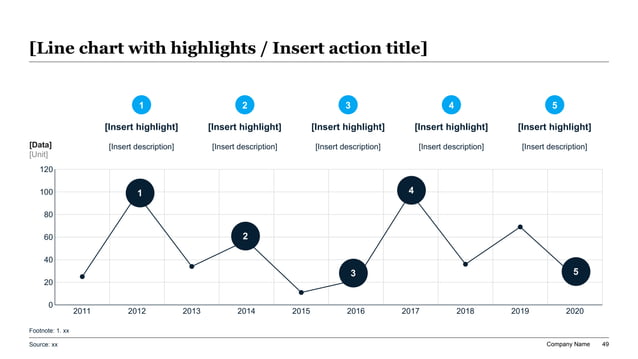
Drone last-mile delivery strategy slide with ten-year milestone line chart, highlighted points, and numbered explanation columns.
Template Design LayoutDrone Last-Mile Delivery Strategy Presentation Template

2When to Use This Drone Delivery Template

Use this template when you need to present a drone delivery concept to executives, investors, regulators, partners, or pilot sponsors. It works for startup fundraising, retail innovation planning, healthcare logistics proposals, city mobility reviews, delivery network strategy, drone corridor discussions, and operations transformation workshops. A drone startup can use it to explain market entry, a retailer can use it to assess use cases, and a public-sector team can use it to evaluate safety and community impact. The template is especially useful when stakeholders need to see evidence beyond the technology demonstration. It organizes the narrative around demand, route economics, regulatory readiness, safety, operating model, and milestone proof. This gives logistics leaders, retailers, healthcare operators, city stakeholders, drone vendors, regulators, and investors enough evidence to assess feasibility, customer value, safety readiness, regulatory exposure, network economics, and scale milestones. It also clarifies which assumptions require pilots, community validation, airspace approval, infrastructure readiness, and operational data before broad deployment.

3Recommended Drone Delivery Deck Structure

A strong drone delivery deck should begin with the target problem: slow delivery, high last-mile cost, rural access gaps, urgent medical transport, traffic congestion, or service limitations in hard-to-reach locations. The next section should define the priority use cases and customer segments, followed by route design, delivery radius, payload requirements, aircraft choice, and landing or handoff model. Then the deck should explain regulatory status, airspace requirements, safety controls, operations model, technology stack, unit economics, pilot plan, and rollout milestones. Close with KPIs, risks, partnerships, investment needs, and the executive ask. This structure keeps the concept grounded in operational proof. This gives logistics leaders, retailers, healthcare operators, city stakeholders, drone vendors, regulators, and investors enough evidence to assess feasibility, customer value, safety readiness, regulatory exposure, network economics, and scale milestones. It also clarifies which assumptions require pilots, community validation, airspace approval, infrastructure readiness, weather resilience, customer trust, and operational data before broad deployment.

4Market Use Cases, Customer Need, and Demand Density

The use-case section should explain where drone delivery creates real value. Common opportunities include prescription delivery, lab samples, medical supplies, rural parcels, campus logistics, restaurant orders, grocery top-ups, spare parts, emergency response, and high-priority ecommerce. Each use case has different needs for payload, speed, temperature control, handoff, delivery radius, and reliability. Demand density matters because drone networks need enough volume to justify launch sites, operators, maintenance, and airspace coordination. The deck should show why the first market is attractive and what evidence supports demand. It should also identify where ground delivery remains more efficient. This gives logistics leaders, retailers, healthcare operators, city stakeholders, drone vendors, regulators, and investors enough evidence to assess feasibility, customer value, safety readiness, regulatory exposure, network economics, and scale milestones. It also clarifies which assumptions require pilots, community validation, airspace approval, infrastructure readiness, weather resilience, customer trust, route density, service reliability, and operational data before broad deployment.

5Network Design, Route Economics, and Delivery Radius

Drone delivery strategy depends on network design. The deck should explain launch sites, route coverage, delivery radius, flight time, payload capacity, battery swaps, maintenance, landing zones, customer handoff, and exception handling. Route economics should compare cost per delivery, time saved, labor avoided, utilization, fleet size, payload constraints, and volume thresholds. A useful slide can show how economics change by density, distance, payload, and weather availability. The deck should also discuss whether the model uses centralized hubs, store-based launch points, hospital campuses, micro-fulfillment sites, or mobile operations. This prevents the concept from relying on an unrealistic service area. This gives logistics leaders, retailers, healthcare operators, city stakeholders, drone vendors, regulators, and investors enough evidence to assess feasibility, customer value, safety readiness, regulatory exposure, network economics, and scale milestones. It also clarifies which assumptions require pilots, community validation, airspace approval, infrastructure readiness, weather resilience, customer trust, and operational data before broad deployment.

6Regulatory Path, Airspace Readiness, and Safety Case

Regulatory readiness is central to any drone delivery deck. The presentation should explain the relevant aviation authority requirements, operating certificates, beyond visual line of sight approvals, detect-and-avoid capabilities, remote pilot model, airspace restrictions, insurance, privacy, and local permissions. The safety case should address people on the ground, other aircraft, weather, lost-link scenarios, emergency landing, battery failure, maintenance procedures, and incident reporting. Community acceptance also matters because noise, privacy, and perceived safety can shape rollout. The deck should separate approved operations from planned approvals and unresolved dependencies. Stakeholders need to know which milestones are technical, regulatory, and community-based. This gives logistics leaders, retailers, healthcare operators, city stakeholders, drone vendors, regulators, and investors enough evidence to assess feasibility, customer value, safety readiness, regulatory exposure, network economics, and scale milestones. It also clarifies which assumptions require pilots, community validation, airspace approval, infrastructure readiness, weather resilience, customer trust, and operational data before broad deployment.

7Technology Stack, Fleet Operations, and Control Model

The operations section should explain how the drone delivery system works day to day. It may include aircraft hardware, batteries, charging, payload containers, navigation software, fleet management, routing, remote operations, monitoring, weather feeds, customer notifications, delivery confirmation, maintenance, and data reporting. The deck should define who operates the fleet, who owns safety decisions, how exceptions are handled, and how the system integrates with order management or logistics platforms. A clear control model helps stakeholders understand whether the company is building a drone airline, licensing technology, operating as a delivery partner, or enabling customers to run their own network. This gives logistics leaders, retailers, healthcare operators, city stakeholders, drone vendors, regulators, and investors enough evidence to assess feasibility, customer value, safety readiness, regulatory exposure, network economics, and scale milestones. It also clarifies which assumptions require pilots, community validation, airspace approval, infrastructure readiness, weather resilience, customer trust, and operational data before broad deployment.

8Business Model, Cost-to-Serve, and ROI

A drone delivery strategy needs a clear business model. The deck should compare revenue, cost-to-serve, delivery fee, subscription, enterprise contract, savings per route, fleet utilization, maintenance cost, launch-site cost, regulatory overhead, insurance, and support needs. It should show whether drones create value through speed premium, labor avoidance, access to underserved areas, medical urgency, customer retention, or network differentiation. Finance reviewers will want sensitivity to demand volume, utilization, aircraft cost, battery life, regulatory limits, weather downtime, and operating staffing. The strongest ROI slide separates pilot metrics from future assumptions and identifies which evidence must be proven before scaling. This gives logistics leaders, retailers, healthcare operators, city stakeholders, drone vendors, regulators, and investors enough evidence to assess feasibility, customer value, safety readiness, regulatory exposure, network economics, and scale milestones. It also clarifies which assumptions require pilots, community validation, airspace approval, infrastructure readiness, weather resilience, customer trust, and operational data before broad deployment.

9Pilot Roadmap, Milestones, and Scale Plan

The roadmap should sequence drone delivery from concept to scalable operations. Phase one may include market selection, regulatory review, aircraft selection, safety case, route analysis, partner alignment, and pilot design. Phase two may launch controlled operations with limited routes, measured demand, safety monitoring, customer feedback, and cost tracking. Phase three may expand service radius, delivery volume, route types, partners, and automation while strengthening regulatory approvals and operating procedures. Each phase should include milestones, owners, dependencies, risks, and decision gates. The deck should specify what proof is needed before moving forward: delivery reliability, safety record, customer adoption, route economics, regulatory progress, and community acceptance. This gives logistics leaders, retailers, healthcare operators, city stakeholders, drone vendors, regulators, and investors enough evidence to assess feasibility, customer value, safety readiness, regulatory exposure, network economics, and scale milestones. It also clarifies which assumptions require pilots, community validation, airspace approval, infrastructure readiness, and operational data before broad deployment.

10How XLSlides Speeds Up Drone Delivery Planning

XLSlides helps drone delivery teams turn market notes, aircraft specs, route assumptions, regulatory research, customer use cases, pilot plans, and cost models into a structured strategy deck faster. The AI workflow can organize the narrative into problem framing, use cases, demand density, network design, aircraft capability, regulatory path, safety case, operating model, business model, pilot roadmap, KPIs, risks, and executive ask. This is useful when teams have technical and operational inputs but need a polished deck for investors, partners, retailers, public-sector stakeholders, or leadership reviews. The generated output is not a substitute for aviation regulatory advice, safety engineering, community consultation, or financial modeling, but it gives teams a strong working draft. This gives logistics leaders, retailers, healthcare operators, city stakeholders, drone vendors, regulators, and investors enough evidence to assess feasibility, customer value, safety readiness, regulatory exposure, network economics, and scale milestones. It also clarifies which assumptions require pilots, community validation, airspace approval, infrastructure readiness, and operational data before broad deployment.