Coding Bootcamp Outcomes Presentation Template

Stop wasting hours on manual formatting. Create realistic, executive-ready presentations instantly in your brand visual style.

Completion, placement, and salary outcome dashboards
Employer partnership and hiring funnel slides
Curriculum quality, student ROI, and reporting pages

1What a Coding Bootcamp Outcomes Deck Needs to Prove

A coding bootcamp outcomes deck needs to prove that students enter with clear expectations, complete a rigorous program, gain job-relevant skills, receive effective career support, and achieve employment outcomes that justify the time and cost. The opening section should define the reporting period, cohort scope, program formats, student profile, curriculum focus, and outcome methodology. It should show whether the bootcamp prepares learners for software engineering, data analytics, cybersecurity, UX, cloud, AI, or full-stack roles. A credible deck separates marketing claims from verified outcomes. This gives bootcamp operators, career services teams, workforce boards, funders, employer partners, student success leaders, investors, regulators, PMOs, and consultants enough evidence to assess completion quality, placement rate, salary lift, employer demand, student ROI, curriculum fit, and improvement priorities. The narrative should also define cohort rules, verification standards, placement categories, salary sources, partner obligations, and review gates for each outcomes reporting cycle and annual transparency review and board reporting decisions and employer partner reviews.
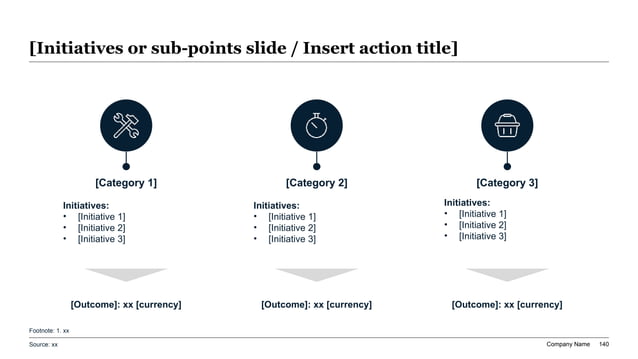
Three-column strategic flow slide for coding bootcamp outcomes showing curriculum inputs, career services process, and graduate placement results.
Template Design LayoutCoding Bootcamp Outcomes Presentation Template

2Who This Template Is Built For

This template is built for education and workforce teams that need to report coding bootcamp outcomes with transparency. Bootcamp leaders can use it to show program performance, growth, and quality. Career services teams can use it to explain job search support, employer engagement, and placement funnel health. Funders can use it to understand whether training investments led to economic mobility. Employer partners can use it to evaluate talent readiness and hiring fit. Investors and regulators can use it to examine outcome claims, methodology, and risk. This gives bootcamp operators, career services teams, workforce boards, funders, employer partners, student success leaders, investors, regulators, PMOs, and consultants enough evidence to assess completion quality, placement rate, salary lift, employer demand, student ROI, curriculum fit, and improvement priorities. The narrative should also define cohort rules, verification standards, placement categories, salary sources, partner obligations, and review gates for each outcomes reporting cycle and annual transparency review and board reporting decisions and employer partner reviews.

3Cohort Profile and Student Segmentation

The cohort section should explain who enrolled and how student mix affects outcomes. Useful slides include cohort size, program format, full-time versus part-time split, prior education, work experience, geography, demographic profile, financial aid participation, career goals, baseline technical skill, and completion risk factors. Segmentation helps audiences understand whether outcomes are comparable across groups or driven by a subset of students. The deck should also define inclusion and exclusion rules, such as withdrawals, deferrals, transfers, international students, or students not seeking employment. Clear cohort definitions are essential for credible reporting. This gives bootcamp operators, career services teams, workforce boards, funders, employer partners, student success leaders, investors, regulators, PMOs, and consultants enough evidence to assess completion quality, placement rate, salary lift, employer demand, student ROI, curriculum fit, and improvement priorities. The narrative should also define cohort rules, verification standards, placement categories, salary sources, partner obligations, and review gates for each outcomes reporting cycle and annual transparency review and board reporting decisions and employer partner reviews.

4Curriculum, Skills, and Learning Evidence

The curriculum section should show what students learned and how skill development was assessed. Slides can cover course sequence, technical stack, project work, code reviews, pair programming, assessments, capstones, portfolio artifacts, instructor support, tutoring, and remediation. Skills pages should connect curriculum to employer requirements such as JavaScript, Python, SQL, cloud, APIs, testing, data visualization, cybersecurity, or agile collaboration. The deck should also show completion of projects and evidence that graduates can perform job-relevant tasks. Strong outcome reporting explains the learning pathway that produced placement results. This gives bootcamp operators, career services teams, workforce boards, funders, employer partners, student success leaders, investors, regulators, PMOs, and consultants enough evidence to assess completion quality, placement rate, salary lift, employer demand, student ROI, curriculum fit, and improvement priorities. The narrative should also define cohort rules, verification standards, placement categories, salary sources, partner obligations, and review gates for each outcomes reporting cycle and annual transparency review and board reporting decisions and employer partner reviews.

5Completion, Persistence, and Student Support

Completion metrics should explain whether students persisted through the program and what support helped them finish. Useful slides include starts, active students, withdrawals, deferrals, graduates, completion rate, attendance, assignment completion, tutoring usage, mentor sessions, student satisfaction, and reasons for non-completion. The deck should compare completion by program format, student segment, campus, instructor team, or funding source where data is available. Support pages should show how advising, tutoring, mental health resources, flexible scheduling, and financial support reduce attrition. Completion quality matters because placement rates are only meaningful when cohort progression is transparent. This gives bootcamp operators, career services teams, workforce boards, funders, employer partners, student success leaders, investors, regulators, PMOs, and consultants enough evidence to assess completion quality, placement rate, salary lift, employer demand, student ROI, curriculum fit, and improvement priorities. The narrative should also define cohort rules, verification standards, placement categories, salary sources, partner obligations, and review gates for each outcomes reporting cycle and annual transparency review and board reporting decisions and employer partner reviews.

6Career Services and Employer Partnership Funnel

The career services section should show how graduates move from program completion to interviews and offers. Slides can include resume reviews, portfolio support, mock interviews, technical interview practice, coaching sessions, networking events, employer introductions, job applications, interviews, offers, and accepted roles. Employer partnership pages should show active hiring partners, role types, repeat employers, hiring feedback, interview conversion, and demand by skill area. The deck should identify bottlenecks in the career funnel and explain which support activities correlate with placement. This gives bootcamp operators, career services teams, workforce boards, funders, employer partners, student success leaders, investors, regulators, PMOs, and consultants enough evidence to assess completion quality, placement rate, salary lift, employer demand, student ROI, curriculum fit, and improvement priorities. The narrative should also define cohort rules, verification standards, placement categories, salary sources, partner obligations, and review gates for each outcomes reporting cycle and annual transparency review and board reporting decisions and employer partner reviews.

7Placement Rate and Job Quality

The placement section should report employment outcomes with clear definitions. Useful slides include job-seeking graduates, placed graduates, placement rate, time to placement, role type, full-time versus contract work, technical role share, employer type, industry, geography, remote work, benefits, and retention where available. The deck should distinguish technical placements from adjacent roles and explain how placements are verified. It should also show unplaced graduate support and reasons some students are still searching. Job quality matters because a high placement rate can hide underemployment or roles that do not match training goals. This gives bootcamp operators, career services teams, workforce boards, funders, employer partners, student success leaders, investors, regulators, PMOs, and consultants enough evidence to assess completion quality, placement rate, salary lift, employer demand, student ROI, curriculum fit, and improvement priorities. The narrative should also define cohort rules, verification standards, placement categories, salary sources, partner obligations, and review gates for each outcomes reporting cycle and annual transparency review and board reporting decisions and employer partner reviews.

8Salary Gains, Student ROI, and Payback

The salary section should explain how graduate earnings changed and whether the program delivered economic value. Useful slides include pre-program salary, post-placement salary, median salary, salary lift, salary range, regional wage context, tuition cost, financing cost, scholarships, income share agreements, payback period, and return on investment. The deck should show salary outcomes by program, segment, role, geography, and prior experience where sample sizes allow. It should also clarify whether salary data is self-reported, employer verified, or based on offer letters. Student ROI is strongest when benefits, costs, and evidence limitations are all visible. This gives bootcamp operators, career services teams, workforce boards, funders, employer partners, student success leaders, investors, regulators, PMOs, and consultants enough evidence to assess completion quality, placement rate, salary lift, employer demand, student ROI, curriculum fit, and improvement priorities. The narrative should also define cohort rules, verification standards, placement categories, salary sources, partner obligations, and review gates for each outcomes reporting cycle and annual transparency review and board reporting decisions and employer partner reviews.

9Reporting Methodology and KPI Dashboard

The methodology section should make outcome claims auditable. Slides should define cohort windows, graduation status, job-seeking status, placement categories, verification process, salary sources, response rate, missing data, sample sizes, and any exclusions. A KPI dashboard can summarize starts, graduates, completion rate, job-seeking graduates, placement rate, median salary, time to placement, employer count, and student satisfaction. Each metric should include target, actual, status, owner, and data source. Transparent methodology protects trust with students, funders, regulators, and employers. This gives bootcamp operators, career services teams, workforce boards, funders, employer partners, student success leaders, investors, regulators, PMOs, and consultants enough evidence to assess completion quality, placement rate, salary lift, employer demand, student ROI, curriculum fit, and improvement priorities. The narrative should also define cohort rules, verification standards, placement categories, salary sources, partner obligations, and review gates for each outcomes reporting cycle and annual transparency review and board reporting decisions and employer partner reviews.

10Improvement Roadmap and XLSlides Workflow

The roadmap should convert outcome findings into program improvements. Actions may include curriculum updates, more technical interview practice, stronger employer partnerships, expanded tutoring, revised admissions screening, better job-search accountability, additional alumni tracking, or improved data verification. The roadmap should define near-term fixes, next cohort changes, and longer-term investments. XLSlides helps teams convert student records, placement trackers, salary data, employer feedback, survey results, and methodology notes into a structured coding bootcamp outcomes deck. The generated draft can then be refined with verified cohort data, school branding, employer logos, and funder-specific language. This gives bootcamp operators, career services teams, workforce boards, funders, employer partners, student success leaders, investors, regulators, PMOs, and consultants enough evidence to assess completion quality, placement rate, salary lift, employer demand, student ROI, curriculum fit, and improvement priorities. The narrative should also define cohort rules, verification standards, placement categories, salary sources, partner obligations, and review gates for each outcomes reporting cycle and annual transparency review and board reporting decisions and employer partner reviews.