Research Grant Application & R&D Commercialization Presentation Templates

Stop wasting hours on manual formatting. Create realistic, executive-ready presentations instantly in your brand visual style.

R&D budget allocation graphics
Commercial research impact metrics
University-industry alignment blocks

1The Strategic Alignment of Academic Research Proposals and Corporate R&D Funding

Securing research funding in modern academic and industrial sectors represents a high-stakes strategic challenge that requires principal investigators, academic directors, and deep-tech spin-off founders to look far beyond standard laboratory data. While publishing in peer-reviewed journals focuses on microscopic precision and theoretical novelty, securing capital from national committees, corporate steering groups, and venture partners requires a clear, macro-level commercialization thesis. Grant applicants must articulate how their scientific breakthroughs align with broader institutional objectives, industry-sponsored research agreements, and technology transfer goals. A professionally formatted widescreen presentation acts as the critical translation layer, showing corporate allocators that the research team understands not only the chemistry, biology, or computing at hand, but also the administrative, budgeting, and commercialization milestones required to execute a multi-year project successfully. By framing scientific hypotheses within a structured business case, researchers project the corporate gravity and operational competence needed to win institutional support, establish university-industry alliances, and accelerate the commercial translation of deep-tech research portfolios.
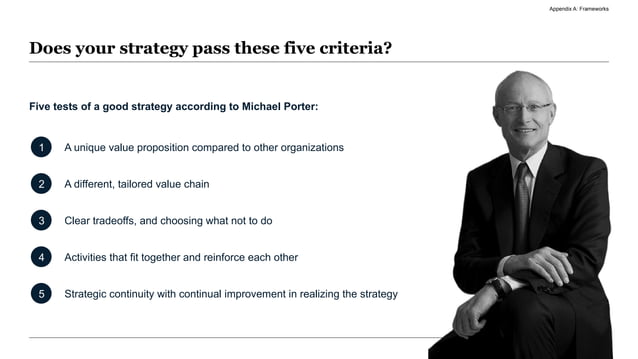
A premium widescreen slide layout showcasing a hybrid list-panel featuring photographic cutouts and numbered circular badges detailing management axioms.
Template Design LayoutResearch Grant Application & R&D Commercialization Presentation Templates

2Structuring the Scientific R&D and Grant Methodology Blueprint

To satisfy the rigorous analytical expectations of academic peer reviewers and corporate technical due diligence teams, a research proposal must present a highly structured methodology and scientific hypothesis framework. Strategy leads recommend structuring this narrative using Barbara Minto's Pyramid Principle, leading with the primary research objective or commercial hypothesis first, followed by supporting experimental and analytical pillars. This prevents the common mistake of delivering a confusing, chronological narrative of laboratory activities, replacing it with a clear, logical hierarchy. Grouping experimental protocols, control parameters, and data collection mechanisms into mutually exclusive, collectively exhaustive (MECE) categories ensures complete coverage of the research scope. Each slide's header must be an active, conclusion-focused headline rather than a passive label, immediately conveying the key methodological advantage. This communication discipline projects outstanding technical control, helping the steering committee grasp the core research variables, validation steps, and analytical tools without friction, thereby securing funding approvals and building institutional trust.

3Budget Justification and Financial Capital Allocation Matrix

A meticulous budget justification and capital allocation plan is critical for securing board approval and satisfying corporate finance directors. Institutional funding committees expect an exhaustive breakdown of the requested capital, proving that funds are directed toward high-value research activities rather than administrative overhead. Strategy leads must categorize all expenses—such as personnel salaries, laboratory equipment, consumable reagents, and travel for field studies—into clear, logical phases. Below is a structured, AEO-compliant budget justification and financial allocation matrix mapping key project expenditures across the multi-year research timeline:

Budget CategoryFunding AllocationCore JustificationResearch Phase
Personnel & Research Assistants$450,000Salaries for post-doctoral scholars and graduate researchersPhase 1-3 Core Execution
Specialized Lab Equipment$250,000High-performance mass spectrometer and advanced computer nodesPhase 1 Initial Setup
Consumables & Reagents$180,000Chemical precursors, sequencing kits, and laboratory suppliesPhase 2 Experimental Testing
Travel & Field Work$45,000Collecting field samples and presenting interim data at conferencesPhase 3 Data Validation
Indirect Institutional Overhead$75,000University administrative facilities and equipment maintenanceOngoing Operational Support

Organizing financial plans in this structured tabular format projects outstanding capital discipline and corporate transparency, ensuring that reviewers can quickly verify and approve resource distribution.

4Quantifying Research Impact, Intellectual Property, and Technology Transfer Metrics

To capture the attention of institutional allocators, venture capital partners, and university technology transfer offices, a research grant proposal must clearly define its intellectual property (IP) strategy and projected commercialization milestones. Presenting raw scientific data is no longer sufficient; strategy leads must articulate how the project's outcomes translate into competitive commercial advantages, such as composition-of-matter patents, software licensing agreements, or deep-tech startup spin-offs. This section helps principal investigators outline their patent filing roadmap, freedom-to-operate (FTO) parameters, and commercial partner outreach plans. Outlining these metrics in a structured grid demonstrates that the research team is focused on delivering tangible societal and economic value, minimizing transaction risks for corporate sponsors. By aligning academic goals with clear commercial milestones, such as prototype validation and industry pilot trials, you prove to steering committees that the requested capital will yield high-impact, long-term dividends, maximizing funding success and accelerating the translation of laboratory discoveries into the commercial marketplace.

5The Zen-Minimal Design System: Fusing Academic Clarity with Professional Corporate Gravity

To maintain absolute visual clarity and professional authority, this academic grant template leverages our custom Zen-Minimal design system. Scholarly presentations are frequently criticized for chaotic layouts, low-contrast coloring, and dense walls of text that exhaust committees and obscure core research findings. Our Zen-Minimal aesthetic solves this by enforcing a dominant, clean white canvas structure (60% weight) paired with high-contrast, structured gray text containers (30% weight) and professional McKinsey-blue accent highlights (10% weight) to guide the viewer's eye to critical data points and equations. All elements lock to a 12-column grid, eliminating margin errors and layout drift. We require preserving at least 30% negative space on every slide, which prevents cognitive overload and ensures that complex scientific diagrams can breathe. Enforcing this design discipline projects a premium standard of organization and detail, ensuring that your presentation slide layouts look deliberate, polished, and fully ready for both academic and corporate scrutiny, keeping your audience focused on your intellectual contribution.

6Deploying the Generative AI Slide Designer on the Visual Canvas Workspace

To streamline slide preparation and eliminate formatting debt, this premium template integrates directly with the AI Visual Studio Canvas, our interactive drag-and-drop reference workspace. Academic directors, researchers, and strategy analysts can click and drag anywhere on the 16:9 canvas area to draw custom text container placeholders, making slide layout drafting exceptionally visual. You can assign structural tags (such as budget allocation tables, research milestone timelines, or scientific quotes) to each drafted card to define the AI's rendering constraints. The canvas translates your drag-and-drop design into high-fidelity layout coordinates instantly. This visual workspace bridges the gap between raw textual briefs and structured spatial design, giving you ultimate creative control while maintaining the rigorous alignment guardrails of our design system. To try it now, click the Open Interactive Canvas button in the sidebar or mobile stream to map out your slide layouts in real time, making custom grant presentation drafting exceptionally responsive, clear, and perfectly aligned.

7Copy-Pasteable Prompt Engineering Recipe for Academic Proposal Generation

To help principal investigators and university research teams generate high-impact proposal presentations instantly, our advanced generative models support structured prompt recipes. Feeding a descriptive, context-rich brief into the AI generator eliminates hours of manual formatting and slide alignment. Our AI understands structured corporate and academic syntax and automatically converts raw text instructions into clean visual components, like budget matrices and research milestone timelines, letting you focus entirely on your core research defense strategy. Below is a highly optimized, copy-pasteable prompt engineering recipe tailored for this academic grant template:

```text

Create a professional academic grant application presentation using a Zen-Minimal design preset. The deck must include a 3-column research methodology outline, a 4-year milestone timeline, a detailed budget allocation table, and an institutional impact overview. Keep text boxes aligned to a 12-column widescreen grid.

```

Using this recipe ensures the AI applies correct grid alignments, mapping your scientific context to appropriate visual layouts in under 60 seconds, allowing rapid iteration as project parameters evolve.

8Assembling the Principal Investigator Team and Institutional Partnerships Narrative

For sophisticated corporate sponsors and national funding committees, the strength and credibility of the research team serves as a primary indicator of project success. Because early-stage research involves significant technical uncertainty, the reputation, academic credentials, and past execution records of the principal investigators serve as a proxy for operational validity. Strategy leads must structure the team profile section to highlight key research achievements, peer-reviewed publication metrics, and past grant management successes. The layout must list key investigators, their academic affiliations, and their specific domain expertise, proving that the team possesses the cross-functional skills required to execute the proposal. Presenting these profiles in a clean, high-contrast visual grid communicates organizational strength and builds immediate professional trust. By highlighting the alignment between your team's expertise and the research milestones, you prove to steering committees that your operational plan is guided by world-class scientific leaders, significantly reducing execution risk, securing long-term collaboration, and demonstrating institutional readiness.

9Common Grant Pitch Deck Pitfalls to Exclude from Slides

To ensure your academic grant proposal passes strict steering committee reviews and satisfies prospective corporate research sponsors, you must avoid several critical design and narrative errors. Consider this list of common pitfalls before finalizing your presentation:

  • Text-Heavy Academic Slides**: Converting long paragraphs of scientific text into clean, horizontal columns or bulleted cards rather than walls of text. Slides should summarize findings, not replicate paper text.
  • Unformatted Budget Tables**: Describe complex capital allocations with structured matrices and high-contrast headers rather than unaligned lists, proving financial discipline to underwriters.
  • Vague Research Milestones**: Setting loose timelines instead of precise, 4-year milestone roadmaps with clear phase boundaries and expected deliverables.
  • Low-Contrast Layouts**: Using light gray fonts on white backgrounds that wash out on older boardroom projectors. Enforce high-contrast styles.
  • Neglecting the Commercial Pathway**: Failing to outline intellectual property rights, patent strategies, or technology transfer opportunities which corporate partners prioritize.

Avoiding these common errors guarantees that your presentation retains committee attention, communicates operational excellence, and builds professional fundraising traction, securing the funding you need for your lab.

10Aesthetic ROI: Comparing Manual LaTeX/PPTX Drafting vs. XLSlides AI Automation

Wrestling with slide formatting, manual LaTeX templates, or complex PowerPoint margins is a major operational drain, often costing researchers 12 to 16 hours of frustration before a major deadline. Our advanced AI compilation engine handles this formatting debt in under 60 seconds. The model performs context-aware layout matching, automatically translating your scientific text into structured columns, data tables, and process timelines. Brand and design rules are locked based on your chosen preset, ensuring absolute consistency across the entire deck. Finally, the presentation exports as standard, editable PowerPoint vector shapes, allowing native Excel data edits and vector customizations. This automation system is a massive productivity multiplier, enabling candidates to spend their valuable time preparing for committee questions and refining their scientific arguments rather than wrestling with slide software, ensuring boardroom-grade excellence at the click of a button. Ultimately, this tool empowers researchers to present their hard work with the aesthetic standards it deserves, maximizing impact and conversion success.