Direct Answer: What An Investment Memo Presentation Should Do
An investment memo presentation should not repeat the memo line by line. Its job is to compress the recommendation, the few assumptions that matter most, the key risks, and the exact approval ask into a form that a senior reader can absorb in minutes. A good deck behaves like a high-signal reading layer on top of the memo. It lets the committee understand the case quickly, then dive into the appendix or the full memo only where challenge is warranted.
That matters because memo readers and deck readers behave differently. A partner, investment committee member, credit approver, CFO, corp dev sponsor, or operating partner may eventually read the full document, but the first decision often happens through slide titles, a scorecard, one valuation bridge, one risk page, and a short list of conditions. If the presentation cannot surface those points cleanly, the memo may be strong while the approval process still feels muddled.
The most useful memo decks therefore follow a simple standard. They lead with the answer, preserve source discipline, separate observed facts from judgment, and make clear what belongs in the main story versus appendix. XLSlides fits this workflow because many teams already have the raw memo, model notes, diligence comments, and management-call summaries. The hard part is turning that material into an editable PowerPoint-style artifact that survives real decision review.
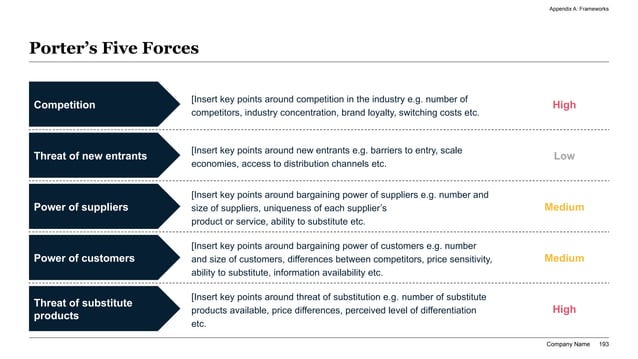
Memo Triage Scorecard Reference
Key Takeaways
- An investment memo deck is a compression tool, not a slide-by-slide copy of the underlying document.
- The strongest memo presentations surface the recommendation, the few underwriting assumptions that matter most, and the reasons the committee might still say no.
- Memo-to-deck work is different from a PE-only final IC deck because it often starts earlier, uses rougher source material, and has to bridge memo prose into decision slides without losing nuance.
- AI is useful when it organizes the source document, proposes action titles, and builds a first-pass deck spine, but human investors still need to own risk judgment, price discipline, and disclosure choices.
Investment Memo Presentation Vs. Adjacent Deal Documents
These artifacts overlap, but they do different jobs. Teams lose clarity when a memo deck tries to be every document at once.
| Document | Primary Audience | Main Job | Common Failure Mode |
|---|---|---|---|
| Investment memo presentation | Investment committee, sponsor, corp dev steering group, CFO, operating partner | Compress the recommendation, economics, risks, and asks into a fast-reading decision layer | Repeats the memo verbatim with no signal hierarchy |
| Full investment memo | Deal lead, partners, committee members, legal and diligence stakeholders | Capture the full thesis, evidence set, diligence history, scenario logic, and references | Too dense to use as the first approval artifact |
| Private equity IC deck | Final capital-approval audience | Ask for a yes, no, or conditioned yes on a specific price, structure, and ownership plan | Assumes the underlying memo-to-deck translation work is already done |
| M&A diligence deck | Deal team, CFO, corp dev lead, PE partner | Show what diligence proved, broke, or left unresolved | Becomes a workstream dump without an investment recommendation |
| Board transaction memo | Directors and governance stakeholders | Frame the strategic rationale, exposure, and approvals needed at board level | Carries too much deal detail and not enough governance framing |
Why A Memo-To-Deck Workflow Exists In Serious Investment Teams
Memo-first investment workflows are common because the underlying judgment is usually made in writing before it is made in slides. Associates, vice presidents, corp dev managers, consultants, and finance leads gather customer findings, model outputs, quality-of-earnings comments, management observations, market maps, and legal notes. They need one durable written document to preserve the case. But the people who approve capital still benefit from a shorter presentation layer because live decision forums reward compression.
That is why a memo presentation deserves its own treatment instead of being folded into a generic PE IC page. The memo deck often appears before the final committee package is fully locked. It may be used for partner pre-wires, investment committee read-aheads, credit committee reviews, growth-equity partner discussions, add-on acquisition screens, or corp dev steering meetings. The audience is still serious, but the workflow begins from prose and attachments rather than from a finished slide story.
The discipline, then, is not merely summarization. A good memo-to-deck workflow decides which claims deserve slide real estate, which numbers need a chart rather than a paragraph, which risks stay in the main story, and which supporting analyses belong in appendix. The real value is helping senior readers challenge the case faster without stripping away the nuance that made the memo useful in the first place.
Inputs To Gather Before Turning A Memo Into Slides
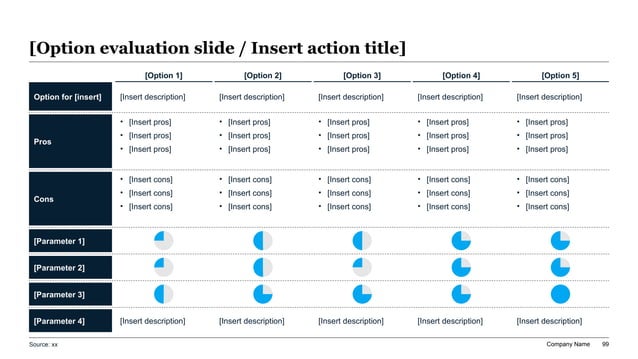
Approval Path And Option Filter Reference
Recommended 10-Slide Investment Memo Deck Sequence
The exact deck varies by context, but this sequence works well when the source material starts as memo prose rather than a finished slide narrative.
| Slide | Purpose | Decision Question Answered |
|---|---|---|
| Opening recommendation | State the answer, price posture, and any explicit conditions | What are we being asked to approve or challenge? |
| Why this asset or decision now | Frame the context, catalyst, and reason the case is in front of the audience | Why does this matter now? |
| Thesis summary | Compress the investment case into three or four testable claims | Why should we believe this is attractive? |
| What the memo proved | Show the strongest evidence the full document established | Which parts of the thesis are actually supported? |
| What could still break the case | Surface the real downside, open items, and challenge points | Why might we still say no? |
| Economics and valuation bridge | Translate model logic into a readable slide layer | How do the numbers work? |
| Scenario or sensitivity view | Bound upside, base case, and downside conditions | How fragile is the recommendation? |
| Execution or ownership plan | Show what must happen after approval for the case to hold | Can the team actually deliver the thesis? |
| Decision asks and guardrails | List approvals, conditions, and unresolved items explicitly | Exactly what vote or feedback is needed? |
| Appendix roadmap | Point readers to the supporting tables, sources, and deeper memo exhibits | Where should we go for challenge-level detail? |
What Stays In The Memo, What Moves To The Main Story, And What Drops To Appendix
The simplest way to improve an investment memo deck is to stop asking the slides to carry every paragraph from the memo. The memo should keep detailed background, long-form reasoning, workstream nuance, contract caveats, interview excerpts, and the full chain of evidence. The presentation should carry only what changes the decision: the recommendation, the claims that matter most, the model logic the audience will actually debate, and the risks that could overturn the answer.
A useful rule is that if a detail changes price, structure, timing, conviction, or post-close execution, it likely belongs in the main story. If a detail only explains how the team got comfortable with an already-accepted claim, it can usually live in appendix. That does not make appendix unimportant. In serious finance workflows, appendix is where credibility is preserved. It simply means the audience should not be forced to process every supporting exhibit before it knows the recommendation.
This distinction is especially important when AI is involved. Models are good at turning long documents into smooth prose, but that often creates a false sense of completeness. A polished summary is not the same as a decision-ready deck. Someone still needs to choose what is essential, what is conditional, and what remains unresolved. The best memo decks do not sound comprehensive. They sound selective for a reason.
Prompt Recipe For Turning An Investment Memo Into A Deck
Create a 10-slide investment memo presentation for a serious finance audience. Audience: investment committee members, deal lead, CFO, and operating partner. Source material: investment memo, model summary, and diligence notes. Include an answer-first opening recommendation, why-now framing, thesis summary, what the memo proved, top challenge points, valuation or underwriting bridge, scenario sensitivities, execution or ownership plan, explicit approval asks, and appendix source-note placeholders. Use consultant-style action titles, separate confirmed facts from judgment, and keep the output editable in PowerPoint style rather than decorative.
Evidence Ladder For Memo Claims
Memo decks become more trustworthy when the audience can see how close each claim is to primary evidence.
| Claim Type | Best Slide Treatment | Minimum Source Discipline |
|---|---|---|
| Observed historical performance | Use one chart or scorecard with the implication stated in the title | Tie back to audited history, board-approved reporting, or filed disclosures |
| Management assertion | Label it as management view and show where validation still depends on diligence | Do not present management narrative as settled fact |
| Deal-team inference | State the conclusion and the evidence chain supporting it | Separate the observed inputs from the interpretive leap |
| Model-driven outcome | Show the few assumptions that matter and the range they produce | Connect the slide back to the latest approved model version |
| Open diligence issue | Present the unresolved item and why it changes price, structure, or confidence | Make clear what is still unknown and who owns resolution |
| Optional upside case | Keep upside distinct from base case and show execution conditions clearly | Do not let optional upside silently support the entry valuation |
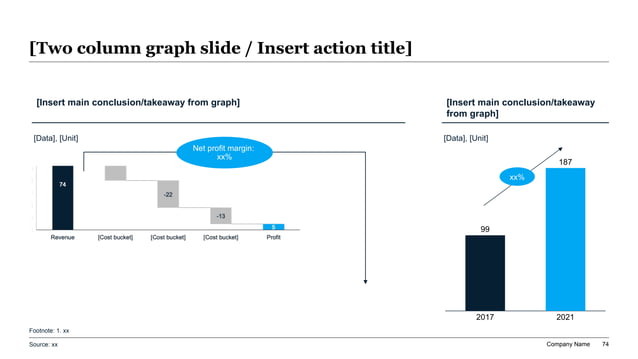
Underwriting Bridge Reference
Action Titles Should Compress The Investment Judgment
Memo decks usually fail in one predictable way: the section labels survive, but the judgment disappears. The slide still says Market, Financials, Diligence, Risks, or Value Creation because those headings came from the memo outline. That is easy to draft, but it does not help the audience decide. A better title tells the reader what to conclude about the market, the financials, or the risk before the chart even gets interpreted.
This matters more in memo-to-deck work than in many other presentation types because the underlying prose can create the illusion that the reasoning is already present elsewhere. It is. But if the slide title does not carry the implication, the audience has to reconstruct the logic from scratch in the meeting. That slows challenge, encourages side conversations, and makes the deck feel less decisive than the memo itself.
The best action titles do three things at once. They state the claim, bound the condition, and imply the decision consequence. Instead of Valuation, say the entry multiple is defendable only if recurring gross profit remains above the current threshold. Instead of Diligence Risks, say customer concentration is manageable if the two largest renewals hold under the revised contract view. Those sentences force clarity and expose weak assumptions early.
Action Title Rewrite Matrix For Investment Memo Slides
The slide title should tell the committee what to think about the page, not just what the page contains.
| Weak Topic Title | Stronger Memo-Deck Action Title | Why The Rewrite Works |
|---|---|---|
| Investment thesis | The asset is attractive because recurring demand and fragmented supply create room for disciplined share gain | It turns a section label into a claim the audience can test |
| Financial performance | Gross-profit durability is stronger than reported EBITDA volatility suggests | It tells the reader what the economics page actually proves |
| Diligence risks | The case still depends on resolving two renewal and one integration risk before final approval | It surfaces what remains open instead of implying closure |
| Valuation | The current price works only if margin recovery arrives inside the first ownership year | It connects the number directly to the assumption that governs it |
| Value creation | Three operational levers can create upside without relying on a replatforming bet | It separates realistic execution from story-level optimism |
| Next steps | Approve the deal within the stated range pending final commercial and lender confirmation | It makes the actual ask explicit and bounded |
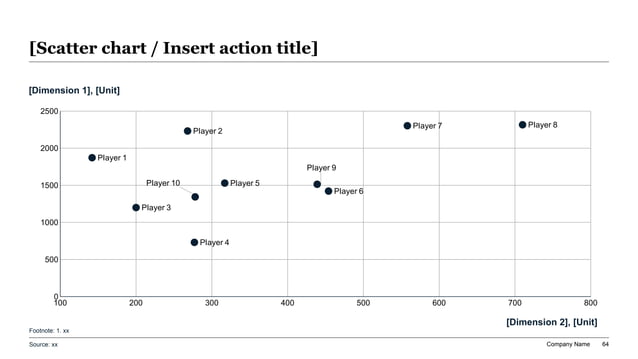
Peer Positioning Reference
XLSlides Resources For Memo, Diligence, And Valuation Workflows
Short Answers For Investment Teams
How is an investment memo presentation different from a private equity IC deck?
An investment memo presentation often starts earlier and is built from the underlying memo itself. It compresses the recommendation, evidence, and open risks into slides for faster reading. A PE IC deck is usually narrower and later-stage, with a more explicit capital approval ask around price, structure, and ownership plan.
How many slides should a memo deck have?
Most serious memo decks work well in roughly 8 to 12 core slides plus appendix. The point is not slide count. The point is whether the recommendation, proof, challenge points, economics, and asks are visible without forcing the audience through the entire memo again.
Should the deck restate every section of the memo?
No. The deck should carry only the material that changes the decision or explains the recommendation quickly. Detailed diligence notes, long historical background, and full supporting tables usually belong in the memo or appendix unless they directly change price, structure, timing, or confidence.
Can AI generate a credible investment memo presentation?
Yes, as a drafting layer. AI is useful for organizing the memo, drafting action titles, proposing a slide sequence, and turning dense prose into a cleaner first draft. The final deck still needs investor judgment on assumptions, disclosure boundaries, legal nuance, and what the audience must challenge in the main flow.
What AI Should Automate In The Memo-To-Deck Workflow
AI should automate the presentation mechanics that consume deal-team time but do not decide the investment. That includes parsing the memo, extracting the repeated themes, clustering evidence into a tighter slide sequence, drafting action-title alternatives, converting long paragraphs into short exhibit-ready bullets, and proposing appendix placement for secondary materials. Those tasks are repetitive, and they often happen late in the process when teams are already under time pressure.
What AI should not own is the approval posture. It cannot decide whether the audience should approve now or wait for another workstream, whether the entry price still clears the risk bar, whether one management answer is evasive, or whether the downside case is understated. Those are precisely the issues that make investment work valuable. When the page is wrong there, the deck becomes dangerous no matter how polished the formatting is.
The right operating model is therefore draft fast and review hard. Use XLSlides to turn the memo, model notes, diligence outputs, and committee comments into a serious first-pass deck with editable PowerPoint-style structure. Then let the deal lead, partner, CFO, or corp dev sponsor tighten the economics, risk framing, and exact decision ask before circulation.
Memo-To-Committee Workflow Roadmap
Final Review Before Sending The Memo Deck
Turn The Memo Into A Serious Deck In XLSlides
Use XLSlides to convert investment memos, model commentary, diligence notes, and committee feedback into an editable memo presentation with action titles, underwriting bridges, appendix structure, and a clearer approval path for serious finance audiences.
Generate Memo Deck