Executive Summary: The Enterprise AI Transformation Playbook
- Enterprise AI decks must be decision documents, not technical tutorials: Board directors and executive leadership teams require economic justification, risk governance, and milestone stage-gates rather than algorithmic jargon or superficial vendor buzzwords.
- Escape 'PoC Purgatory' via disciplined use-case gating: Over 80% of enterprise AI initiatives fail to transition beyond isolated sandbox prototypes because they lack clean data lineage, executive operational sponsorship, and quantifiable P&L ROI metrics.
- The 10/20/70 Rule dictates real-world value realization: As established by leading transformation studies, durable AI returns derive 10% from model selection, 20% from underlying cloud and data architecture, and 70% from operational process re-engineering and human adoption workflows.
- Multi-horizon sequencing balances quick wins with structural moats: Anchor near-term momentum in Horizon 1 assistive productivity, fund Horizon 2 core workflow automation, and strategically architect Horizon 3 autonomous business models.
- Responsible AI governance is a prerequisite for capital deployment: Board Technology and Audit Committees will not release multi-million dollar transformation envelopes without rigorous controls for data privacy, model hallucination blast radiuses, IP indemnity, and EU AI Act / NIST compliance.
- Editable, structured slide architecture wins executive alignment: Senior business reviewers dismiss generic, decorative AI-generated slides; they demand consulting-grade MECE layouts, clear action titles, quantitative exhibits, and explicit decision asks.
The Enterprise AI Dilemma: Moving from Sandbox Experiments to Board-Sanctioned Capital Programs
In the wake of rapid generative AI breakthroughs, virtually every Fortune 1000 enterprise and mid-market corporation initiated dozens of decentralized artificial intelligence experiments. Business unit managers spun up API accounts, functional teams tested departmental co-pilots, and IT departments launched exploratory proof-of-concept (PoC) sandboxes. Yet as organizations approach their second and third budget cycles of AI investment, executive committees and Boards of Directors are demanding tangible evidence: Where is the measurable revenue lift? Where is the permanent SG&A cost-out? What are our unquantified enterprise liabilities?
This inflection point separates vanity experimentation from institutional AI transformation. An executive AI Transformation Roadmap presentation is not a collection of science-fiction aspirations or dry IT backlog tickets. It is a strategic decision document presented by the Chief Information Officer (CIO), Chief Technology Officer (CTO), or Chief Digital & AI Officer (CDAIO) to secure multi-million dollar capital allocations, realign cross-functional operating models, and establish board-level governance over algorithmic risks.
To succeed in the boardroom, the roadmap must translate complex technological capabilities into the universal currency of executive leadership: risk-adjusted economic return, competitive moat defensibility, operational resilience, and compliance readiness. When presenting to a Board Technology or Audit Committee, slide pages must anticipate intense scrutiny from directors who care deeply about capital preservation, intellectual property exposure, and regulatory exposure under evolving global regimes like the EU AI Act and NIST AI Risk Management Framework.
Furthermore, the presentation must bridge the chronic communication gap between engineering leaders and business stakeholders. Engineering teams naturally default to presenting model benchmarks, latency curves, and GPU cluster utilization. Executive directors, conversely, evaluate strategic initiatives through the lens of EBITDA expansion, customer net revenue retention (NRR), balance sheet flexibility, and risk mitigation. A world-class AI transformation deck achieves synthesis: it establishes architectural credibility while ruthlessly focusing on business outcomes and decision governance.
Enterprise AI Maturity Benchmark: Four Stages from Ad-Hoc Experimentation to Autonomous Ecosystem
| Maturity Dimension | Stage 1: Ad-Hoc Experimentation | Stage 2: Operational Point-Solutions | Stage 3: Scaled Enterprise Platform | Stage 4: Autonomous AI-First Ecosystem |
|---|---|---|---|---|
| Strategic Vision & Executive Ownership | Decentralized, grassroots experimentation; no unified corporate strategy; shadow IT credit-card spending by functional managers. | Departmental sponsorship (e.g., Head of Customer Support or Legal); siloed use-case funding; fragmented executive alignment. | Unified enterprise AI strategy owned by CIO/CDAIO; dedicated AI Steering Committee; board-level charter with clear capital envelopes. | AI woven into core corporate identity; CEO and Board treat proprietary AI models and algorithmic workflows as primary competitive moat. |
| Data Architecture & Semantic Layer | Fragmented, unstructured data silos; uncurated corporate documents; absence of centralized metadata, vector stores, or clean lineage. | Domain-specific data pipelines; isolated retrieval-augmented generation (RAG) vector stores; manual extraction and data cleansing. | Modern data stack with unified semantic layer; automated data governance; centralized feature and vector store; real-time streaming pipelines. | Self-healing data fabric; autonomous synthetic data generation; continuous zero-copy data virtualization across multi-cloud ecosystems. |
| Model Orchestration & LLMOps Pipeline | Direct manual API calls to commercial third-party LLMs; hardcoded prompts; zero versioning, regression testing, or fallback routing. | Basic prompt management repositories; rudimentary eval scripts; manual model switching; isolated deployment in development sandboxes. | Institutional LLMOps/MLOps pipeline; automated regression testing; intelligent multi-model routing (commercial vs. open-source); automated eval harness. | Dynamic agentic orchestration; autonomous multi-agent swarms; proprietary fine-tuned SLMs deployed on edge and private cloud. |
| Governance, Security & Risk Controls | No formal AI usage policy; high risk of corporate IP and PII data leakage into public frontier models; unmonitored shadow tools. | Draft corporate acceptable use policy; basic keyword filtering; reactive manual reviews following hallucination incidents. | Formal Responsible AI Framework aligned with NIST/EU AI Act; automated PII redaction; output guardrails; model registry and audit logging. | Continuous automated red-teaming; algorithmic bias monitoring; mathematical explainability gates; real-time compliance reporting to Audit Committee. |
| Value Realization & Economic Impact | Anecdotal individual time savings; unmeasured productivity gains; zero visible P&L impact or balance sheet improvement. | Localized task efficiency (e.g., 20% faster Tier-1 customer ticket resolution); minor software tool consolidation; modest ROI. | Quantified cross-functional value capture; measurable SG&A cost compression; product velocity acceleration; predictable token unit economics. | Structural margin expansion (+300 to +600 bps EBITDA); net-new AI-enabled revenue streams; dynamic algorithmic pricing and operations. |
| Talent, Operating Model & Culture | A few enthusiastic internal champions; broad workforce skepticism or fear of automation; zero formal enablement programs. | Dedicated departmental data scientists working in isolation; ad-hoc prompt engineering lunch-and-learns; uneven adoption. | Centralized Center of Excellence (CoE) with federated business hub-and-spoke embedding; structured prompt/AI fluency programs across enterprise. | Universal AI-native workforce; engineering and business teams co-design agentic workflows; talent evaluated on AI amplification. |
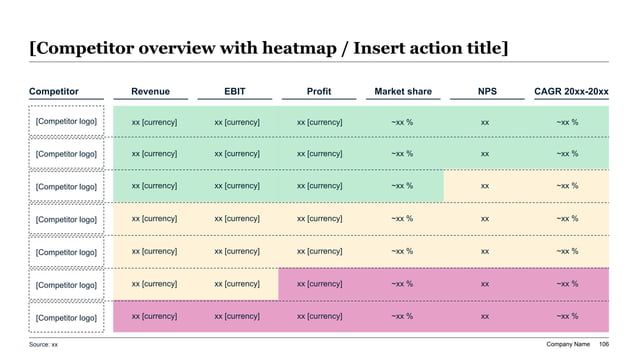
Exhibit 1: Enterprise AI Readiness & Capability Heatmap across Operating Dimensions
Deconstructing the Technical Foundation: Data Modernization, Model Routing, and Token Economics
A foundational failure mode in executive AI presentations is presenting artificial intelligence as an isolated software application rather than an infrastructure dependency stack. Boards and finance committees often assume that deploying generative AI merely requires paying enterprise seat licenses for frontier foundation models. The CIO's roadmap deck must disabuse leadership of this misconception and articulate the four-layer technical architecture required for sustained value creation.
Layer 1: The Modern Enterprise Data Fabric. Generative models are functionally commoditized; proprietary enterprise context is the only durable differentiator. Without clean, permissioned, and deduplicated internal data, even the most capable foundation model will produce generic, hallucinated, or legally hazardous outputs. The roadmap must outline the migration toward a unified semantic layer, automated metadata tagging, role-based access control (RBAC) at the data layer, and high-performance vector indexing. If the enterprise data foundation is fragmented, the roadmap must explicitly allocate Phase 1 capital to data hygiene before promising complex customer-facing autonomous agents.
Layer 2: Model Orchestration and Intelligent Multi-Model Routing. Relying on a single proprietary frontier model creates systemic vendor lock-in, severe operational cost inflation, and business continuity vulnerabilities. An institutional AI architecture leverages an intelligent gateway layer that dynamically routes queries based on task complexity, data sensitivity, and cost parameters. Low-complexity summarization tasks are routed to lightweight open-source Small Language Models (SLMs) running on private enterprise cloud infrastructure at pennies per thousand queries, while high-stakes analytical synthesis is routed to premium frontier models with contractual data isolation and indemnity protections.
Layer 3: Evaluation Harnesses and LLMOps Infrastructure. In enterprise environments, 95% accuracy is functionally a failure. An autonomous contract analysis system that hallucinates on 5% of legal clauses introduces existential corporate liability. The roadmap must demonstrate how the organization is instituting continuous evaluation harnesses ('evals') that benchmark model performance against golden domain-specific test sets prior to production deployment, paired with automated regression monitoring to detect model drift over time.
Layer 4: Token Economics and Total Cost of Ownership (TCO) Containment. AI compute is not a fixed software cost; it is a variable marginal operating expenditure tied to query volume, prompt token density, context window utilization, and inference latency requirements. The presentation must present CFO-grade unit economics: modeling inference token costs, vector retrieval database hosting, data pipeline compute overhead, and fine-tuning cycles against expected labor savings and operational throughput gains.
The 12-Point Technical & Architectural AI Readiness Audit
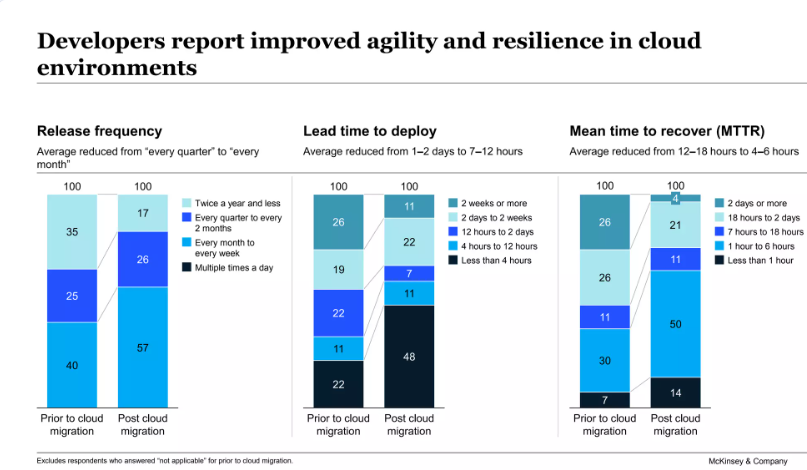
Exhibit 2: Enterprise AI Infrastructure & Cloud Platform Performance
AI Use-Case Prioritization: The 2x2 Economic Value vs. Execution Feasibility Matrix
The single most destructive error in enterprise AI roadmapping is attempting to execute every suggested departmental idea simultaneously. When business units submit dozens of AI proposals—from internal HR chatbots to automated underwriting models—leadership faces severe capital dilution and execution paralysis. The roadmap presentation must introduce a rigorous, objective filtering framework to triage competing demands.
The gold standard for executive prioritization is the two-dimensional Economic Value vs. Execution Feasibility Matrix. Economic Value must be quantified across two distinct pools: operational cost-out (headcount reallocation, external agency spend elimination, cycle-time compression) and revenue acceleration (improved conversion velocity, churn reduction, dynamic pricing capture). Qualitative assertions like 'improved employee morale' or 'enhanced customer delight' should be treated as secondary benefits, not primary capital justification.
Execution Feasibility, conversely, must be evaluated across three uncompromising criteria: Data Readiness (do structured, clean historical datasets already exist?), Algorithmic Risk (what is the operational and reputational blast radius if the model hallucinates or fails?), and Organizational Friction (how deeply does the initiative require frontline workers to fundamentally alter their daily workflow habits?).
By plotting initiatives across these dimensions, the executive deck categorizes use cases into four actionable quadrants: Quick Wins (high value, high feasibility—prioritized for Horizon 1 proof of value), Strategic Transformers (high value, moderate feasibility—allocated substantial engineering resources for Horizon 2), Departmental Experiments (low value, high feasibility—delegated to business units without centralized capital), and Distractions / High-Risk Traps (low value, low feasibility—explicitly killed to preserve focus).
Enterprise AI Use-Case Prioritization Matrix: Front-Office, Back-Office, and Core Operations
| Functional Domain | High-Priority Enterprise Use Case | Target Business Metric & P&L Value Pool | Technical Complexity & Data Architecture Moat | Adoption Horizon & Risk Profile |
|---|---|---|---|---|
| Customer Operations & Support | Tier-1 Autonomous Customer Resolution & Agent Co-Pilot | 35% reduction in average handle time (AHT); $4.2M annual support contractor cost elimination; 8% increase in CSAT. | Moderate complexity; requires bidirectional CRM integration, sanitized knowledge base vector RAG, and strict sentiment guardrails. | Horizon 1 (Months 1–6); Low risk when paired with automatic human-agent escalation triggers upon customer frustration. |
| Corporate Finance & FP&A | Automated Variance Analysis, Rolling Forecast & Board Exhibit Synthesis | 5-day compression in monthly financial close; 60% reduction in manual spreadsheet consolidation; zero reporting errors. | High complexity; demands deterministic arithmetic accuracy, integration with ERP/EPM ledgers, and zero-hallucination validation. | Horizon 2 (Months 6–12); Moderate financial risk requiring dual-key CFO signoff before board distribution. |
| Software Engineering & IT | Enterprise Code Generation, Unit Test Automation & Legacy Modernization | 28% increase in developer pull-request throughput; 40% automated test coverage expansion; faster technical debt retirement. | Low-to-moderate complexity; localized IDE plugins; repository-level context retrieval; automated CI/CD pipeline integration. | Horizon 1 (Months 1–4); Low risk with mandatory human peer review and automated SAST/DAST security scanning. |
| Legal & Procurement | Contract Redlining, Third-Party Paper Analysis & Compliance Extraction | 70% faster vendor contract cycle times; $1.8M external legal counsel savings; real-time identification of unfavorable indemnities. | Moderate-to-high complexity; demands legal domain embeddings, clause-level comparison against standard playbook, and audit trails. | Horizon 2 (Months 6–15); High legal risk; requires human-in-the-loop attorney validation for final signature. |
| Supply Chain & Procurement | Dynamic Supplier Risk Scoring & Autonomous Purchase Order Reconciliation | 1.8% gross procurement spend reduction via automated discount capture; 22% reduction in supply chain stock-out incidents. | High complexity; multi-source external risk data integration (geopolitical, weather, port congestion) combined with internal SAP/Oracle feeds. | Horizon 2 (Months 9–18); Moderate operational risk requiring automated threshold gating for purchase orders over $50k. |
| Commercial Sales & Marketing | Hyper-Personalized Account-Based Marketing (ABM) & RFP Proposal Synthesis | 18% increase in outbound pipeline conversion; 4-day compression in enterprise RFP response turnaround; higher win rates. | Moderate complexity; CRM activity history, competitive win/loss intelligence, and product capability matrix RAG retrieval. | Horizon 1 (Months 3–8); Low risk; sales reps retain final editorial authority before sending proposals to enterprise buyers. |
| Core Product Innovation | Domain-Specific Autonomous AI Agents & Generative Product Workflows | Net-new high-margin ARR stream (+15% revenue expansion); multi-year competitive differentiation and switching cost moat. | Very high complexity; proprietary fine-tuned foundation models, low-latency microservices, multi-tenant security architecture. | Horizon 3 (Months 18–36); High strategic risk; requires board-level product strategy alignment and multi-year R&D capital. |
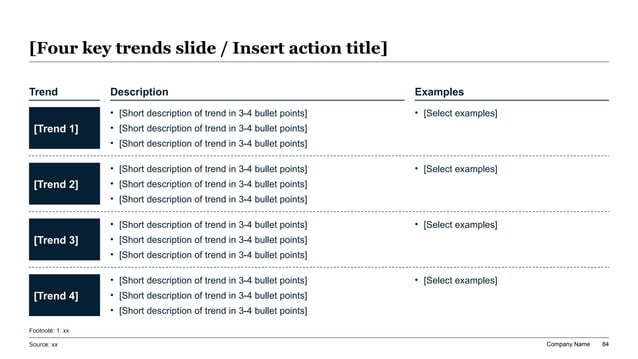
Exhibit 3: Strategic AI Use-Case Prioritization & Capability Adoption Grid
The Three-Horizon AI Roadmap: Sequencing Value Capture from Assistive Tools to Autonomous Ecosystems
A critical responsibility of the Chief Information Officer and Strategy Lead is orchestrating the temporal sequence of the AI transformation. Attempting to leap directly into complex autonomous agent ecosystems without first establishing basic enterprise AI fluency and data plumbing is the primary cause of high-profile corporate AI failures. The presentation must structure execution across three interlocking horizons, adapting the classic McKinsey Three Horizons framework to modern cognitive computing.
Horizon 1: Assistive AI & Functional Productivity (Months 1 to 6). The primary objective of Horizon 1 is building organizational confidence, capturing immediate efficiency gains, and establishing operational baseline metrics. Initiatives in this horizon focus on augmentative tools where humans remain 100% in the loop: developer co-pilots, customer service draft generation, document summarization, and sales RFP outline acceleration. These projects utilize commercial APIs with minimal custom architecture, allowing the enterprise to demonstrate tangible ROI within the first two fiscal quarters. Critically, savings realized in Horizon 1 help self-fund the deeper infrastructure investments required in subsequent phases.
Horizon 2: Systemic Workflow Automation & Process Re-engineering (Months 6 to 18). Horizon 2 transitions the organization from individual task assistance to end-to-end business process redesign. In this horizon, AI systems connect across multiple enterprise software stacks to execute complex, multi-step workflows with exception-based human oversight. Examples include automated invoice-to-cash reconciliation, automated claims adjudication in insurance, dynamic inventory replenishment in retail, and multi-document regulatory filing synthesis. Horizon 2 requires proprietary domain-specific fine-tuning, robust vector databases, automated evaluation harnesses, and formal change management programs to retrain frontline operators.
Horizon 3: Autonomous AI Agents & Transformative Business Models (Months 18 to 36+). Horizon 3 represents the apex of corporate AI maturity: leveraging proprietary algorithmic intelligence to create entirely new business models, autonomous customer interactions, and self-optimizing operational systems. In this horizon, the enterprise deploys autonomous multi-agent networks capable of negotiating supplier contracts within pre-approved parameters, generating personalized synthetic product experiences, or discovering new biochemical formulations. Horizon 3 shifts AI from an internal operational cost-efficiency lever into the primary competitive moat of the corporation, commanding superior market valuation multiples.
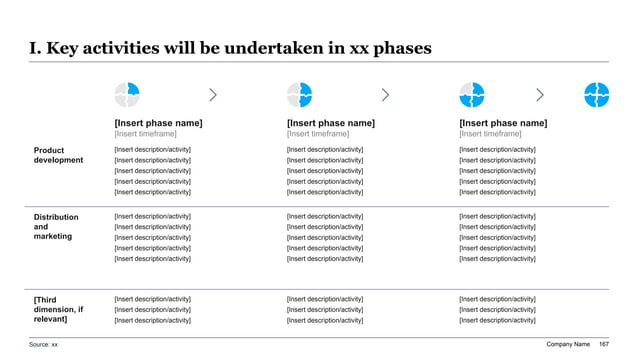
Exhibit 4: The Multi-Horizon Enterprise AI Transformation Roadmap
Responsible AI Governance, Risk Management & Compliance: The 7 Pillars of Enterprise Control
No enterprise AI roadmap presentation will receive board approval without a bulletproof governance and risk management framework. For Board Audit and Risk Committees, the potential liabilities of unmanaged AI—data exfiltration, statutory fines under the EU AI Act, brand destruction from public hallucinations, copyright infringement lawsuits, and systemic algorithmic bias—far outweigh the promise of incremental operational efficiency. The executive deck must present governance not as an innovation blocker, but as an essential commercial enabler.
The roadmap must articulate seven institutional pillars of Responsible AI: First, Data Privacy and Confidentiality: guaranteeing that zero proprietary corporate data, customer PII, or trade secrets are transmitted to public model training loops, enforced via automated API proxy gateways. Second, Model Verification and Hallucination Containment: establishing domain-specific confidence scoring thresholds, citation-backed RAG architectures, and deterministic verification modules that flag low-confidence outputs for human review. Third, Intellectual Property and Copyright Protection: ensuring enterprise indemnification from model vendors, vetting open-source model training datasets, and establishing clean-room code generation policies.
Fourth, Algorithmic Fairness and Non-Discrimination: mandating demographic parity and bias auditing on all models impacting credit, employment, housing, or customer underwriting. Fifth, Human-in-the-Loop Governance: defining explicit operational boundaries where autonomous execution is forbidden and mandatory human sign-off is codified. Sixth, Auditability, Logging and Explainability: preserving full immutable audit logs of user prompts, model parameters, retrieved context chunks, and generated outputs to satisfy regulatory scrutiny and legal discovery demands. Seventh, Cyber Resilience and Adversarial Defense: deploying defenses against prompt injection attacks, model inversion, data poisoning, and unauthorized system access.
To operationalize these pillars, the deck must propose an Enterprise AI Governance Council comprising the CIO, Chief Legal Officer / General Counsel, Chief Risk Officer, Chief Information Security Officer (CISO), and Business Unit Leads. This council holds absolute veto authority over production deployments, ensuring that innovation velocity never outpaces regulatory compliance.
Exhibit 5: Responsible AI Governance Architecture & Enterprise Guardrails
Enterprise AI Risk Taxonomy: Vulnerability Profiles, Impact Severity, and Mitigation Controls
| Risk Category | Vulnerability & Threat Vector | Potential Enterprise Impact | Regulatory & Legal Triggers | Mitigation Architecture & Control Gate |
|---|---|---|---|---|
| Data Leakage & Confidentiality | Employees paste sensitive customer PII, merger plans, or unreleased financials into public third-party LLMs. | Loss of trade secrets, severe regulatory penalties, contractual breach of client confidentiality agreements. | GDPR Art. 83, CCPA, HIPAA, SEC Regulation Fair Disclosure (FD). | Enterprise firewall blocking public consumer AI; mandatory corporate API gateway with automated PII regex tokenization. |
| Hallucination & Factual Drift | Generative model invents non-existent legal precedents, incorrect financial figures, or erroneous engineering tolerances. | Faulty executive decisions, erroneous financial reporting, defective product designs, civil litigation. | SEC Rule 10b-5, Sarbanes-Oxley (SOX) internal financial controls, product liability torts. | Dual-verification RAG architectures; strict temperature settings (0.0); mandatory source attribution citations; human sign-off. |
| Intellectual Property Infringement | Model reproduces copyrighted training code or verbatim literary passages; commercial dispute over generative asset ownership. | Copyright infringement lawsuits, software licensing contamination (GPL copyleft taint), loss of patent protection. | U.S. Copyright Act, EU Copyright Directive, commercial software licensing disputes. | Contractual vendor copyright indemnification; enterprise code scanning tools (e.g., Black Duck); avoidance of unvetted models. |
| Algorithmic Bias & Discrimination | Underwriting, hiring, or pricing algorithms exhibit statistically disparate impact across protected demographic categories. | Regulatory enforcement actions, severe class-action lawsuits, catastrophic brand and reputation destruction. | EU AI Act High-Risk System rules, EEOC employment discrimination guidelines, CFPB Fair Lending regulations. | Pre-deployment statistical parity testing; independent demographic bias audits; continuous production fairness monitoring. |
| Prompt Injection & Cyber Attack | Malicious external inputs manipulate system prompt instructions to bypass security controls or extract underlying database data. | Unauthorized data exfiltration, system hijacking, compromised enterprise applications, reputational damage. | NIST Cybersecurity Framework, ISO/IEC 27001, OWASP Top 10 for Large Language Model Applications. | Input sanitization proxies; delimiter separation; secondary guardrail LLM verification; principle of least privilege API access. |
| Vendor Lock-In & API Instability | Enterprise workflows hardcoded to a single proprietary vendor that alters pricing, suffers outages, or changes model behavior. | Operational paralysis during vendor downtime; massive unexpected compute cost inflation; forced workflow refactoring. | Enterprise Business Continuity & Disaster Recovery (BC/DR) operational mandates. | Decoupled multi-model orchestration layer; local open-source SLM fallbacks; multi-cloud model deployment capability. |
Board & Steering Committee AI Governance: Decision Cadence, Gatekeeping & Capital Allocation
Securing multi-million dollar transformation funding requires establishing a transparent, disciplined governance cadence that provides directors with ongoing oversight without strangling engineering velocity. The roadmap deck must propose a formal three-tier governance hierarchy paired with stage-gated capital tranches.
Tier 1: The Board Technology & Audit Committee (Quarterly Review). The board's role is not to inspect code or select foundation models; it is to review risk exposure, audit compliance milestones, approve enterprise capital tranches, and evaluate strategic competitive impact. The quarterly board packet should be exactly 5 to 7 executive slides: high-level roadmap status, realized P&L value capture vs. plan, compute budget variance, and an exception-based risk/governance scorecard.
Tier 2: The Enterprise AI Steering Committee (Monthly Review). Co-chaired by the CIO/CDAIO and a senior business executive (e.g., Chief Operating Officer or CFO), this body governs the active portfolio of AI initiatives. The steering committee reviews project stage-gate progression, allocates engineering capacity, resolves cross-functional priority disputes, and authoritatively terminates underperforming initiatives that fail their feasibility benchmarks.
Tier 3: The Transformation Office & Working Groups (Bi-Weekly Sprint Cadence). The operational engine of the rollout, led by AI Product Managers and Lead Enterprise Architects. They monitor daily sprint velocity, evaluate model performance metrics, manage cloud infrastructure spend, and lead frontline change management and training initiatives across target business units.
Stage-Gate Capital Tranche Structure: To protect enterprise capital, funding must be disbursed in three disciplined gates rather than a single lump-sum check. Gate 1 (Discovery & Feasibility: $100k–$250k): 6-week sprint to validate data availability, establish baseline accuracy, and confirm technical viability. Gate 2 (Piloting & Human-in-the-Loop Validation: $500k–$1.5M): 12-week pilot deployed to a controlled internal user group to measure real-world productivity and defect rates. Gate 3 (Full Enterprise Rollout: $2M–$10M+): Production scaling, enterprise system integration, and frontline enablement only unlocked after Gate 2 achieves its audited ROI targets.
Board AI Presentation Gatekeeper: The 10-Question Test Before Submitting to Directors
Total Cost of Ownership (TCO) & Value Realization: The CFO-Grade Economic Model
In enterprise boardrooms, the Chief Financial Officer is frequently the most skeptical reviewer of AI initiatives. CFOs have witnessed decades of enterprise software cycles—from ERP rollouts to Big Data lakes—that promised revolutionary productivity but delivered massive budget overruns and elusive returns. To win CFO endorsement, the AI transformation presentation must present a rigorous Total Cost of Ownership (TCO) model that accounts for all direct, indirect, and ongoing operational expenditures.
CapEx vs. OpEx Transformation Dynamics: Traditional software investments feature high upfront capital expenditure followed by predictable, flat annual maintenance fees. Enterprise AI, by contrast, introduces highly variable operational expenditure. Every query processed by an LLM incurs marginal inference costs, every vector embedding stored requires memory infrastructure, and every model requires ongoing domain evaluation and fine-tuning. The financial exhibit must model these cost categories across multiple adoption curves: conservative, base, and accelerated.
The Six Cost Buckets of Enterprise AI: First, Upfront Engineering & Architecture (internal engineering FTEs, external advisory fees, initial pipeline build). Second, Data Curation & Infrastructure Modernization (data cleansing, ETL pipeline re-engineering, vector database licensing). Third, Model Compute & Inference Costs (commercial API token charges, private cloud GPU instance reservations, dedicated endpoint hosting). Fourth, Evaluation, Tooling & Observability (eval harness subscriptions, security proxies, output guardrail software). Fifth, Frontline Enablement & Change Management (employee training, workflow redesign, productivity measurement). Sixth, Legal, Compliance & Audit (third-party bias audits, regulatory filing preparation, legal indemnity reviews).
Value Realization Metrics and Hurdle Rates: To prove commercial viability, the deck should benchmark projects against corporate internal rate of return (IRR) hurdle rates and payback periods. A healthy enterprise AI portfolio should target a blended payback period of 14 to 18 months, with Horizon 1 initiatives breaking even within 6 to 9 months to establish self-funding financial momentum.
Institutional AI Transformation Roadmap Deck Prompt Recipe for XLSlides
Act as a Senior Partner in McKinsey & Company's QuantumBlack AI Practice and a Chief Information Officer advising the Board of Directors and Executive Leadership Team of an enterprise Fortune 500 corporation. Generate a comprehensive, 12-slide executive AI Transformation Roadmap presentation formatted for board review. Structure the deck following Pyramid Principle logic with action titles on every page. Include: (1) Executive Summary highlighting business rationale, capital envelope ($12M over 24 months), and expected P&L return ($38M run-rate EBITDA lift by Year 3); (2) Enterprise AI Maturity Benchmark evaluating current state (Stage 1.8) vs. target state (Stage 3.5); (3) Four-Layer Technical Architecture (Data Fabric, Multi-Model Routing, Eval Harness, Token FinOps); (4) 2x2 Use-Case Prioritization Matrix evaluating 8 core initiatives across Front-Office, Back-Office, and Products; (5) Three-Horizon Execution Roadmap (Horizon 1: Efficiency & Assistive Tools, Horizon 2: Workflow Automation & Process Re-engineering, Horizon 3: Autonomous Agents & New Business Models); (6) Responsible AI Governance Framework detailing 7 control pillars, EU AI Act compliance, and Audit Committee oversight; (7) Total Cost of Ownership & Economic Model comparing CapEx, variable token OpEx, and Net Present Value (NPV); and (8) Stage-Gated Board Decision Asks with explicit Phase 1 capital release conditions. Ensure tone is objective, executive, and mathematically grounded, avoiding generic AI hype or unquantified assertions.
Frequently Asked Questions: Executive AI Transformation Roadmaps
How long should an executive AI transformation roadmap presentation be for a Board of Directors meeting?
For a formal Board of Directors meeting, the primary presentation should be between 8 and 12 slides, designed for a 20-minute executive presentation followed by 25 minutes of strategic discussion. Additional architectural diagrams, detailed use-case scoring rubrics, vendor comparisons, and technical benchmark evals should be placed in an organized appendix of 15 to 25 slides for reference during Q&A.
How should a CIO address the build versus buy decision in an AI transformation deck?
The presentation should establish a clear decision principle: 'Buy commodity capabilities, configure domain workflows, build proprietary differentiators.' For standard productivity tools (email summarization, meeting intelligence, standard coding co-pilots), the enterprise should buy off-the-shelf commercial software. For proprietary core workflows that touch unique enterprise data and form the company's competitive advantage (underwriting algorithms, dynamic pricing, proprietary customer recommendations), the enterprise must build and own the orchestration and data layers.
What is the best way to present model hallucination risks to an executive board?
Do not minimize hallucination as a minor technical glitch. Present it as an engineering constraint with quantified operational boundaries. Frame model accuracy around specific use cases: explain that deterministic financial and legal tasks utilize low-temperature models paired with strict RAG validation, citation checks, and mandatory human sign-off, whereas creative ideation or drafting tasks operate under broader tolerance thresholds. Show the board the exact automated guardrail architecture that halts ungrounded outputs before they reach end users.
How should an enterprise AI roadmap account for the EU AI Act and emerging global regulations?
Incorporate a dedicated slide mapping enterprise use cases directly against the EU AI Act risk tiers: Unacceptable Risk (banned practices), High-Risk (systems impacting credit, employment, critical infrastructure requiring formal conformity assessments and human oversight), Specific Transparency Risk (AI chatbots requiring clear user disclosure), and Minimal Risk (standard internal productivity tools). Demonstrating proactive regulatory classification builds immense trust with Board Audit and Risk Committees.
Why do so many enterprise AI initiatives stall in 'PoC Purgatory', and how does this roadmap solve it?
Initiatives stall because sandboxes operate on small, clean datasets without legacy system integration, authentication, data governance, or frontline workflow adoption. This roadmap solves PoC purgatory by introducing mandatory stage-gate funding: an initiative cannot receive Phase 2 scaling capital without an audited enterprise data pipeline, validated human-in-the-loop operating procedures, and a signed business unit sponsor committed to capturing the P&L savings.
What role does XLSlides play in an enterprise AI transformation workflow?
XLSlides bridges the critical gap between executive strategy and presentation execution. While generic consumer AI tools produce decorative, bullet-heavy slides that boards dismiss, XLSlides generates consultant-grade, structured PowerPoint presentations featuring MECE narrative flow, full-sentence action titles, decision-ready data tables, and editable layouts. Strategy teams and executives use XLSlides to rapidly draft board decks, steering committee updates, and business cases that survive rigorous boardroom review.
Build Board-Ready Enterprise AI Transformation Decks with XLSlides
Turn complex AI architectures, multi-horizon roadmaps, and governance frameworks into clean, consultant-grade presentations. XLSlides generates editable, structured PowerPoint decks with executive action titles, MECE logic, and decision clarity.
Methodology And Sources
- The State of AI: How Organizations Are Rewiring for Value Realization(McKinsey & Company (QuantumBlack AI) • 2024)
Global enterprise empirical research demonstrating that top-performing AI organizations allocate capital across strategic workflow reinvention rather than isolated point-solution experiments.
- Where's the Value in AI? The Enterprise Playbook for Scaled Adoption(Boston Consulting Group (BCG X) • 2024)
Executive framework establishing the 10/20/70 rule of AI transformation: 10% model algorithms, 20% technology architecture, and 70% business process and people transformation.
- Artificial Intelligence Risk Management Framework (AI RMF 1.0)(National Institute of Standards and Technology (NIST) • 2023)
Authoritative institutional guidance outlining the Govern, Map, Measure, and Manage functions for mitigating enterprise algorithmic risk, bias, hallucination, and data leakage.
- Artificial Intelligence Act (Regulation EU 2024/1689)(European Parliament & Council of the European Union • 2024)
Binding statutory framework establishing risk-based tiers (Unacceptable, High-Risk, Transparency, Minimal) and rigorous compliance gates for commercial AI systems.
- Building the AI-Powered Organization: Technology Isn't the Biggest Challenge(Harvard Business Review • 2019)
Seminal executive analysis detailing why cultural inertia, hub-and-spoke operating models, and change management dictate enterprise AI ROI over model selection.