XLSlides
The fight to obtain the claims documents
On January the seventeenth, 2008, Florida's insurance commissioner did something almost unheard of. He suspended the licence of one of America's biggest insurers to write new business in his state. The company was Allstate. "The Good Hands People." Its offence? It had not handed over documents the state had subpoenaed. Among the files in the fight was a set of slides, written more than a decade earlier, by McKinsey and Company.
One of those slides played on Allstate's famous slogan. Its title read: "Good Hands, or Boxing Gloves." Within a day, an appeals court put the suspension on hold. But the slides were about to become very public.
The good hands
Allstate was founded in 1931, by the retailer Sears, Roebuck. By the mid-2000s, it insured about one in every eight homes in America, and one in every nine cars. And for decades, its advertising made a simple promise: "You're in good hands."
Source context: [1]
The business model
So how does an insurer make money? Customers pay premiums up front. Claims are paid out later. What's left, after claims and running costs, is underwriting profit. And in between, the insurer invests the money it's holding. Warren Buffett calls this "float": money that isn't yours, but that you get to invest. So every claim dollar paid less, or paid later, is worth something.
The number that tracks it is the loss ratio: how many cents of each premium dollar go back out as claims.
Enter McKinsey
In 1992, the year Hurricane Andrew hit Florida, Allstate's property and casualty business paid out about eighty-seven cents in claims for every premium dollar. That September, according to records in at least six civil court cases, Allstate hired McKinsey. The work became a project called Claim Core Process Redesign. Over the 1990s, McKinsey produced about thirteen thousand pages of documents for Allstate, including PowerPoint slides.
Allstate later described the change simply: in the early 1990s, it had redesigned its claims practices, to handle claims more efficiently and serve customers better.
Source context: [1]
The slides
For years, the slides stayed sealed. Then, on May the twelfth, 2005, in a courtroom in Lexington, Kentucky, a lawyer for an injured couple showed them at a hearing. One slide was titled "Good Hands, or Boxing Gloves." According to Bloomberg's account of the videotaped hearing, the advice went like this: make a low first offer. If the claimant accepts, treat them with good hands. If they protest, or hire a lawyer, fight back.
Another slide showed an alligator, with the caption "Sit and Wait." It described how delay could discourage claimants. And one was titled "Zero-Sum Economic Game."
Source context: [1]
The machine
Another slide, quoted in a book by trial lawyers and in a 2007 consumer group report, warned that some medical providers, plaintiff attorneys and claimants would lose out. "Allstate gains," it said. "Others must lose." A key tool was software called Colossus, sold by Computer Sciences Corporation. It scored injury claims, including pain and suffering. The Consumer Federation of America quoted the seller's own marketing: it could reduce the size of bodily injury claims by up to twenty percent.
A former Allstate adjuster told Bloomberg that at staff meetings, managers wanted them to help the stock price, by keeping claims down.
Measure the claim, not just the payout
- 01Premium received
An insurer accepts a contractual obligation before any claim occurs.
- 02Claim evaluated
Evidence, coverage, valuation and a claimant’s circumstances must be assessed.
- 03Outcome tested
Cost, speed, fairness and appeal outcomes belong in the same review.
Follow the money
Did it work? In 1997, Allstate's chief executive told reporters that the new process had reduced payments and increased profit. "The leverage," he said, "is really on the claims side." Allstate's own figures, presented to investors in 2007, showed what it paid on the average injury claim falling by about twenty-one percent from 1993 to 1996. Across the industry, it fell about six.
From 1987 to 1996, Allstate paid out seventy-three cents of each premium dollar in claims. From 1997 to 2006, fifty-nine cents. Storms make that number jump around, year by year. But the trend was clear. And profit? It rose from about two billion dollars in 1996, to nearly five billion in 2006.
Where the money went
Where did it go? In 2007, Allstate's finance chief told investors that since 1995 it had paid six point six billion dollars in dividends, and spent thirteen point seven billion buying back its own shares. Its stock market value had grown from twelve billion dollars to forty. And McKinsey? We could find no public figure for what it was paid.
The fight for the documents
As lawsuits multiplied, lawyers kept asking for the slides. Allstate refused, saying they contained trade secrets and would reveal its trial strategy. In 2004, a court in Indiana fined it ten thousand dollars for not handing them over. In September 2007, a judge in Jackson County, Missouri, held Allstate in contempt, and fined it twenty-five thousand dollars a day.
That November, Missouri's Supreme Court ordered the documents handed over. Then came Florida, and the suspension.
The reckoning
In April 2008, Allstate changed course. It posted around one hundred and fifty thousand pages of claims documents online. Allstate said its critics had used snippets, taken out of context. That July, the Missouri case settled on confidential terms. The judge lifted the contempt order, and more than seven million dollars in fines were wiped away.
In 2010, after an eighteen-month investigation, forty-five states settled with Allstate over Colossus. It paid ten million dollars, and agreed to tell claimants when the software might be used. Regulators found Allstate had not tuned the software consistently. But they said they found no systemic underpayment of injury claims. No one was charged with a crime. Allstate has said its claims processes are absolutely sound. McKinsey does not discuss its client work.
THE SEQUENCE
A timeline of the case
Claims redesign begins
The documentary traces the consulting relationship to the early 1990s. [1]
Slides shown in court
Civil litigation brought parts of the claims documents into public view. [1]
Florida suspension
A document dispute triggered a suspension that was promptly stayed. [5]
Missouri case settles
The contempt order and accumulated fines were lifted. [3]
Colossus settlement
States agreed on payment and process changes; regulators reported no systemic underpayment. [2]
The loss ratio is a starting point, not a verdict
An insurer’s loss ratio compares claims costs with premiums. A lower ratio can support underwriting profitability, but its interpretation depends on the business and period being measured. Premium rates, the mix of risks, claims frequency, severity, catastrophes and reserve changes can all affect it. A chart showing the ratio falling does not establish why it fell.
That distinction is central to this case. Critics argued that the claims programme favoured the insurer at the expense of claimants. Allstate defended its practices and challenged how the documents were presented. The article needs to examine the arguments and evidence without treating an aggregate financial trend as proof about every individual claim.
A useful analysis therefore pairs financial measures with operational and customer measures. How long did comparable claims take to settle? How often did an appeal change the result? Were similar injuries evaluated consistently? How many disputes reflected genuine uncertainty in the evidence rather than a process problem? Those questions require more than an annual report.
Define fair process before measuring efficiency
An insurer has a legitimate interest in investigating claims, detecting fraud and paying the amount owed. A claimant has a legitimate interest in a timely, accurate and understandable decision. The operating model should explain how both interests are protected. Calling the interaction a negotiation does not remove the contractual and regulatory duties involved.
For a transformation team, the baseline should include error rates, time to resolution, complaints and the quality of explanations. Savings should then be evaluated alongside those outcomes. A process that reduces administration while preserving accurate payment is different from one that simply makes it harder for a claimant to obtain a justified amount.
| Measure | Why it matters | Interpretation limit |
|---|---|---|
| Cost per claim | Shows administrative efficiency | May omit costs shifted to customers |
| Time to settlement | Tests responsiveness | Complexity and disputed evidence matter |
| Appeal reversal rate | Can reveal decision quality problems | Reversals need case-level review |
| Loss ratio | Connects claims and premiums | Does not prove fairness or unfairness |
The proposed measures are an analytical framework, not a claim that these historical data are available. A customer-experience presentation should make missing evidence visible instead of substituting a convenient financial proxy.
Decision-support software still needs judgment
Software can improve consistency by applying the same framework across many claims. It can also reproduce a flawed calibration at scale. The key questions concern the inputs, configuration, permitted overrides and the process for reviewing unusual cases. Buying a standard product does not settle how it is used.
The 2010 multistate Colossus settlement is important precisely because its account contains both criticism and limits. The reporting describes inconsistent tuning and required changes, while quoting the regulator’s statement that systemic underpayment was not found. Omitting either part would leave readers with a different impression of the outcome.
For a current programme, an audit should compare similar cases across offices and versions of the system. Reviewers should be able to explain why two cases differ. Staff should know when a model’s output is advisory and how to document an override. A customer should receive an intelligible explanation rather than an unexplained reference to the software.
An illustrative metric that improves while service worsens
Consider a fictional claims operation that lowers its average administrative cost from 100 units to 90. If customers now spend substantially more time supplying repeated documents and the appeal queue grows, the original cost metric may describe only a transfer of work. A complete review would ask whether total effort and time to fair resolution improved.
Conversely, an increase in investigation cost may be justified if it reduces serious errors or detects fraud accurately. The direction of one metric is not a definition of success. The decision requires a clear objective and evidence about the effects on both the insurer and the claimant.
These invented numbers are not Allstate’s results. They are a practical exercise for deciding which measures belong beside an efficiency claim. The same issue appears in the ICE detention-cost case, where a cheaper line item needs to be evaluated against mandatory service and welfare standards.
Internal language can become the public description
Consulting teams often use short phrases to make a point memorable. The Allstate document controversy shows how that language can acquire a much wider audience. A slide written for an internal discussion may later be read by customers, regulators, journalists or a court. The surrounding meeting context may be unavailable.
The practical response is not to make every slide vague. It is to state the legitimate objective precisely. If the goal is fair, consistent and efficient claims handling, explain the safeguards and the behaviour expected from staff. A slogan that can be understood as hostility to customers may undermine the programme even where the team believes its substantive advice is defensible.
During presentation review, ask whether a person affected by the recommendation could understand what the slide proposes and why. Check the title, the chart definition and the source note. Read the page without the presenter’s explanation, because that may be how the page is eventually encountered.
A disclosure dispute has its own chronology
Document access was a major part of the case’s public history. That story needs to show both the sanctions imposed and their later disposition. Reporting an accumulated contempt fine without its subsequent lifting would present an incomplete legal outcome. Likewise, a temporary suspension and the prompt court stay are different events in the sequence.
This discipline applies to the sources themselves. Consumer advocates, trial lawyers, companies and regulators may describe the same documents differently. Identify the role of the source so readers can assess the claim. A consumer report can be valuable evidence of a critique without becoming a court finding.
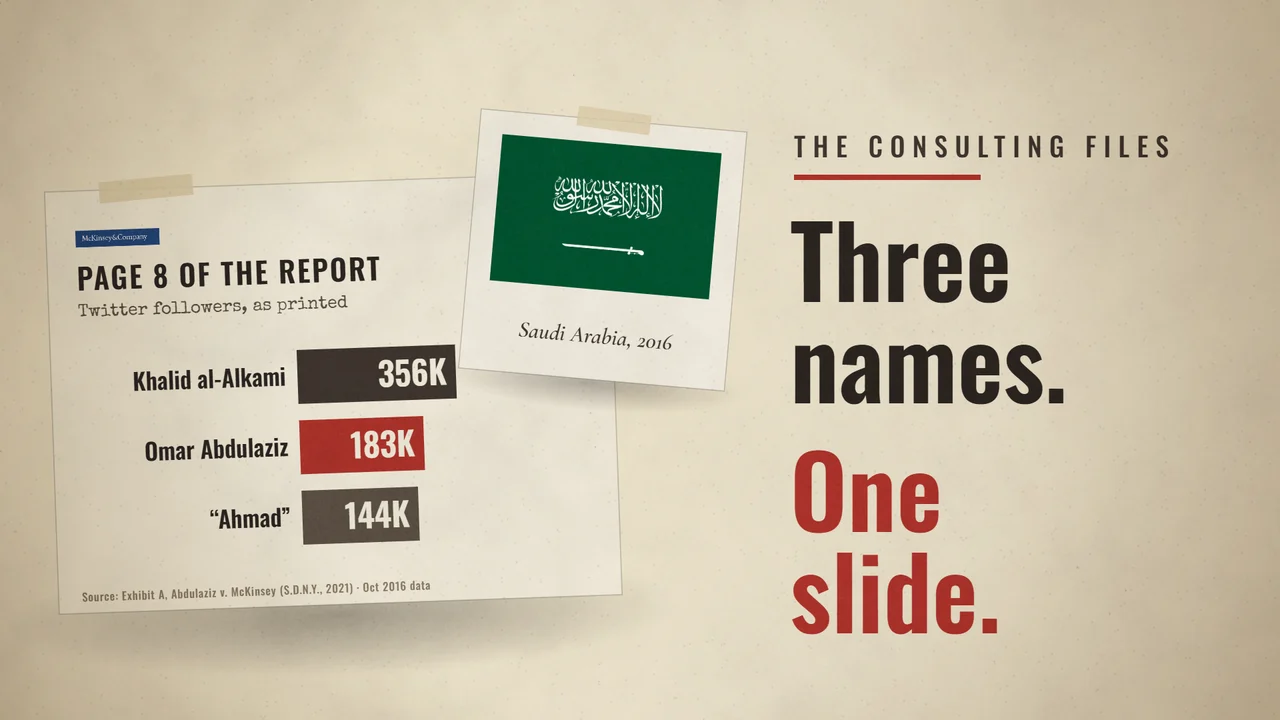
The Saudi report case offers another example of why later procedural outcomes belong beside the original allegation. The quality of an investigative article depends on the whole sequence, not only the most dramatic moment.
The better transformation brief
A defensible claims-transformation brief would define accurate payment, timely resolution, consistent handling and proportionate investigation as explicit outcomes. It would specify the financial measures, but also the limits that keep an efficiency target from displacing the customer obligation. Independent sampling would test whether the results match the stated purpose.
The final executive summary should show where costs improved, where customer outcomes improved and where the evidence is inconclusive. The recommendation should name an owner for unresolved problems. That is a more useful management document than a page celebrating a lower ratio without explaining what changed underneath it.
TAKE IT INTO THE NEXT MEETING
Three practical lessons
Pair savings with service evidence
Track claim accuracy, time to fair payment, complaints and appeal reversals alongside the loss ratio. A single financial metric cannot tell the whole customer story.
Audit decision-support software
Document how a model is calibrated and how staff may override it. Consistent use and independent review matter even when the software is commercially standard.
Write for the affected customer
Use language that explains fair process. A short internal slogan can become the public description of an entire programme years later.
Questions about the case
What were the Allstate McKinsey slides?
They were part of the consulting-era claims documentation discussed in civil proceedings and subsequent reporting. Critics and Allstate disputed their meaning and context. The article distinguishes those interpretations from regulatory findings.
Did the 2010 investigation establish systemic underpayment?
The reported regulator statement said it found no systemic underpayment. The settlement nevertheless addressed inconsistent software tuning and required process changes. Both parts belong in an accurate account.
Does a falling loss ratio prove claims were unfairly reduced?
No. Loss ratios change with pricing, claims frequency, severity, catastrophes, business mix and reserving. Claims fairness requires claim-level evidence and a comparison of like-for-like outcomes.
THE EVIDENCE TRAIL
Sources & editorial notes
Adapted from the original XLSlides documentary, with additional analysis. Published 29 October 2026. Sources have different roles: primary records, investigative reporting and the positions of affected parties.
- Consumer Federation of America: Allstate report ↗The consumer group’s analysis and interpretation, not a court finding.
- Insurance Journal: 2010 Colossus settlement ↗The multistate settlement and regulator statement on systemic underpayment.
- Insurance Journal: Missouri contempt fines dismissed ↗The later outcome of the document-disclosure dispute.
- Allstate investor relations: SEC filings ↗Company financial reporting archive; ratios require consistent periods and definitions.
- Insurance Journal: Allstate’s disputed-records settlement ↗The disclosure dispute and Allstate’s response to critics.
Image credits & licences
Original illustrations and typography: XLSlides. Documentary stills have been resized and converted to WebP for this article. Underlying images retain the credits supplied with the episode.
- McKinsey logo: public domain
- Warren Buffett: Mark Hirschey, CC BY-SA 2.0
- All other images are drawn illustrations; slide layouts are illustrative (titles as reported)
FROM EVIDENCE TO A RECOMMENDATION
Make the reasoning visible.
Use clear action titles, sourced exhibits and an explicit decision. XLSlides helps turn your analysis into an editable presentation; the evidence and judgment remain yours to verify.
Build a case-study presentation