Nuclear Fusion Industry Impact Presentation Template

Stop wasting hours on manual formatting. Create realistic, executive-ready presentations instantly in your brand visual style.

Fusion market timing, technology readiness, and opportunity matrix slides
Power economics, capital intensity, supply chain, and policy KPI dashboards
Commercialization, partnership, risk, and phased deployment roadmap visuals

1What a Nuclear Fusion Industry Impact Deck Needs to Prove

A nuclear fusion industry impact presentation should prove that the opportunity is being assessed through commercial milestones, not only scientific aspiration. Leaders need to understand where fusion technology stands, which engineering barriers remain, what value-chain opportunities may emerge before utility-scale plants, and what evidence would shift fusion from long-term option to investable platform. The deck should connect technical readiness to market timing, capital requirements, supply chain constraints, regulatory path, customer demand, and partnership strategy. It should also avoid claiming near-term certainty where commercialization remains uncertain. This gives fusion founders, energy investors, utilities, industrial customers, policy teams, supply chain partners, corporate strategists, climate-tech leaders, boards, PMOs, and consultants enough evidence to assess technology maturity, market attractiveness, cost trajectory, policy dependency, capital intensity, partnership readiness, and commercialization sequencing. The narrative should also define milestone owners, readiness gates, funding needs, regulatory evidence, and partnership checkpoints for each rollout wave and investment decision clearly.
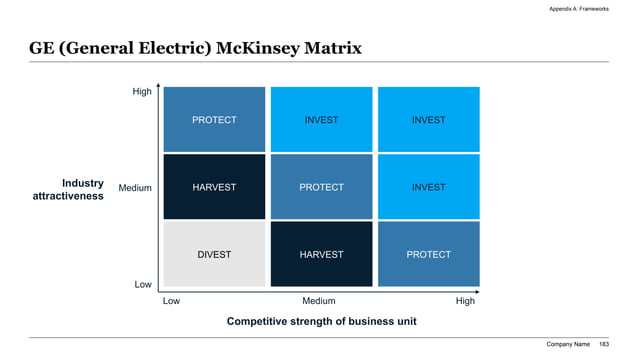
Nuclear fusion industry impact slide with a 3x3 attractiveness matrix ranking value-chain opportunities by competitive strength and market potential.
Template Design LayoutNuclear Fusion Industry Impact Presentation Template

2Who This Template Is Built For

This template is built for teams that need to explain fusion industry impact in a way investors, boards, partners, and policy stakeholders can evaluate. Typical users include fusion startups, advanced energy companies, climate-tech founders, energy investors, infrastructure funds, corporate venture teams, utilities, industrial energy buyers, government agencies, economic development groups, and strategy consultants. It is useful when the conversation needs to move beyond a technology overview and address commercialization timing, market segments, infrastructure requirements, financing, supply chain readiness, and policy support. The audience usually wants to know where the opportunity is credible, what must be proven next, and how to stage capital. This gives fusion founders, energy investors, utilities, industrial customers, policy teams, supply chain partners, corporate strategists, climate-tech leaders, boards, PMOs, and consultants enough evidence to assess technology maturity, market attractiveness, cost trajectory, policy dependency, capital intensity, partnership readiness, and commercialization sequencing. The narrative should also define milestone owners, readiness gates, funding needs, regulatory evidence, and partnership checkpoints for each rollout wave.

3Technology Readiness and Engineering Milestones

The technology readiness section should translate fusion progress into milestones that non-specialist leaders can understand. It may cover confinement approach, plasma performance, net energy targets, materials durability, tritium or fuel-cycle considerations, magnets, heat extraction, plant availability, safety case, maintainability, and grid integration requirements. The deck should distinguish laboratory achievement, integrated system demonstration, pilot plant readiness, first commercial plant, and repeatable deployment. It should also identify which milestones create commercial credibility and which still require scientific or engineering validation. This framing prevents the presentation from treating a breakthrough headline as equivalent to deployable infrastructure. This gives fusion founders, energy investors, utilities, industrial customers, policy teams, supply chain partners, corporate strategists, climate-tech leaders, boards, PMOs, and consultants enough evidence to assess technology maturity, market attractiveness, cost trajectory, policy dependency, capital intensity, partnership readiness, and commercialization sequencing. The narrative should also define milestone owners, readiness gates, funding needs, regulatory evidence, and partnership checkpoints for each rollout wave.

4Market Timing and Demand Scenarios

The market timing section should show how fusion demand may develop under different energy-system scenarios. Useful inputs include electricity demand growth, decarbonization targets, industrial heat needs, grid reliability concerns, renewable integration, firm clean power demand, hydrogen production, data center load, and policy incentives. The deck should compare near-term markets for technology components, services, and demonstration partnerships with longer-term markets for commercial power plants. Scenarios can show conservative, base, and accelerated adoption paths with trigger milestones. A credible impact story avoids a single forecast and shows which evidence would change timing, customer interest, or capital allocation. This gives fusion founders, energy investors, utilities, industrial customers, policy teams, supply chain partners, corporate strategists, climate-tech leaders, boards, PMOs, and consultants enough evidence to assess technology maturity, market attractiveness, cost trajectory, policy dependency, capital intensity, partnership readiness, and commercialization sequencing. The narrative should also define milestone owners, readiness gates, funding needs, regulatory evidence, and partnership checkpoints for each rollout wave.

5Value Chain Opportunity Matrix

Fusion industry impact is broader than the first commercial plant, so the deck should map value-chain opportunities. Relevant areas may include superconducting magnets, power electronics, advanced materials, vacuum systems, robotics, diagnostics, fuel handling, simulation software, licensing support, construction, thermal systems, grid interconnection, and operations services. A 3x3 matrix can compare industry attractiveness against competitive strength to identify where to invest, partner, monitor, or avoid. This is useful for investors and corporates evaluating whether to back a fusion developer, supplier, infrastructure partner, or enabling technology. The matrix should make assumptions explicit so the opportunity ranking does not look arbitrary. This gives fusion founders, energy investors, utilities, industrial customers, policy teams, supply chain partners, corporate strategists, climate-tech leaders, boards, PMOs, and consultants enough evidence to assess technology maturity, market attractiveness, cost trajectory, policy dependency, capital intensity, partnership readiness, and commercialization sequencing. The narrative should also define milestone owners, readiness gates, funding needs, regulatory evidence, and partnership checkpoints for each rollout wave.

6Economics, Capital Intensity, and Business Model

The economics section should define what must become true for fusion to compete. It should cover capex, plant utilization, construction duration, financing cost, operating cost, maintenance model, component replacement, fuel-cycle assumptions, grid revenue, power purchase agreements, policy support, and learning-curve potential. It should also show how business models may evolve from research grants and strategic partnerships to demonstration projects, equipment supply, licensing, project development, or power sales. Finance audiences will want sensitivity ranges rather than a single cost claim. The goal is to connect commercialization ambition to credible capital staging and measurable de-risking events. This gives fusion founders, energy investors, utilities, industrial customers, policy teams, supply chain partners, corporate strategists, climate-tech leaders, boards, PMOs, and consultants enough evidence to assess technology maturity, market attractiveness, cost trajectory, policy dependency, capital intensity, partnership readiness, and commercialization sequencing. The narrative should also define milestone owners, readiness gates, funding needs, regulatory evidence, and partnership checkpoints for each rollout wave.

7Policy, Regulation, and Public-Sector Role

Fusion commercialization will depend partly on policy and public-sector support, so the deck should show the regulatory and institutional environment clearly. It may cover licensing pathways, safety case, environmental review, grid connection, public funding, research partnerships, export controls, site selection, workforce development, and energy security objectives. The presentation should distinguish between support that accelerates innovation and requirements that create project risk. Policy pages can also show where governments may fund test facilities, supply chain capabilities, demonstration plants, or demand commitments. A strong deck explains how policy affects timing and bankability without assuming subsidy support is unlimited. This gives fusion founders, energy investors, utilities, industrial customers, policy teams, supply chain partners, corporate strategists, climate-tech leaders, boards, PMOs, and consultants enough evidence to assess technology maturity, market attractiveness, cost trajectory, policy dependency, capital intensity, partnership readiness, and commercialization sequencing. The narrative should also define milestone owners, readiness gates, funding needs, regulatory evidence, and partnership checkpoints for each rollout wave.

8Supply Chain, Partnerships, and Ecosystem Readiness

The supply chain section should identify which capabilities must scale before fusion can become an industry. It should cover specialized materials, high-field magnets, precision manufacturing, advanced controls, robotics, construction partners, engineering firms, grid operators, fuel-cycle suppliers, academic labs, national laboratories, and technology vendors. Partnership pages should explain which capabilities are core, which should be outsourced, and which require strategic alliances or public-private collaboration. The deck should also discuss bottlenecks, talent shortages, qualification standards, and long-lead components. This helps leaders see fusion as an ecosystem development challenge rather than a single-company technical project. This gives fusion founders, energy investors, utilities, industrial customers, policy teams, supply chain partners, corporate strategists, climate-tech leaders, boards, PMOs, and consultants enough evidence to assess technology maturity, market attractiveness, cost trajectory, policy dependency, capital intensity, partnership readiness, and commercialization sequencing. The narrative should also define milestone owners, readiness gates, funding needs, regulatory evidence, and partnership checkpoints for each rollout wave.

9Risk Register and Decision Gates

The risk section should be explicit about technical, commercial, regulatory, financing, supply chain, and execution uncertainty. Common risks include missed performance milestones, materials degradation, high capex, construction delays, weak policy support, licensing uncertainty, supply shortages, grid integration issues, talent constraints, customer hesitation, and investor fatigue. The deck should convert those risks into decision gates, such as demonstration results, independent validation, partnership commitments, site approval, funding close, cost benchmark, or customer memorandum. A risk register makes the story more credible because it shows leadership what must be proven before larger commitments are made. This gives fusion founders, energy investors, utilities, industrial customers, policy teams, supply chain partners, corporate strategists, climate-tech leaders, boards, PMOs, and consultants enough evidence to assess technology maturity, market attractiveness, cost trajectory, policy dependency, capital intensity, partnership readiness, and commercialization sequencing. The narrative should also define milestone owners, readiness gates, funding needs, regulatory evidence, and partnership checkpoints for each rollout wave.

10Commercialization Roadmap and XLSlides Workflow

The commercialization roadmap should sequence fusion industry development through technology proof points, integrated demonstration, supply chain qualification, policy engagement, customer partnerships, pilot plant planning, financing, licensing, construction, operation, and repeatable deployment. Early waves should focus on evidence that changes investor and customer confidence. Later waves can address cost reduction, standardization, supplier scale-up, project finance, and market expansion. XLSlides helps teams convert technology milestones, market research, investor assumptions, policy notes, supply chain maps, risk registers, and partnership plans into a structured industry impact deck. The generated output gives teams a strong working draft that can be refined with current technical evidence, capital requirements, named partners, and customer data. This gives fusion founders, energy investors, utilities, industrial customers, policy teams, supply chain partners, corporate strategists, climate-tech leaders, boards, PMOs, and consultants enough evidence to assess technology maturity, market attractiveness, cost trajectory, policy dependency, capital intensity, partnership readiness, and commercialization sequencing. The narrative should also define milestone owners, readiness gates, funding needs, regulatory evidence, and partnership checkpoints for each rollout wave.