Micro-Learning Content Strategy Presentation Template

Stop wasting hours on manual formatting. Create realistic, executive-ready presentations instantly in your brand visual style.

Learner journey and content-format strategy slides
Engagement, completion, and ROI dashboards
Production workflow and governance roadmap pages

1What a Micro-Learning Strategy Deck Needs to Prove

A micro-learning strategy deck needs to prove that short-form learning can solve a specific performance problem better than long courses alone. The opening section should define the learner audience, the business outcome, the skill or knowledge gap, and the moments where learners need support. It should explain whether the program supports onboarding, compliance, sales enablement, product training, frontline operations, leadership habits, or continuous professional development. A strong strategy does not simply break long courses into smaller pieces. It designs the right learning moment for the right context. This gives L&D leaders, enablement teams, HR partners, instructional designers, content strategists, business sponsors, compliance owners, platform admins, PMOs, and consultants enough evidence to assess learner need, content fit, engagement quality, production effort, reinforcement design, measurement rigor, and rollout sequencing. The narrative should also define topic owners, content standards, delivery channels, analytics rules, review cadence, and adoption checkpoints for each learning wave and quarterly content improvement cycle before scaled rollout approval.
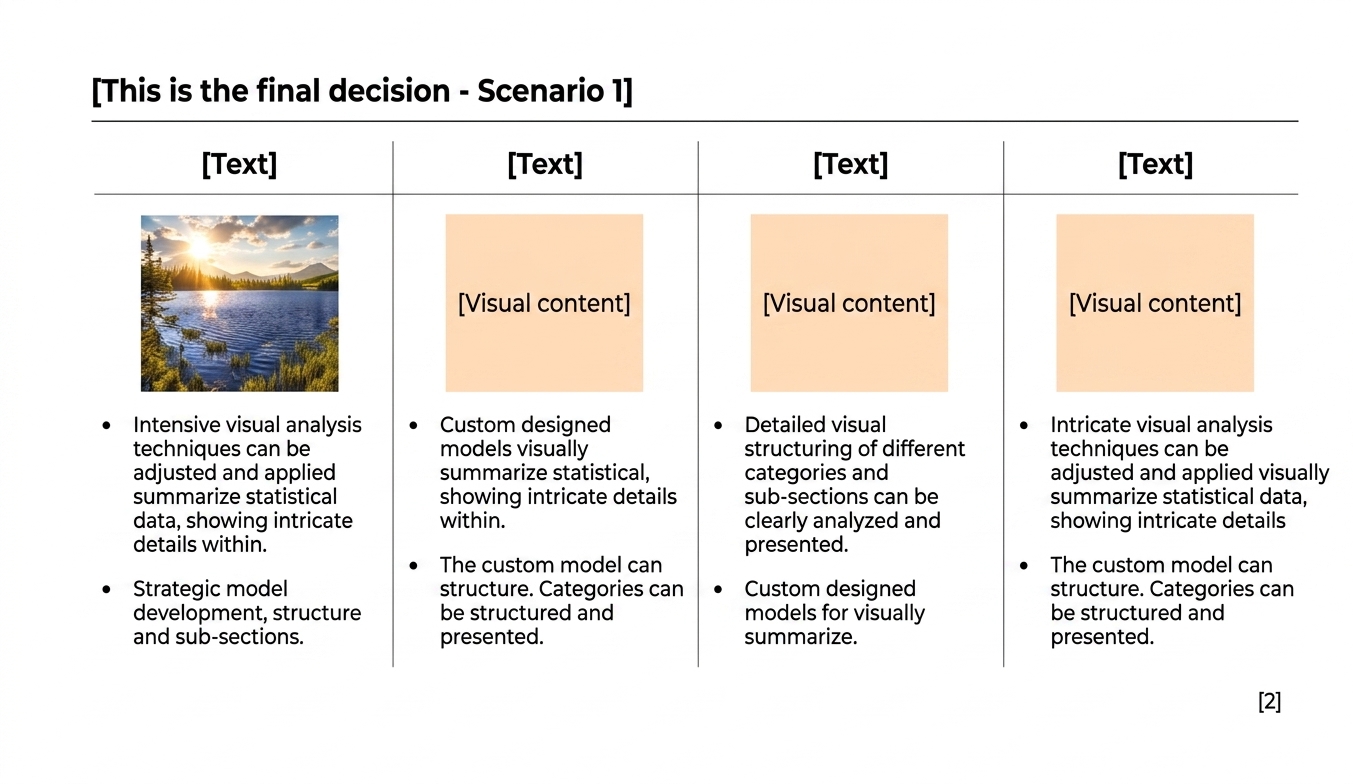
Four-column content strategy slide for micro-learning showing learner journeys, content formats, engagement metrics, and production workflow.
Template Design LayoutMicro-Learning Content Strategy Presentation Template

2Who This Template Is Built For

This template is built for teams that need to turn training demand into a practical micro-learning content plan. L&D teams can use it to prioritize skill gaps, format choices, and measurement. Enablement leaders can use it to support sales, customer success, product, or frontline teams with fast, role-specific learning. HR teams can use it for onboarding, policy refreshers, and manager development. Instructional designers can use it to define modular content patterns and quality standards. Consultants can use it to frame a learning transformation roadmap. This gives L&D leaders, enablement teams, HR partners, instructional designers, content strategists, business sponsors, compliance owners, platform admins, PMOs, and consultants enough evidence to assess learner need, content fit, engagement quality, production effort, reinforcement design, measurement rigor, and rollout sequencing. The narrative should also define topic owners, content standards, delivery channels, analytics rules, review cadence, and adoption checkpoints for each learning wave and quarterly content improvement cycle before scaled rollout approval.

3Learner Segments and Use Cases

The learner section should define who the program serves and what each audience needs to do differently. Useful slides include learner personas, role groups, skill levels, job moments, access constraints, device preferences, time availability, language needs, and manager involvement. Use cases may include new hire ramp, product knowledge, compliance reinforcement, safety reminders, coaching prompts, customer objection handling, software tips, or leadership behaviors. The deck should show which learning moments are best handled through micro-lessons, nudges, videos, quizzes, job aids, scenarios, or practice prompts. This gives L&D leaders, enablement teams, HR partners, instructional designers, content strategists, business sponsors, compliance owners, platform admins, PMOs, and consultants enough evidence to assess learner need, content fit, engagement quality, production effort, reinforcement design, measurement rigor, and rollout sequencing. The narrative should also define topic owners, content standards, delivery channels, analytics rules, review cadence, and adoption checkpoints for each learning wave and quarterly content improvement cycle before scaled rollout approval.

4Skill Gap and Topic Prioritization

The topic prioritization section should identify which knowledge and behavior gaps deserve micro-learning treatment. Slides can compare business impact, learner urgency, frequency of use, risk level, audience size, content availability, and measurement feasibility. The deck should classify topics as awareness, procedure, practice, reinforcement, performance support, or compliance evidence. It should also show what should not become micro-learning because it requires deep instruction, facilitated practice, or formal certification. Prioritization helps prevent a content backlog from becoming a large library of low-impact fragments. This gives L&D leaders, enablement teams, HR partners, instructional designers, content strategists, business sponsors, compliance owners, platform admins, PMOs, and consultants enough evidence to assess learner need, content fit, engagement quality, production effort, reinforcement design, measurement rigor, and rollout sequencing. The narrative should also define topic owners, content standards, delivery channels, analytics rules, review cadence, and adoption checkpoints for each learning wave and quarterly content improvement cycle before scaled rollout approval.

5Content Formats and Learning Experience Design

The format section should define the content patterns that will make micro-learning consistent and effective. Useful slides include short video, interactive cards, scenario questions, flashcards, quizzes, infographics, manager prompts, checklists, simulations, spaced repetition, and performance-support job aids. Each format should be matched to a learning objective and learner context. The deck should also define duration guidelines, tone, accessibility standards, branding, assessment logic, and reinforcement rules. Strong micro-learning design avoids novelty for its own sake and chooses formats that support recall, confidence, and action. This gives L&D leaders, enablement teams, HR partners, instructional designers, content strategists, business sponsors, compliance owners, platform admins, PMOs, and consultants enough evidence to assess learner need, content fit, engagement quality, production effort, reinforcement design, measurement rigor, and rollout sequencing. The narrative should also define topic owners, content standards, delivery channels, analytics rules, review cadence, and adoption checkpoints for each learning wave and quarterly content improvement cycle before scaled rollout approval.

6Delivery Channels and Learning Technology

The delivery section should show where learners will access micro-learning and how the experience fits into daily work. Channels may include LMS, LXP, mobile app, collaboration tools, CRM, intranet, email, SMS, QR codes, manager meetings, or embedded workflow prompts. Slides should compare channel reach, friction, tracking, personalization, notification limits, offline access, and integration needs. The deck should also define how content assignments, reminders, search, recommendations, and completion data will work. Delivery choices should support learner behavior rather than forcing every moment into one platform. This gives L&D leaders, enablement teams, HR partners, instructional designers, content strategists, business sponsors, compliance owners, platform admins, PMOs, and consultants enough evidence to assess learner need, content fit, engagement quality, production effort, reinforcement design, measurement rigor, and rollout sequencing. The narrative should also define topic owners, content standards, delivery channels, analytics rules, review cadence, and adoption checkpoints for each learning wave and quarterly content improvement cycle before scaled rollout approval.

7Engagement, Reinforcement, and Behavior Change

Micro-learning succeeds when it creates repeated engagement and visible behavior change. This section should explain how the program will use spaced repetition, nudges, practice questions, manager coaching, peer discussion, certificates, streaks, reminders, and performance prompts. Engagement slides should distinguish vanity metrics from meaningful indicators such as repeat participation, quiz improvement, skill confidence, usage at the moment of need, manager observation, and business KPI movement. The deck should also show how learners receive feedback and how content is refreshed when engagement declines. This gives L&D leaders, enablement teams, HR partners, instructional designers, content strategists, business sponsors, compliance owners, platform admins, PMOs, and consultants enough evidence to assess learner need, content fit, engagement quality, production effort, reinforcement design, measurement rigor, and rollout sequencing. The narrative should also define topic owners, content standards, delivery channels, analytics rules, review cadence, and adoption checkpoints for each learning wave and quarterly content improvement cycle before scaled rollout approval.

8Content Operations and Governance

The operating model section should define how micro-learning content will be requested, created, reviewed, published, maintained, and retired. Useful slides include intake workflow, subject matter expert roles, instructional design standards, production timeline, review gates, localization, accessibility checks, legal or compliance approval, analytics review, and content lifecycle rules. The deck should also show how the team balances speed with quality, especially when business units ask for rapid content. Governance prevents the program from becoming inconsistent, stale, or difficult to measure. This gives L&D leaders, enablement teams, HR partners, instructional designers, content strategists, business sponsors, compliance owners, platform admins, PMOs, and consultants enough evidence to assess learner need, content fit, engagement quality, production effort, reinforcement design, measurement rigor, and rollout sequencing. The narrative should also define topic owners, content standards, delivery channels, analytics rules, review cadence, and adoption checkpoints for each learning wave and quarterly content improvement cycle before scaled rollout approval.

9Metrics, ROI, and Optimization

The measurement section should connect micro-learning activity to learning and business outcomes. Useful metrics include reach, starts, completions, time spent, repeat visits, quiz score improvement, retention checks, confidence ratings, manager observations, support ticket reduction, sales behavior, safety incidents, compliance completion, onboarding speed, and productivity indicators. The deck should define baseline, target, owner, data source, cadence, and decision trigger for each metric. ROI pages can compare content production cost, learner time saved, reduced instructor delivery, faster ramp, and risk reduction. Measurement should also guide content refresh and retirement. This gives L&D leaders, enablement teams, HR partners, instructional designers, content strategists, business sponsors, compliance owners, platform admins, PMOs, and consultants enough evidence to assess learner need, content fit, engagement quality, production effort, reinforcement design, measurement rigor, and rollout sequencing. The narrative should also define topic owners, content standards, delivery channels, analytics rules, review cadence, and adoption checkpoints for each learning wave and quarterly content improvement cycle before scaled rollout approval.

10Program Roadmap and XLSlides Workflow

The roadmap should sequence micro-learning strategy through audience research, skill gap mapping, topic prioritization, format standards, pilot content, channel setup, manager enablement, analytics design, launch, feedback review, content refresh, and scaled rollout. Early waves should focus on high-impact topics with clear audiences and measurable outcomes. Later waves can expand into more roles, languages, channels, and reinforcement patterns. XLSlides helps teams convert learner research, training requests, content inventories, engagement metrics, platform notes, and implementation milestones into a structured content strategy deck. The generated draft can then be refined with exact audience data, named owners, content examples, and KPI baselines. This gives L&D leaders, enablement teams, HR partners, instructional designers, content strategists, business sponsors, compliance owners, platform admins, PMOs, and consultants enough evidence to assess learner need, content fit, engagement quality, production effort, reinforcement design, measurement rigor, and rollout sequencing. The narrative should also define topic owners, content standards, delivery channels, analytics rules, review cadence, and adoption checkpoints for each learning wave and quarterly content improvement cycle before scaled rollout approval.