Luxury Resale Market Thesis Presentation Template

Stop wasting hours on manual formatting. Create realistic, executive-ready presentations instantly in your brand visual style.

Luxury resale market sizing and category-growth slides
Authentication, pricing, and supply quality dashboards
Platform unit economics and retention roadmap pages

1What a Luxury Resale Market Thesis Needs to Prove

A luxury resale market thesis needs to prove that secondhand luxury demand is durable, supply can be acquired with quality control, trust can be protected through authentication, and marketplace economics can improve with scale. The opening section should define the category in scope, the target customer, the value proposition, and the investment question. It should show whether the thesis focuses on handbags, watches, jewelry, apparel, sneakers, multi-category marketplaces, brand-owned resale, or enabling infrastructure. A strong thesis also separates macro tailwinds from company-specific advantages and measurable platform evidence. This gives resale founders, marketplace operators, luxury brands, investors, authentication teams, pricing analysts, supply acquisition leaders, retention teams, corporate strategists, PMOs, and consultants enough evidence to assess market growth, supply quality, buyer trust, platform liquidity, unit economics, retention potential, and expansion sequencing. The narrative should also define category priorities, authentication controls, pricing rules, seller acquisition channels, customer cohorts, and milestone gates for each growth wave.
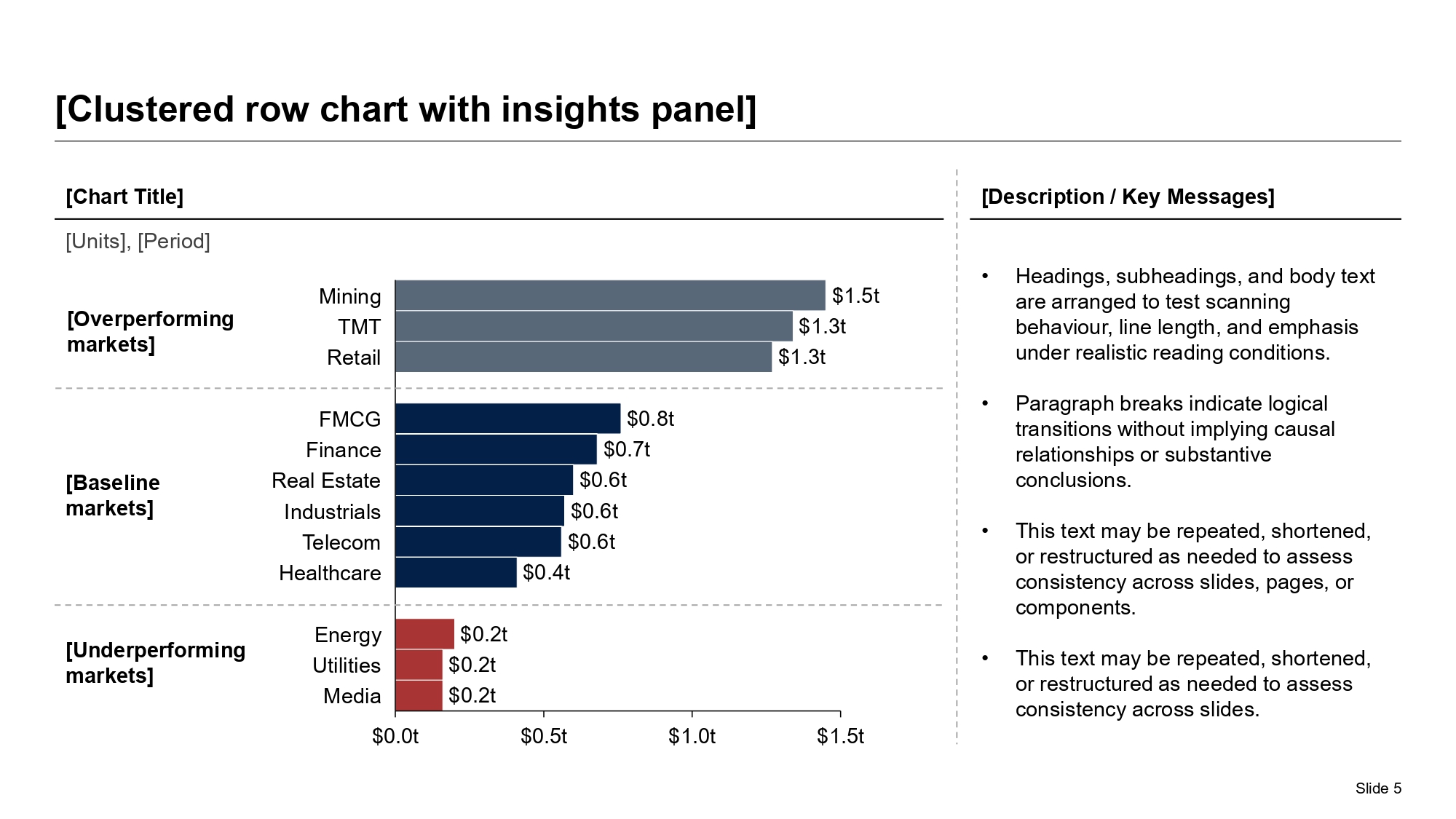
Clustered horizontal bar chart slide comparing luxury resale market tiers, platform economics, category demand, and investor thesis priorities.
Template Design LayoutLuxury Resale Market Thesis Presentation Template

2Who This Template Is Built For

This template is built for teams that need to present luxury resale as a serious market, not simply a consumer trend. Founders can use it to explain fundraising logic, marketplace defensibility, and growth priorities. Investors can use it to evaluate category maturity, competitive structure, liquidity, and unit economics. Luxury brands can use it to assess owned resale, certified pre-owned programs, customer retention, and brand protection. Marketplace operators can use it to align supply acquisition, authentication, pricing, merchandising, and buyer retention. Consultants can use it to structure market entry and partnership recommendations. This gives resale founders, marketplace operators, luxury brands, investors, authentication teams, pricing analysts, supply acquisition leaders, retention teams, corporate strategists, PMOs, and consultants enough evidence to assess market growth, supply quality, buyer trust, platform liquidity, unit economics, retention potential, and expansion sequencing. The narrative should also define category priorities, authentication controls, pricing rules, seller acquisition channels, customer cohorts, and milestone gates for each growth wave.

3Market Size, Category Growth, and Demand Signals

The market section should quantify the luxury resale opportunity by category, region, buyer segment, channel, and growth driver. Useful slides include total addressable market, serviceable market, category growth rates, resale penetration, primary luxury market linkage, price bands, demographic adoption, online migration, and sustainability-driven demand. The deck should identify whether growth is driven by value-seeking buyers, collectible demand, younger luxury customers, limited supply, brand price increases, circular fashion adoption, or marketplace convenience. It should also separate high-velocity categories from categories with slower turnover or heavier authentication burden. This gives resale founders, marketplace operators, luxury brands, investors, authentication teams, pricing analysts, supply acquisition leaders, retention teams, corporate strategists, PMOs, and consultants enough evidence to assess market growth, supply quality, buyer trust, platform liquidity, unit economics, retention potential, and expansion sequencing. The narrative should also define category priorities, authentication controls, pricing rules, seller acquisition channels, customer cohorts, and milestone gates for each growth wave.

4Buyer Segments and Retention Drivers

The buyer section should explain who purchases luxury resale and why they return. Segments may include aspirational luxury buyers, value-conscious shoppers, collectors, sustainability-oriented customers, younger consumers entering luxury, repeat marketplace buyers, and brand loyalists seeking discontinued items. Slides should compare acquisition channels, average order value, purchase frequency, category preferences, trust requirements, return behavior, and customer lifetime value. Retention drivers can include authenticated inventory, pricing transparency, personalized recommendations, wishlists, seller alerts, loyalty benefits, financing options, and seamless returns. A credible thesis shows that demand is not only first-purchase curiosity but repeatable behavior. This gives resale founders, marketplace operators, luxury brands, investors, authentication teams, pricing analysts, supply acquisition leaders, retention teams, corporate strategists, PMOs, and consultants enough evidence to assess market growth, supply quality, buyer trust, platform liquidity, unit economics, retention potential, and expansion sequencing. The narrative should also define category priorities, authentication controls, pricing rules, seller acquisition channels, customer cohorts, and milestone gates for each growth wave.

5Supply Acquisition and Inventory Quality

Luxury resale platforms win only if they can attract desirable supply at the right quality, price, and velocity. This section should explain seller acquisition channels, consignment models, direct purchase models, trade-in programs, brand partnerships, estate sources, professional sellers, creator channels, and repeat seller cohorts. Inventory quality slides should define condition grades, brand mix, category mix, scarcity, sell-through rate, aging inventory, defect rate, and return risk. The deck should also show the operational cost of acquiring, inspecting, photographing, pricing, storing, and merchandising supply. Strong supply pages make the connection between seller trust, inventory liquidity, and buyer conversion. This gives resale founders, marketplace operators, luxury brands, investors, authentication teams, pricing analysts, supply acquisition leaders, retention teams, corporate strategists, PMOs, and consultants enough evidence to assess market growth, supply quality, buyer trust, platform liquidity, unit economics, retention potential, and expansion sequencing. The narrative should also define category priorities, authentication controls, pricing rules, seller acquisition channels, customer cohorts, and milestone gates for each growth wave.

6Authentication, Trust, and Brand Protection

Trust is central to luxury resale, so the thesis should explain how authenticity, condition, provenance, and buyer confidence are protected. Authentication slides can cover expert review, technology support, serial number checks, image analysis, material inspection, certificates, brand data, seller risk scoring, dispute handling, and counterfeit escalation. The deck should define where authentication happens in the workflow, how accuracy is measured, how errors are handled, and how trust signals are shown to customers. Brand protection pages should address unauthorized listings, damaged brand perception, pricing integrity, and partnership opportunities. Without a trust architecture, marketplace growth can increase risk faster than revenue. This gives resale founders, marketplace operators, luxury brands, investors, authentication teams, pricing analysts, supply acquisition leaders, retention teams, corporate strategists, PMOs, and consultants enough evidence to assess market growth, supply quality, buyer trust, platform liquidity, unit economics, retention potential, and expansion sequencing. The narrative should also define category priorities, authentication controls, pricing rules, seller acquisition channels, customer cohorts, and milestone gates for each growth wave.

7Pricing, Take Rate, and Unit Economics

The economics section should show how luxury resale makes money and where margin pressure appears. Useful slides include average order value, gross merchandise value, take rate, seller payout, authentication cost, shipping cost, returns cost, storage cost, payment fees, marketing cost, contribution margin, and payback period. Pricing pages should explain dynamic pricing, condition adjustments, scarcity premiums, comparable listings, markdown rules, and category-specific pricing discipline. The deck should also show sensitivity to acquisition cost, sell-through rate, return rate, and authentication expense. A strong thesis proves that growth can become more efficient as liquidity, data, and repeat behavior improve. This gives resale founders, marketplace operators, luxury brands, investors, authentication teams, pricing analysts, supply acquisition leaders, retention teams, corporate strategists, PMOs, and consultants enough evidence to assess market growth, supply quality, buyer trust, platform liquidity, unit economics, retention potential, and expansion sequencing. The narrative should also define category priorities, authentication controls, pricing rules, seller acquisition channels, customer cohorts, and milestone gates for each growth wave.

8Competitive Landscape and Platform Differentiation

The competitive section should compare resale marketplaces, brand-owned resale programs, consignment specialists, auction houses, peer-to-peer platforms, vertical category players, and authentication infrastructure providers. Slides should evaluate category focus, trust model, supply strategy, customer experience, pricing tools, logistics, brand relationships, geographic reach, and margin structure. Differentiation may come from proprietary supply, authentication depth, luxury brand partnerships, community, data-driven pricing, curated merchandising, faster seller payout, or superior retention loops. The deck should avoid generic competitor grids and instead show which strategic choices create defensibility across priority categories. This gives resale founders, marketplace operators, luxury brands, investors, authentication teams, pricing analysts, supply acquisition leaders, retention teams, corporate strategists, PMOs, and consultants enough evidence to assess market growth, supply quality, buyer trust, platform liquidity, unit economics, retention potential, and expansion sequencing. The narrative should also define category priorities, authentication controls, pricing rules, seller acquisition channels, customer cohorts, and milestone gates for each growth wave.

9Strategic Options for Brands and Marketplaces

The strategic options section should show how different players can participate in luxury resale. Brands may launch owned resale, certify pre-owned products, partner with marketplaces, support trade-in programs, monetize archives, or use resale data to improve customer lifetime value. Marketplaces may expand categories, add white-glove selling services, deepen authentication, build B2B partnerships, launch loyalty programs, or enter new geographies. Investors may evaluate platform consolidation, infrastructure plays, or vertical category leaders. Each option should be compared by strategic fit, investment need, operational complexity, brand risk, customer impact, and expected economics. This gives resale founders, marketplace operators, luxury brands, investors, authentication teams, pricing analysts, supply acquisition leaders, retention teams, corporate strategists, PMOs, and consultants enough evidence to assess market growth, supply quality, buyer trust, platform liquidity, unit economics, retention potential, and expansion sequencing. The narrative should also define category priorities, authentication controls, pricing rules, seller acquisition channels, customer cohorts, and milestone gates for each growth wave.

10Investment Roadmap and XLSlides Workflow

The roadmap should sequence the luxury resale thesis through market sizing, category prioritization, customer research, supply acquisition tests, authentication workflow design, pricing model validation, unit economics review, retention analysis, competitive positioning, partnership strategy, and expansion planning. Early milestones should prove supply quality, conversion, sell-through, and trust. Later milestones can address new categories, brand partnerships, geographic expansion, and operating leverage. XLSlides helps teams convert market data, cohort metrics, pricing benchmarks, authentication notes, competitive research, and strategic assumptions into a polished thesis deck. The generated draft can then be refined with current company metrics, investor evidence, and named partner opportunities. This gives resale founders, marketplace operators, luxury brands, investors, authentication teams, pricing analysts, supply acquisition leaders, retention teams, corporate strategists, PMOs, and consultants enough evidence to assess market growth, supply quality, buyer trust, platform liquidity, unit economics, retention potential, and expansion sequencing. The narrative should also define category priorities, authentication controls, pricing rules, seller acquisition channels, customer cohorts, and milestone gates for each growth wave.