Luxury Hotel Capital and Operations Plan Presentation Template

Stop wasting hours on manual formatting. Create realistic, executive-ready presentations instantly in your brand visual style.

Asset-condition, guest-experience, RevPAR, and operational performance layouts
Capex prioritization, renovation phasing, owner ROI, and risk slides
Milestone roadmap, governance, KPI, and executive approval sections

1What Is a Luxury Hotel Capital Plan?

A luxury hotel capital plan explains which property investments are required to protect brand positioning, guest experience, operational reliability, and owner returns. It should connect asset condition, service standards, revenue opportunity, operating constraints, renovation timing, funding needs, and risk management into one decision-ready story. The deck should not be a generic capex list. It should show why specific investments matter, how they affect RevPAR and guest satisfaction, what disruption they create, and when ownership needs to approve spend. This gives hotel owners, asset managers, operators, finance leaders, general managers, brand teams, lenders, and development advisors enough evidence to assess asset quality, revenue upside, guest impact, operating disruption, capital intensity, ROI, risk exposure, and implementation sequencing. It keeps decisions grounded in property evidence, brand standards, market positioning, owner objectives, and measurable milestones. The narrative should also identify budget owners, seasonal constraints, approval gates, guest-impact controls, and contingency triggers for each investment workstream.
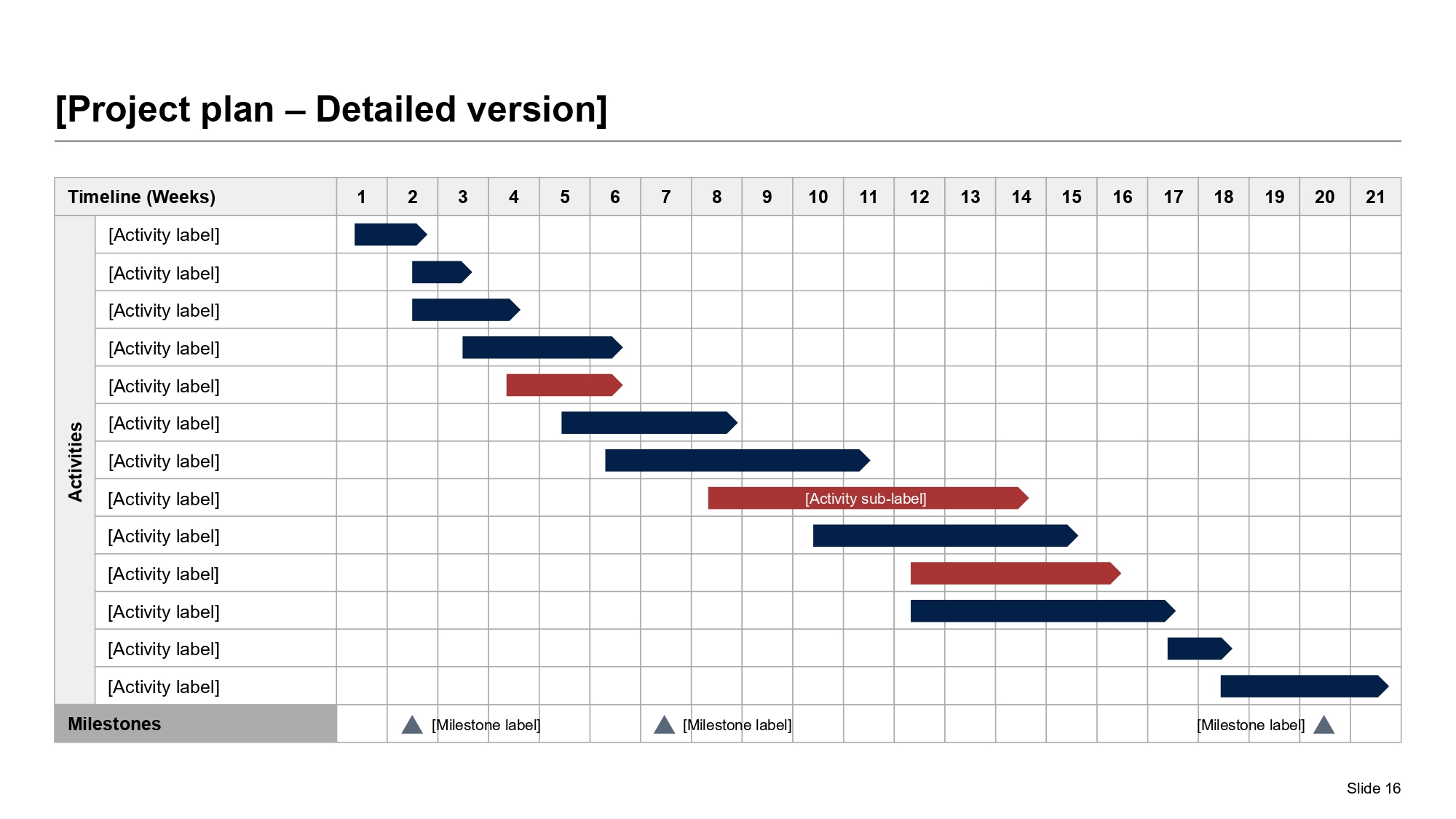
Luxury hotel capital plan slide with multi-week Gantt chart showing renovation workstreams, milestones, and owner decision gates.
Template Design LayoutLuxury Hotel Capital and Operations Plan Presentation Template

2When to Use This Luxury Hotel Capital Plan Template

Use this template when a property team needs to prepare an annual capex review, renovation proposal, owner meeting, lender update, asset-management plan, repositioning case, brand-standard compliance plan, or operational improvement roadmap. It works for luxury resorts, urban hotels, boutique properties, destination hotels, branded residences, and mixed-use hospitality assets. The page is especially useful when leadership must compare visible guest-facing upgrades with back-of-house infrastructure investments. Owners need to understand what protects the asset, what grows revenue, what reduces risk, and what can be phased without damaging service quality. This gives hotel owners, asset managers, operators, finance leaders, general managers, brand teams, lenders, and development advisors enough evidence to assess asset quality, revenue upside, guest impact, operating disruption, capital intensity, ROI, risk exposure, and implementation sequencing. It keeps decisions grounded in property evidence, brand standards, market positioning, owner objectives, and measurable milestones. The narrative should also identify budget owners, seasonal constraints, approval gates, guest-impact controls, and contingency triggers for each investment workstream.

3Recommended Hotel Capital Planning Deck Structure

A strong luxury hotel capital plan usually starts with the executive recommendation, property context, market positioning, and asset-condition summary. It then moves into guest-experience gaps, revenue performance, operating pain points, capex portfolio, prioritization logic, financial return, renovation phasing, disruption mitigation, governance, risks, and approval ask. The structure should make it easy for ownership to distinguish mandatory investments from strategic enhancements and discretionary upgrades. It should also show which workstreams must happen together because of closures, procurement, permitting, seasonality, or brand compliance. This gives hotel owners, asset managers, operators, finance leaders, general managers, brand teams, lenders, and development advisors enough evidence to assess asset quality, revenue upside, guest impact, operating disruption, capital intensity, ROI, risk exposure, and implementation sequencing. It keeps decisions grounded in property evidence, brand standards, market positioning, owner objectives, and measurable milestones. The narrative should also identify budget owners, seasonal constraints, approval gates, guest-impact controls, and contingency triggers for each investment workstream.

4Asset Condition, Brand Standards, and Guest Experience Gaps

The diagnostic section should show the current condition of rooms, public areas, food and beverage venues, spa, meeting spaces, back-of-house infrastructure, mechanical systems, technology, landscaping, and arrival experience. Luxury properties need more than basic maintenance; they need consistent sensory quality, service enablement, design relevance, and brand-standard compliance. The deck should identify where asset deterioration, design fatigue, operational bottlenecks, or inconsistent amenities are affecting guest satisfaction and revenue potential. Evidence may include inspections, guest reviews, brand audits, engineering reports, mystery-shopper results, and competitive benchmarking. This gives hotel owners, asset managers, operators, finance leaders, general managers, brand teams, lenders, and development advisors enough evidence to assess asset quality, revenue upside, guest impact, operating disruption, capital intensity, ROI, risk exposure, and implementation sequencing. It keeps decisions grounded in property evidence, brand standards, market positioning, owner objectives, and measurable milestones. The narrative should also identify budget owners, seasonal constraints, approval gates, guest-impact controls, and contingency triggers for each investment workstream.

5RevPAR, Occupancy, ADR, and Revenue Opportunity

The revenue section should connect capital investment to performance drivers such as RevPAR, occupancy, ADR, booking pace, channel mix, group demand, suite premiums, food and beverage capture, spa spend, event revenue, and repeat guest behavior. Owners need to see whether a renovation supports rate growth, share recovery, loyalty, segmentation, or ancillary revenue. The deck should compare the property with its competitive set and clarify whether revenue upside depends on physical upgrades, service improvements, sales execution, pricing strategy, or market recovery. A strong slide avoids promising automatic ROI from design changes alone. This gives hotel owners, asset managers, operators, finance leaders, general managers, brand teams, lenders, and development advisors enough evidence to assess asset quality, revenue upside, guest impact, operating disruption, capital intensity, ROI, risk exposure, and implementation sequencing. It keeps decisions grounded in property evidence, brand standards, market positioning, owner objectives, and measurable milestones. The narrative should also identify budget owners, seasonal constraints, approval gates, guest-impact controls, and contingency triggers for each investment workstream.

6Capex Prioritization, Renovation Scope, and Tradeoffs

The capex section should rank projects by strategic value, compliance need, guest impact, revenue upside, asset risk, operational dependency, cost, and timing. Typical workstreams may include guestroom renovation, lobby refresh, restaurant repositioning, pool or spa upgrades, meeting-space modernization, mechanical systems, elevators, kitchens, laundry, energy efficiency, digital systems, or staff areas. The deck should distinguish must-do maintenance from value-creating repositioning. It should also show tradeoffs between guest-facing impact and invisible infrastructure resilience. Ownership discussions improve when each initiative has scope, estimate, rationale, priority, dependency, and decision status. This gives hotel owners, asset managers, operators, finance leaders, general managers, brand teams, lenders, and development advisors enough evidence to assess asset quality, revenue upside, guest impact, operating disruption, capital intensity, ROI, risk exposure, and implementation sequencing. It keeps decisions grounded in property evidence, brand standards, market positioning, owner objectives, and measurable milestones. The narrative should also identify budget owners, seasonal constraints, approval gates, guest-impact controls, and contingency triggers for each investment workstream.

7Operational Disruption, Phasing, and Delivery Governance

Luxury hotel renovations require careful phasing because disruption can damage guest experience, staff productivity, and revenue capture. The deck should show construction windows, seasonal demand constraints, room-out-of-order assumptions, procurement lead times, permitting, contractor dependencies, brand approvals, guest communication, service recovery, and contingency plans. A Gantt-style roadmap helps owners see why workstreams are sequenced and where milestone risk exists. Governance should define who approves scope changes, monitors budget, manages contractors, coordinates operations, and reports progress. This gives hotel owners, asset managers, operators, finance leaders, general managers, brand teams, lenders, and development advisors enough evidence to assess asset quality, revenue upside, guest impact, operating disruption, capital intensity, ROI, risk exposure, and implementation sequencing. It keeps decisions grounded in property evidence, brand standards, market positioning, owner objectives, and measurable milestones. The narrative should also identify budget owners, seasonal constraints, approval gates, guest-impact controls, staffing readiness, communications, and contingency triggers for each investment workstream.

8Investment Case, ROI, Funding, and Risk Management

The financial section should connect capital requests to return logic and risk protection. Useful analysis may include project cost, contingency, timeline, room displacement, revenue uplift, margin impact, cost savings, avoided maintenance, brand compliance risk, asset value, payback period, and funding source. Luxury hotel economics can be sensitive to seasonality, labor cost, supply chain timing, and demand mix, so assumptions should be visible. The deck should also identify downside scenarios and mitigation plans. Owners and lenders need to know which investments are defensive, which are growth-oriented, and which require further validation. This gives hotel owners, asset managers, operators, finance leaders, general managers, brand teams, lenders, and development advisors enough evidence to assess asset quality, revenue upside, guest impact, operating disruption, capital intensity, ROI, risk exposure, and implementation sequencing. It keeps decisions grounded in property evidence, brand standards, market positioning, owner objectives, and measurable milestones. The narrative should also identify budget owners, seasonal constraints, approval gates, guest-impact controls, and contingency triggers for each investment workstream.

9KPIs, Owner Reporting, and Milestone Decisions

The KPI section should define how the capital plan will be tracked after approval. Useful metrics include budget variance, schedule adherence, room availability, guest satisfaction, RevPAR index, ADR growth, ancillary spend, maintenance incidents, energy savings, staff productivity, brand audit score, project closeout status, and post-renovation performance. Owner reporting should focus on exceptions, decisions, and value realization rather than operational noise. The roadmap should identify approval gates for design, procurement, contractor award, room block release, opening readiness, and post-launch review. This gives hotel owners, asset managers, operators, finance leaders, general managers, brand teams, lenders, and development advisors enough evidence to assess asset quality, revenue upside, guest impact, operating disruption, capital intensity, ROI, risk exposure, and implementation sequencing. It keeps decisions grounded in property evidence, brand standards, market positioning, owner objectives, and measurable milestones. The narrative should also identify budget owners, seasonal constraints, approval gates, guest-impact controls, and contingency triggers for each investment workstream.

10How XLSlides Speeds Up Hotel Capital Planning

XLSlides helps hospitality teams convert property inspections, capex lists, engineering reports, guest feedback, RevPAR data, brand standards, renovation ideas, vendor estimates, and owner notes into a structured luxury hotel capital plan presentation. The AI workflow can organize the story into asset condition, revenue opportunity, guest-experience gaps, capex portfolio, prioritization, renovation phasing, financial case, risk controls, KPIs, and owner approvals. This is useful when hotel teams have detailed inputs but need a polished deck for ownership, lenders, operators, or brand teams. The generated output is not a substitute for engineering review, design work, procurement, or financial underwriting, but it gives teams a strong working draft. This gives hotel owners, asset managers, operators, finance leaders, general managers, brand teams, lenders, and development advisors enough evidence to assess asset quality, revenue upside, guest impact, operating disruption, capital intensity, ROI, risk exposure, and implementation sequencing. It keeps decisions grounded in property evidence, brand standards, market positioning, owner objectives, and measurable milestones.