Construction Technology and Site Safety Automation Plan Template

Stop wasting hours on manual formatting. Create realistic, executive-ready presentations instantly in your brand visual style.

Turn site safety risks, incidents, BIM data, and field workflows into a board-ready construction technology roadmap.
Explain how sensors, computer vision, wearables, drones, permit workflows, and automation improve safety performance.
Build implementation slides for project executives, EHS leaders, operations teams, owners, and construction technology vendors.

1What Is a Construction Tech Site Safety Plan Deck?

A construction tech site safety plan deck explains how a contractor, owner, developer, or ConTech vendor will use digital tools to reduce incidents, improve field visibility, and standardize safer project execution. It should connect the safety problem to operational reality: changing crews, subcontractor handoffs, schedule pressure, high-risk work zones, equipment movement, permit workflows, near-miss reporting, and incomplete data capture. The deck usually covers the current safety baseline, key risk areas, target workflows, technology use cases, implementation roadmap, governance, adoption plan, and KPI model. The strongest version avoids presenting technology as a standalone answer. It shows how BIM, sensors, drones, computer vision, wearables, mobile inspections, and automation fit into daily site routines. That evidence helps project executives, EHS leaders, owners, superintendents, IT teams, and procurement reviewers understand where the roadmap reduces risk, where controls remain manual, and what must be proven before broader rollout. It also gives field teams a practical way to compare risk reduction, productivity impact, rollout complexity, privacy exposure, subcontractor readiness, and budget priority before committing to a site-wide operating change.
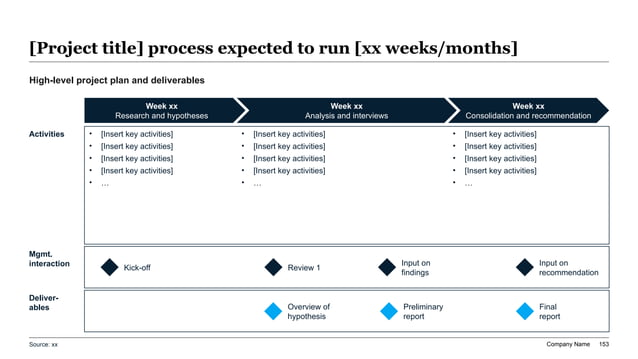
Construction technology site safety roadmap slide with three-phase project plan, milestone chevrons, governance checkpoints, and deliverable outcomes.
Template Design LayoutConstruction Technology and Site Safety Automation Plan Template

2When to Use This Construction Safety Template

Use this template when you need to make a construction technology and safety initiative understandable to senior stakeholders. It is useful for EHS strategy reviews, construction operations updates, owner briefings, capital project governance, contractor prequalification discussions, ConTech sales pitches, safety innovation committees, and digital transformation planning. The same structure can support a general contractor proposing site-wide automation, a developer evaluating project controls, a safety leader requesting budget for monitoring tools, or a consultant building a site safety maturity roadmap. It works best when the audience needs to see both the risk case and the operating plan. Instead of listing disconnected tools, the template organizes the story around priority hazards, affected workflows, measurable outcomes, deployment phases, and accountability. That evidence helps project executives, EHS leaders, owners, superintendents, IT teams, and procurement reviewers understand where the roadmap reduces risk, where controls remain manual, and what must be proven before broader rollout. It also gives field teams a practical way to compare risk reduction, productivity impact, rollout complexity, privacy exposure, subcontractor readiness, and budget priority before committing to a site-wide operating change.

3Recommended Site Safety Automation Structure

A strong site safety automation deck should begin with the safety baseline and project context. Show incident trends, near misses, leading indicators, high-risk activities, compliance gaps, schedule pressures, and the consequences of incomplete visibility. The next section should prioritize use cases such as digital permits, hazard observations, equipment zone monitoring, fall-risk prevention, confined-space workflows, crane lift coordination, inspection automation, worker credentialing, and subcontractor reporting. After that, explain the technology architecture: BIM links, field mobile apps, IoT sensors, cameras, analytics, dashboards, integrations, and data governance. The roadmap should then sequence pilots, training, site rollout, operating model changes, and decision gates. Close with KPIs, economics, risks, and the executive ask. This structure keeps the presentation practical. That evidence helps project executives, EHS leaders, owners, superintendents, IT teams, and procurement reviewers understand where the roadmap reduces risk, where controls remain manual, and what must be proven before broader rollout. It also gives field teams a practical way to compare risk reduction, productivity impact, rollout complexity, privacy exposure, subcontractor readiness, and budget priority before committing to a site-wide operating change.

4Prioritizing Hazards, Workflows, and Site Personas

Construction technology planning should start with hazard and workflow prioritization, not with vendor features. The deck should identify which problems matter most: falls, struck-by incidents, equipment interaction, hot work, lifting operations, trenching, fatigue, access control, housekeeping, material movement, or delayed inspections. For each priority, explain who is affected and who owns the behavior change. Superintendents, foremen, safety managers, subcontractors, craft workers, project controls, and owners need different views of the same program. A useful slide maps each persona to decisions, pain points, data inputs, and expected benefits. This makes the roadmap operational instead of abstract. It also shows where adoption risk may appear, especially if tools slow down crews or duplicate existing reporting. That evidence helps project executives, EHS leaders, owners, superintendents, IT teams, and procurement reviewers understand where the roadmap reduces risk, where controls remain manual, and what must be proven before broader rollout. It also gives field teams a practical way to compare risk reduction, productivity impact, rollout complexity, privacy exposure, subcontractor readiness, and budget priority before committing to a site-wide operating change.

5BIM, Field Data, and Analytics Integration

Many construction safety programs fail because field data stays disconnected from project planning. A site safety automation deck should show how BIM, schedule data, work packaging, inspection records, access logs, incident reports, equipment telemetry, and observation data will connect. BIM can help teams visualize high-risk zones, sequence work, coordinate trades, and anticipate hazards before crews enter the field. Mobile forms and sensors can capture what actually happens on site. Analytics can identify leading indicators such as repeated hazards, delayed corrective actions, inspection completion, permit exceptions, and unsafe interactions. The deck should explain which systems are sources of truth, which integrations are required, and how data quality will be managed. That evidence helps project executives, EHS leaders, owners, superintendents, IT teams, and procurement reviewers understand where the roadmap reduces risk, where controls remain manual, and what must be proven before broader rollout. It also gives field teams a practical way to compare risk reduction, productivity impact, rollout complexity, privacy exposure, subcontractor readiness, and budget priority before committing to a site-wide operating change.

6Computer Vision, Wearables, Drones, and Automation Use Cases

The technology use-case section should translate innovation into practical site safety outcomes. Computer vision may detect missing PPE, restricted-zone entry, unsafe equipment proximity, poor housekeeping, or high-risk behavior patterns. Wearables may support fatigue monitoring, location awareness, lone-worker alerts, and emergency response. Drones may improve inspection coverage, progress documentation, roof review, facade checks, and remote hazard identification. Workflow automation may speed incident reporting, permit approvals, corrective-action tracking, toolbox talks, and compliance documentation. The deck should show which use cases are ready now, which require pilots, and which remain exploratory. It should also identify privacy, labor relations, false positives, and data retention considerations. That evidence helps project executives, EHS leaders, owners, superintendents, IT teams, and procurement reviewers understand where the roadmap reduces risk, where controls remain manual, and what must be proven before broader rollout. It also gives field teams a practical way to compare risk reduction, productivity impact, rollout complexity, privacy exposure, subcontractor readiness, and budget priority before committing to a site-wide operating change.

7Governance, Compliance, Privacy, and Change Management

Construction safety technology requires governance because it changes how field behavior is observed, reported, and managed. The deck should define the steering group, site-level ownership, escalation paths, subcontractor responsibilities, data access rules, and review cadence. It should also explain how the program will support OSHA or local compliance requirements, owner standards, internal EHS policies, union or workforce considerations, and contractual obligations. Privacy and trust are especially important when cameras, wearables, or location tracking are involved. Stakeholders need to know what data is collected, who can view it, how long it is stored, and how it will be used. Change management should cover training, supervisor coaching, field feedback, pilot refinement, and communication. That evidence helps project executives, EHS leaders, owners, superintendents, IT teams, and procurement reviewers understand where the roadmap reduces risk, where controls remain manual, and what must be proven before broader rollout. It also gives field teams a practical way to compare risk reduction, productivity impact, rollout complexity, privacy exposure, subcontractor readiness, and budget priority before committing to a site-wide operating change.

8Safety KPIs, ROI, and Business Case Logic

A construction tech safety deck should include leading and lagging indicators. Lagging metrics may include recordable incident rate, lost time incidents, severity rate, claims, rework, and schedule disruption from safety events. Leading indicators may include inspection completion, hazard closure time, near-miss reporting, permit compliance, unsafe condition recurrence, training participation, supervisor observations, subcontractor scorecards, and adoption rates. The business case should connect technology spend to avoided incidents, fewer delays, lower insurance or claims exposure, better owner confidence, improved productivity, and stronger compliance evidence. Avoid overstating savings unless assumptions are clear. A good KPI slide shows baseline, target, owner, source system, reporting frequency, and decision use. That evidence helps project executives, EHS leaders, owners, superintendents, IT teams, and procurement reviewers understand where the roadmap reduces risk, where controls remain manual, and what must be proven before broader rollout. It also gives field teams a practical way to compare risk reduction, productivity impact, rollout complexity, privacy exposure, subcontractor readiness, and budget priority before committing to a site-wide operating change.

9Implementation Roadmap, Pilots, and Decision Gates

The implementation roadmap should make the safety automation plan credible. Phase one may assess the current safety process, define high-risk use cases, map systems, select pilot sites, confirm privacy requirements, and choose vendors. Phase two may run focused pilots for inspections, hazard observations, camera analytics, digital permits, or worker credentials while measuring adoption and accuracy. Phase three may expand to additional projects, integrate dashboards, standardize subcontractor reporting, and formalize governance. Each phase should have milestones, owners, risks, budget needs, and decision gates. The deck should specify what evidence is required before scaling, such as incident reduction, inspection completion, user adoption, data quality, workflow fit, and superintendent support. That evidence helps project executives, EHS leaders, owners, superintendents, IT teams, and procurement reviewers understand where the roadmap reduces risk, where controls remain manual, and what must be proven before broader rollout. It also gives field teams a practical way to compare risk reduction, productivity impact, rollout complexity, privacy exposure, subcontractor readiness, and budget priority before committing to a site-wide operating change.

10How XLSlides Speeds Up Construction Safety Planning

XLSlides helps construction and EHS teams turn site observations, incident reports, technology notes, BIM requirements, vendor comparisons, and safety metrics into a structured presentation faster. The AI workflow can organize inputs into a clear executive narrative: safety baseline, priority hazards, workflow map, technology use cases, integration plan, governance model, KPI dashboard, business case, pilot design, and implementation roadmap. This is valuable when teams have strong field knowledge but need a polished deck for leadership, owners, procurement, or project governance. The output is not a substitute for safety expertise, legal review, worker consultation, or technology validation, but it gives teams a stronger starting point. That evidence helps project executives, EHS leaders, owners, superintendents, IT teams, and procurement reviewers understand where the roadmap reduces risk, where controls remain manual, and what must be proven before broader rollout. It also gives field teams a practical way to compare risk reduction, productivity impact, rollout complexity, privacy exposure, subcontractor readiness, and budget priority before committing to a site-wide operating change.