Channel Partner Enablement Slides Template

Stop wasting hours on manual formatting. Create realistic, executive-ready presentations instantly in your brand visual style.

Partner certification roadmaps
Sales-playbook visualizations
Asset & training dashboards

1What Are Channel Partner Enablement Slides?

Channel partner enablement slides are the operating presentation used to help indirect sellers understand the product, target customers, sales motion, proof points, onboarding requirements, and success metrics. A good deck is not just a library of training links. It explains how partners will move from recruitment to readiness to active selling. It normally covers partner segmentation, value proposition, ideal customer profile, sales plays, certification steps, content assets, demo guidance, deal registration, escalation paths, and KPI reporting. This template is useful when a company wants partners to behave like an extension of the sales organization rather than a loose referral network. The slides should make it obvious what partners must learn, what internal teams must provide, and what evidence will show progress. When enablement is structured visually, channel teams can reduce inconsistent onboarding, improve partner confidence, and make the partner program easier to inspect by leadership. It also gives partner managers a repeatable field coaching artifact.
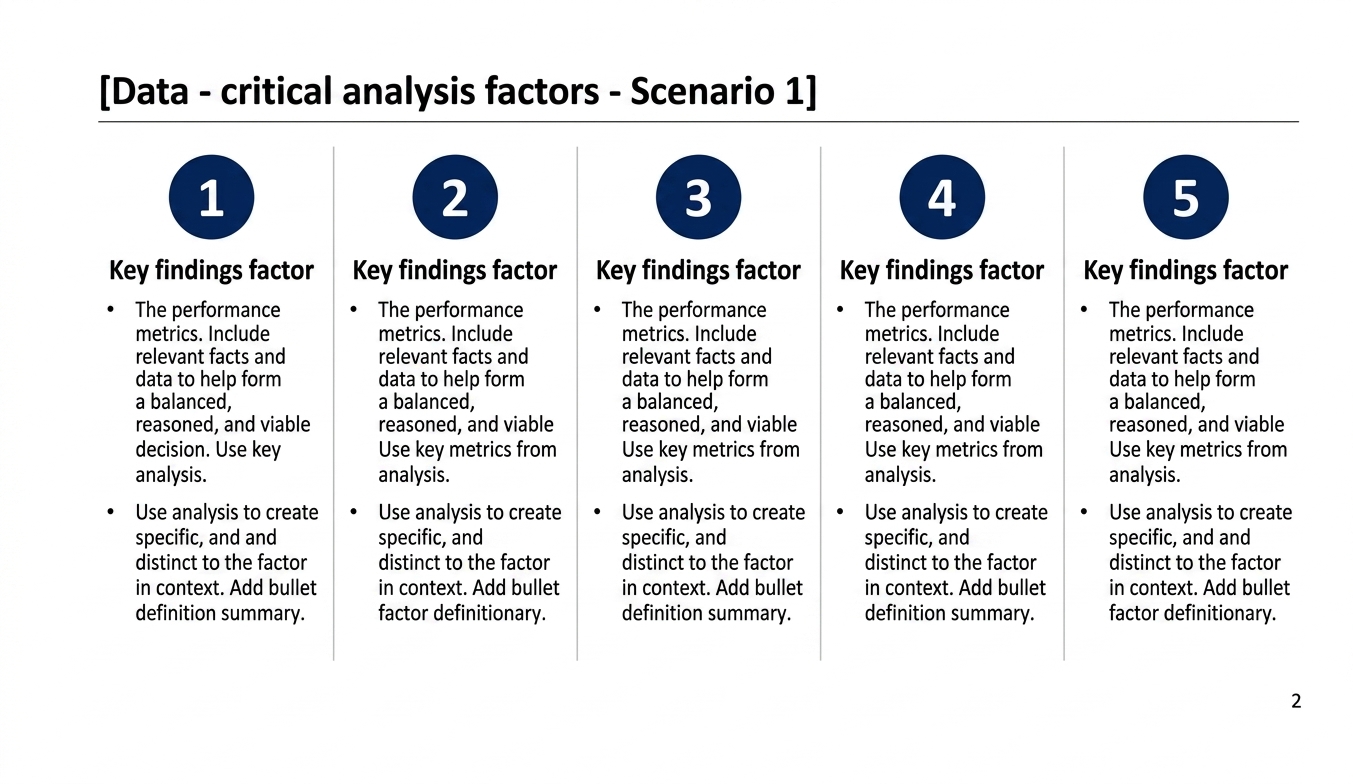
Channel partner enablement slide with five numbered columns for critical analysis factors, sales play readiness, and partner KPIs
Template Design LayoutChannel Partner Enablement Slides Template

2When to Use This Partner Enablement Template

Use this template when the company needs partners to generate more qualified pipeline, improve win rates, shorten ramp time, or support expansion into a new segment or region. Common moments include launching a new partner program, refreshing reseller onboarding, building a certification path, preparing a partner summit, training system integrators, creating a co-sell playbook, or updating marketplace partner guidance. It is also useful when partner performance is inconsistent and leadership needs to understand whether the issue is recruitment quality, weak training, unclear sales plays, missing assets, poor incentives, or lack of governance. The deck gives partner managers, sales enablement, product marketing, customer success, and finance a shared view of the activation system. Instead of treating enablement as scattered webinars and PDFs, the presentation frames partner readiness as a measurable funnel from recruited to trained to certified to activated to productive. That funnel helps teams see where partner momentum is stalling.

3Recommended Partner Enablement Deck Structure

A strong partner enablement presentation usually follows a ten-slide flow. Start with the strategic objective and the partner motion that leadership wants to scale. Then define the partner segments, such as resellers, system integrators, technology partners, marketplace partners, referral partners, or distributors. Next, show the target customer profile and the specific sales plays partners should run. The middle of the deck should cover onboarding journey, certification requirements, demo and discovery guidance, battlecards, content assets, and support model. After that, present the governance model, deal registration process, escalation paths, and partner manager cadence. Close with KPI dashboard, activation roadmap, risks, and decisions required. This structure works because it moves from business logic to field execution. It avoids the common mistake of listing training materials before explaining which partner outcomes the training is supposed to create. Leadership can then fund enablement as an operating system. The sequence also makes ownership and dependencies clear.

4Segmenting Partners Before Designing Enablement

Partner enablement fails when every partner receives the same training regardless of business model, customer access, technical skill, or revenue potential. The deck should first separate partners into meaningful segments and define what each segment needs to succeed. A reseller may need pricing guidance, objection handling, demand generation assets, and deal registration rules. A system integrator may need technical architecture, implementation methodology, customer success handoff, and reference designs. A marketplace partner may need listing optimization, attach-rate messaging, and procurement guidance. A referral partner may need simple qualification criteria and compensation clarity. Once segments are clear, enablement can be tailored by role, maturity, and expected contribution. This also helps leadership avoid overinvesting in low-potential partners or under-supporting strategic alliances. A simple matrix can compare partner potential, readiness, enablement effort, and expected pipeline impact so teams know where to focus first. It also prevents long-tail partners from consuming strategic program capacity unnecessarily.

5Sales Plays, ICP, and Messaging for Partners

Partners need more than product features. They need a practical explanation of who to target, why those accounts care, what trigger events matter, what discovery questions to ask, and which proof points will create confidence. A partner enablement deck should include ideal customer profiles, persona pain points, competitive positioning, qualification criteria, objection handling, and sample talk tracks. For co-sell motions, the deck should define how direct sellers and partners coordinate account planning, intro ownership, opportunity handoff, and executive sponsorship. Product marketing should make sure the messaging is simple enough for non-employee sellers to repeat accurately. If partners must position a bundle, service package, integration, or compliance advantage, that message should be shown with examples. Clear sales plays reduce partner hesitation because they remove guesswork from prospecting and discovery. They also make pipeline reviews more consistent because partner managers can evaluate whether opportunities match the intended motion. This keeps partner coaching tied to real selling behavior.

6Certification and Training Roadmap

A credible enablement deck should show the partner learning journey from onboarding to certification to advanced specialization. The roadmap can include product fundamentals, target customer training, demo certification, competitive positioning, implementation readiness, security or compliance training, and customer success handoff. Each stage should define required modules, expected time investment, evidence of completion, and the business privilege unlocked by completion, such as lead access, marketplace promotion, deal registration eligibility, or advanced support. This makes certification feel like a commercial pathway rather than an administrative checkbox. The deck should also clarify which roles need which training: partner executives, sellers, solution consultants, implementation leads, and customer success managers rarely need identical material. A staged roadmap helps partner managers prioritize readiness and gives leadership a way to inspect whether the channel is becoming more capable. Without this structure, enablement often becomes a one-time launch event that does not produce durable behavior. Strong certification design also raises partner accountability.

7Partner Content, Assets, and Portal Governance

Partner enablement often breaks down because assets are hard to find, outdated, or inconsistent with current positioning. The deck should list the core asset system partners need: pitch deck, one-page overview, discovery guide, battlecards, demo script, implementation overview, objection-handling guide, ROI calculator, customer case studies, pricing guidance, and campaign kits. It should also explain where assets live, who owns updates, how version control works, and how partners are notified when content changes. If the company uses a partner portal, the slides should show the information architecture and the partner journey through it. Content governance matters because partners may continue using old claims, retired screenshots, or unapproved discount language if updates are unmanaged. A simple owner matrix can prevent this risk by assigning product marketing, sales enablement, partner operations, legal, and solution teams to specific asset categories. Good governance makes enablement repeatable instead of personality-driven. It also protects brand consistency across markets.

8Co-Sell Operating Model and Deal Governance

Partner enablement is incomplete without a clear operating model for joint selling. The deck should explain how accounts are selected, how partners identify opportunities, when direct sales is involved, how deal registration works, how conflicts are resolved, and how customer handoff is managed. It should define meeting cadence, CRM fields, partner manager responsibilities, sales engineer support, executive sponsor involvement, and rules for shared pipeline inspection. This is especially important in enterprise programs where direct sellers may see partners as competitors rather than leverage. A good co-sell slide makes decision rights explicit so partners know when they can move independently and when they need internal alignment. It also helps finance and leadership evaluate whether channel influence is being measured consistently. Without governance, the program may report activity but struggle to prove sourced or influenced revenue. With governance, partners can become a predictable part of the revenue operating system. Clear governance also reduces channel conflict.

9KPIs for Channel Partner Enablement

A partner enablement dashboard should measure both readiness and commercial outcomes. Readiness metrics include recruited partners, trained users, certification completion, active sellers, demo-certified resources, portal engagement, asset usage, and time to first opportunity. Commercial metrics include partner-sourced pipeline, partner-influenced pipeline, win rate, average deal size, sales cycle length, attach rate, marketplace conversions, implementation capacity, renewal influence, and partner-sourced revenue. It is useful to separate leading indicators from lagging results because enablement quality may improve before closed-won revenue appears. For example, higher certification completion and more joint account plans can signal future productivity even if current bookings remain early. The dashboard should also show partner tier or segment so leadership can distinguish strategic partners from long-tail accounts. A simple five-column matrix works well for summarizing critical factors: readiness, sales play adoption, content usage, pipeline quality, and revenue impact. This keeps reviews practical and decision-oriented. It also supports sharper quarterly business reviews.

10Common Partner Enablement Gaps to Diagnose

When partner performance is weak, the cause is rarely just low effort. The deck should help teams diagnose specific gaps across recruitment, positioning, training, assets, incentives, and governance. Partners may not understand the ideal customer profile, may lack confidence in demos, may not know how to handle technical objections, may have unclear incentives, or may struggle to access support. Internal teams may also create friction through slow deal registration, inconsistent channel conflict rules, outdated content, or unclear escalation paths. A useful slide maps each performance gap to evidence and corrective action. For example, low opportunity conversion may point to weak qualification training, while high partner churn may point to poor onboarding and limited executive engagement. Diagnosing gaps this way prevents the program from defaulting to more webinars when the real issue is sales play clarity, content quality, or operating model design. It keeps the remediation plan specific and measurable for owners.

11Prompt Recipe for Better Partner Enablement Outputs

XLSlides produces stronger partner enablement decks when the prompt names the partner types, go-to-market motion, product category, target customers, and approval audience. A useful prompt is: `Create an executive channel partner enablement deck for a B2B SaaS company. Audience: VP Partnerships, CRO, product marketing, sales enablement, and partner operations. Include partner segmentation, onboarding journey, certification roadmap, partner sales plays, ICP and messaging, content asset inventory, co-sell operating model, deal registration governance, KPI dashboard, enablement gap diagnosis, and a 90-day activation roadmap.` Add details such as reseller versus SI focus, target regions, marketplace strategy, certification tiers, partner portal tools, and current performance issues. Ask for action-title headlines and compact matrix slides so the output can support leadership decisions. Specific prompts help the generated deck become an operating playbook rather than a generic partner training overview. Include named partner tiers and sample KPIs when available. Add region or vertical context for better segmentation.

12How XLSlides Speeds Up Partner Enablement Planning

Partner enablement planning is slow because the inputs live across partner strategy documents, product marketing assets, sales training, certification tools, CRM reports, and partner manager feedback. Teams usually know what partners need, but the operating story is fragmented. XLSlides helps convert those inputs into a structured first draft with sections for partner segmentation, sales plays, certification, content governance, co-sell process, KPIs, and rollout plan. Partner leaders can use the draft to align the program thesis, product marketing can refine messaging and assets, sales enablement can tighten training steps, and partner operations can validate portal and reporting requirements. This does not remove the need for real partner insight, but it reduces formatting work and gives stakeholders a shared page structure. The result is faster planning, clearer partner expectations, and a more inspectable path from recruited partner to productive channel revenue. Teams can reuse the same structure for partner reviews and QBRs.