Executive Presence Workshop Presentation Template

Stop wasting hours on manual formatting. Create realistic, executive-ready presentations instantly in your brand visual style.

Leadership behavior and influence framework slides
Communication practice and feedback dashboards
Confidence, presence, and action-plan pages

1What an Executive Presence Workshop Needs to Prove

An executive presence workshop needs to prove that presence can be practiced through specific behaviors rather than treated as a vague personality trait. The opening section should define what executive presence means for the organization, which leadership moments matter most, and how participants will improve during the workshop. It should connect credibility, clarity, composure, confidence, empathy, influence, and strategic communication to real business situations. A strong workshop gives leaders a model, practice, feedback, and a personal action plan. This gives leadership development teams, HR partners, executive coaches, facilitators, managers, talent leaders, participants, business sponsors, PMOs, and consultants enough evidence to assess behavior gaps, communication quality, confidence, influence, stakeholder trust, practice design, and follow-up priorities. The narrative should also define workshop outcomes, feedback rules, exercise flow, coaching responsibilities, measurement cadence, and action checkpoints for each participant development cycle and manager follow-up review before leadership program reporting and coaching accountability updates monthly.
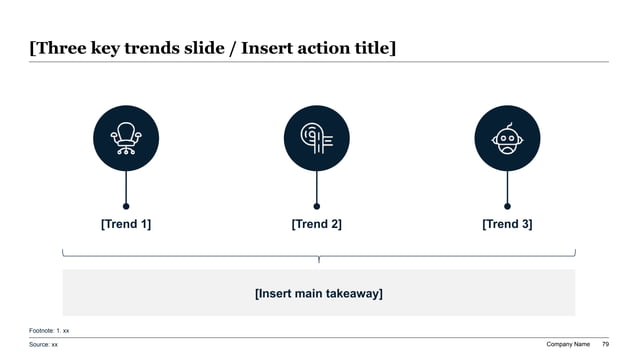
Three-column strategic trends slide for executive presence workshop content covering communication, confidence, influence, and leadership behaviors.
Template Design LayoutExecutive Presence Workshop Presentation Template

2Who This Template Is Built For

This template is built for teams that need to run a practical executive presence session for current or emerging leaders. HR and learning teams can use it to support manager development, promotion readiness, and leadership transitions. Executive coaches can use it to structure individual or group sessions. Facilitators can use it to guide practice, reflection, and feedback. Business sponsors can use it to connect presence skills to leadership effectiveness, client trust, board communication, and team alignment. Consultants can use it to tailor workshops for different leadership levels. This gives leadership development teams, HR partners, executive coaches, facilitators, managers, talent leaders, participants, business sponsors, PMOs, and consultants enough evidence to assess behavior gaps, communication quality, confidence, influence, stakeholder trust, practice design, and follow-up priorities. The narrative should also define workshop outcomes, feedback rules, exercise flow, coaching responsibilities, measurement cadence, and action checkpoints for each participant development cycle and manager follow-up review before leadership program reporting and coaching accountability updates monthly.

3Leadership Presence Model

The presence model section should define the behaviors participants will practice. Useful slides include credibility, clarity, composure, confidence, empathy, authenticity, strategic framing, executive voice, listening, and stakeholder awareness. Each behavior should be described in observable terms so participants know what good looks like. The deck can also show common presence blockers such as over-explaining, weak openings, defensive reactions, low energy, poor eye contact, unclear recommendations, or limited audience awareness. The model should be simple enough for workshop use but specific enough for feedback. This gives leadership development teams, HR partners, executive coaches, facilitators, managers, talent leaders, participants, business sponsors, PMOs, and consultants enough evidence to assess behavior gaps, communication quality, confidence, influence, stakeholder trust, practice design, and follow-up priorities. The narrative should also define workshop outcomes, feedback rules, exercise flow, coaching responsibilities, measurement cadence, and action checkpoints for each participant development cycle and manager follow-up review before leadership program reporting and coaching accountability updates monthly.

4Audience Awareness and Strategic Framing

Executive presence improves when leaders adapt messages to the audience and decision context. This section should teach participants how to identify stakeholder priorities, decision rights, concerns, evidence needs, and likely objections. Slides can cover executive summaries, issue framing, recommendation logic, board-level brevity, client-facing confidence, and team communication. The workshop should include exercises where participants reframe the same message for senior executives, peers, direct reports, and skeptical stakeholders. Strategic framing helps leaders move from information sharing to decision influence. This gives leadership development teams, HR partners, executive coaches, facilitators, managers, talent leaders, participants, business sponsors, PMOs, and consultants enough evidence to assess behavior gaps, communication quality, confidence, influence, stakeholder trust, practice design, and follow-up priorities. The narrative should also define workshop outcomes, feedback rules, exercise flow, coaching responsibilities, measurement cadence, and action checkpoints for each participant development cycle and manager follow-up review before leadership program reporting and coaching accountability updates monthly.

5Voice, Body Language, and Composure

The delivery section should help participants practice the physical and vocal behaviors that shape credibility. Slides can cover posture, eye contact, gestures, breathing, pace, pausing, vocal variety, facial expression, camera presence, meeting posture, and managing nerves. The deck should avoid superficial body-language rules and instead connect delivery choices to clarity, trust, and control under pressure. Practice activities can include opening statements, difficult questions, concise updates, and recorded feedback. Leaders should leave with a few specific behaviors to practice, not an overwhelming checklist. This gives leadership development teams, HR partners, executive coaches, facilitators, managers, talent leaders, participants, business sponsors, PMOs, and consultants enough evidence to assess behavior gaps, communication quality, confidence, influence, stakeholder trust, practice design, and follow-up priorities. The narrative should also define workshop outcomes, feedback rules, exercise flow, coaching responsibilities, measurement cadence, and action checkpoints for each participant development cycle and manager follow-up review before leadership program reporting and coaching accountability updates monthly.

6Storytelling, Clarity, and Message Discipline

The communication section should teach leaders how to structure messages that are memorable and easy to act on. Useful frameworks include headline-first communication, situation-complication-resolution, recommendation-evidence-next step, three-point narratives, and story examples that link facts to meaning. Slides should show how to remove filler, reduce jargon, sharpen openings, and close with a decision or action. Participants can practice turning a complex update into a concise executive message. Message discipline is central to presence because leaders lose credibility when audiences cannot follow the point. This gives leadership development teams, HR partners, executive coaches, facilitators, managers, talent leaders, participants, business sponsors, PMOs, and consultants enough evidence to assess behavior gaps, communication quality, confidence, influence, stakeholder trust, practice design, and follow-up priorities. The narrative should also define workshop outcomes, feedback rules, exercise flow, coaching responsibilities, measurement cadence, and action checkpoints for each participant development cycle and manager follow-up review before leadership program reporting and coaching accountability updates monthly.

7Listening, Questions, and Stakeholder Influence

Executive presence is not only presenting well; it also includes listening, reading the room, and responding thoughtfully. This section should cover active listening, clarifying questions, acknowledgment, reframing, handling interruptions, responding to challenge, and building alignment. Exercises can include stakeholder role plays, difficult Q&A, disagreement scenarios, and influence conversations where participants must balance confidence with curiosity. The deck should show how leaders can stay composed while addressing concerns directly. Influence improves when stakeholders feel heard and understand the reasoning behind a recommendation. This gives leadership development teams, HR partners, executive coaches, facilitators, managers, talent leaders, participants, business sponsors, PMOs, and consultants enough evidence to assess behavior gaps, communication quality, confidence, influence, stakeholder trust, practice design, and follow-up priorities. The narrative should also define workshop outcomes, feedback rules, exercise flow, coaching responsibilities, measurement cadence, and action checkpoints for each participant development cycle and manager follow-up review before leadership program reporting and coaching accountability updates monthly.

8Practice Exercises and Feedback Design

The practice section should define how participants will rehearse executive presence behaviors during the workshop. Useful activities include short introductions, strategic updates, board-style recommendations, conflict conversations, client responses, impromptu speaking, meeting leadership, and recorded delivery review. Feedback pages should define what observers evaluate, how feedback is delivered, and how participants convert feedback into improvement actions. The deck should create psychological safety while maintaining useful specificity. Practice is most effective when participants repeat a behavior, receive feedback, adjust, and try again. This gives leadership development teams, HR partners, executive coaches, facilitators, managers, talent leaders, participants, business sponsors, PMOs, and consultants enough evidence to assess behavior gaps, communication quality, confidence, influence, stakeholder trust, practice design, and follow-up priorities. The narrative should also define workshop outcomes, feedback rules, exercise flow, coaching responsibilities, measurement cadence, and action checkpoints for each participant development cycle and manager follow-up review before leadership program reporting and coaching accountability updates monthly.

9Measurement, Confidence, and Follow-Up

The measurement section should show how workshop impact will be tracked beyond the session. Useful measures include self-assessment, manager feedback, peer observation, presentation quality, meeting effectiveness, stakeholder confidence, promotion readiness, coaching goals, and follow-up practice completion. The deck should define baseline, target behavior, owner, review cadence, and evidence source for each measure. It should also show how participants will keep practicing after the workshop through coaching, peer groups, manager check-ins, and live leadership moments. Presence development requires repetition and reflection. This gives leadership development teams, HR partners, executive coaches, facilitators, managers, talent leaders, participants, business sponsors, PMOs, and consultants enough evidence to assess behavior gaps, communication quality, confidence, influence, stakeholder trust, practice design, and follow-up priorities. The narrative should also define workshop outcomes, feedback rules, exercise flow, coaching responsibilities, measurement cadence, and action checkpoints for each participant development cycle and manager follow-up review before leadership program reporting and coaching accountability updates monthly.

10Workshop Roadmap and XLSlides Workflow

The roadmap should sequence the workshop through pre-work, participant self-assessment, presence model introduction, communication practice, delivery coaching, stakeholder influence exercises, feedback rounds, action planning, manager follow-up, and impact review. Early activities should build shared language and psychological safety. Later activities should create live practice, targeted feedback, and durable action commitments. XLSlides helps facilitators convert workshop objectives, leadership models, exercise notes, feedback rubrics, and participant action plans into a structured executive presence deck. The generated draft can then be refined with company examples, facilitator instructions, timing, and coaching prompts. This gives leadership development teams, HR partners, executive coaches, facilitators, managers, talent leaders, participants, business sponsors, PMOs, and consultants enough evidence to assess behavior gaps, communication quality, confidence, influence, stakeholder trust, practice design, and follow-up priorities. The narrative should also define workshop outcomes, feedback rules, exercise flow, coaching responsibilities, measurement cadence, and action checkpoints for each participant development cycle and manager follow-up review before leadership program reporting and coaching accountability updates monthly.