Blockchain Loyalty Program Pitch Presentation Template

Stop wasting hours on manual formatting. Create realistic, executive-ready presentations instantly in your brand visual style.

Token reward loop, member journey, and partner ecosystem slides
Engagement, retention, liability, and redemption KPI dashboards
Compliance, wallet, governance, economics, and phased rollout visuals

1What a Blockchain Loyalty Pitch Needs to Prove

A blockchain loyalty program pitch should prove that tokenized rewards solve a real customer and business problem. Leadership needs to see why conventional points, coupons, tiers, or cashback are not enough, and how tokens improve engagement, portability, partner collaboration, or perceived value. The deck should explain the member experience, reward earning rules, redemption paths, wallet design, partner participation, token economics, compliance controls, and financial impact. It should also be honest about friction, because many customers will not tolerate complicated wallet setup or speculative reward mechanics. This gives loyalty leaders, brand teams, fintech teams, Web3 product owners, CRM teams, finance stakeholders, legal teams, partner managers, investors, PMOs, and consultants enough evidence to assess member value, reward economics, engagement upside, compliance exposure, technical feasibility, partner readiness, and rollout sequencing. The narrative should also define member segments, reward rules, wallet controls, partner obligations, and adoption checkpoints for each rollout wave before executive funding approval.
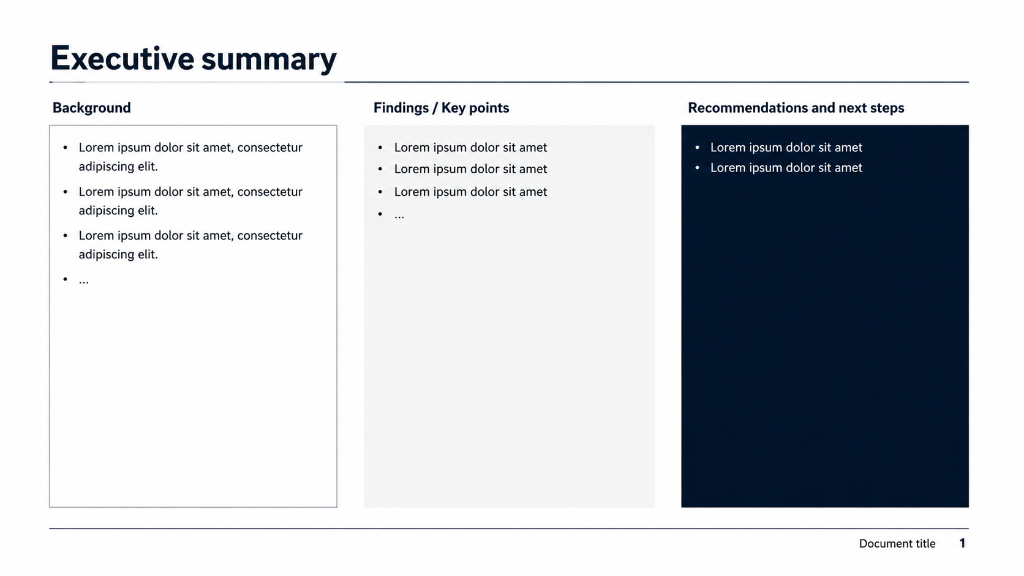
Blockchain loyalty program pitch slide with three executive summary columns for background, findings, and recommendations in contrasting card layouts.
Template Design LayoutBlockchain Loyalty Program Pitch Presentation Template

2Who This Template Is Built For

This template is built for teams that need to pitch tokenized loyalty in a way that business leaders can evaluate. Typical users include consumer brand executives, retail loyalty teams, gaming studios, travel programs, marketplace operators, fintech product teams, Web3 founders, CRM leaders, lifecycle marketers, partnership teams, legal stakeholders, finance leaders, and strategy consultants. It is useful when the organization is exploring transferable rewards, NFT membership passes, partner redemption networks, community incentives, digital collectibles, or loyalty wallets. The audience usually wants to know whether the idea improves retention and customer value without creating legal, accounting, technical, or brand risk. This gives loyalty leaders, brand teams, fintech teams, Web3 product owners, CRM teams, finance stakeholders, legal teams, partner managers, investors, PMOs, and consultants enough evidence to assess member value, reward economics, engagement upside, compliance exposure, technical feasibility, partner readiness, and rollout sequencing. The narrative should also define member segments, reward rules, wallet controls, partner obligations, and adoption checkpoints for each rollout wave.

3Customer Problem and Loyalty Strategy

The strategy section should begin with the current loyalty problem. Useful diagnostics include member inactivity, low redemption, weak tier progression, high churn, low partner engagement, limited personalization, reward liability, low perceived value, and poor differentiation against competitors. The deck should explain which customer segments will care about tokenized rewards and why. It should also define the strategic role of the program, such as increasing repeat purchase, deepening community, improving partner engagement, creating a premium membership layer, rewarding creator participation, or enabling cross-brand value exchange. Without a clear loyalty problem, blockchain features can look like novelty rather than strategy. This gives loyalty leaders, brand teams, fintech teams, Web3 product owners, CRM teams, finance stakeholders, legal teams, partner managers, investors, PMOs, and consultants enough evidence to assess member value, reward economics, engagement upside, compliance exposure, technical feasibility, partner readiness, and rollout sequencing. The narrative should also define member segments, reward rules, wallet controls, partner obligations, and adoption checkpoints for each rollout wave.

4Token Reward Design and Member Journey

The reward design section should show how members earn, hold, use, and understand tokenized benefits. It should cover earning triggers, reward tiers, expiration rules, redemption options, transferability, partner benefits, wallet onboarding, customer support, and recovery paths. The member journey should be simple enough for mainstream customers, not only crypto-native users. Strong slides can show the path from enrollment to first reward, first redemption, tier progression, partner benefit discovery, and ongoing engagement. The deck should also define what lives on-chain, what remains in internal systems, and how the brand avoids overwhelming members with technical complexity. This gives loyalty leaders, brand teams, fintech teams, Web3 product owners, CRM teams, finance stakeholders, legal teams, partner managers, investors, PMOs, and consultants enough evidence to assess member value, reward economics, engagement upside, compliance exposure, technical feasibility, partner readiness, and rollout sequencing. The narrative should also define member segments, reward rules, wallet controls, partner obligations, and adoption checkpoints for each rollout wave.

5Partner Ecosystem and Network Effects

Tokenized loyalty often depends on partner participation, so the deck should explain why partners would join and what value they receive. Partner pages can define categories such as retailers, travel providers, gaming communities, events, creators, financial services, or marketplace sellers. The pitch should show how rewards move across the ecosystem, how settlement or reimbursement works, how partner offers are governed, and how customer data or identity signals are shared responsibly. It should also separate early anchor partners from later ecosystem expansion. A credible partner model avoids vague network-effect claims and shows specific incentives, integration needs, commercial terms, and operational responsibilities. This gives loyalty leaders, brand teams, fintech teams, Web3 product owners, CRM teams, finance stakeholders, legal teams, partner managers, investors, PMOs, and consultants enough evidence to assess member value, reward economics, engagement upside, compliance exposure, technical feasibility, partner readiness, and rollout sequencing. The narrative should also define member segments, reward rules, wallet controls, partner obligations, and adoption checkpoints for each rollout wave.

6Technology, Wallet, and Data Architecture

The technology section should describe the architecture without turning the pitch into a protocol tutorial. It should cover wallet approach, custody model, chain or ledger choice, smart contract scope, loyalty platform integration, customer identity, CRM linkage, analytics, fraud monitoring, and customer support tooling. The deck should explain whether the program uses custodial wallets, embedded wallets, external wallets, or account abstraction, because that choice affects usability and risk. It should also clarify how member data, transaction history, reward status, and consent are handled across brand systems and blockchain components. The best architecture pages connect technical choices to member simplicity and enterprise control. This gives loyalty leaders, brand teams, fintech teams, Web3 product owners, CRM teams, finance stakeholders, legal teams, partner managers, investors, PMOs, and consultants enough evidence to assess member value, reward economics, engagement upside, compliance exposure, technical feasibility, partner readiness, and rollout sequencing. The narrative should also define member segments, reward rules, wallet controls, partner obligations, and adoption checkpoints for each rollout wave.

7Economics, Liability, and Value Case

The economics section should show how tokenized loyalty affects revenue, retention, margin, and reward liability. Useful metrics include incremental purchase frequency, average order value, churn reduction, redemption rate, reward breakage, partner-funded benefits, acquisition cost, active wallet rate, community engagement, and customer lifetime value. Finance stakeholders will also want to understand token issuance rules, accounting treatment, funding sources, redemption obligations, settlement with partners, and downside scenarios if participation or redemption behavior differs from assumptions. The deck should make clear whether token scarcity, utility, status, or interoperability drives value. A credible value case is grounded in member behavior, not only token supply mechanics. This gives loyalty leaders, brand teams, fintech teams, Web3 product owners, CRM teams, finance stakeholders, legal teams, partner managers, investors, PMOs, and consultants enough evidence to assess member value, reward economics, engagement upside, compliance exposure, technical feasibility, partner readiness, and rollout sequencing. The narrative should also define member segments, reward rules, wallet controls, partner obligations, and adoption checkpoints for each rollout wave.

8Legal, Compliance, Fraud, and Brand Risk

Blockchain loyalty programs need careful risk framing because rewards can create regulatory, tax, accounting, consumer protection, privacy, and brand concerns. The deck should address whether tokens are transferable, whether they have cash-like value, how terms and conditions are written, what restrictions apply by geography, how fraud or abuse is detected, and how customer complaints are handled. It should also explain sanctions screening, wallet misuse, bot activity, secondary market risk, misleading marketing claims, and data privacy boundaries. Brand leaders will care about reputational risk if the program looks speculative or confusing. This gives loyalty leaders, brand teams, fintech teams, Web3 product owners, CRM teams, finance stakeholders, legal teams, partner managers, investors, PMOs, and consultants enough evidence to assess member value, reward economics, engagement upside, compliance exposure, technical feasibility, partner readiness, and rollout sequencing. The narrative should also define member segments, reward rules, wallet controls, partner obligations, and adoption checkpoints for each rollout wave.

9KPI Dashboard and Pilot Success Criteria

The KPI section should define how the pilot will be judged before the program scales. Useful measures include enrollment, wallet activation, first reward earned, first redemption, monthly active members, repeat purchase, referral rate, partner offer usage, redemption cost, reward liability, support tickets, fraud attempts, customer satisfaction, and retention uplift. The dashboard should separate engagement indicators from financial outcomes so leaders can see whether early activity is translating into business value. Pilot criteria should include minimum adoption thresholds, compliance signoff, partner readiness, technical stability, and customer support performance. This gives loyalty leaders, brand teams, fintech teams, Web3 product owners, CRM teams, finance stakeholders, legal teams, partner managers, investors, PMOs, and consultants enough evidence to assess member value, reward economics, engagement upside, compliance exposure, technical feasibility, partner readiness, and rollout sequencing. The narrative should also define member segments, reward rules, wallet controls, partner obligations, and adoption checkpoints for each rollout wave before scaled launch approval.

10Rollout Roadmap and XLSlides Workflow

The rollout roadmap should sequence tokenized loyalty through strategy definition, legal review, partner design, wallet architecture, pilot build, member launch, KPI review, ecosystem expansion, and operating optimization. Early waves should focus on a narrow member segment and a small partner set where value is easy to explain. Later waves can add more reward types, partner integrations, personalization, community features, and advanced analytics. XLSlides helps teams convert loyalty research, member journey notes, token design assumptions, partner plans, risk controls, economics, and launch milestones into a structured pitch deck. The generated output provides a strong working draft that can be refined with exact financial assumptions, legal language, partner names, and pilot dates. This gives loyalty leaders, brand teams, fintech teams, Web3 product owners, CRM teams, finance stakeholders, legal teams, partner managers, investors, PMOs, and consultants enough evidence to assess member value, reward economics, engagement upside, compliance exposure, technical feasibility, partner readiness, and rollout sequencing. The narrative should also define member segments, reward rules, wallet controls, partner obligations, and adoption checkpoints for each rollout wave.