Fintech Regulatory Compliance Summary Template

Stop wasting hours on manual formatting. Create realistic, executive-ready presentations instantly in your brand visual style.

Regulatory landscape visuals
KYC/AML process maps
Licensing roadmap roadmaps

1What Is a Fintech Regulatory Compliance Summary?

A fintech regulatory compliance summary is an executive presentation that explains the regulatory obligations, compliance controls, risk posture, and remediation plan for a financial technology product or business model. It normally covers licensing or registration status, jurisdiction scope, KYC and AML controls, sanctions screening, transaction monitoring, consumer protection, data privacy, cybersecurity, complaints handling, reporting obligations, outsourcing, and governance. A good deck does not attempt to replace legal analysis. It translates legal and compliance work into a decision-ready view that executives can govern. Stakeholders need to understand where the company is ready, where risk remains, what evidence exists, who owns the controls, and what decisions are required. This template helps teams present compliance as an operating system rather than a checklist. It is especially useful when a fintech is scaling across markets, launching a regulated product, preparing diligence materials, or remediating control gaps before supervisory, partner, or investor review. The focus is management clarity.
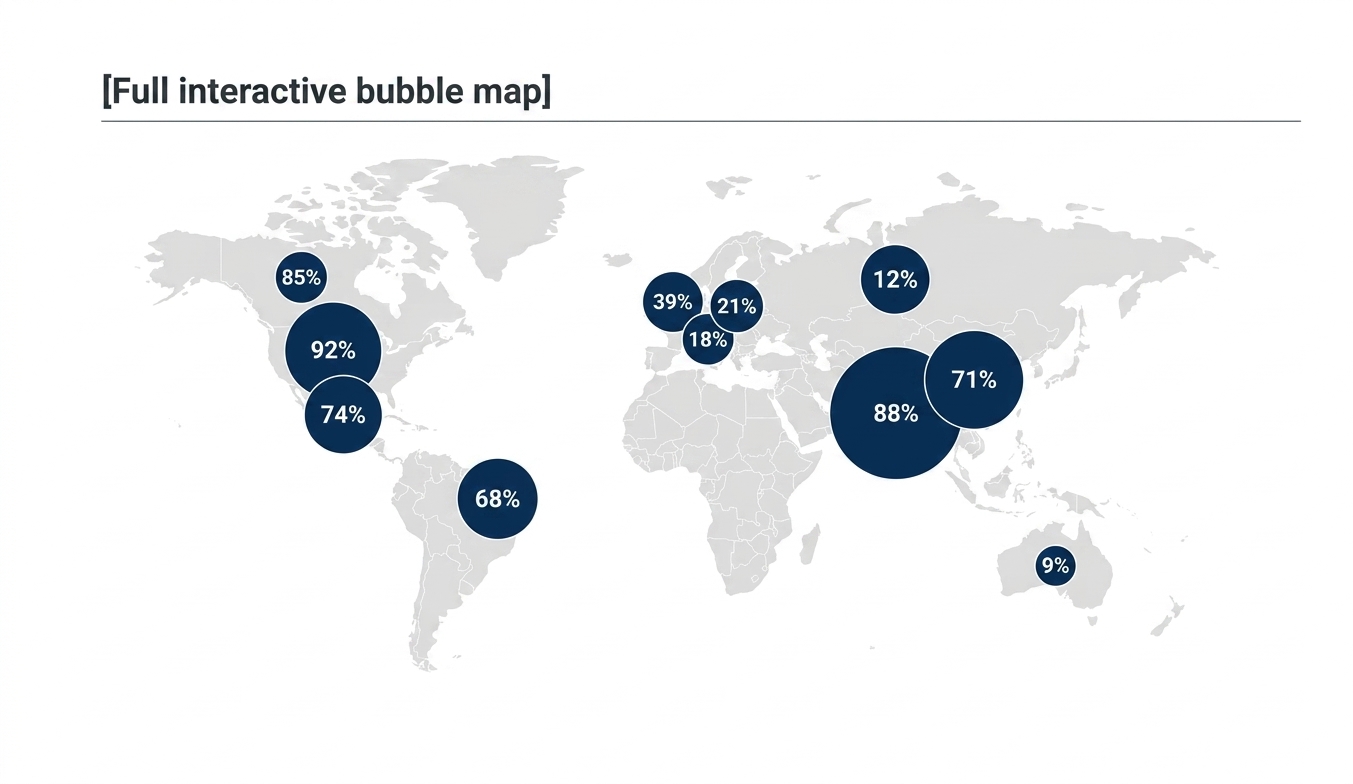
Fintech regulatory compliance slide with global bubble map showing percentage markers for jurisdiction coverage and regulatory readiness
Template Design LayoutFintech Regulatory Compliance Summary Template

2When to Use This Fintech Compliance Template

Use this template when a fintech team needs to explain regulatory readiness clearly to leadership, investors, banking partners, risk committees, or product stakeholders. Common moments include market entry, product launch, licensing application preparation, partner due diligence, bank sponsorship review, embedded finance rollout, crypto or payments expansion, lending compliance review, or post-audit remediation planning. It is also useful when the company operates across multiple jurisdictions and needs a consolidated view of which obligations apply where. The deck gives compliance, legal, risk, product, engineering, operations, and executive teams a shared structure for discussing regulatory exposure. Without that structure, compliance conversations can become either too legalistic for business stakeholders or too high level for risk owners. This template keeps the discussion practical: what rules apply, how controls work, where evidence exists, where gaps remain, and what leadership must fund or approve next. It also helps product teams understand launch constraints early and avoid rework.

3Recommended Compliance Summary Deck Structure

A decision-ready fintech compliance deck usually follows a ten-slide narrative. Start with the executive compliance status: what is ready, what is at risk, and what decisions are needed. Then show the business model, product scope, customer segments, regulated activities, and jurisdiction map. Next, present the regulatory landscape, including licensing, registration, KYC, AML, sanctions, privacy, consumer protection, payment rules, lending rules, or crypto obligations where relevant. The middle section should cover the control framework, policy inventory, evidence pack, risk assessment, monitoring, issue management, and ownership model. After that, include a roadmap for licensing, remediation, reporting, or control enhancement. Close with open decisions, dependencies, and governance cadence. This structure works because it connects regulatory obligations to business operations and avoids presenting compliance as disconnected policy text. It also makes gaps visible without overstating legal certainty. The sequence is built for executive review, committee oversight, and partner diligence workflows consistently across teams and markets.

4Regulatory Landscape and Jurisdiction Map

The suggested global bubble-map image works well for summarizing fintech regulatory coverage because regulated activity often changes by jurisdiction. A compliance summary should show where the company operates, where customers are located, which licenses or registrations are held, which are pending, and which activities are restricted. The map can also show readiness percentage, risk rating, product availability, or remediation status by region. For example, payments, lending, wallets, brokerage, remittance, crypto services, and embedded finance may trigger different obligations in different markets. The slide should avoid implying that a country is approved unless that status is documented. Instead, classify markets by readiness: active, approved, pending, restricted, paused, or not assessed. This helps executives understand expansion constraints and prevents product teams from treating global availability as a simple launch switch. A jurisdiction map also helps banking partners and investors quickly see where compliance risk concentrates. It should cite the source owner and review date.

5Licensing, Registration, and Product Scope

Fintech compliance depends heavily on the exact product scope and regulated activity. The deck should explain whether the business performs payments, money transmission, lending, deposits, investment advice, brokerage, custody, crypto exchange, stablecoin, payroll, insurance, or embedded finance functions. For each activity, summarize the relevant licensing or registration status, regulator, application stage, operating restrictions, renewal requirement, and dependency on partners. If the company relies on a bank sponsor, payment processor, broker-dealer, lending partner, or regulated affiliate, that structure should be visible. Executives need to understand whether compliance readiness comes from the company's own license, a partner arrangement, an exemption, or a pending approval. This section should also clarify product boundaries so sales, product, and growth teams do not market features outside approved scope. A clear licensing slide reduces launch risk and makes regulatory dependency visible before scaling decisions are made. Include assumptions and counsel review status for each market and product.

6KYC, AML, Sanctions, and Transaction Monitoring

A fintech compliance summary should explain customer onboarding and financial crime controls in a way that non-specialists can evaluate. Cover KYC, KYB, beneficial ownership, identity verification, customer due diligence, enhanced due diligence, sanctions screening, politically exposed person checks, adverse media, fraud controls, transaction monitoring, suspicious activity escalation, and recordkeeping. The deck should show the control flow from customer signup to risk scoring, screening, account approval, ongoing monitoring, alert review, escalation, and reporting. It should also identify the tools, vendors, manual review points, and ownership model. For higher-risk products, explain risk-tiering logic and how thresholds are tuned. Executives do not need every rule, but they do need confidence that controls match the customer base, geography, product risk, and transaction behavior. A strong KYC and AML slide makes control coverage, evidence, and residual gaps visible enough for risk committees and partners to review. It should distinguish automated and manual controls and escalation rights.

7Consumer Protection, Privacy, and Conduct Controls

Fintech compliance is broader than licensing and AML. The deck should also cover customer-facing obligations such as transparent disclosures, fee communication, complaint handling, fair lending or fair treatment, marketing review, consent management, data privacy, data retention, cybersecurity, accessibility, and vulnerable customer safeguards where relevant. Product and marketing teams need to know which claims, flows, and user journeys require compliance review. Operations teams need clear processes for complaints, refunds, disputes, errors, chargebacks, and customer communications. If the fintech uses models, automation, or personalization, the deck should show controls around explainability, bias, and human review where applicable. This section is important because conduct failures often emerge in product experience, not only legal documents. Presenting these controls visually helps executives see whether the customer experience is compliant by design or dependent on after-the-fact review. It also helps product teams understand compliance as part of design quality and trust. Conduct controls should be embedded before launch.

8Risk Assessment and Control Gap Analysis

A useful compliance summary should include a risk assessment that ranks obligations and gaps by severity, likelihood, business impact, and remediation urgency. Typical risk categories include licensing, financial crime, sanctions, privacy, cybersecurity, consumer protection, complaints, third-party risk, reporting, operational resilience, and governance. For each risk, show current control, evidence available, residual gap, owner, target date, and escalation need. Avoid vague ratings without evidence. If a control is rated green, stakeholders should know why. If it is amber or red, they should know the remediation path and business implication. A gap analysis helps executives decide where to invest and whether a product launch, market expansion, or partner onboarding can proceed. It also prevents compliance updates from becoming a list of completed activities rather than a view of residual risk. The strongest decks show both control maturity and decision implications. They also separate inherent and residual risk by obligation and owner clearly.

9Evidence Pack and Audit Readiness

Compliance readiness must be supported by evidence, not only policy statements. The deck should identify the documents, logs, approvals, reports, workflows, and artifacts that prove controls exist and operate. Evidence may include policies, procedures, risk assessments, training records, vendor due diligence, monitoring reports, alert review logs, customer due diligence records, board minutes, issue trackers, incident reports, complaint records, data protection assessments, and regulatory correspondence. For partner diligence or investor review, an evidence inventory helps teams respond quickly and consistently. It also reveals whether the company has designed controls but not yet documented their operation. The presentation should show which evidence is complete, pending, outdated, or missing. This matters because regulators, bank partners, and auditors often judge readiness by documentation quality and operating proof. A clear evidence slide turns compliance from a verbal assurance into a reviewable management system. It should name owners, repositories, and refresh cadence clearly for accountability checks.

10Compliance Roadmap and Remediation Plan

A fintech compliance deck should close with a roadmap that shows how gaps will be remediated and how compliance capability will scale with the business. The roadmap may include license applications, policy updates, vendor implementation, monitoring improvements, data privacy work, complaints process changes, reporting automation, training, governance upgrades, and audit preparation. Each action should have an owner, dependency, due date, risk addressed, and evidence deliverable. Prioritize actions by regulatory impact and business dependency rather than by convenience. For example, remediation tied to product launch approval or bank partner onboarding should be clearly flagged. The roadmap should also distinguish quick fixes from structural capability builds. Quick fixes may close documentation gaps, while larger work may require systems, data pipelines, staffing, or vendor changes. A clear roadmap helps leadership fund compliance work as risk reduction and growth enablement, not administrative overhead. It also supports committee tracking and accountability over time across owners.

11Prompt Recipe for Better Compliance Summary Outputs

XLSlides works best when the prompt includes the fintech product, regulated activities, jurisdictions, compliance audience, and current readiness. A strong prompt is: `Create an executive fintech regulatory compliance summary deck for a payments and embedded finance company. Audience: CEO, CFO, Chief Compliance Officer, legal, product, risk committee, and banking partner diligence team. Include business model scope, jurisdiction map, licensing and registration status, KYC/KYB and AML controls, sanctions screening, transaction monitoring, consumer protection, privacy, third-party risk, control gap analysis, evidence inventory, remediation roadmap, and decisions required.` Add specific details such as operating countries, product types, partner dependencies, pending licenses, known gaps, and launch timeline. Ask for action-title headlines, regulatory landscape map, control flow diagrams, risk heatmap, and roadmap slides. Specific prompts help XLSlides create a practical compliance management deck rather than a generic policy overview. Include counsel-reviewed assumptions where available and pending approvals, plus owners and deadlines for remediation work tracking.

12How XLSlides Speeds Up Fintech Compliance Reviews

Fintech compliance reviews are slow because the evidence lives across legal memos, policy documents, vendor tools, ticketing systems, risk registers, product requirements, audit logs, and partner diligence folders. Teams often spend too much time assembling slides and not enough time clarifying decisions, residual risk, and remediation ownership. XLSlides helps create a structured first draft with sections for regulatory landscape, licensing, KYC and AML controls, conduct obligations, risk assessment, evidence pack, roadmap, and governance. Compliance leaders can refine the obligations, legal teams can verify scope, product teams can validate control flows, and executives can review investment decisions. This does not replace legal advice or compliance testing, but it reduces presentation assembly work and creates a clear management narrative. The result is faster alignment on what is ready, what is risky, what evidence exists, and what must happen before launch, expansion, or partner approval. Teams can reuse it quarterly for risk committee updates.